
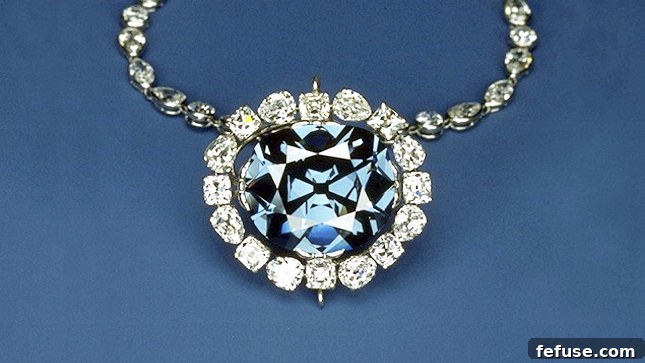
The Idol’s Eye Diamond: A Royal Qatari Legal Battle Unfolds in London
A dazzling 70.21-carat Golconda diamond, famously known as The Idol’s Eye and carrying an estimated value of $10 million, has become the focal point of an intriguing legal dispute currently playing out in the High Court of London. This high-stakes case pits prominent members of Qatar’s influential Al-Thani royal family against one another, drawing attention to the intricate world of ultra-luxury asset transactions and the significant wealth of the Gulf nation.
At the heart of the controversy is Qipco, a formidable private investment company closely associated with the Qatari royal family. Qipco, steered by the renowned art collector Sheikh Hamad bin Abdullah al-Thani, has initiated legal proceedings against Elanus Holdings Limited, an entity registered in the Channel Island of Guernsey. This legal confrontation not only highlights the immense value of the rare gem but also sheds light on the complex ownership structures often employed in high-value asset holdings.
The Enduring Allure of The Idol’s Eye Diamond
The Idol’s Eye is more than just a large diamond; it possesses a storied history and an exceptional provenance that elevates its status far beyond mere carat weight. Originating from the legendary Golconda mines in India, a source renowned for producing some of the world’s most famous and historically significant diamonds—including the Koh-i-Noor, the Hope Diamond, and the Daria-i-Noor—The Idol’s Eye commands respect for its rarity, brilliant cut, and captivating allure. Golconda diamonds are particularly prized for their exceptional clarity, often described as “water-clear,” and a unique internal luminescence that sets them apart from stones found in other regions.
The gem’s 70.21-carat weight makes it a truly monumental stone, a rare treasure that has captivated collectors and connoisseurs for centuries. Its estimated $10 million valuation reflects not only its inherent physical characteristics but also its rich historical narrative, its scarcity in the global market, and its impeccable Golconda heritage. Such diamonds are not merely investments; they are cultural artifacts, often passed down through generations, embodying tales of power, prestige, and passion.
Key Players in the High-Stakes Dispute
The legal tussle involves two primary entities, both with deep connections to the Qatari royal family:
Qipco: The Claimant
Qatar Investment & Projects Development Holding Company (Qipco) is a diverse private investment group with a significant global footprint. It manages a wide portfolio of assets and investments across various sectors, including real estate, construction, services, and luxury goods. The company’s involvement underscores the Al-Thani family’s expansive economic influence. Overseen by Sheikh Hamad bin Abdullah al-Thani, a prominent art collector and a driving force behind Qatar’s cultural ambitions, Qipco represents a sophisticated player in the international market for rare and valuable assets. Their pursuit of The Idol’s Eye highlights its strategic importance within their portfolio or future acquisition plans.
Elanus Holdings Limited: The Defendant
Elanus Holdings Limited is a company registered in Guernsey, a jurisdiction often favored for its robust legal framework concerning offshore trusts and corporate structures. According to a report by the Financial Times (FT), Qipco asserts that Elanus is ultimately owned by the estate of the late Sheikh Saud bin Mohammed Al-Thani. Sheikh Saud was an immensely influential figure, recognized globally for his extraordinary vision and relentless dedication to overseeing the acquisition of Qatar’s colossal national art collection. His tireless efforts transformed Qatar into a major cultural hub, establishing world-class museums and acquiring masterpieces that form the core of the nation’s cultural heritage. The alleged ownership link to Sheikh Saud adds a poignant layer of complexity to the dispute, intertwining the diamond’s fate with a legacy of monumental cultural patronage.
The Al-Thani Family’s Global Influence
The Al-Thani family, the ruling dynasty of Qatar, is renowned for its immense wealth and a profound engagement with the international art and luxury markets. Over decades, members of the family have strategically invested in iconic properties, priceless artworks, and legendary jewels, establishing themselves as key arbiters of taste and value in the global luxury landscape. This particular dispute, involving such a significant diamond and members of the royal family on both sides, underscores the intense competition and intricate relationships that can characterize transactions at the pinnacle of the private collecting world.
The Contention: A Loan, an Option, and a Withdrawal
The origins of the legal conflict trace back to 2014, when Elanus Holdings reportedly loaned The Idol’s Eye diamond to Qipco. This arrangement was not a simple loan; it was structured for an extended period of 20 years and, crucially, included a contractual option for Qipco to purchase the diamond at a later date. Such an agreement demonstrates a long-term strategic interest from Qipco in acquiring the gem outright.
The situation escalated significantly in February 2020. According to the lawsuit filed by Qipco, Elanus Holdings extended an offer to sell the valuable gem. This offer seemingly activated the purchase option or indicated a willingness to proceed with a sale outside of the original option’s timeline. However, shortly after presenting this offer, Elanus inexplicably withdrew it. The reasons behind this sudden retraction are central to the current legal battle and remain a key point of contention.
Qipco views this withdrawal as a breach of their understanding and potentially a breach of a binding agreement derived from the initial loan terms or the subsequent offer. As a result, Qipco has sought the intervention of the High Court in London, petitioning it to enforce “specific performance.” This legal remedy is powerful, asking the court to compel Elanus to fulfill its alleged contractual obligations and go through with the sale of The Idol’s Eye diamond, rather than merely seeking monetary damages.
The Legal Ramifications and Broader Implications
The London High Court is a prestigious and respected jurisdiction for resolving complex international commercial disputes. Its involvement signals the seriousness and the high stakes of this case. The outcome will have significant financial consequences, directly impacting the ownership of a $10 million asset. Beyond the monetary value, however, the ruling could also carry substantial reputational implications for all parties involved, particularly within the exclusive and discerning circles of high-net-worth individuals and royal families.
Furthermore, this legal battle resonates within the broader context of the global luxury art and rare gem market. Cases involving specific performance for unique, irreplaceable assets like The Idol’s Eye are closely watched. The decision could influence how future agreements are structured for high-value items, particularly those involving options to purchase or complex international ownership frameworks. It underscores the critical importance of clear, unambiguous contractual terms, especially when dealing with assets of such extraordinary value and historical significance.
Neither Pinsent Masons, the law firm representing Qipco, nor Farrer & Co, the legal counsel for Elanus, has offered public comments to the Financial Times regarding the ongoing litigation. This standard practice in active legal proceedings only adds to the mystery and intrigue surrounding this captivating dispute, leaving the specifics of each party’s arguments largely under wraps until the court proceedings unfold.
Conclusion: A Diamond’s Destiny in the Balance
The Idol’s Eye diamond, with its mesmerizing beauty and unparalleled Golconda legacy, is now at the center of a compelling legal drama. This case is not merely about a precious stone; it’s a testament to the immense wealth, intricate legal maneuvers, and enduring rivalries that can exist even within the most affluent and connected families. As the London High Court deliberates, the fate of this historic 70.21-carat gem hangs in the balance, awaiting a judgment that will not only determine its ownership but also add another chapter to its already remarkable story, forever linking it to the modern-day complexities of royal wealth and international law.