
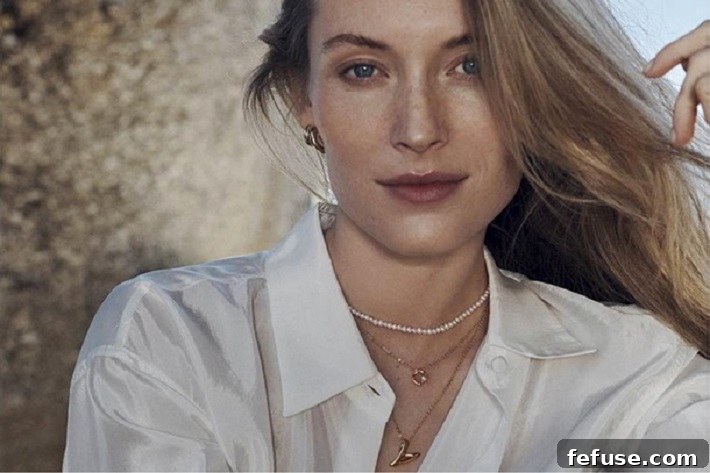
Pandora Shines: Double-Digit Growth Amidst Economic Headwinds, Solidifying Its Position as a Full Jewelry Brand
In a testament to strategic resilience and evolving market appeal, Pandora, the renowned Danish jewelry giant, reported impressive financial results for its second quarter, demonstrating robust growth despite a globally recognized period of “sluggish” consumer spending. The company, traditionally synonymous with its iconic charm bracelets, is successfully executing a bold repositioning strategy to establish itself as a comprehensive “full jewelry brand,” a move that appears to be resonating strongly with consumers worldwide.
The Q2 2024 earnings report highlighted a significant 15 percent surge in revenue, reaching an impressive $999 million, a substantial increase from $870 million recorded in the same period last year. This growth underscores Pandora’s ability to not only navigate challenging economic currents but also to thrive by expanding its product portfolio and enhancing its brand perception.
Defying Economic Gravitation: A Deeper Look into Q2 Performance
Pandora’s financial success in the second quarter is particularly noteworthy given the prevailing macroeconomic climate. Consumers globally have exercised caution in discretionary spending, yet Pandora managed to achieve its fourth consecutive quarter of double-digit organic growth. This consistent performance speaks volumes about the effectiveness of its strategic initiatives and the enduring appeal of its products.
Key markets played a pivotal role in this growth trajectory. Europe, a crucial region for the brand, saw a commendable 10 percent like-for-like (LFL) growth. This strong performance in established European markets suggests that Pandora’s expanded offerings and targeted marketing campaigns are successfully engaging a diverse customer base, solidifying its presence across the continent. Meanwhile, the United States market, another significant contributor, experienced a healthy 5 percent growth. While slightly lower than Europe, this still represents positive momentum in a highly competitive and often volatile retail landscape, reflecting sustained brand loyalty and new customer acquisition.
The overall Q1 growth of 18 percent set a high bar, and Q2’s 15 percent revenue increase demonstrates sustained momentum rather than a fleeting success. This consistent upward trend is a clear indicator that Pandora’s underlying business model and strategic direction are sound, allowing it to capture market share even when broader consumer confidence wavers.
The Phoenix Strategy: Reimagining Pandora as a Full Jewelry Brand
At the heart of Pandora’s remarkable turnaround and continued growth is its ambitious “Phoenix strategy,” launched in 2021. This multi-faceted initiative aims to propel the company towards greater growth and enhanced sustainability, fundamentally transforming its identity from primarily a charm bracelet retailer to a comprehensive jewelry powerhouse. The second quarter’s results serve as a powerful validation of this strategic pivot.
Pandora’s journey to become a “full jewelry brand” involves a conscious effort to diversify its product range beyond its iconic customizable charm bracelets. This includes a significant focus on rings, necklaces, earrings, and other fine jewelry pieces crafted from high-quality materials. By offering a broader array of designs and categories, Pandora is actively appealing to a wider demographic and fulfilling a broader spectrum of jewelry needs, from everyday wear to special occasion pieces. This expansion is critical for increasing average transaction values and encouraging repeat purchases across different product lines.
The strategy is not merely about adding new products; it’s about redefining the brand’s perception. Pandora is investing in sophisticated marketing campaigns that showcase its diverse collections, emphasizing craftsmanship, design innovation, and sustainable practices. This holistic approach ensures that consumers perceive Pandora as a credible and desirable option across all jewelry categories, moving beyond its historical niche.
Embracing the Future: The Phenomenal Rise of Lab-Grown Diamonds
One of the most striking insights from Pandora’s Q2 report is the staggering 88 percent surge in like-for-like sales of lab-grown diamonds. While these sales currently represent a modest portion—less than one percent of total sales, amounting to $9 million—their explosive growth rate signals a significant emerging trend and a strategic foresight on Pandora’s part.
The increasing popularity of lab-grown diamonds is a global phenomenon, driven by several compelling factors. Consumers are increasingly seeking ethical sourcing, sustainability, and transparency in their purchases. Lab-grown diamonds offer a compelling alternative to traditionally mined diamonds, often at a more accessible price point, without compromising on quality, brilliance, or durability. They provide the same physical, chemical, and optical properties as natural diamonds, making them an attractive choice for value-conscious and ethically minded buyers.
Alexander Lacik, President and CEO of Pandora, has been a vocal proponent of this shift. In a significant statement during a Bloomberg TV interview, Lacik boldly predicted that within a decade, an astonishing half of all diamonds sold globally would be lab-grown. This visionary outlook not only highlights Pandora’s commitment to innovation but also positions the company at the forefront of a transformative movement within the jewelry industry. By investing early and heavily in lab-grown diamond collections, Pandora is poised to capitalize on this growing market segment, appealing to a new generation of consumers who prioritize sustainable luxury.
The rapid adoption of lab-grown diamonds aligns perfectly with Pandora’s broader Phoenix strategy, particularly its emphasis on sustainability. Offering a product that minimizes environmental impact resonates with the brand’s commitment to responsible business practices and strengthens its appeal to environmentally conscious consumers. As awareness and acceptance of lab-grown alternatives continue to grow, Pandora’s early positioning in this space could prove to be a significant competitive advantage.
Leadership Vision and Bolstered Market Confidence
Alexander Lacik’s leadership has been instrumental in steering Pandora through this period of transformation and growth. His commentary consistently reflects confidence in the company’s direction and strategy. “Our strategy continues to take Pandora to new heights despite general consumer spending being somewhat sluggish,” Lacik remarked, underscoring the intrinsic strength of their approach even amidst external challenges.
He further added, “We have successfully started the journey to make Pandora known as a full jewellery brand, and our results show that consumers like what they see.” This statement is not merely a reflection of financial numbers but also a validation of the brand’s creative direction and market acceptance. It suggests that Pandora’s design aesthetic, product quality, and value proposition across its expanded jewelry range are genuinely resonating with its target audience.
The company’s confidence in its future trajectory is further evidenced by its decision to increase its organic growth guidance for the year to “9-12 percent,” up from the previously projected “8-10 percent.” This upward revision signals strong internal projections and a belief in sustained momentum. Furthermore, current trading in Q3 remains robust, with underlying like-for-like growth at mid-single-digit levels, indicating a healthy start to the second half of the fiscal year, often a critical period driven by holiday season shopping.
Looking Ahead: Sustaining Momentum in a Dynamic Market
As Pandora moves forward, its strategic pillars — the Phoenix strategy, the expansion into a full jewelry brand, and the embrace of sustainable innovations like lab-grown diamonds — are expected to continue driving growth. The ability to maintain double-digit organic growth amidst a challenging backdrop speaks to a fundamentally strong business model and agile execution.
However, the global retail landscape remains dynamic, with evolving consumer preferences, inflationary pressures, and geopolitical uncertainties. Pandora will need to continue its innovative streak, investing in design, marketing, and supply chain efficiencies to maintain its competitive edge. The successful integration of its diverse product lines, coupled with its commitment to sustainability, will be crucial in fostering long-term brand loyalty and attracting new customer segments.
The increased guidance and healthy Q3 trading paint an optimistic picture for Pandora. By staying true to its vision of becoming a comprehensive, sustainable, and highly desirable jewelry brand, Pandora is well-positioned to unlock further growth opportunities and reinforce its standing as a leader in the global jewelry market. Its strategic shifts are not just about adapting to change but actively shaping the future of jewelry retail.