
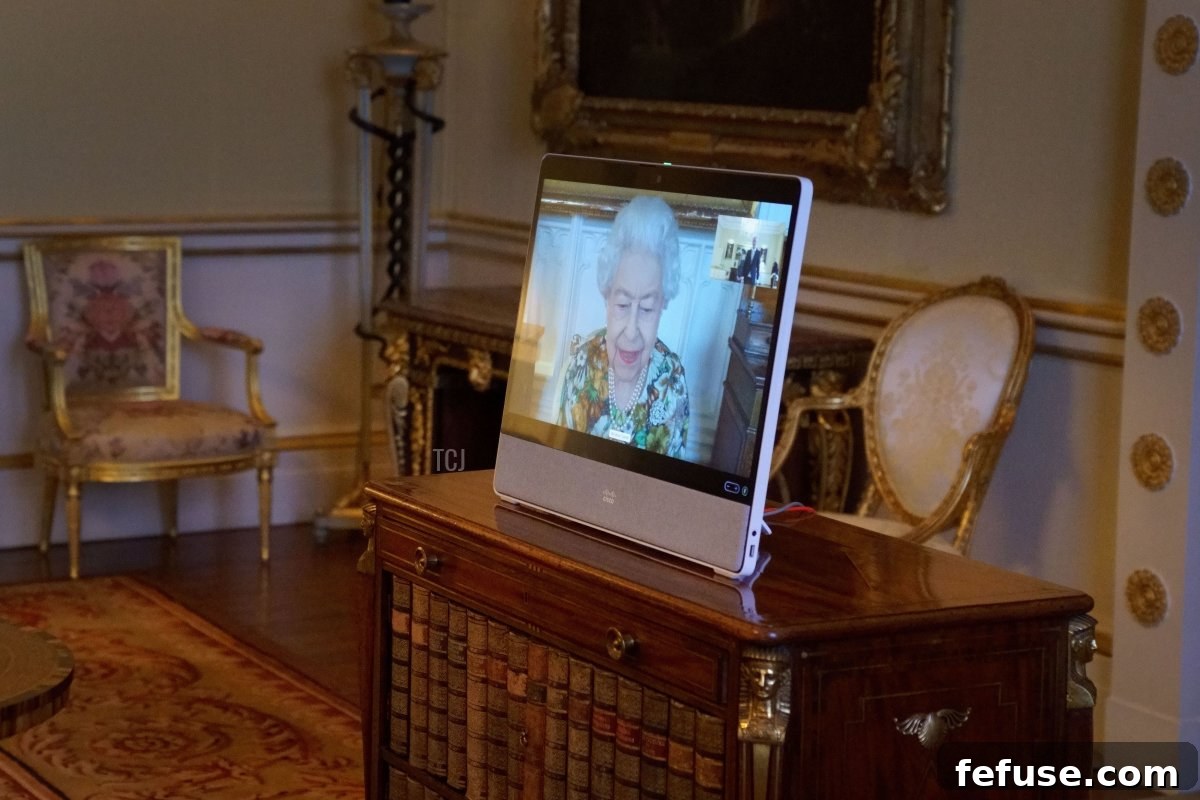
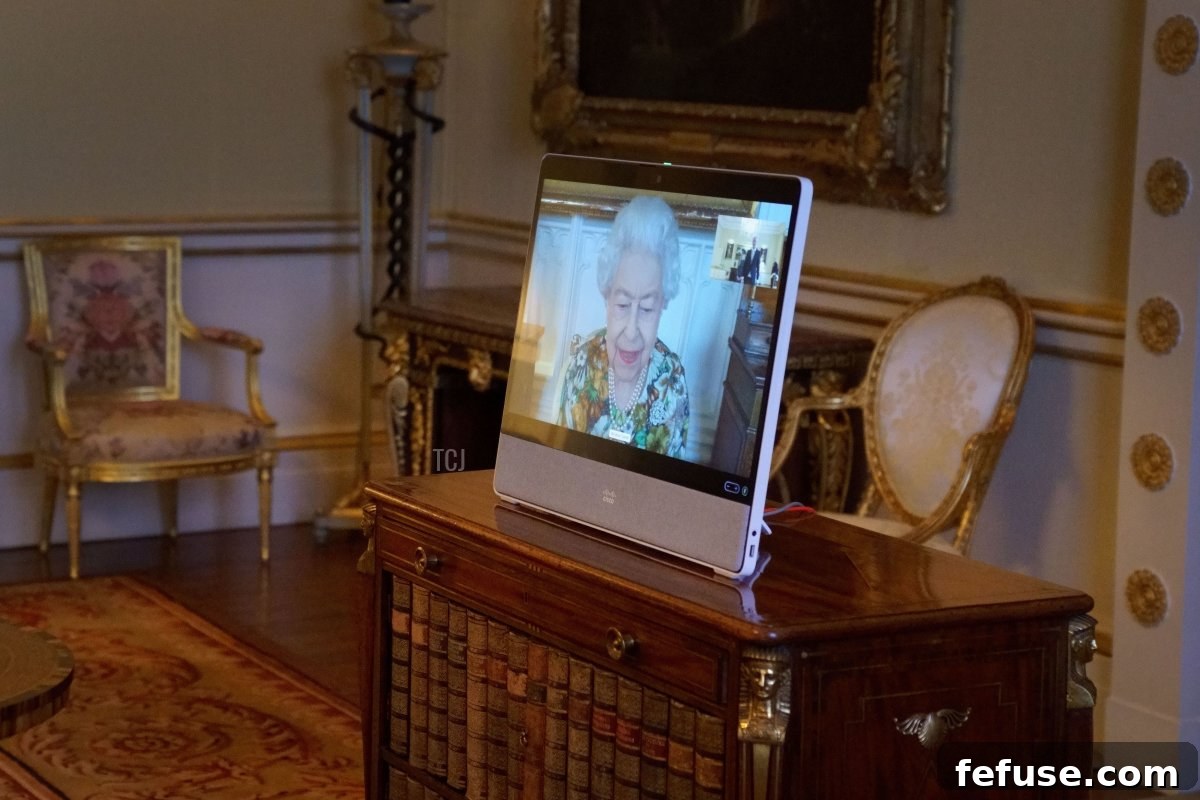
Queen Elizabeth II’s Timeless Brooch Choice for Virtual Audiences
In a significant return to royal duties following her Accession Day, Her Majesty Queen Elizabeth II once again captivated observers with her discerning choice of jewelry. The Queen, renowned for her subtle yet profound use of brooches to convey messages and pay tribute, continued a remarkable trend this week by selecting a piece that beautifully harks back to the formative years of her extensive reign. This article delves into the exquisite diamond floral brooch she donned for her virtual audiences held on Tuesday, February 15, 2022, a piece steeped in history and symbolic resonance.
The Queen’s public appearances, especially in her later years, were meticulously planned, and her choice of adornments was rarely arbitrary. Each brooch often carried a story, a connection to a past event, a specific person, or even a diplomatic gesture. For these crucial diplomatic engagements, conducted from the comfort of Windsor Castle, she chose a jewel that not only added a touch of elegance but also underscored the enduring legacy of the British monarchy. Her selection of the Nizam of Hyderabad Rose Brooch for these modern virtual settings perfectly illustrates this practice, bridging centuries of tradition with contemporary adaptations.
Diplomatic Engagements in a Digital Age: The Queen’s Virtual Audiences
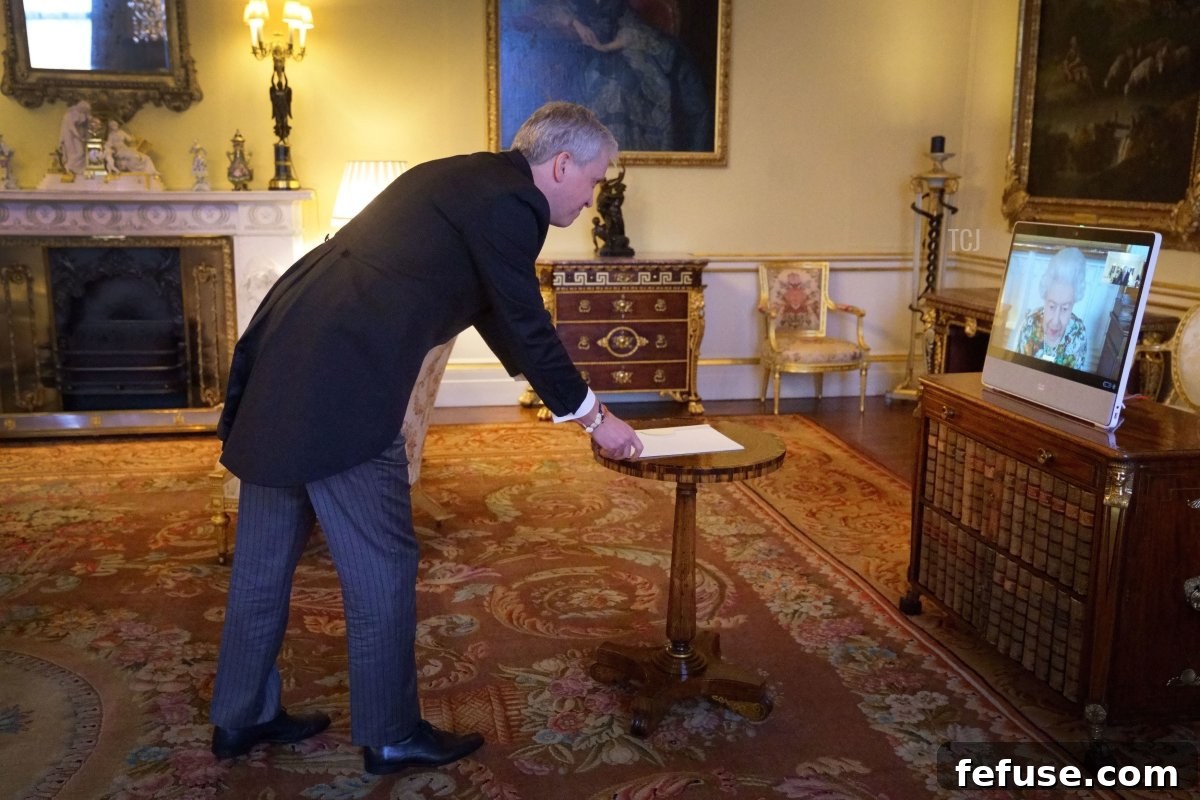
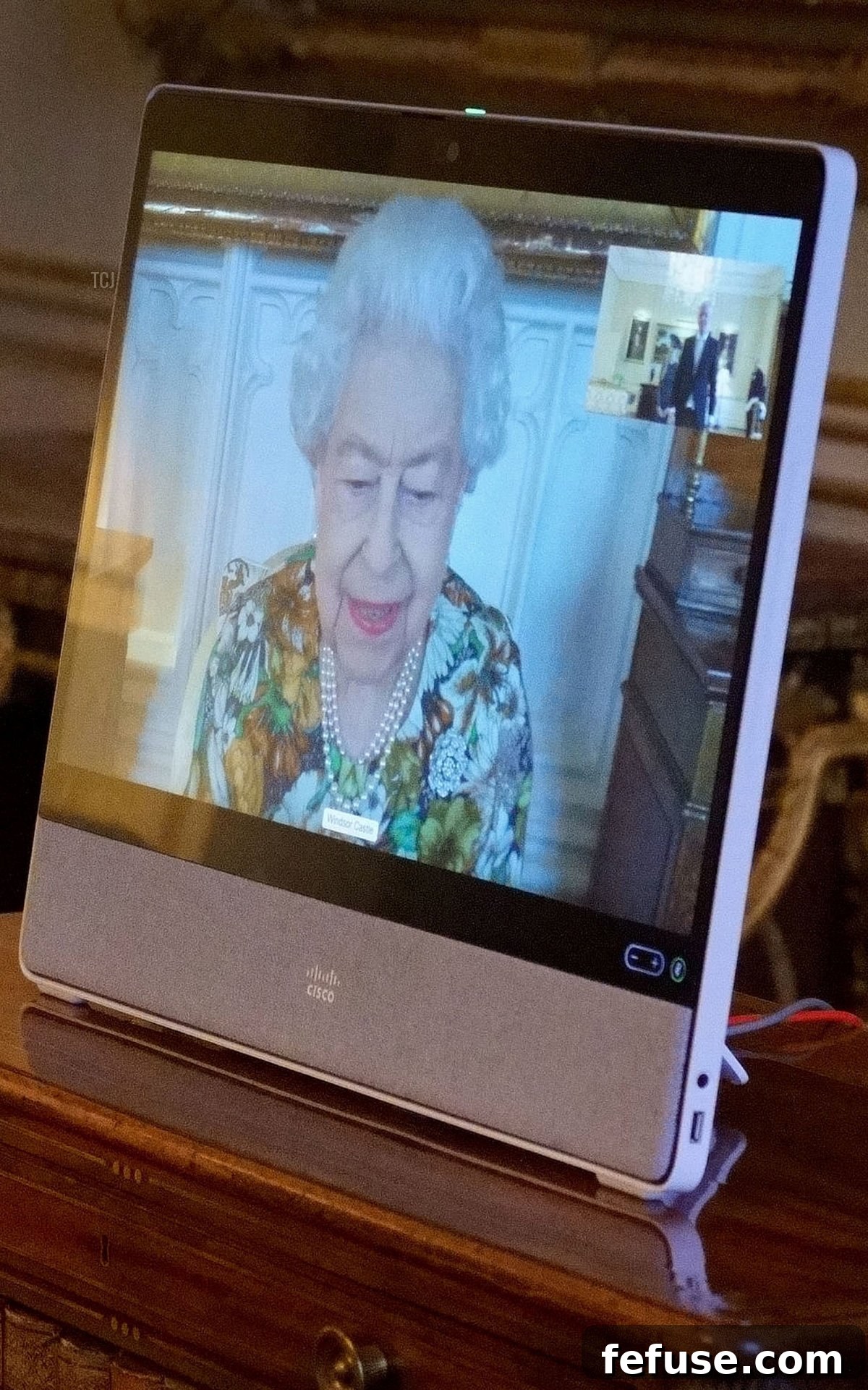
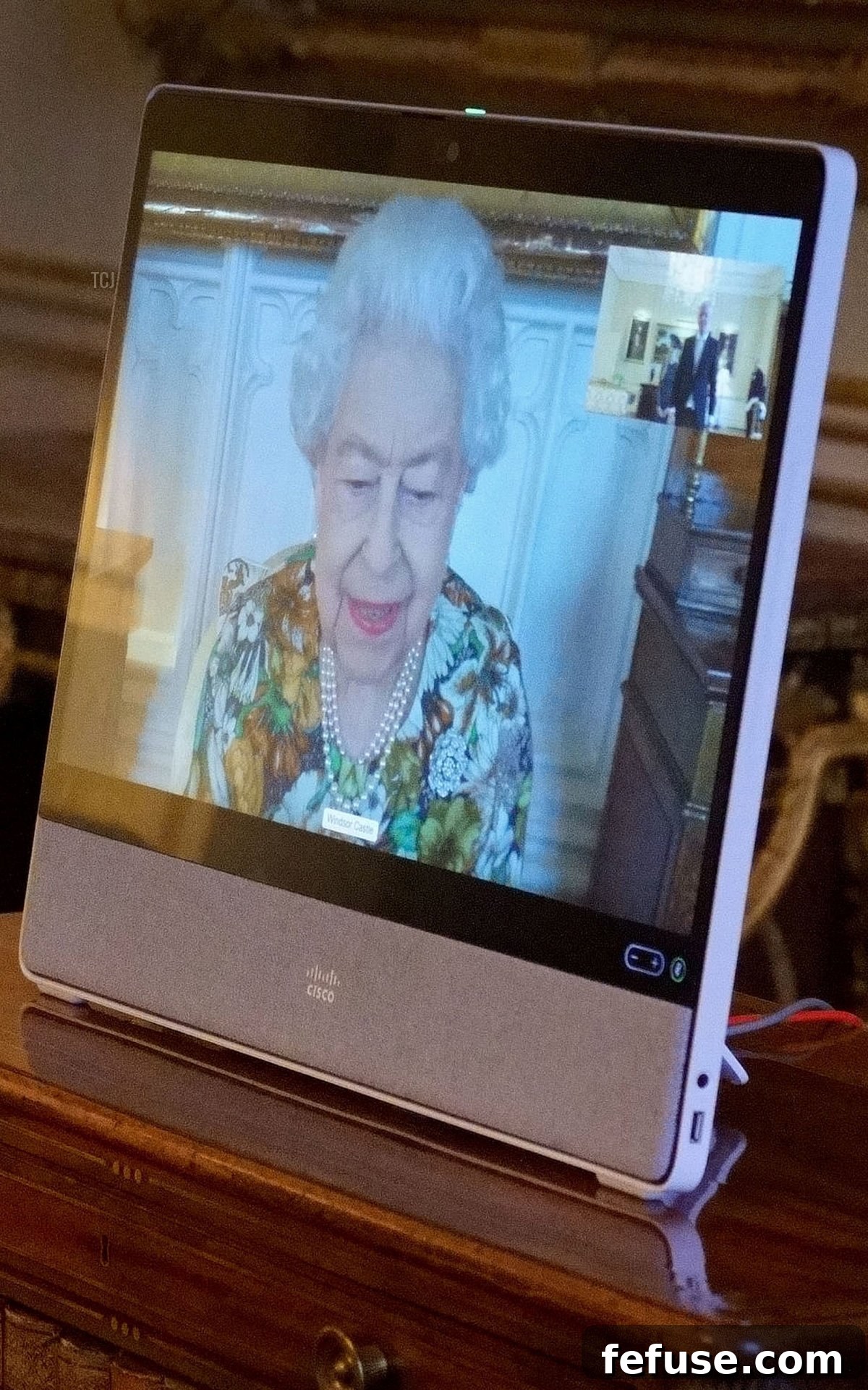
On that Tuesday, February 15, 2022, Queen Elizabeth II expertly navigated the demands of modern diplomacy by receiving two newly appointed ambassadors through the convenience of a video link. Residing at Windsor Castle, Her Majesty connected digitally with Buckingham Palace, a testament to her adaptability and commitment to duty. Among those presenting their credentials was Viljar Lubi, the distinguished new Ambassador from Estonia. The photograph above captures this historic moment, showcasing the seamless integration of technology into age-old royal protocols. Such virtual audiences became an increasingly important part of the Queen’s official schedule, especially during periods when travel or large gatherings were restricted.
Virtual audiences, though a relatively new format for royal engagements, allowed the Queen to maintain a full diary of diplomatic responsibilities without physical strain. This innovative approach highlighted the monarchy’s capacity to evolve, ensuring that vital international relations continued uninterrupted. These ceremonies, where ambassadors formally present their credentials, are critical for establishing diplomatic ties and are usually steeped in tradition. The Queen’s embrace of virtual platforms demonstrated her pragmatism and unwavering dedication to her role as Head of State, ensuring smooth transitions for incoming foreign representatives.
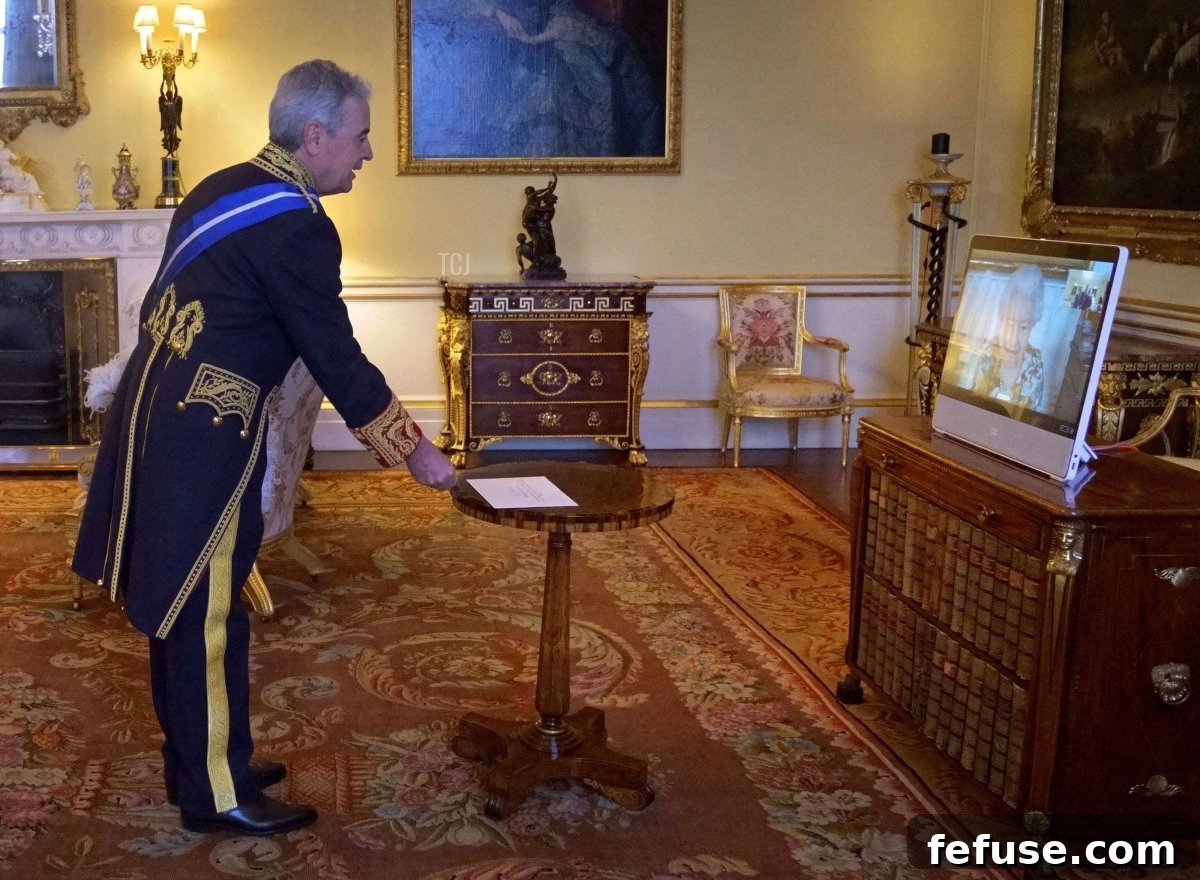
Following the audience with the Estonian ambassador, the Queen then met virtually with Jose Pascual Marco Martinez, the esteemed new Spanish Ambassador to the United Kingdom. These virtual sessions underscore the symbolic importance of the monarch in welcoming foreign representatives, an act that solidifies international relations and affirms diplomatic ties. Despite the digital medium, the gravitas and formality of these meetings remained undiminished, with the Queen’s presence radiating through the screen. Her consistent engagement, even remotely, reinforced the enduring strength and stability of the British Crown in global diplomacy, setting a dignified precedent for future royal duties.
The Nizam of Hyderabad Rose Brooch: A Masterpiece of Royal Jewelry
For these important virtual engagements, Queen Elizabeth II opted for a vibrant floral dress, accessorized with her signature pearls and, most notably, a breathtaking diamond floral brooch. This particular piece is instantly recognizable as the largest of the acclaimed Nizam of Hyderabad Rose Brooches, a jewel with a fascinating provenance and a cherished place within the royal collection. Its glittering presence, even on a video screen, was undeniable, adding a regal flourish to her ensemble and drawing attention to its intricate beauty.
The Nizam of Hyderabad Rose Brooch is more than just a beautiful adornment; it is a testament to exquisite craftsmanship and a piece laden with historical significance. Composed of an intricate arrangement of brilliant and baguette-cut diamonds set in platinum, it captures the delicate beauty of a blooming rose in extraordinary detail. Each facet of the diamonds, meticulously placed, contributes to a dazzling sparkle that has graced countless royal occasions. The choice of this magnificent brooch for a formal diplomatic audience reflects the Queen’s consistent appreciation for both artistry and tradition, making it a true highlight of her royal jewelry collection.
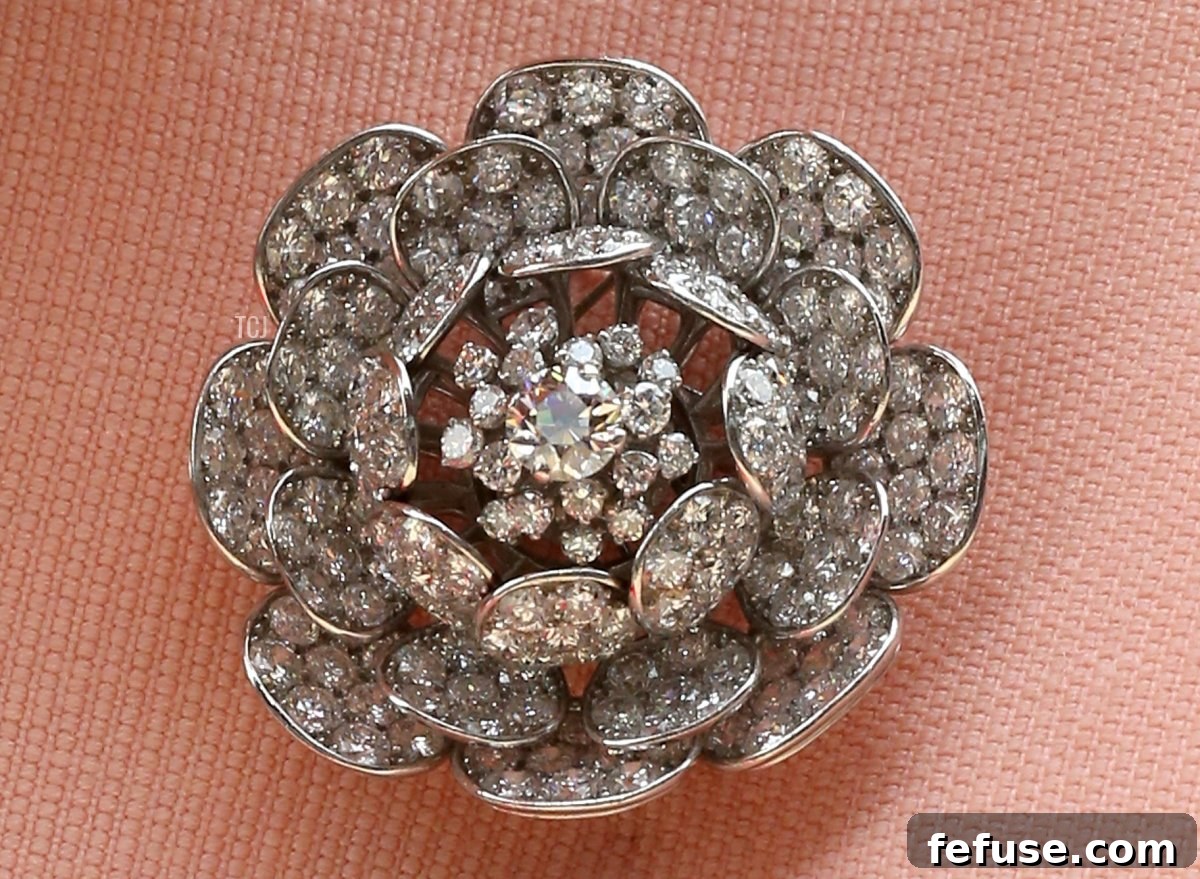
A closer inspection of this iconic royal brooch, as seen in an excellent close-up captured during a royal visit to Paddington Station in London in June 2017, reveals the unparalleled artistry involved in its creation. Crafted by the prestigious French jewelry house Cartier in the 1930s, this diamond and platinum masterpiece showcases the era’s sophisticated design sensibilities. Cartier, a favored jeweler of royalty worldwide, imbued the piece with timeless elegance, ensuring its status as a significant component of the Queen’s vast and impressive royal jewelry collection. Its provenance from a renowned house like Cartier further elevates its status among royal connoisseurs and historians alike.
The brooch’s intricate detail, from the perfectly cut diamonds to the precise platinum setting, speaks volumes about its quality and the meticulous work that went into its design. It’s a stellar example of why Cartier jewels are so highly prized and why they are often chosen for significant royal events, embodying both luxury and heritage. The way light plays off its many facets creates a dazzling display, a feature that was evident even through the virtual broadcast, reminding viewers of the enduring brilliance of royal jewels.
From Tiara to Brooch: The Nizam of Hyderabad Wedding Gift
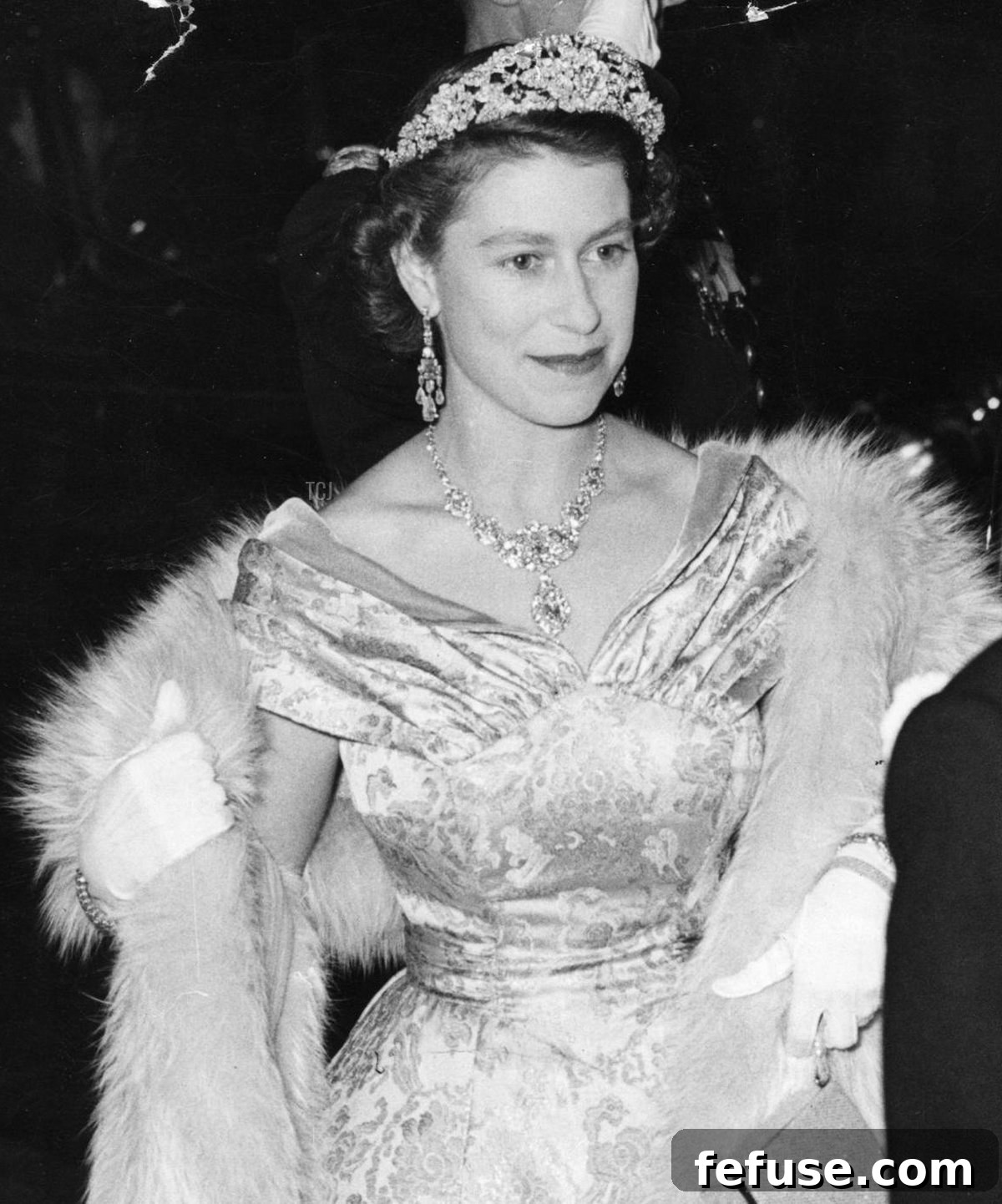
The history of this splendid brooch is as rich and multifaceted as its diamonds. It was originally conceived as the magnificent central element of a grand diamond floral tiara. This exquisite tiara, along with a perfectly coordinating necklace, formed a breathtaking suite of jewels. These pieces were famously presented as a wedding gift to Princess Elizabeth by His Exalted Highness Mir Osman Ali Khan, the seventh Nizam of Hyderabad, upon her marriage to Prince Philip in 1947. This opulent gift, known as the Nizam of Hyderabad Suite, marked a significant diplomatic gesture from a powerful sovereign to a future queen.
The Nizam, at the time considered one of the wealthiest men in the world, extended an extraordinary gesture of generosity that few could rival. He instructed Cartier, the esteemed jewelers, to allow Princess Elizabeth to select any pieces she desired from their extensive collection as her wedding present. This unique approach ensured that the bride would receive jewels truly to her liking, a testament to the Nizam’s profound respect and affection for the future Queen. The result was a suite of unparalleled beauty and value, comprising a stunning tiara, a magnificent necklace, and the adaptable brooches. The accompanying necklace, which matched the tiara’s floral motif, and the tiara itself, were notably worn by the Queen at the Royal Variety Performance in 1952, marking one of her earliest public appearances with these magnificent pieces as monarch, just a year into her reign.
The original Nizam of Hyderabad Tiara was designed with remarkable versatility from its inception, a foresight that proved invaluable for a busy working royal. Its central floral element was ingeniously crafted to be detachable, allowing it to be worn independently as a large brooch. Additionally, two smaller floral sections, situated on either side of the main piece, could also be removed and worn as individual brooches. This modular design offered the future Queen a multitude of options, transforming a grand tiara into more accessible daytime pieces suitable for various engagements, from formal dinners to less formal daytime events.
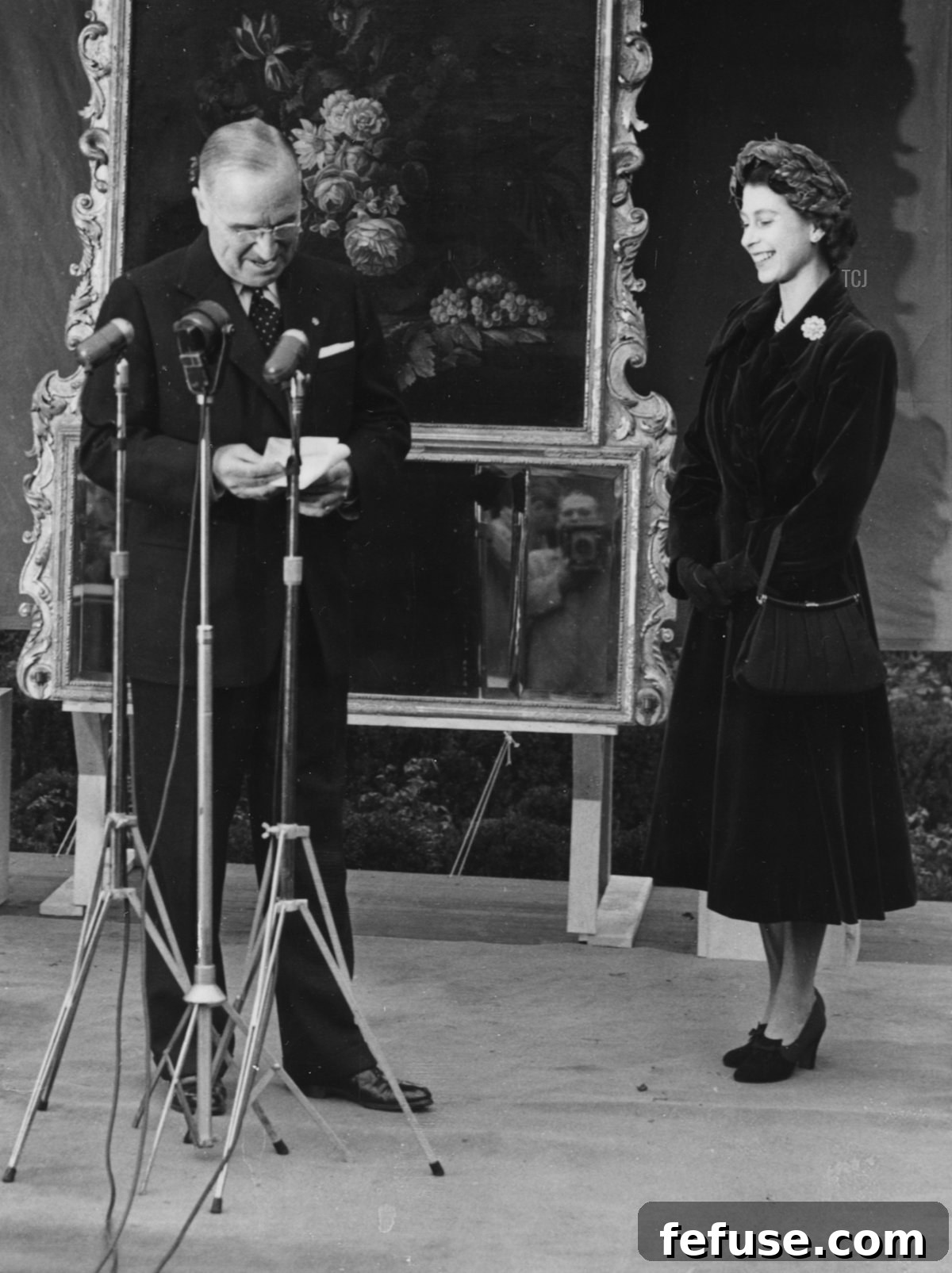
A compelling example of this versatility dates back to 1951, before her accession to the throne. The then-Princess Elizabeth wore the large rose brooch, precisely the piece seen in the recent virtual audience, during her official visit to the United States. She was photographed wearing it as she met with President Harry Truman at the White House. This early appearance solidified the brooch’s importance in her collection, showcasing its adaptability and elegance long before the tiara’s eventual transformation. It illustrates how these jewels were not merely ceremonial but integral to her working wardrobe.
The Enduring Legacy of the Nizam Rose Brooches
While the Nizam of Hyderabad Tiara itself was eventually dismantled in the 1970s – its diamonds ingeniously repurposed in the construction of the new Burmese Ruby Tiara – the three magnificent rose brooches derived from it continued to be cherished and frequently worn by the Queen. This decision to preserve the brooches, even as the larger tiara was transformed, speaks volumes about their personal and historical value to Her Majesty. The largest of these brooches, the one highlighted in her recent virtual audience, has been a particularly favored choice for numerous royal engagements throughout her long reign, becoming a recognizable symbol of her enduring style.
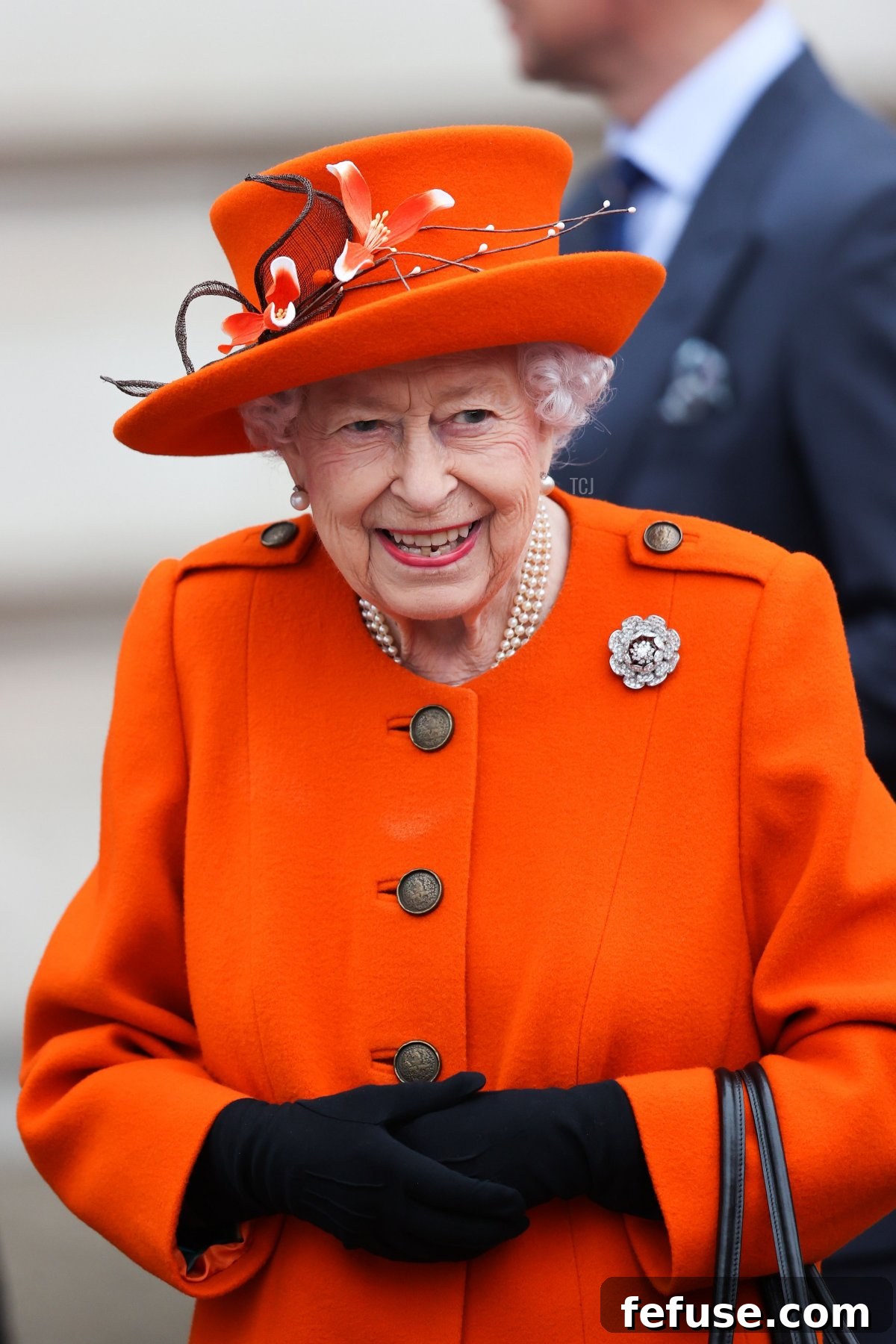
Its consistent presence in her wardrobe highlights its adaptability for both formal and semi-formal occasions, making it a versatile staple. Above, we see a splendid example: Queen Elizabeth II wearing the large Nizam Rose Brooch at Buckingham Palace in October 2021. This occasion marked the launch of The Queen’s Baton Relay for the XXII Commonwealth Games, an event that perfectly demonstrates how these jewels often accompany moments of national and international significance, blending personal style with state ceremony and conveying a sense of continuity and tradition.
Platinum Jubilee Tributes: Brooches from the Dawn of a Reign
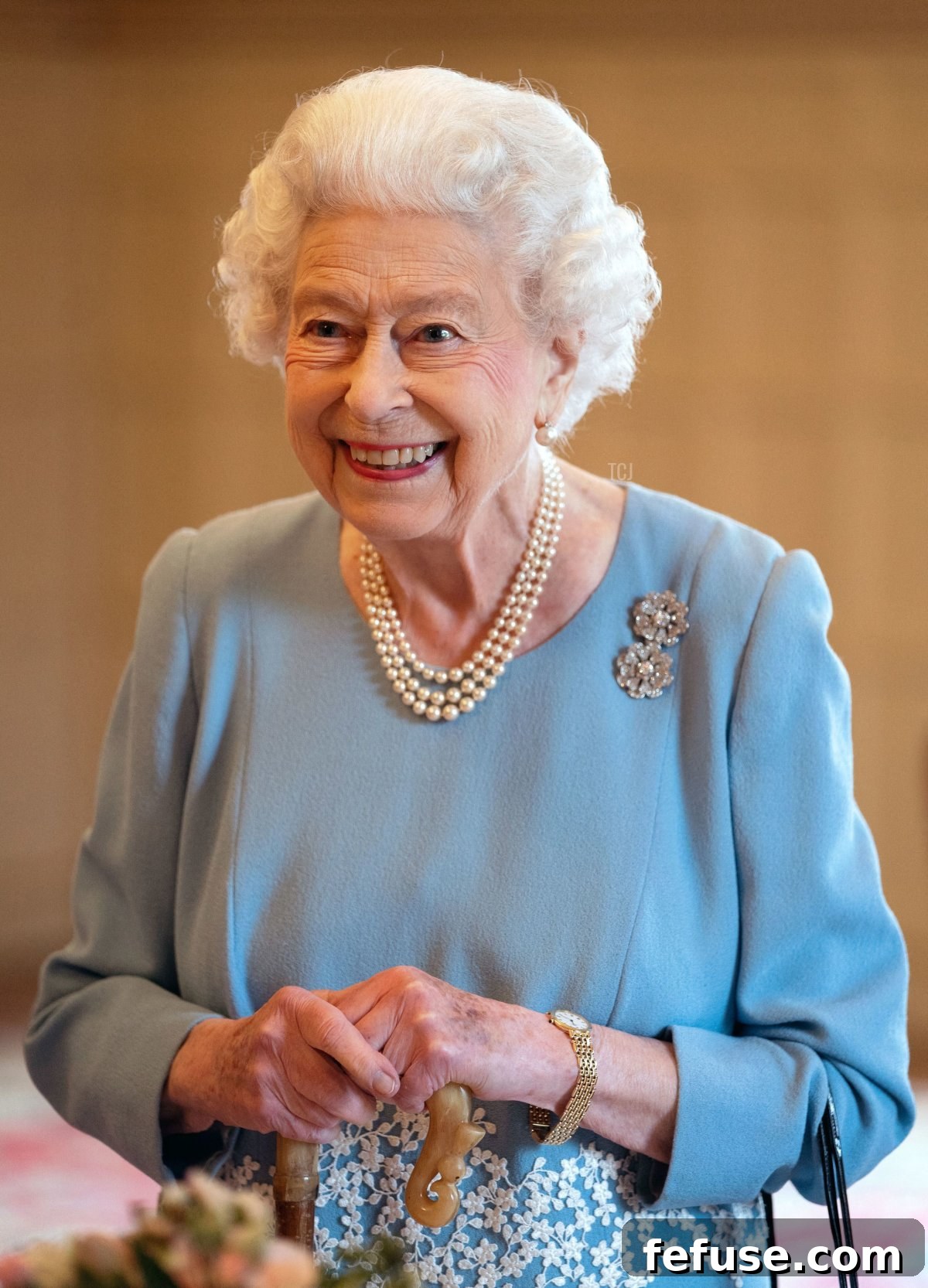
The significance of the Nizam rose brooches was further highlighted in early February 2022, during the pivotal celebrations marking the 70th anniversary of Queen Elizabeth II’s accession to the throne – her historic Platinum Jubilee. While the largest brooch graced her recent virtual audience, it was the two smaller Nizam rose brooches that she chose for a poignant reception at Sandringham House on February 5th. These smaller pieces are almost invariably worn together as a pair, creating a delicate yet impactful statement and showcasing another facet of this remarkable suite of jewels.
Her choice of these particular brooches for such a monumental occasion was deeply symbolic. Throughout that entire weekend of Platinum Jubilee events, the Queen deliberately wore brooches dating back to the 1930s and 1940s. This deliberate selection served as a heartfelt and clear tribute to the individuals, events, and formative years that supported her at the very dawn of her reign. It was a subtle nod to the enduring strength and continuity of her rule, linking her past with her unprecedented present. The Nizam brooches, born from a wedding gift in the 1940s, perfectly fit this narrative of historical continuity and personal reflection, making them a poignant choice for her Platinum Jubilee celebrations.
A Legacy That Continues to Sparkle
Taking one final glance at Queen Elizabeth II during her February 15th virtual audience, it’s clear that even through the medium of a computer monitor, the largest Nizam Rose Brooch manages to sparkle with undiminished majesty. Its vibrant display of diamonds against her elegant attire reaffirms its status as a cornerstone of her working wardrobe and a jewel that consistently commands attention, proving that true elegance transcends any medium.
The Queen’s deliberate choice of such historically resonant pieces for her public engagements, especially during her Platinum Jubilee year, serves as a powerful reminder of her reign’s depth and longevity. Each diamond within the Nizam Rose Brooch tells a story of an extraordinary life dedicated to service, a life intertwined with the history of a nation and its diplomatic relations. It’s not just a piece of jewelry; it’s a living relic, reflecting the brilliance and enduring legacy of Queen Elizabeth II, an icon whose style and substance continue to inspire generations.