
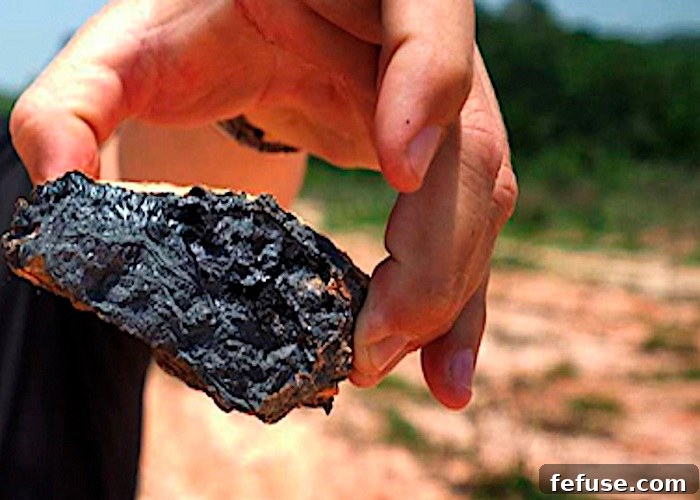
In a strategic move poised to capitalize on the escalating global demand for critical battery metals, Maxtech Ventures (CNSX: MVT), a Canada-based mining exploration company, announced ambitious plans to significantly expand its operational footprint in Brazil. The news sent the company’s shares soaring by more than 13% on Wednesday morning, reflecting strong investor confidence in its growth trajectory within the vital South American nation.
Maxtech’s expansion strategy centers on two key fronts: deepening its engagement with its flagship Brasnorte manganese project and forging a new joint venture in Santana do Pirapama, located in the mineral-rich state of Minas Gerais. This dual approach underscores the company’s commitment to establishing a robust presence in Brazil, leveraging the country’s vast untapped mineral resources and its strategic position in the evolving global supply chain for electric vehicle (EV) batteries and large-scale energy storage systems.
Strategic Joint Venture: Unlocking New Potential in Minas Gerais
The Vancouver-based miner confirmed the signing of a non-exclusive letter of interest to form a joint venture with a local Brazilian entity. This partnership aims to develop claims in Santana do Pirapama, Minas Gerais, an area where preliminary assessments have already indicated proven manganese mineralization. This collaborative effort is a testament to Maxtech’s strategy of de-risking exploration and development through local expertise and partnerships, while expanding its resource base and future production potential.
Both Maxtech and its prospective partner have already initiated the formal process by filing for a trial mining license, known locally as a ‘Guia’. This critical regulatory step allows for initial, small-scale mining activities to thoroughly assess the full potential and viability of the asset. The assessment phase will involve detailed geological surveys, precise sampling, and preliminary economic evaluations to confirm the extent and grade of the manganese deposits. This meticulous approach ensures that subsequent investment decisions are based on solid geological and economic data, paving the way for sustainable and profitable operations in the heart of Brazil’s mineral belt.
Advancing the Flagship Brasnorte Manganese Project in Mato Grosso
Concurrently, Maxtech Ventures continues to accelerate development at its flagship Brasnorte manganese project, situated in the state of Mato Grosso. The current operational focus is intensely concentrated on four specific claims within the Brasnorte concession, which have demonstrated exceptional promise. Recent assay results from these areas have confirmed high-grade manganese, with reported purity levels ranging impressively between 51.4% and 55.9%. Such high-grade mineralization is particularly attractive in the current market, as it can significantly reduce processing costs and increase the overall economic viability of the project.
The company’s dedicated in-country asset and exploration management team is actively engaged with regulatory bodies. They are scheduled to meet with the Departamento Nacional de Produção Mineral (DNPM) in Cuiabá to finalize discussions regarding the approval of Brasnorte’s trial mining license. Securing this permit is a crucial regulatory milestone, signifying official recognition of the project’s development potential. Upon obtaining the trial license, Maxtech is prepared to promptly apply for the necessary environmental and operating licenses. These permits are indispensable for advancing further exploration activities and commencing trial production initiatives, marking a significant transition from the initial exploration phase to potential operational readiness and future revenue generation.
Diversifying with Vanadium Assets in Bahia
Beyond its prominent manganese endeavors, Maxtech Ventures is also strategically developing its vanadium assets, recognizing the metal’s growing importance in the renewable energy sector. The company’s Brazilian-based geologist, supported by a research team with extensive experience in vanadium exploration and metallurgy, is preparing to travel to Bahia. This upcoming field visit marks the commencement of the next critical stage of research and exploration on these claims. Bahia is known for its geological potential in various strategic minerals, and Maxtech’s exploration here aligns with its broader objective of building a diversified portfolio of high-value strategic metals, positioning the company for long-term success in the burgeoning clean energy market.
Maxtech’s proactive approach to investigating additional areas of interest within these regions further highlights its aggressive growth strategy. The company is continuously evaluating new opportunities that could enhance its resource base and expand its market presence, ensuring it remains at the forefront of supplying essential materials for the world’s burgeoning clean energy transition. This commitment to continuous exploration and strategic acquisition underscores Maxtech’s ambition to be a key player in the global supply chain for future-forward metals.
The Global Strategic Importance of Manganese and Vanadium
Peter Wilson, Chief Executive at Maxtech Ventures, encapsulated the company’s vision, stating, “Manganese and vanadium are globally high-value strategic metals. We will continue to build on our strategic metal asset base in Brazil as opportunities arise.” His statement underscores the profound significance of these metals in the contemporary industrial landscape, particularly within the burgeoning electric vehicle and renewable energy storage sectors, which are driving unprecedented demand for such critical raw materials.
Manganese: The Quiet Powerhouse of Modern Batteries and Steel
Traditionally, manganese has been indispensable in the steel industry, where it acts as a deoxidizer and desulfurizer, significantly enhancing the strength, hardness, and wear resistance of steel. This foundational role continues to be a major demand driver. However, its importance has dramatically expanded in recent years, propelling it into the spotlight as a crucial component in advanced battery technologies. Manganese is now a key ingredient in the cathodes of lithium-ion batteries, which power everything from portable electronic devices to the rapidly expanding fleet of electric vehicles (EVs). Its presence in battery chemistries like Lithium Manganese Oxide (LMO) and Nickel Manganese Cobalt (NMC) formulations contributes to improved safety, thermal stability, and lower cost compared to purely nickel or cobalt-rich alternatives, making it an economically attractive option for mass-produced EVs globally.
Furthermore, manganese is vital for large-scale energy storage applications, including electricity grid storage solutions. Systems such as Tesla’s (NASDAQ:TSLA) Powerwall batteries often utilize manganese-based chemistries to store renewable energy effectively and reliably. The metal is also a critical component in other battery types, including nickel-metal hydride (NiMH) batteries, commonly found in hybrid electric vehicles and various consumer electronics, and lithiated manganese dioxide (LMD) batteries, known for their high power capabilities and excellent cycle life. The versatility, abundance, and cost-effectiveness of manganese position it as an essential metal in the global transition towards a cleaner, electrified future, making its reliable supply a top priority for manufacturers.
Vanadium: The Future of Grid-Scale Energy Storage
Vanadium has emerged as another high-performing energy material, gaining significant traction for its unique properties that make it ideal for large-scale, long-duration energy storage. While lithium-ion batteries currently dominate the portable electronics and EV markets due to their high energy density, vanadium redox flow batteries (VRFBs) offer distinct advantages for stationary applications, particularly for utility-scale grid stabilization and renewable energy integration. VRFBs are renowned for their exceptional longevity, often boasting a lifespan of 20+ years, and their unlimited rechargeability without degradation, making them an economically compelling solution for grid-scale storage systems where consistent performance over decades is paramount.
The core principle of VRFBs involves two electrolyte tanks, where vanadium ions in different oxidation states are circulated past a membrane, generating or storing electricity. This elegant design allows for independent scaling of power (by increasing electrode surface area) and energy capacity (by simply enlarging electrolyte tanks), offering unparalleled flexibility in system design. Their inherent safety profile, being non-flammable and avoiding thermal runaway risks, and their ability to operate efficiently across a wide range of temperatures further solidify vanadium’s position as a game-changer for renewable energy integration and grid stability. As the world increasingly adopts intermittent renewable energy sources like solar and wind, the demand for robust, reliable, and scalable energy storage solutions like VRFBs is set to skyrocket, elevating vanadium’s strategic importance in the global energy transition.
Brazil: A Powerhouse for Strategic Metal Resources
Brazil’s vast and resource-rich landscape positions it as a critical player in the global supply of strategic metals. The nation is home to the world’s third-largest manganese reserves, estimated at a staggering 116 million tonnes, underscoring its immense geological potential and long-term supply capabilities. Furthermore, Brazil stands as the fifth-largest producer of manganese globally, with an impressive output of 1.2 million tonnes of the metal recorded last year. This established production base, coupled with extensive undeveloped reserves, makes Brazil an extremely attractive destination for mining companies like Maxtech Ventures seeking to secure critical resources.
The country’s allure for foreign investment has been further amplified by its newly revised mining regulations. These progressive reforms aim to streamline permitting processes, enhance legal certainty, and create a more transparent and investor-friendly environment. Such regulatory improvements are instrumental in attracting the capital and expertise needed to unlock Brazil’s significant mineral wealth, particularly for metals crucial to the burgeoning clean energy transition, such as manganese and vanadium. The strategic importance of Brazil in securing a stable and diversified supply of these essential battery metals cannot be overstated, making it a focal point for global exploration and production efforts aiming to meet future demand.
Maxtech Ventures: Poised for Growth in a Dynamic Market
Maxtech Ventures’ proactive expansion in Brazil aligns perfectly with the current global market dynamics and the imperative for a secure supply of battery-grade minerals. The significant surge in its share price – trading 13.64% higher at 25 Canadian cents at 10:02 a.m. EDT following the announcement – vividly illustrates the market’s positive reception to its strategic initiatives. This investor enthusiasm is not merely speculative; it reflects a deep understanding of the fundamental drivers behind the demand for critical battery metals and the strategic value of Maxtech’s Brazilian assets.
The global shift towards electric vehicles, coupled with the imperative for robust grid-scale energy storage systems to support renewable energy integration, is creating unprecedented, long-term demand for metals like manganese and vanadium. Companies that can secure and develop high-quality assets in geopolitically stable and mineral-rich jurisdictions, such as Brazil, are exceptionally well-positioned for sustained growth. Maxtech Ventures, with its strategic acquisitions, robust exploration programs, and commitment to local partnerships, is clearly signaling its intent to become a significant contributor to this critical supply chain, driving substantial value for its shareholders while actively supporting the global energy transition towards a more sustainable future.
By strategically focusing on both manganese and vanadium, Maxtech is diversifying its portfolio across complementary segments of the battery and energy storage market. This strategy mitigates risk and enhances potential returns, as both metals are crucial for different but equally vital applications in the future of energy. As the company continues to navigate the permitting process and advance its projects across Brazil, its trajectory will be keenly watched by investors and industry observers alike, solidifying its role in the next generation of strategic metal supply and innovation.
News Source: mining.com