
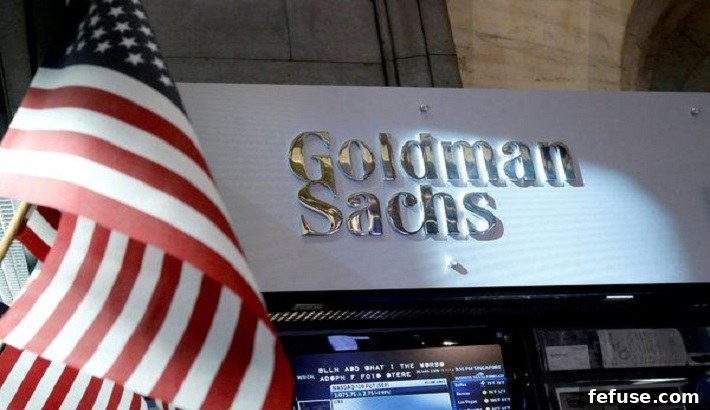
The 1MDB Scandal: Malaysia Files Criminal Charges Against Goldman Sachs and Former Executives
In a significant development stemming from one of the world’s most notorious financial scandals, Malaysia has formally initiated criminal proceedings against Goldman Sachs and two of its former executives. The charges relate to their alleged pivotal role in the systematic ransacking of the state investment fund, 1Malaysia Development Berhad (1MDB), which saw billions of dollars illicitly siphoned away.
Attorney General Tommy Thomas announced that the Malaysian government is seeking multi-billion dollar fines from the prestigious investment bank. These penalties are being pursued for grave breaches of securities laws, specifically alleging that Goldman Sachs made false and misleading statements to investors, facilitating the widespread fraud. Furthermore, Thomas confirmed that his office intends to seek severe prison sentences of up to ten years for the former Goldman Sachs executives implicated: Roger Ng Chong Hwa and Tim Leissner. Leissner, notably, is widely recognized for his marriage to model Kimora Lee Simmons.
Unraveling the Grand Scheme: How 1MDB Funds Were Allegedly Plundered
Prosecutors in both Malaysia and the United States have painstakingly detailed how bond sales orchestrated by Goldman Sachs for 1MDB became a primary conduit for associates of former Malaysian Prime Minister Najib Razak to embezzle billions over several years. Ostensibly established in 2009 with the noble goal of accelerating Malaysia’s economic development through strategic investments, 1MDB swiftly transformed into a vehicle for an elaborate international money-laundering and bribery scheme.
The scandal, initially brought to light by investigative reports from Sarawak Report and The Wall Street Journal, sent shockwaves through Malaysia’s political landscape. It directly contributed to the historic election defeat of Najib Razak and his long-ruling coalition earlier this year, marking a seismic shift in Malaysian governance. Najib himself is now facing a litany of corruption charges, cementing his downfall from the pinnacle of power.
Najib Razak has consistently maintained his innocence, asserting that over $700 million discovered in his personal bank account was merely a political donation from the Saudi royal family. However, U.S. prosecutors have staunchly refuted this claim, presenting evidence that the funds originated directly from 1MDB, a fund over which Najib, as Prime Minister, held ultimate authority and oversight. The discrepancy between these narratives lies at the heart of the prosecution’s case against the former leader.
U.S. legal filings, integral to a Justice Department civil case aimed at recovering assets purchased with misappropriated 1MDB funds, paint a vivid picture of extreme opulence. These documents allege that the stolen money was shamelessly used to finance lavish Hollywood films, acquire a staggering array of luxury goods such as diamond jewelry for Najib’s wife, a superyacht, priceless artworks, and high-end properties spanning multiple continents. This extravagant spending underscored the scale of the alleged embezzlement, transforming public funds meant for national development into instruments of personal indulgence.
Goldman Sachs’ Defense and the Allegations of Negligence
In response to Malaysia’s severe criminal charges, Goldman Sachs has vehemently denied any wrongdoing. Edward Naylor, a spokesperson for the bank, issued a statement articulating their position: “We believe these charges are misdirected and we will vigorously defend them and look forward to the opportunity to present our case.” The firm also reiterated its commitment to cooperate with all authorities actively investigating these complex matters, attempting to project an image of transparency amidst the controversy.
However, Attorney General Thomas’s allegations against Goldman Sachs are precise and damning. He stated that an estimated $2.7 billion was illicitly siphoned from just three bond sales that were meticulously arranged by subsidiaries of Goldman Sachs. Disturbingly, Thomas highlighted that the investment bank received an astronomical $600 million in fees for organizing these bond deals – an amount he claims was several times higher than conventional industry norms, raising immediate questions about the nature of their involvement and the perceived risk associated with these transactions.
Key Players and the Web of Conspiracy
The investigation has meticulously unraveled a complex web of conspiracy involving multiple high-profile individuals. According to Thomas, Tim Leissner and Roger Ng allegedly conspired with Low Taek Jho, widely known as Jho Low. Low is considered the principal architect and alleged mastermind behind the entire 1MDB fraud. Their alleged scheme involved bribing Malaysian government officials to ensure that Goldman Sachs would be selected as the exclusive arranger for the lucrative bond deals. Thomas asserts that not only these individuals but also Goldman Sachs as an institution, were fully aware that the funds generated from these bond sales would inevitably be stolen. “Having held themselves out as the pre-eminent global adviser/arranger for bonds, the highest standards are expected of Goldman Sachs,” the attorney general’s statement underscored, emphasizing the severe breach of trust and professional ethics.
The legal consequences for those involved are already unfolding. Tim Leissner, who once headed Goldman Sachs’ operations in Southeast Asia, pleaded guilty last month in the U.S. to charges of money laundering conspiracy and conspiring to violate foreign bribery laws. This plea came after the Justice Department initiated charges against him, Ng, and Low in connection with the sprawling 1MDB scandal, marking a significant victory for prosecutors in the United States.
Roger Ng Chong Hwa, the other former Goldman executive, was apprehended in Malaysia in early November, signaling the Malaysian authorities’ resolve to bring all alleged perpetrators to justice. However, Jho Low, the enigmatic financier at the center of the scandal, remains at large. Despite his fugitive status, Low has previously maintained his innocence through statements issued via his legal counsel. Malaysian police reported in July that Low had fled Macau, disappearing to an unknown destination, making his capture a primary objective for international law enforcement agencies.
Before he became an international fugitive facing myriad criminal charges, Jho Low was renowned for his extravagant lifestyle, prominently featuring in the exclusive club scenes of New York City and Los Angeles. In 2012, his lavish 31st birthday celebration famously attracted a constellation of Hollywood stars and celebrities, including Leonardo DiCaprio and Kim Kardashian, providing a stark contrast to his current status as a wanted man.
The Broader Implications and Quest for Justice
The 1MDB scandal transcends a mere financial fraud; it represents a profound betrayal of public trust and a glaring example of systemic corruption at the highest levels. The ongoing investigations and legal proceedings by both Malaysian and U.S. authorities, alongside other jurisdictions, highlight a concerted global effort to repatriate the stolen funds and hold accountable all individuals and institutions that facilitated this colossal scheme. The involvement of a global financial titan like Goldman Sachs has brought unprecedented scrutiny to the compliance mechanisms and ethical standards within the investment banking sector.
The fines sought from Goldman Sachs, potentially running into billions, underscore the severe financial penalties that await firms found complicit in such large-scale malfeasance. Beyond the monetary penalties, the reputational damage suffered by the bank and the prison sentences facing its former executives serve as a stark warning to the financial industry about the critical importance of due diligence, ethical conduct, and adherence to anti-money laundering and anti-bribery regulations. The global financial system relies on trust and integrity, and scandals like 1MDB erode that foundation, prompting calls for stronger international cooperation and more stringent regulatory oversight.
The road to full justice and recovery for the people of Malaysia is undoubtedly long and arduous. However, the filing of criminal charges against Goldman Sachs marks a pivotal moment, signaling Malaysia’s unwavering commitment to reclaim what was lost and to ensure that all parties responsible for the 1MDB debacle are held to account, regardless of their status or influence.
NewsSource: economictimes.indiatimes.com