
The Audacious Venice Jewel Heist: Unraveling the Theft of Al Thani Treasures
Venice, Italy – The serene beauty of the historic Doge’s Palace in Venice was shattered recently by an audacious and highly professional jewel theft, sending shockwaves through the international art and security communities. Two exquisite pieces from the renowned Al Thani Collection, a symbol of unparalleled craftsmanship and historical grandeur, were calmly pilfered from a high-security exhibition, leaving Italian officials red-faced and sparking a frantic international manhunt. This brazen act has not only stripped a global collection of its priceless assets but also ignited a crucial debate surrounding the security protocols protecting some of the world’s most valuable cultural artifacts.
A Daring Daylight Robbery: The Stolen Splendor
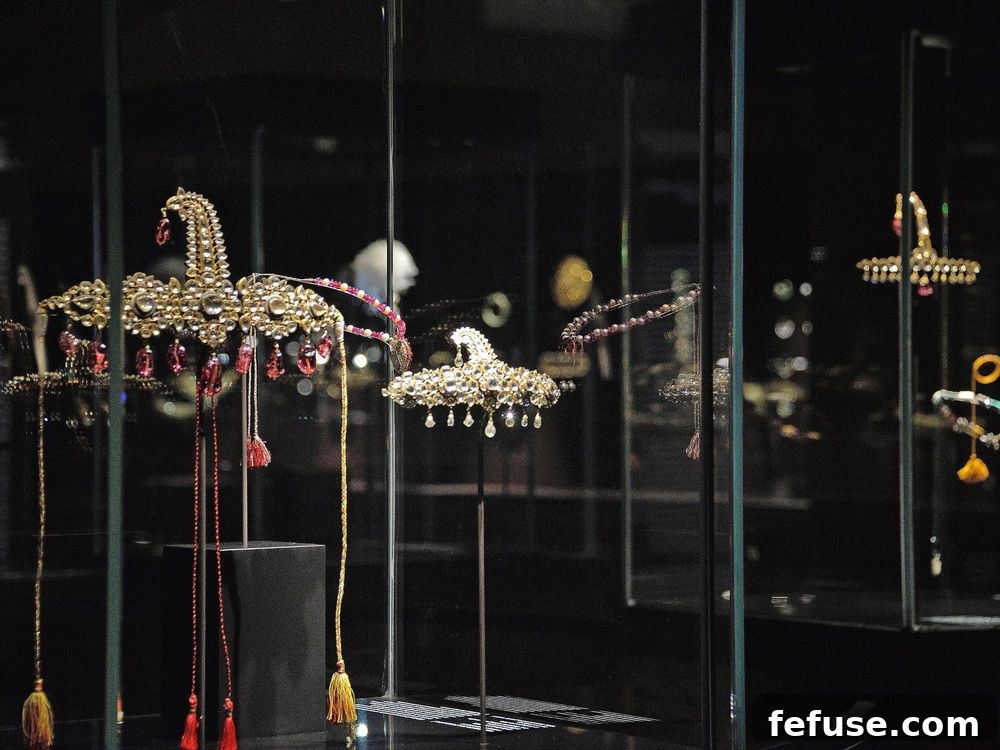
The incident, which occurred amidst the bustling tourist activity of St. Mark’s Square, targeted an exhibition titled “Treasures of the Mughals and the Maharajas,” a showcase of extraordinary Indian and Indian-inspired jewelry. The thieves made off with two items of breathtaking beauty and immense value, meticulously crafted by the exclusive Mumbai jeweler Bhagat Jewelers, celebrated for its unique artistry.
One of the stolen treasures was a delicate, tasseled pendant, an embodiment of refined elegance. It featured a flawless 10-carat diamond, its brilliance accentuated by a captivating ring of deep red rubies and smaller, glittering diamonds. This piece alone was a testament to the pinnacle of jewelry design and gemology, combining precious stones with an intricate setting that spoke volumes of its bespoke origins.
The second stolen item comprised a pair of earrings, equally stunning yet distinct in their allure. These were two magnificent pear-shaped diamonds, each weighing an impressive 30.2 carats. Their substantial size and perfect cut were further enhanced by a surrounding constellation of smaller, irregularly-cut diamonds, suspended in such a way that they mimicked the dazzling effect of starbursts. The minimalist platinum settings, a signature style of Bhagat Jewelers, were ingeniously designed to create the illusion that these magnificent jewels were suspended effortlessly, almost floating in mid-air, a design philosophy that elevates the stones themselves to an ethereal plane.
The Al Thani Collection: A Legacy of Opulence
The jewels were part of the celebrated Al Thani Collection, assembled by Qatar’s Sheikh Hamad bin Abdullah Al Thani. This collection is universally recognized as one of the world’s foremost private collections of Indian and Indian-inspired jewelry, precious stones, jades, and artifacts. Spanning an incredible 400 years, from the opulent Mughal period to the sophisticated designs of the present day, the collection comprises approximately 270 pieces, each telling a story of historical grandeur, cultural exchange, and exquisite craftsmanship.
The collection showcases the evolution of Indian jewelry traditions, from the intricate, jewel-encrusted pieces favored by Mughal emperors to the more modern, Art Deco-inspired creations that emerged in the 20th century. These modern pieces bear witness to the enduring popularity of Indian motifs and gems, which profoundly influenced Western jewelers like Cartier and others throughout the last century, fostering a unique blend of Eastern artistry and Western design sensibilities. The exhibition itself has been a global phenomenon, gracing prestigious venues such as Paris’ Grand Palais, London’s Victoria and Albert Museum, New York’s Metropolitan Museum of Art, and the Miho Museum near Kyoto, Japan, before its ill-fated stop in Venice.
Bhagat Jewelers: Masters of Minimalist Grandeur
Both stolen pieces, designed in 2011 and 2014, were the masterful creations of Bhagat Jewelers. Based in Mumbai, Bhagat Jewelers, under the visionary leadership of Viren Bhagat, has carved a niche as an exclusive jeweler renowned for its unparalleled craftsmanship, exceptional quality gems, and truly one-of-a-kind designs. Bhagat jewels are celebrated for their distinctive aesthetic, often featuring unique, minimal platinum settings that emphasize the inherent beauty and brilliance of the stones themselves, rather than elaborate metalwork.
This minimalist approach creates a mesmerizing effect, making the jewels appear to float, almost unanchored, drawing the eye directly to the inherent splendor of the diamonds, rubies, and other precious stones. Such pieces are not merely jewelry; they are wearable art, and their exquisite design and the rarity of their components mean they can easily fetch into the seven figures at auction, underscoring the immense financial and artistic loss represented by the theft.
The Mechanics of the Heist: Professional Precision
Surveillance footage from Wednesday’s theft at the historic Doge’s Palace painted a chilling picture of calculated precision. The video shows one of the thieves calmly approaching the showcase window, seemingly equipped with a key or a highly sophisticated tool. With unnerving composure, he opened the display, reached in, and pocketed the invaluable jewels. All the while, an accomplice stood nearby, acting as a lookout, maintaining a facade of casual observation amidst the throngs of unsuspecting tourists.
The ease and speed with which the theft was executed point strongly towards a professional operation. Police reports indicate that the alarm system was triggered approximately a minute after the jewels were taken, a crucial window that allowed the thieves ample time to make their escape. This precise timing, combined with their ability to navigate the palace’s security without immediate detection, strongly suggests that the perpetrators were seasoned professionals who had meticulously planned their operation, perhaps having scouted the location beforehand and possessing intimate knowledge of the exhibit’s security vulnerabilities.
Adding to the mystique of the heist, a gold necklace displayed in the same showcase was reportedly left untouched. This selective targeting further supports the theory that the thieves knew precisely what they wanted and were not opportunistic opportunists but rather highly specialized individuals or a syndicate targeting specific, high-value pieces. Their ability to melt seamlessly into the crowd following the theft, disappearing into the labyrinthine streets of Venice, highlights their expertise in evasion and escape.
The Aftermath: Security Embarrassment and a Global Manhunt
The theft has caused significant embarrassment for Italian security officials, particularly given the high profile of the Doge’s Palace and the international significance of the Al Thani Collection. Venice, a city synonymous with history and culture, prides itself on its ability to host world-class exhibitions securely. The incident has raised serious questions about the effectiveness of existing security measures, particularly in historic venues that may present unique challenges for modern security installations.
A comprehensive manhunt has been launched, involving both local and international law enforcement agencies. Investigators are meticulously reviewing surveillance footage, analyzing forensic evidence, and collaborating with Interpol and other international bodies to track down the culprits and recover the stolen treasures. The challenge, however, is immense. Stolen jewels of this caliber often disappear into clandestine networks, making their recovery exceptionally difficult, as they can be dismantled, recut, or sold on black markets to illicit collectors.
This incident serves as a stark reminder of the ongoing threats faced by museums and galleries worldwide. While the Doge’s Palace has a storied history of hosting invaluable art and artifacts, this brazen theft underscores the need for continuous reassessment and upgrading of security protocols, especially for temporary exhibitions featuring extraordinary and easily portable high-value items. The loss extends beyond the financial, impacting cultural heritage and the public’s access to these magnificent works of art.
As the investigation continues, the global art community watches with bated breath, hoping for the safe return of these irreplaceable pieces of history and craftsmanship. The Venice jewel heist will undoubtedly serve as a critical case study, prompting museums and security experts to rethink strategies for protecting our shared heritage against increasingly sophisticated criminal enterprises.