
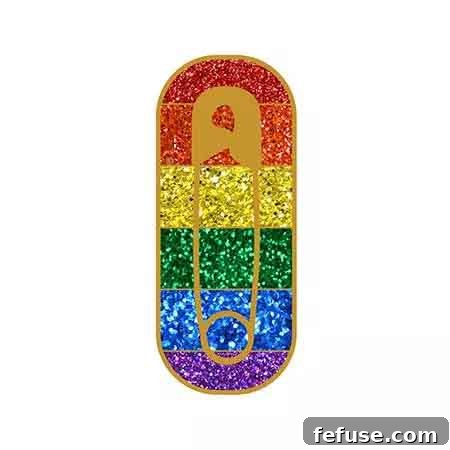
The Symbolic Power of the Safety Pin: A Beacon of Solidarity in Modern Times
The humble safety pin, traditionally a utilitarian fastening device, has unexpectedly emerged from the realms of sewing kits and punk-rock fashion to become a powerful symbol of solidarity, compassion, and anti-hate. Its recent prominence is rooted in a tumultuous political climate, particularly in the wake of the 2016 U.S. presidential election and the United Kingdom’s Brexit vote, which ignited widespread anxieties about social division, intolerance, and disrespect towards marginalized communities.
In a world grappling with increased xenophobia, misogyny, and fear, the simple safety pin has transformed into a quiet yet profound declaration. Wearing one signifies an open-minded stance, a commitment to anti-hate principles, and a visible pledge to respect and support minorities, immigrants, Muslims, women, and anyone feeling vulnerable. It acts as a silent signal, letting others know that the wearer is a safe person, an ally, and a defender of human dignity.
The Genesis of a Movement: From Brexit to #IllRideWithYou
The concept of using the safety pin as a statement of solidarity first gained significant traction in the United Kingdom following the 2016 Brexit referendum. The vote, which led to the UK’s departure from the European Union, was unfortunately followed by a noticeable spike in hate crimes and intolerant behavior against immigrants and minorities. In response, a grassroots movement encouraged individuals to wear a safety pin, signaling their opposition to xenophobia and their support for those affected by the rising hostility. It became a quiet, everyday act of defiance and empathy.
This powerful idea also draws inspiration from Australia’s #illridewithyou movement, which predates the Brexit phenomenon. Initiated in 2014 after a Muslim gunman held people hostage in a Sydney cafe, #illridewithyou saw compassionate Australians offering to accompany Muslims on public transportation, fearing a backlash and ensuring their safety and comfort. Both movements share a common thread: using a simple, visible gesture to offer reassurance and stand against bigotry in moments of heightened fear and uncertainty. The safety pin, therefore, landed on American shores with a pre-established legacy of quiet yet profound activism.
Beyond Utility: The Safety Pin’s Journey in Fashion and Culture
While its recent political connotation is novel, the safety pin is no stranger to symbolic roles, particularly within the world of fashion and jewelry. Its origins trace back to ancient times, with early versions serving practical purposes. However, it was its embrace by the 1970s punk rock movement that truly cemented its status as a rebellious and edgy fashion statement. Punks adorned their clothing and bodies with safety pins, transforming an everyday item into a symbol of anti-establishment sentiment, defiance, and DIY aesthetics.
More recently, the safety pin has transitioned into high fashion and fine jewelry. Renowned designer Rosanne Karmes, through her popular Sydney Evan line, introduced elegant safety pin designs into the luxury market over a decade ago. These pieces often serve as vehicles for charms, offering a playful and personalized touch to fine jewelry collections. This rich history of cultural and fashion adaptation further underscores the safety pin’s versatility and its capacity to carry diverse meanings, making its current incarnation as a symbol of solidarity a natural, albeit unexpected, evolution.
Diverse Voices from the Jewelry Industry: Engagement, Empathy, and Nuance
The safety pin’s emergence as a political symbol has resonated differently across the jewelry industry, prompting introspection and varied responses from designers and retailers alike. Their perspectives offer a fascinating glimpse into how personal convictions, business philosophies, and the desire for social impact intersect.
Jennifer Gandia: Cautious Solidarity and Measured Optimism
Jennifer Gandia, co-owner of Greenwich St. Jewelers in lower Manhattan, embodies a thoughtful approach to the safety pin movement. While her store isn’t currently selling safety pins, she and her staff proudly wear them. For Gandia, this act is a deeply personal one, describing it as “a small gesture in solidarity.” It’s a quiet but visible affirmation of support for those who feel marginalized and scared in a turbulent political climate. This sentiment highlights the emotional power of symbols – their ability to create connection and reassurance without words.
Gandia’s business acumen, however, tempers her enthusiasm for quickly commercializing the trend. She acknowledges that her customers haven’t yet requested safety pins, and she’s hesitant to jump on something “hot.” Her observation, “I want to see if they have legs,” speaks to a desire for authenticity and longevity in movements rather than fleeting fads. This reflects a responsible business approach that prioritizes genuine impact over momentary profit. Despite her cautious stance on stocking the pins, Gandia remains hopeful, actively engaging in other forms of activism, such as contacting local representatives to voice her concerns over political appointments. Her philosophy suggests that while visible symbols are important, sustained action and a long-term commitment to change are equally crucial.
Hannah Becker: Creative Catharsis and Conscious Contribution
In contrast to Gandia’s measured approach, Hannah Becker of Diamondoodles represents a more direct and immediate response to the political climate. Following the presidential election, Becker harnessed her creative talents as a form of “creative catharsis,” channeling her feelings of hopelessness and frustration into action. She began designing and selling enamel safety pin buttons through her Etsy shop, pre-selling over 100 pins shortly after the election.
Becker’s endeavor is not merely about selling a product; it is deeply rooted in social impact. She donates $5 from each sale to six different nonprofit organizations, including Planned Parenthood, the NAACP, and the Human Rights Campaign. This model transforms a purchase into a direct contribution to causes that uphold the values symbolized by the safety pin. For Becker, the “true purpose of the pin is to demonstrate an allegiance—to show that you are a safe person for anyone who feels threatened in our current climate.” Her work exemplifies how individuals can leverage their skills and platforms to foster positive change, offering both a visible symbol of solidarity and tangible financial support to vital organizations. It’s an inspiring example of how personal craft can intersect with powerful social activism.
Rosanne Karmes: A Different Kind of Message – Love, Protection, and Neutrality
Rosanne Karmes, the designer behind Sydney Evan, offers a different, yet equally valid, perspective on the safety pin. Having introduced her sophisticated safety pin designs to the market over a decade ago, Karmes’ initial intent was purely aesthetic and whimsical. For her, the pins were “fun things that make me smile,” serving primarily as elegant vehicles for charms, devoid of any explicit political meaning. Her designs predate the recent solidarity movement, highlighting the evolving interpretations of symbols over time.
Despite a retailer’s request to stock her safety pins post-election in light of the new symbolism, Karmes has consciously chosen to remain politically neutral. Her brand ethos is centered on “love and protection,” a message she believes transcends partisan divides. Karmes emphasizes the importance of unity and respect, stating, “We shouldn’t attack others or unfriend people because of politics; what kind of message is that?” Her stance underscores a different form of solidarity – one that advocates for civility, understanding, and finding common ground, even amidst political disagreement. While not participating in the specific political symbolism of the safety pin, her overarching message of love and protection resonates with the broader humanistic values that the pin has come to represent for many.
Beyond the Pin: The Broader Landscape of Symbolic Activism
The safety pin movement, like many forms of symbolic activism, sparks important conversations about its efficacy and depth. Is wearing a pin enough? Critics might argue that such gestures are superficial, mere “slacktivism” that doesn’t lead to substantial change. However, proponents contend that visible symbols play a crucial role in building community, providing reassurance, and inspiring further action.
The safety pin, at its core, is a starting point. It’s a non-verbal signal that fosters a sense of psychological safety and shared identity among allies. For many, seeing a safety pin offers a moment of relief, a reminder that they are not alone. More importantly, it can serve as a catalyst for deeper engagement. As Jennifer Gandia demonstrates with her calls to local representatives, the pin can be a tangible manifestation of an individual’s commitment to broader civic participation. It bridges the gap between personal belief and public action, reminding wearers and observers alike that visible solidarity can, and often does, lead to more profound forms of advocacy.
The Enduring Message: Unity, Hope, and the Power of a Small Gesture
From its humble origins as a practical fastener to its unexpected transformation into a powerful emblem of social consciousness, the safety pin’s journey reflects our collective desire for unity and respect in challenging times. It stands as a testament to the profound impact a simple object can have when imbued with shared meaning and purpose. Whether worn as a personal statement, crafted as an act of creative resistance, or considered within a framework of broader humanitarian values, the safety pin continues to inspire dialogue about what it means to be an ally, to stand against hate, and to foster a more inclusive world.
The symbolism of the safety pin is a powerful reminder that even the smallest gestures can carry immense weight, sparking conversations, fostering empathy, and lighting pathways toward a more just and compassionate society. It embodies a cautious optimism, a belief that even when things seem to “break down,” there is always the potential for them to “break through” and lead to positive, lasting change.