

In a significant development that has sent ripples through the artisan community and the broader e-commerce landscape, Etsy Wholesale, the once-promising closed online marketplace designed to bridge Etsy sellers with traditional retailers, appears to be on the verge of closure. This platform, renowned for connecting independent makers with high-profile names such as Macy’s, Williams-Sonoma, and West Elm, facilitated a unique avenue for small businesses to scale their operations and reach a mainstream audience.
The signs of its impending shutdown have been accumulating for months, painting a concerning picture for those who relied on its services. According to reports from Bloomberg, a noticeable shift occurred approximately six months prior, transforming the once vibrant and interactive service into a seemingly dormant entity. What was once an energized platform, actively engaging its user base, now projects an image of abandonment, teetering precariously on the brink of extinction. This abrupt change has left many sellers in a state of uncertainty, questioning the future of their wholesale ventures.
Evidence pointing towards this decline is both compelling and consistent. Sellers attempting to contact the service have reported their emails going unanswered, a stark contrast to the platform’s previous responsiveness. Furthermore, updates to the Etsy Wholesale website have ceased entirely, suggesting a lack of ongoing maintenance or development. Perhaps most telling, a popular Instagram account dedicated to showcasing merchants’ products through Etsy Wholesale, which once boasted a lively presence, went dormant and has since been completely deleted. These realities, as reported by various outlets, have remained unchanged, solidifying the perception that Etsy Wholesale is indeed winding down.
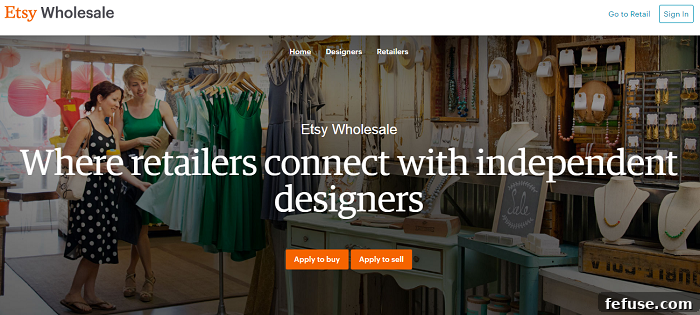
Etsy Wholesale: A Vision for Connecting Artisans with Retail Giants
The inception of Etsy Wholesale was rooted in an ambitious vision championed by former CEO Chad Dickerson. Joining Etsy in 2011 and subsequently leading the company through its highly anticipated public offering in 2015, Dickerson was known for his innovative approach and commitment to expanding Etsy’s ecosystem. His goal was clear: to empower Etsy’s vast community of artisans by providing them with a direct conduit to the world of traditional brick-and-mortar retail. This initiative was designed not just as another marketplace, but as a strategic bridge, enabling independent creators to access larger markets and secure significant wholesale orders, thereby fostering growth and professionalization within the handmade economy.
Through Etsy Wholesale, thousands of small businesses and individual artisans gained unprecedented access to an exclusive network of established retail brands. The platform allowed these makers to streamline their wholesale operations, manage orders efficiently, and present their unique products to a curated list of buyers from prominent stores. For many, it represented a golden opportunity to transcend the limitations of direct-to-consumer sales and establish their brands within the competitive mainstream retail environment. The potential for Etsy sellers to see their handcrafted items displayed in the windows of Macy’s or on the shelves of Williams-Sonoma was a powerful testament to Dickerson’s vision for the company’s future.
A Change at the Helm: From Growth Ambition to Fiscal Prudence
However, the trajectory of Etsy, and by extension Etsy Wholesale, took a decisive turn with a change in leadership. In May of last year, Chad Dickerson was replaced by Josh Silverman, who stepped in as the new CEO. This leadership transition was not without its turbulence, occurring amidst growing scrutiny from board members and investors regarding the company’s financial performance. Dickerson’s tenure, while marked by innovation and expansion into various programs, had faced criticism for what some perceived as overspending on initiatives that were not generating sufficient revenue or immediate returns.
Investor Pressure and Strategic Realignment
A particularly vocal critic was hedge fund Black-and-White Capital LP, which, at the time, held a 2 percent stake in Etsy. In a scathing letter obtained by Bloomberg, the fund articulated its concerns, stating, “The company’s historical pattern of ill-advised spending has completely obfuscated the extremely attractive underlying marketplace business model.” This sentiment underscored a broader demand for fiscal discipline and a sharper focus on Etsy’s core profitability. The pressure from investors like Black-and-White Capital LP became a driving force behind the strategic realignment that would characterize Silverman’s leadership.
Upon taking the reins, Silverman was tasked with an explicit mandate: to orchestrate a rapid turnaround for the company. His response was swift and decisive, marked by a series of cost-cutting measures and a recalibration of Etsy’s strategic priorities. These actions included multiple rounds of layoffs aimed at streamlining operations and significantly reducing overhead. Furthermore, Silverman initiated the discontinuation of several programs that were deemed non-essential or underperforming. Among these were the company’s internship program and Etsy Studio, a Google Hangouts–style tutorial site that aimed to provide creative workshops and educational content for the community. These early decisions signaled a clear shift towards a more financially conservative approach, prioritizing the core business over experimental ventures.
Strategic Re-evaluation: Focusing on the Core E-commerce Marketplace
In this context, the potential shutdown of Etsy Wholesale appears to be a calculated move, forming part of a larger, deliberate plan to rein in the ambitious experiments launched under Dickerson’s leadership. Silverman’s administration has made it abundantly clear that the company’s primary focus must squarely return to its foundational strength: the consumer-facing e-commerce site. This strategic pivot is driven by the desire to optimize resources, enhance profitability, and cater directly to the demands of investors who seek a lean, efficient, and highly profitable marketplace model.
The rationale behind abandoning a platform like Etsy Wholesale, despite its apparent potential, likely stems from a critical assessment of its return on investment and resource allocation. While connecting sellers to large retailers seems beneficial, the operational complexities, the specialized support required, and the potentially slower conversion cycles of the wholesale market might have been deemed a significant drain on resources that could otherwise be channeled into enhancing the main Etsy platform. By divesting from non-core initiatives, Etsy aims to strengthen its position as the premier global marketplace for unique and creative goods, ensuring that every dollar spent and every effort expended directly contributes to the growth and efficiency of its central e-commerce engine.
This reinforced commitment to the core consumer-facing marketplace involves several key aspects. It means redoubling efforts on improving the buyer and seller experience on the main site, investing in marketing strategies that drive direct traffic and sales, and developing features that enhance discoverability and transactional efficiency. For Etsy, simplifying its business model and sharpening its focus is seen as the most direct path to sustainable financial health and long-term shareholder value, even if it means sacrificing ancillary ventures that once seemed promising.
The Impact on Etsy Sellers: Navigating a New Landscape
The impending closure of Etsy Wholesale carries significant implications for the thousands of artisans and small businesses that either utilized the platform or aspired to. For many Etsy sellers, particularly those categorized as “power sellers” due to their high volume and professional operations, Etsy Wholesale represented a vital channel for growth and a credible pathway into the lucrative world of physical retail. The prospect of losing this direct link to traditional brick-and-mortar stores severs a tenuous but crucial tie that many hoped would elevate their brands beyond online-only sales.
The aspirations of these power sellers often extend beyond the digital realm. They envision their handcrafted goods displayed in boutiques, department stores, and specialty shops, reaching a broader demographic that might not actively seek out online marketplaces. Etsy Wholesale provided a structured, reputable environment to engage with such buyers. Without it, these sellers face the daunting challenge of independently navigating the complex and often opaque landscape of wholesale distribution. This means individually cultivating relationships with buyers, managing complex order processes, and marketing their wholesale offerings without the established infrastructure and prestige that Etsy Wholesale once offered.
The loss of Etsy Wholesale will compel sellers to seek alternative strategies for wholesale outreach. This could lead to a fragmented approach, with increased competition on other B2B platforms, or a return to more traditional methods such as attending trade shows, direct outreach to independent boutiques, or even developing their own standalone wholesale portals. The ecosystem for small businesses seeking to expand into wholesale is dynamic, and while alternatives exist, none may offer the same blend of brand recognition and curated access that Etsy Wholesale once promised. This shift may inadvertently push some sellers to focus solely on their direct-to-consumer models, potentially limiting their growth potential or requiring a complete re-evaluation of their business strategies in the face of this significant change.
The Competitive Wholesale Landscape: Emerging Players Fill the Void
Interestingly, Etsy’s potential retreat from the wholesale market comes at a time when several competitors are rapidly gaining ground, demonstrating a robust demand for such services among small and independent brands. These emerging platforms are not constrained by the same stock market fluctuations or the strategic pressures to divest from non-core assets that Etsy currently faces. Their success highlights the ongoing need for effective wholesale marketplaces specifically tailored for unique, handmade, and small-batch products.
Indigo Fair: A New Player Backed by Experienced Minds
One notable contender is Indigo Fair, a marketplace launched by former Square Inc. employees. Leveraging their extensive experience in payment processing and small business solutions, the founders of Indigo Fair have developed a platform that aims to simplify wholesale purchasing for retailers and selling for brands. They focus on creating a seamless experience, often offering incentives like free returns and net payment terms to attract both buyers and sellers. Their approach suggests a deep understanding of the practical pain points in the wholesale industry, positioning them as a strong alternative for brands looking to expand their reach to physical stores without the complexities of traditional wholesale arrangements.
Hubba: Empowering Small Brands with Significant Funding
Another significant player is Toronto-based Hubba. Having already raised an impressive $30 million in funding, Hubba’s mission is explicitly focused on connecting handmade and small brands with brick-and-mortar retailers. Hubba provides a comprehensive platform for brands to showcase their products, manage inventory, and connect with a wide network of retail buyers. Their substantial investment capital allows for continuous innovation and aggressive market expansion, enabling them to offer robust features and support to their users. Hubba’s growth underscores the market’s appetite for dedicated wholesale solutions that empower independent creators to thrive in the physical retail space, directly contrasting Etsy’s current strategic withdrawal.
The rise of these specialized wholesale platforms prompts a critical question: can Etsy truly afford to keep cutting programs that cater to the growth aspirations of its most dedicated sellers, especially when competitors are actively investing in and succeeding within this very niche? While focusing on the core business might appear fiscally sound in the short term, neglecting a segment where rivals are flourishing could represent a missed opportunity for long-term growth and seller loyalty. The strategic choices made today will undoubtedly shape Etsy’s competitive position in the evolving landscape of artisan commerce.
Etsy’s Financial Turnaround: A Double-Edged Sword?
It is crucial to acknowledge that Josh Silverman’s aggressive cost-cutting and strategic repositioning have yielded positive financial results, at least in the short term. The company has, indeed, reported three consecutive quarters of revenue growth, a clear indicator that the belt-tightening measures and renewed focus on the core marketplace have resonated positively with investors and analysts. This financial turnaround reflects a successful execution of the mandate given to Silverman: to stabilize and grow Etsy’s profitability by streamlining operations and concentrating on its most lucrative assets.
However, this apparent success comes with a lingering question: will these financial gains come at a hefty long-term cost? While shedding non-performing or resource-intensive programs can boost immediate financial metrics, it might also stifle future innovation, limit diversification, and potentially alienate a segment of the seller community that relies on such expanded services. The balance between fiscal discipline and fostering an environment for growth and opportunity is delicate. Abandoning a platform like Etsy Wholesale, which aimed to facilitate a significant revenue stream for its sellers and extend Etsy’s brand presence into new markets, could be perceived as a missed opportunity for future expansion, even if it brings immediate financial relief.
The strategic choice reflects a fundamental dilemma: whether to focus intensely on maximizing the efficiency and profitability of an existing core business, or to invest in new avenues that, while riskier and more resource-intensive, could unlock entirely new growth territories. For Etsy, the current strategy prioritizes the former, betting that a stronger, more focused core marketplace will ultimately benefit all stakeholders, despite the closure of ventures like Etsy Wholesale.
The Future of Etsy: A Crossroads for Creativity and Commerce
The potential shuttering of Etsy Wholesale marks a significant strategic crossroads for Etsy, highlighting a clear shift from ambitious expansion to focused efficiency. This decision, driven by new leadership and investor demands for increased profitability, underscores Etsy’s commitment to fortifying its core consumer-facing e-commerce marketplace. While the financial results of Josh Silverman’s tenure have been positive, the long-term implications for the company’s ecosystem and its vast network of sellers remain a subject of considerable debate.
For the thousands of artisans and small businesses within the Etsy community, the closure of Etsy Wholesale signifies the loss of a valuable, albeit challenging, pathway to traditional retail. It compels them to independently seek out new avenues for wholesale distribution in an increasingly competitive market, where players like Indigo Fair and Hubba are actively filling the void. This strategic pivot by Etsy might streamline its operations and boost its bottom line, but it also raises questions about its broader vision for empowering creative entrepreneurs in an evolving retail landscape.
Ultimately, Etsy’s future success will depend on its ability to strike a delicate balance: maintaining fiscal discipline while continuing to nurture the creativity and commercial aspirations of its sellers. The ongoing narrative of Etsy is a testament to the dynamic interplay between innovation, market pressures, and the ever-changing demands of the digital economy, proving that even established platforms must constantly adapt to remain relevant and prosperous.
(Top image: An Etsy web page, courtesy of Etsy)