
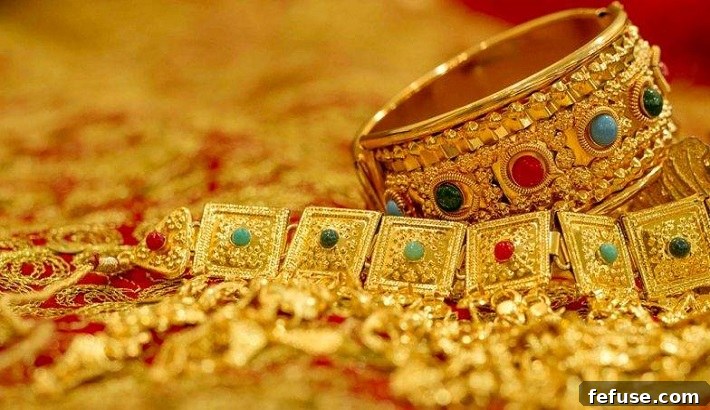
The Evolving Landscape of India’s Gold Jewellery Market: An ICRA Perspective
India, a nation deeply rooted in tradition and cultural grandeur, holds an unparalleled global position in the gold jewellery market. Gold, more than just an adornment, is intrinsically woven into the fabric of Indian society, serving as a symbol of wealth, prosperity, and auspiciousness. It plays a pivotal role in every major life event, from births and weddings to religious festivals, making the country one of the largest consumers of gold worldwide. Against this vibrant backdrop, ICRA maintains a stable outlook on the gold jewellery retail industry, underscoring the sector’s inherent resilience despite navigating periods of fluctuating demand and evolving regulatory landscapes.
ICRA’s Stable Outlook Amidst Dynamic Market Shifts
The financial year 2018 proved to be a robust period for the Indian gold jewellery sector, witnessing a strong 9% volume growth. This impressive performance was fueled by a confluence of factors, including a relatively stable economic environment, robust consumer confidence, and the enduring cultural significance of gold in Indian households. However, the subsequent year presented a more subdued picture, with overall gold jewellery demand experiencing a noticeable slowdown. Jewellery sales during the critical festive period, spanning August to November 2018 – a time traditionally marked by heightened purchasing activity for major festivals like Diwali and Dussehra, and the auspicious onset of the wedding season – were notably sluggish. Several interconnected factors contributed to this deceleration, creating a challenging environment for retailers across the nation.
Foremost among these challenges were the elevated gold prices. Gold, being a highly price-sensitive commodity in the Indian market, often sees consumers deferring non-essential or large-ticket purchases when prices surge. A significant increase of over 6% in gold prices during the preceding year directly impacted consumption demand, causing many potential buyers to adopt a cautious ‘wait-and-watch’ approach in anticipation of price corrections. This apart, regional adversities played a role; for instance, the devastating floods in Kerala significantly dampened consumer sentiment and purchasing power in one of India’s key gold-consuming states, thereby impacting overall national sales figures. Furthermore, a lesser number of auspicious days (known as Shubh Muhurats) in the Hindu calendar for weddings and other important ceremonies also contributed to the overall moderation in demand, as these dates traditionally dictate the timing of significant jewellery purchases, especially for bridal and ceremonial wear.
Beyond these immediate demand-side pressures, the supply side and operational aspects of the industry also faced headwinds. The broader gems and jewellery sector, including gold retail, came under increased scrutiny from banks and financial institutions. This heightened cautiousness in lending, characterized by enhanced due diligence and stringent checks on credit quality and inventory quality, emerged following widely reported instances of fraud involving a few lenders with exposures to leading diamond jewellers and some gold jewellery retailers, particularly in South India. This tightened credit environment significantly curtailed the store expansion plans of many players, especially those operating in the unorganized sector, and also negatively impacted their working capital positions, further exacerbating the already challenging market conditions and fostering a move towards greater financial discipline.
Understanding India’s Diverse Gold Demand: Rural vs. Urban Dynamics
The pattern of gold jewellery demand in India is remarkably diverse, varying significantly across rural and urban markets. This divergence extends beyond just the quantity of gold bought to encompass the type of jewellery preferred, the desired purity levels, and even the strategic timing of purchases. Given that approximately 65% of India’s vast population resides in rural areas, the economic health of the agricultural sector directly translates into a substantial portion of the national gold demand. Favourable farm output over the past two years, largely on the back of good monsoons, has served as a significant positive trigger for rural demand. For rural households, gold jewellery is not merely an adornment but a traditional and tangible store of wealth, a secure asset that can be readily liquidated during times of financial need or proudly passed down through generations, embodying family heritage and security.
Conversely, urban demand for gold jewellery has been steadily gaining traction, propelled by the twin engines of rising per capita income and India’s significant demographic dividend. As urban populations experience increased disposable incomes and rapidly evolving lifestyles, their consumption patterns shift beyond purely traditional investments. Gold jewellery in urban centers often reflects contemporary fashion trends, aspirational buying, and a distinct preference for branded, lighter, and more design-centric pieces suitable for daily wear, professional settings, or specific social occasions beyond traditional weddings. The younger, working demographic in urban areas, with a higher propensity for discretionary spending and a greater exposure to global trends, contributes significantly to this segment, driving demand for innovative designs, fusion jewellery, and diverse collections that blend tradition with modernity.
The Seasonal Rhythms and Price Sensitivity of Gold Jewellery Purchases
While gold jewellery buying occurs throughout the year, there is a pronounced skew towards specific periods, particularly between September and January. This five-month window encompasses a multitude of major Indian festivals such as Navratri, Dussehra, and Diwali, alongside the peak marriage season that commences post-monsoons. These occasions are inextricably linked with the tradition of buying and gifting gold, making them critical periods for retailers who prepare extensively with special collections and marketing campaigns. Beyond these strong seasonal influences, several other key determinants impact consumer purchasing decisions, including the prevailing gold price, overall inflation rates, and the hierarchy of household needs and priorities.
Consumers in India are renowned for being highly strategic in their gold purchases, often timing them to coincide with auspicious dates, known as `Shubh Muhurats`, or periods of perceived lower gold prices. This acute price sensitivity is a defining characteristic of the Indian market; a sustained increase in gold prices almost invariably leads to a deferment of purchases, as consumers recalibrate their budgets or await more favorable market conditions. Conversely, a dip in prices can trigger a significant surge in demand, as consumers look to capitalize on perceived value and secure their assets. The industry constantly monitors these price fluctuations, as they can significantly impact sales volumes and revenues, especially during crucial festive and wedding seasons when buying sentiment is already high. Inflation also plays a crucial role, as it affects the real value of savings and the disposable income available for discretionary purchases like gold jewellery, influencing overall consumer confidence and spending patterns.
The Formalization Drive: Shifting Tides from Unorganized to Organized Sector
Perhaps one of the most transformative trends shaping the Indian gold jewellery market in recent years has been the accelerated formalization of the sector. While overall demand remained largely subdued in the period under review, the performance of organized players, as indicated by ICRA’s comprehensive sample set, was notably better. This divergence highlights a significant and ongoing shift from the fragmented, unorganized trade to the more structured and transparent organized sector. This transition has been notably propelled by two landmark policy interventions by the Indian government: currency demonetisation in 2016 and the subsequent implementation of the Goods and Services Tax (GST) in 2017.
Demonetisation brought a temporary disruption but ultimately served as a catalyst, pushing transactions towards greater transparency and digital modes. This made it inherently harder for the unorganized sector, which traditionally relies on cash-heavy and informal practices, to operate effectively. The subsequent introduction of GST further leveled the playing field, mandating proper invoicing, standardized taxation, and comprehensive tax compliance across the entire value chain. These stringent regulatory measures created a more structured, accountable, and transparent business environment, making it increasingly challenging and less profitable for unorganized players who often operated outside the formal tax framework. For consumers, the accelerating shift towards organized retailers is also driven by a multitude of compelling advantages.
Organized players offer robust assurances on quality and purity, often backed by certifications like BIS Hallmark, which instills greater trust and confidence in buyers, particularly for high-value purchases. They provide a significantly wider design range, catering to diverse tastes and rapidly evolving fashion trends, from traditional heavy bridal sets to contemporary lightweight everyday wear and specialized occasion jewellery. The rising preference for branded and fashion jewellery, coupled with professional retail experiences, superior customer service, and modern payment options, further supports the growth of organized trade. As a direct result, ICRA explicitly expects these ongoing regulatory measures and evolving consumer preferences to continue accelerating the formalization of the sector. This continuous and significant shift is anticipated to further consolidate the market shares of organized players, firmly establishing their position as the dominant and future-facing force in the dynamic Indian gold jewellery retail landscape.
Medium to Long-Term Growth Prospects: A Resilient Future
Looking beyond the immediate challenges and transitional phases, the medium to long-term outlook for gold jewellery demand growth in India remains remarkably robust, projected at a healthy 6-7%. This optimistic forecast is underpinned by a confluence of enduring and emerging factors that are strategically poised to sustain the industry’s upward trajectory, demonstrating the inherent resilience and potential of the market.
Firstly, the deeply entrenched cultural underpinnings of gold in Indian society provide an unshakeable and continuous foundation for demand. Gold’s irreplaceable role in weddings, religious festivals, and as a treasured generational asset is unlikely to diminish, ensuring a consistent and strong base demand that transcends economic cycles. Secondly, India’s rapidly evolving lifestyle, particularly evident in urban and semi-urban areas, is leading to higher discretionary spending. As household incomes rise, so does the propensity to invest in aspirational items and luxury goods, with gold jewellery often topping the list. The growing disposable income across various consumer segments will continue to fuel this demand, moving beyond purely traditional purchases to include fashion and aspirational buying.
Furthermore, India’s favourable demographic dividend, characterized by a large and continually growing young, working-age population, presents a significant and sustained opportunity. This demographic cohort, with its increasing earning potential, evolving consumer preferences, and desire for modern consumption, will be a key driver for future jewellery purchases, both for traditional occasions and as expressions of personal style. Lastly, the growing penetration and increasing sophistication of the organized sector will contribute significantly to overall market expansion and professionalization. Organized players, with their enhanced ability to innovate in design and retail experience, offer diverse and certified products, ensure transparency in transactions, and strategically expand their retail footprint across the nation, are exceptionally well-positioned to tap into both existing and new consumer segments, driving comprehensive market growth.
In conclusion, while the Indian gold jewellery market experiences periodic fluctuations influenced by global economic conditions, domestic gold prices, and regional events, its fundamental demand drivers remain profoundly strong and deeply rooted in cultural values. The ongoing formalization of the sector, meticulously driven by impactful regulatory reforms and steadily changing consumer preferences, is set to redefine the competitive landscape, paving the way for organized players to capture an ever-larger market share. With its enduring cultural significance, steadily rising incomes, and a dynamic, youthful population as its unwavering pillars, the sector is exceptionally well-poised for sustained and robust growth, affirming its crucial status as a cornerstone of India’s vibrant retail economy and a symbol of its enduring prosperity.