
Tiffany & Co. Navigates Challenging Q3 Amid Global Headwinds and Strategic Adjustments
Luxury jeweler Tiffany & Co. faced a complex and challenging third quarter, reporting financial results that underscored both the resilience of its brand in key markets and the significant headwinds presented by geopolitical events. While overall global sales remained flat year-over-year, a deeper dive into the figures reveals a landscape of contrasting performances across different regions and product categories. The Hong Kong protests, in particular, emerged as a major factor impacting the company’s worldwide performance, necessitating strategic agility and a clear focus on core markets.
The Hong Kong Impact: A Significant Headwind for Luxury Retail
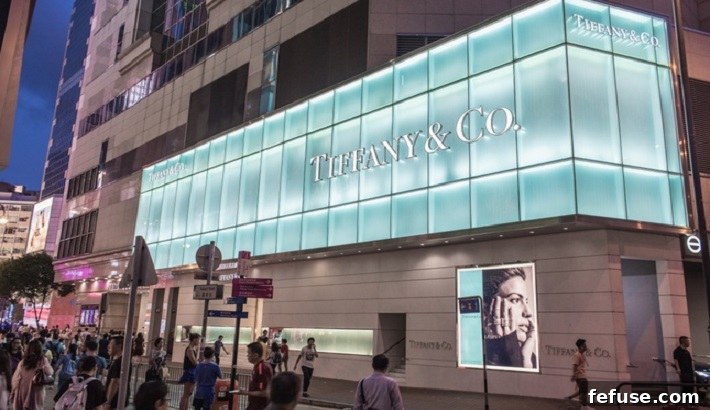
The unrest that gripped Hong Kong during the third quarter had a profound and undeniable impact on Tiffany & Co.’s financial results. The vibrant city, historically a crucial hub for luxury retail in Asia, experienced widespread protests that severely disrupted tourism and local consumer spending. For Tiffany, this translated directly into a drag on its global sales figures. The company reported that worldwide net sales of $1 billion and comparable sales were unchanged from the prior year. However, when the volatile Hong Kong market was excluded from the calculations, the picture shifted dramatically. Excluding Hong Kong, worldwide net sales and comparable sales impressively increased by 4 percent and 3 percent, respectively. This stark contrast highlights the significant adverse effect of the Hong Kong situation, masking an otherwise healthy underlying business performance in other parts of the world. It underscores the vulnerability of global luxury brands to regional socio-political instability, especially in high-volume, tourist-dependent markets.
Unpacking the Financials: Sales and Earnings Overview
Beyond the Hong Kong specific impact, Tiffany’s broader financial metrics for the third quarter revealed a period of consolidation and adjustment. Worldwide net sales for the quarter were unchanged from the prior year, holding steady at $1 billion. Looking at the year-to-date performance, net sales saw a slight decrease of 2 percent. This flat to slightly declining revenue trend indicates a challenging environment, where growth in some areas was largely offset by softness in others, amplified by the situation in Hong Kong.
Net earnings, a crucial indicator of profitability, declined in both the third quarter and the year-to-date period. This decline was attributed to several factors. Lower operating margins played a significant role, suggesting increased costs or less efficient operations relative to sales. Additionally, the effective income tax rate saw fluctuations; it was higher for the third quarter compared to the prior year, contributing to the earnings dip, while being slightly lower in the year-to-date period. These shifts in profitability metrics signal a period where Tiffany was absorbing external shocks while simultaneously investing in future growth, impacting its immediate bottom line. Managing these pressures requires a delicate balance of cost control, strategic pricing, and targeted marketing efforts to maintain brand desirability and market share.
Regional Performance: Growth in China, Softness in the Americas
CEO Alessandro Bogliolo’s insights shed further light on the nuanced regional performance, painting a picture of a global business with distinct market dynamics. He noted, “Our underlying business remains healthy with sales attributed to local customers on a global basis growing in the third quarter, led by strong double-digit growth in the Chinese Mainland offset in part by softness in domestic sales in the Americas.” This statement is critical for understanding Tiffany’s strategic focus and market resilience.
The Chinese Mainland emerged as a beacon of strong performance, delivering robust double-digit growth. This highlights the increasing importance of the Chinese consumer for luxury brands globally, not just for purchases made abroad, but increasingly within their home market. Tiffany’s ability to capitalize on this burgeoning demand domestically in China, despite global uncertainties, demonstrates the success of its localized strategies and brand appeal within this vital market. This growth is particularly encouraging as it suggests a shift towards local consumption, reducing dependency on outbound tourism for sales.
Conversely, the Americas market, traditionally a stronghold for Tiffany, experienced softness in domestic sales. This could be attributed to various factors, including a mature market, shifting consumer preferences, economic uncertainties, or increased competition. For a brand like Tiffany, maintaining momentum in its home market is paramount, and addressing this softness likely involves targeted marketing campaigns, innovative product offerings, and enhanced customer experiences to re-energize local demand. The balance between strong growth in emerging markets like China and the need to invigorate established markets like the Americas is a constant challenge for global luxury retailers.
Product Category Performance and Strategic Focus
A detailed look at product category performance offers further granularity into consumer preferences and market trends. Jewelry categories sales in the third quarter and year-to-date were unchanged for both periods, indicating a stable but not growing overall demand for Tiffany’s core offerings. However, within these broad categories, distinct trends emerged.
Engagement jewelry, a foundational pillar of the Tiffany brand, remained unchanged in Q3 but saw a 3 percent decline year-to-date. This segment is often sensitive to economic sentiment and shifting generational preferences regarding marriage and spending on traditional symbols. Maintaining its leadership in this iconic category requires continuous innovation, appealing to contemporary tastes while preserving its timeless heritage. On the other hand, designer jewelry sales showed a positive trajectory in the short term, increasing 1 percent during the quarter, signaling success with newer collections or specific designer collaborations. However, this was tempered by an 8 percent decline year-to-date, suggesting that while some novelties resonated, the broader designer segment faced longer-term challenges or perhaps a difficult comparison period. These fluctuations underscore the importance of a diverse product portfolio and the continuous need to introduce fresh, desirable collections that resonate with a wide array of consumers.
CEO’s Vision: Brand Amplification and Future Outlook
In response to the challenging market conditions, CEO Alessandro Bogliolo emphasized Tiffany’s ongoing commitment to brand amplification and strategic product launches. He highlighted key initiatives aimed at expanding the brand’s reach and appeal: “We are continuing to amplify the Brand with the recent colorful extension of Tiffany T, the launch of the men’s collection, the unveiling of the Tiffany & Love fragrance pillars and our ‘Very, Very Tiffany Holiday campaign.'”
These initiatives are critical for several reasons. The “colorful extension of Tiffany T” likely aims to invigorate a popular, modern collection, attracting a younger and fashion-forward demographic with fresh designs and vibrant aesthetics. The launch of a dedicated men’s collection represents a strategic move to capture a growing segment of the luxury market, diversifying Tiffany’s traditional, predominantly female-centric offerings. This taps into the increasing trend of men investing in fine jewelry and accessories. Furthermore, the introduction of the Tiffany & Love fragrance pillars expands the brand’s presence in the lucrative beauty sector, leveraging its iconic name to reach a broader audience through accessible luxury products. Finally, the “Very, Very Tiffany Holiday campaign” is a seasonal staple, designed to capitalize on peak holiday spending, reinforcing the brand’s image as the ultimate destination for gifting and celebratory occasions. These combined efforts demonstrate a proactive strategy to innovate, diversify, and reinforce Tiffany’s position as a leading global luxury brand in a dynamic consumer landscape.
Navigating the Luxury Landscape: Challenges and Resilience
Tiffany & Co.’s Q3 performance is a microcosm of the broader challenges and opportunities facing the global luxury industry. Brands are increasingly navigating a complex environment characterized by geopolitical tensions, shifting consumer demographics, the rise of e-commerce, and the imperative for sustainability. While the Hong Kong protests presented an acute external shock, the varying regional performances and product category trends point to deeper strategic imperatives.
The strength in the Chinese Mainland underscores the shift in global luxury power dynamics, making localized engagement and digital strategies crucial. The softness in the Americas suggests the need for continued innovation and customer experience enhancements in mature markets. Tiffany’s proactive brand amplification through new collections and campaigns is a testament to its commitment to staying relevant and desirable. In an industry where heritage meets modernity, the ability to adapt to evolving consumer tastes while preserving core brand values will determine long-term success. Despite the Q3 headwinds, Tiffany’s strategic direction, focusing on product innovation, market diversification, and strong brand messaging, positions it to continue navigating the complexities of the luxury landscape with resilience and a clear vision for growth.
News Source: idexonline