
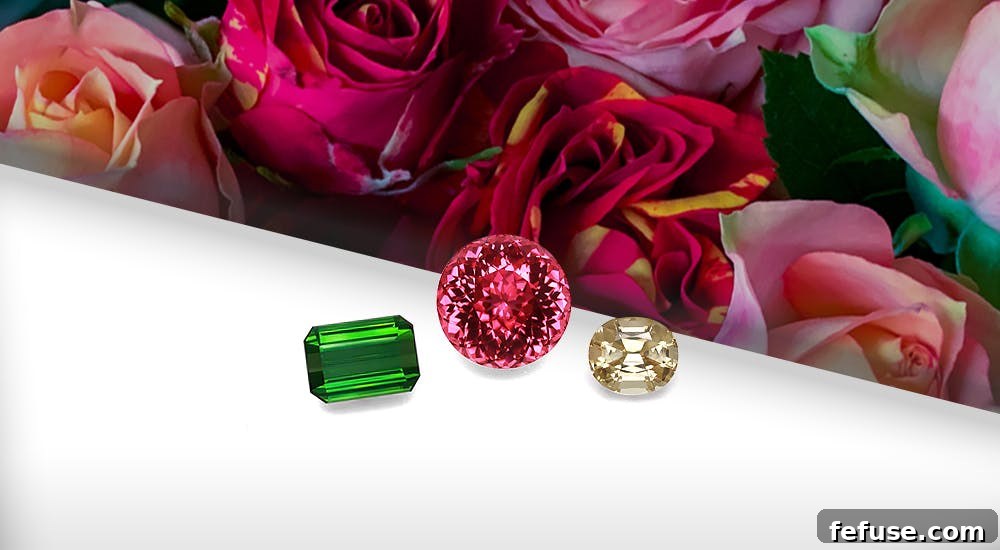
Tourmaline, a gemstone celebrated for its astonishing spectrum of colors, has long captivated gem enthusiasts and jewelers alike. Ranging from vibrant pinks and deep reds to serene green tourmaline and mesmerizing blues, this mineral offers an unparalleled palette found in few other gemstones. As one of the most common gemstones discovered on Earth, its accessibility, combined with its diverse beauty, has secured its place as a beloved choice for fine jewelry. Recently, however, the emergence of exquisite Tourmaline from the Congo region has ignited a massive surge in demand, particularly for its captivating pastel-colored varieties, bringing renewed attention and excitement to the gemstone market.
The Allure of Tourmaline: A Symphony of Colors and History
Tourmaline is not just a single gemstone, but a group of closely related mineral species, each contributing to its vast color range. Its name, derived from the Sinhalese word “turmali,” meaning “mixed gems,” perfectly encapsulates its incredible diversity. For centuries, tourmaline was often mistaken for other precious stones due to its wide array of hues; pink and red tourmalines were frequently confused with rubies, while green varieties were sometimes identified as emeralds. It wasn’t until the 19th century that scientists fully recognized tourmaline as a distinct mineral species. This rich history of discovery and misidentification only adds to the mystique of a gem that truly offers something for everyone.
Today, tourmaline is treasured not only for its beauty but also for its unique properties. Its ability to exhibit multiple colors within a single crystal, known as pleochroism, means that the stone can appear to change color when viewed from different angles, adding an intriguing dynamic to any piece of jewelry. This characteristic, coupled with its relatively good durability, makes tourmaline a versatile and appealing choice for designers and collectors. The gemstone’s consistent popularity stems from this combination of historical intrigue, scientific uniqueness, and undeniable visual appeal.
The Rise of Congo Tourmaline: Pastel Perfection Redefines Elegance
In recent years, the Democratic Republic of Congo has emerged as a significant source of exceptionally beautiful tourmaline, particularly those exhibiting delicate pastel shades. These Congo Tourmalines have rapidly ascended to the forefront of the gemstone market, creating a significant “boom” due to their unique aesthetic. Among these, the blue tourmaline originating from Congo is currently considered one of the hottest gems in the industry. Its vibrant yet soft blue tones, often coupled with exceptional clarity, make it highly sought after. When expertly cut, these fine gemstones achieve an extraordinary brilliance and sparkle that is simply breathtaking. Jewelry designers are particularly enamored with these contemporary colors, recognizing their potential to create truly stunning and innovative jewelry pieces that stand out.
The appeal of Congo Tourmaline lies in its ability to offer a sophisticated alternative to more traditional vibrant hues. The pastel palette, encompassing soft blues, delicate greens, and subtle pinks, lends itself perfectly to modern jewelry aesthetics, appealing to a clientele that appreciates understated elegance and unique charm. These gems bring a fresh, contemporary feel to classic designs, allowing designers to push boundaries and craft pieces that resonate with current fashion trends while retaining timeless beauty.
Unveiling the “Neon Glow”: Why Tourmaline Captivates
One of the most distinguishing features contributing to the immense popularity of certain tourmalines, especially those from newer sources like Congo, is a special optical phenomenon often referred to as the “neon glow.” This captivating effect gives the gemstone an internal luminescence, making it appear as if it emits light from within. When observed under natural sunlight, this glow intensifies, creating a beautiful and almost electric radiance that is truly mesmerizing. It’s this vibrant, almost animated quality that makes these tourmalines so highly desirable and coveted by collectors and designers alike.
The “neon glow” is attributed to specific trace elements within the tourmaline’s crystal structure, particularly copper and manganese, which interact with light in a unique way. This phenomenon is most famously associated with the rare and highly valuable Paraiba Tourmaline, but similar, albeit less intense, effects are now being observed in some high-quality stones from other regions, including Congo. This intrinsic brilliance sets these tourmalines apart, giving them a distinct advantage in a crowded gemstone market. The demand for stones exhibiting this radiant glow continues to climb, as consumers seek out gems that offer both beauty and a remarkable visual experience.
A Kaleidoscope of Tourmaline Varieties: Exploring Its Diverse Forms
The term “Tourmaline” encompasses a diverse family of borosilicate minerals, each distinguished by its unique chemical composition and, consequently, its distinct color range. This extensive variety is one of Tourmaline’s greatest strengths, offering an endless source of inspiration for jewelry designers and a fascinating field of study for gemologists. Understanding these different types enriches the appreciation for this remarkable gemstone.
- Rubellite (Pink to Red Tourmaline): Named for its resemblance to rubies, Rubellite showcases a stunning range from delicate rose pink to deep, rich purplish-red. Its vibrant colors make it a perennial favorite for romantic and sophisticated jewelry.
- Verdelite (Green Tourmaline): Spanning hues from light mint green to deep forest green, Verdelite is often praised for its refreshing and earthy tones. Some rare Verdelites exhibit a chrome-like intensity, making them particularly valuable.
- Indicolite (Blue Tourmaline): From light sky blue to deep sapphire-like shades, Indicolite is a captivating variety. The finest Indicolites possess an intense, almost electric blue, similar to the highly prized blue tourmaline found in Congo.
- Paraiba Tourmaline: Perhaps the most famous and rarest tourmaline, Paraiba Tourmaline is known for its intense neon-blue, blue-green, and violet colors, caused by traces of copper. Discovered in Paraíba, Brazil, its vivid, glowing hue is unparalleled, commanding premium prices in the market.
- Watermelon Tourmaline: A truly unique bi-color or tri-color variety, Watermelon Tourmaline resembles the fruit itself, with a pink or red center transitioning to a white band, and then to a green rind. These slices are often cut to highlight their natural beauty.
- Schorl (Black Tourmaline): The most common variety, Schorl is opaque black. While less valued for its aesthetic beauty in fine jewelry, it is highly regarded for its metaphysical properties, often used for protection and grounding.
- Chrome Tourmaline: A vivid green variety, Chrome Tourmaline owes its intense color to vanadium and sometimes chromium, similar to emeralds. It is typically found in East Africa and is prized for its pure, intense green.
- Dravite: This variety typically presents in shades of brown to yellow-brown, though sometimes green, and is named after the Drave district of Austria. It is less common in jewelry but valued by collectors.
- Bi-color and Tri-color Tourmalines: Beyond Watermelon Tourmaline, many tourmaline crystals naturally grow with two or more distinct colors, creating fascinating and unique gemstones.
Origins and Geological Marvels: Where Tourmaline is Found
Tourmaline is found in various geological settings around the world, primarily in granite pegmatites and metamorphic rocks. Each significant mining location is renowned for producing tourmalines with distinct characteristics, contributing to the gem’s global appeal:
- Brazil: Historically, Brazil has been a cornerstone for tourmaline production, particularly the state of Minas Gerais, which is famous for its vast deposits of multicolored tourmalines, including vibrant pinks, greens, and blues. The legendary Paraiba Tourmaline was first discovered here.
- Africa (Congo, Nigeria, Mozambique, Madagascar): African nations have become increasingly important sources. Congo, as previously mentioned, is celebrated for its pastel blues and greens. Nigeria and Mozambique are significant producers of Paraiba-like tourmalines (often referred to as cuprian tourmalines) and various other colors, while Madagascar offers beautiful pinks and reds.
- Sri Lanka: Known for its alluvial deposits, Sri Lanka has long been a source of various colored gemstones, including tourmaline, often found in a wide range of hues.
- Pakistan and Afghanistan: These regions are noted for producing high-quality tourmalines, especially fine green and pink specimens, often with excellent clarity.
- United States: California and Maine have historical tourmaline mines that have yielded beautiful pink, green, and bi-color tourmalines, particularly in the late 19th and early 20th centuries.
The diversity of these geological origins ensures a continuous supply of tourmaline, each with its unique charm and story, further cementing its status as a truly global gemstone.
Caring for Your Tourmaline Gemstone: Durability and Maintenance
While tourmaline is a beautiful and desirable gemstone, proper care is essential to maintain its brilliance and longevity. Understanding its physical properties is key to responsible maintenance.
Understanding Tourmaline’s Durability
Tourmaline possesses a Mohs hardness rating of 7 to 7.5. This places it firmly in the category of durable gemstones, meaning it is robust enough for everyday wear. It can effectively resist scratches from common hazards encountered in daily life, including abrasive household dust, which can often be a culprit for scratching softer gems. This excellent hardness allows tourmaline to be worn confidently in a variety of jewelry settings, from rings and bracelets to pendants and earrings, making it a versatile choice for any occasion. However, it’s important to note that while durable, tourmaline is not impervious to damage and should still be treated with care.
A particular challenge that even experienced gem cutters face stems from rough tourmaline crystals. Multi-colored gemstones, in particular, are often weaker at the point where different colors meet within the crystal. This is due to variations in crystal lattice structure or internal stress points. Furthermore, every variety of tourmaline, regardless of its color uniformity, may have inherent stressed zones or internal inclusions that make the cutting process intricate. Despite these challenges during the initial stages of cutting, once the tourmaline rough is skillfully cut, polished, and securely set into jewelry, it generally transforms into a remarkably durable and resilient piece, capable of withstanding the rigors of regular wear.
The Unique Electrical Properties and Cleaning Needs
One of tourmaline’s most fascinating and somewhat unique characteristics is its pyroelectric and piezoelectric properties. This means that when subjected to heat, pressure, or friction, tourmaline crystals can generate an electrical charge. This electrical conductivity has an interesting implication for its care: tourmalines will naturally attract more dust and lint than other non-conductive gemstones. This tendency to accumulate dust means that while its hardness makes it durable, its electrical properties necessitate more frequent cleaning to maintain its sparkle and luster. Regular cleaning ensures that the gemstone’s brilliance is not obscured by a layer of dust, allowing its natural beauty to shine through consistently.
Best Practices for Cleaning Tourmaline
Given tourmaline’s internal structure and common inclusions, the method of cleaning is crucial to prevent damage. The safest and most recommended way to clean your tourmaline gemstone is with a soft brush, warm soapy water, and a mild detergent. Simply immerse the jewelry in the soapy water, gently scrub around the gemstone and setting with a soft brush (like a soft toothbrush), rinse thoroughly with clean water, and then dry with a soft, lint-free cloth. This gentle approach effectively removes dirt and grime without risking the integrity of the stone.
It is absolutely critical to avoid using ultrasonic cleaners or steam devices for tourmaline. The vast majority of tourmalines contain several inclusions, which are natural internal features like tiny fissures or liquid-filled cavities. The intense vibrations produced by ultrasonic cleaners and the high heat from steam devices can cause these liquid inclusions to expand rapidly, putting immense pressure on the surrounding stone. This can lead to internal fractures, or in severe cases, even cause the gemstone to shatter, resulting in irreversible damage. Prioritizing gentle cleaning methods will ensure your tourmaline remains beautiful for generations.
Common Enhancements in Tourmaline: What You Need to Know
Like many other natural gemstones, tourmaline is often subjected to various enhancement treatments designed to improve its appearance, such as intensifying its color or improving its clarity. Understanding these common enhancements is important for both buyers and sellers in the gemstone trade.
- Heat Treatment: This is one of the most common and widely accepted enhancements for tourmaline. Moderate heat can be applied to lighten dark stones, deepen pale colors, or alter certain hues (for instance, changing brownish tones to more desirable pinks or reds, or modifying greens and blues). This treatment is generally stable and considered a permanent enhancement that does not require special care.
- Irradiation: This treatment involves exposing tourmaline to radiation to induce color changes, typically to create or enhance pink, red, yellow, or greenish-yellow hues. The radiation alters the electron structure within the crystal lattice, leading to new or intensified colors. This treatment is also widely accepted in the trade, and the resulting color is stable under normal wearing conditions.
- Acid Treatment: This refers to processes typically used to remove surface stains or to clean internal fissures. While it can improve appearance, it’s generally not considered an accepted practice for enhancing tourmaline’s value, and its effects may not be stable or desirable long-term.
- Clarity Enhancement (Fracture Filling): This involves filling surface-reaching fractures or cavities with a resin, oil, or glass-like substance to reduce their visibility and improve the stone’s perceived clarity. While commonly done on some other gemstones, clarity enhancement in tourmaline, especially with polymer resins, is generally not accepted in the trade as it can be unstable and alter the stone’s natural properties.
- Dying & Coating: These treatments involve applying artificial dyes or thin colored coatings to the surface of the tourmaline to alter or enhance its color. These are surface-level treatments that are often not permanent, can wear off, and are universally not accepted in the legitimate gemstone trade. They are typically used to misrepresent lower-quality stones.
In summary, while heat treatment and irradiation are widely accepted and stable enhancements for tourmaline within the professional trade, treatments such as acid treatment, clarity enhancement (especially fracture filling), dyeing, and coating are generally not accepted due to issues of stability, permanence, and disclosure. Reputable gem dealers and jewelers should always disclose any treatments applied to their gemstones, ensuring transparency and trust in the buying process.
Buying Tourmaline: A Buyer’s Guide
When investing in tourmaline, several factors contribute to its value and appeal. Understanding these “4 Cs” – Color, Clarity, Cut, and Carat Weight – alongside other considerations, will help you make an informed decision:
- Color: This is by far the most important factor for tourmaline. Look for vivid, saturated colors without being too dark or too light. Desirable colors include intense blues (Indicolite, Paraiba), vibrant greens (Green Tourmaline, Chrome Tourmaline), and rich pinks to reds (Rubellite). The “neon glow” is also a highly prized color attribute.
- Clarity: Tourmalines can often have visible inclusions. While some inclusions are acceptable, especially in deeply colored stones, look for stones that are “eye-clean” (no inclusions visible to the naked eye) for optimal beauty, particularly in lighter pastel colors. Paraiba tourmalines are often included but highly valued for their color.
- Cut: An excellent cut maximizes the stone’s brilliance and brings out its best color. A well-cut tourmaline will display lively sparkle and even color distribution. Common cuts include oval, round, cushion, emerald, and fancy shapes, depending on the rough stone’s characteristics.
- Carat Weight: As with most gemstones, larger tourmalines of good quality are rarer and thus command higher prices per carat. However, smaller tourmalines can still be exceptionally beautiful and more affordable.
- Origin and Disclosure: Be aware of the gemstone’s origin, as certain localities (like Paraíba, Brazil, or Congo) can impact value. Always inquire about any treatments the stone may have undergone, and ensure they are fully disclosed by the seller.
Tourmaline in Jewelry: Versatility and Design
Tourmaline’s unparalleled range of colors makes it an incredibly versatile gemstone for jewelry design. Its ability to complement a variety of metals – from the warmth of yellow gold to the cool elegance of platinum or white gold – allows designers endless creative possibilities. Designers often leverage tourmaline’s unique characteristics, such as its pleochroism or multi-color zoning, to create distinctive pieces.
Whether featured as a striking center stone in an engagement ring, set in delicate earrings, or arranged in a vibrant necklace or bracelet, tourmaline brings a touch of unique beauty to any design. Its diverse appeal means it can be incorporated into both classic, vintage-inspired pieces and bold, contemporary creations. The rise of pastel tourmalines from regions like Congo has particularly energized modern jewelry trends, offering designers a fresh palette to craft sophisticated and understated luxury items that appeal to a broad demographic looking for unique, colorful elegance beyond traditional choices.
In conclusion, tourmaline stands out as a truly magnificent gemstone, celebrated for its astonishing range of colors, intriguing optical properties, and commendable durability. From the historical depths of its discovery to the modern appeal of the “neon glow” from new sources, tourmaline continues to captivate hearts and inspire creativity in the world of fine jewelry. Its diverse forms and the ongoing discovery of breathtaking varieties ensure that tourmaline will remain a cherished and sought-after gem for generations to come, embodying beauty, versatility, and a vibrant spectrum of nature’s artistry.