
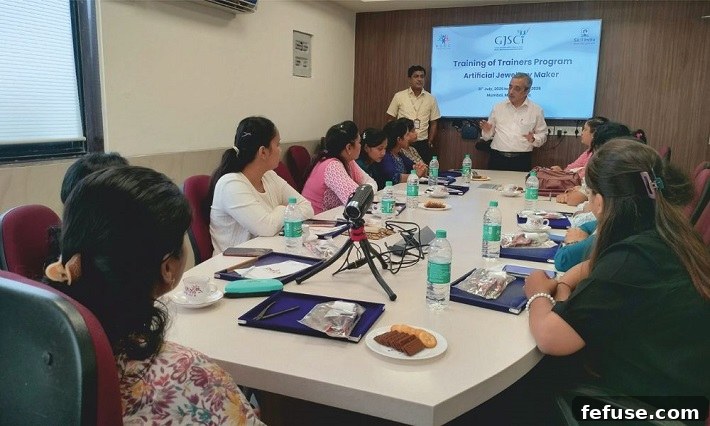
Empowering Craftsmanship: GJSCI’s Pivotal Training of Trainers Bolsters India’s Jewellery Sector
The Gem & Jewellery Skill Council of India (GJSCI) continues its unwavering commitment to fostering excellence within India’s vibrant jewellery industry. This dedication was recently underscored by a highly impactful three-day Training of Trainers (ToT) workshop, meticulously conducted in Mumbai from July 31 to August 2, 2025. This strategic initiative stands as a testament to GJSCI’s proactive vision, aiming to significantly strengthen the talent pipeline and elevate skill standards across the nation’s diverse jewellery manufacturing ecosystem. By investing in its trainers, GJSCI is effectively multiplying its efforts, ensuring that high-quality, standardized training reaches every corner of the industry.
The workshop was not merely another training session; it was a carefully curated program designed to achieve maximum impact. It specifically targeted the vital skill development of 12 exceptionally talented and dedicated trainers. These participants were chosen for their specialization in the intricate and in-demand roles of Imitation Jewellery Maker and Artificial Jewellery Maker – segments experiencing substantial growth and innovation within the Indian market. The diversity of the participants was noteworthy, with trainers hailing from key jewellery manufacturing hubs and emerging craft regions, including the culturally rich state of Odisha, as well as Maharashtra’s bustling Thane and historic Kolhapur districts. This geographical spread ensures that the benefits of the training will disseminate widely, impacting local economies and empowering artisans in various regions.
The Imperative of Skill Development: GJSCI’s Vision for India’s Jewellery Future
India’s gem and jewellery sector is a cornerstone of its economy, renowned globally for its exquisite craftsmanship, intricate designs, and significant export contributions. However, sustaining this legacy and meeting the evolving demands of both domestic and international markets requires a continuous influx of highly skilled artisans and innovative techniques. GJSCI was established precisely to address this critical need, serving as the apex body dedicated to bridging skill gaps, standardizing training methodologies, and fostering a robust ecosystem for skill development within the industry. The Training of Trainers (ToT) model is central to GJSCI’s strategy because it creates a powerful multiplier effect. Instead of directly training thousands of artisans, GJSCI empowers a select group of master trainers, who then, in turn, can impart their enhanced knowledge and skills to countless students and aspiring professionals. This approach ensures scalability, consistency, and the widespread dissemination of best practices.
The Mumbai ToT workshop, therefore, was a strategic intervention designed to equip these frontline educators with advanced pedagogical skills, deeper domain knowledge, and the confidence to effectively transfer complex crafting techniques. The roles of Imitation Jewellery Maker and Artificial Jewellery Maker are particularly significant. These sectors cater to a vast market, offering affordable yet fashionable alternatives to traditional fine jewellery, and they represent a significant employment generator, especially for women artisans. Enhancing the capabilities of trainers in these specialized areas means a direct upliftment of a large segment of the workforce, fostering entrepreneurship, and improving product quality across the industry.
Workshop Dynamics: Blending Theory with Practical Mastery
The meticulously structured three-day workshop was a masterclass in experiential learning, thoughtfully designed to blend rigorous theoretical understanding with extensive practical exposure. Participants were engaged in sessions that covered not only advanced crafting techniques but also essential principles of design, material science, quality control, and the latest market trends relevant to imitation and artificial jewellery. This holistic approach ensures that trainers are not just technically proficient but also commercially aware, capable of guiding their future students toward market-relevant skills and sustainable livelihoods. The program aimed to empower these trainers to refine their existing techniques, introduce them to cutting-edge methodologies, and significantly deepen their craft knowledge, enabling them to stay abreast of an ever-evolving industry.
Targeting Key Roles: Elevating Imitation and Artificial Jewellery Craftsmanship
The deliberate focus on Imitation Jewellery Maker and Artificial Jewellery Maker roles reflects a keen understanding of market demands and employment opportunities. These segments require a distinct set of skills, often involving intricate handwork, innovative material handling, and an eye for contemporary design. The trainers selected for this program were already experienced professionals, but the ToT workshop provided them with a platform to elevate their expertise to an instructional level. They were taught not just *what* to do, but *how* to teach it effectively, breaking down complex processes into digestible steps, managing diverse learning styles, and fostering a stimulating classroom environment. The geographical representation from Odisha, Thane, and Kolhapur was also strategic, as these regions have nascent or established clusters of jewellery manufacturing that stand to benefit immensely from upgraded training capabilities. Odisha, known for its rich cultural heritage and traditional crafts, can integrate modern techniques into its artisanal practices, while Thane and Kolhapur, parts of Maharashtra, are emerging as significant hubs for various manufacturing activities, including jewellery.
The Interactive Learning Experience: Theory Meets Practice Through Live Demonstrations
A standout and particularly engaging feature of the workshop was its robust live demonstration segment. This hands-on component moved beyond passive observation, immersing participants in the real-time creation of traditional jewellery pieces. Under expert guidance, trainers actively engaged in the process, from initial design conceptualization to the final finishing touches. This direct, practical application of learned theories was invaluable. It not only solidified their technical understanding but also significantly enhanced their confidence in executing complex designs and, critically, their instructional capabilities. By experiencing the challenges and nuances of live creation, trainers gained a deeper empathy for their future students, learning how to troubleshoot common issues and effectively guide learners through practical exercises. This practical reinforcement is vital for imparting skills that are inherently hands-on, ensuring that theoretical knowledge is firmly grounded in real-world application.
The Guiding Force: Master Trainer Sangeeta Arun Patil’s Invaluable Contribution
The resounding success of the program was undeniably bolstered by the profound expertise and dynamic guidance of Master Trainer Sangeeta Arun Patil. A revered figure in the jewellery skill development landscape, her engaging, insightful, and comprehensive sessions were universally appreciated by all attendees. Sangeeta Arun Patil’s ability to demystify complex techniques, coupled with her infectious passion for the craft and pedagogical excellence, created an inspiring learning environment. She not only imparted technical knowledge but also shared invaluable tips on effective teaching methodologies, classroom management, and motivational strategies essential for nurturing future artisans. GJSCI proudly acknowledged her valuable and pivotal contribution, recognizing her instrumental role in elevating the overall impact, quality, and effectiveness of this critical training initiative. Her mentorship is a prime example of the high standards GJSCI maintains in its training programs.
Impact and Significance: Building India’s Jewellery Talent Pipeline
Initiatives like this ToT workshop are far more than isolated training events; they are foundational pillars for sustainable growth and innovation within the entire jewellery sector. By empowering a cadre of highly skilled and proficient trainers, GJSCI is creating a powerful ripple effect that will extend far beyond the workshop’s immediate participants. These 12 trainers, now armed with enhanced skills and refined instructional abilities, will return to their respective regions as torchbearers of knowledge, capable of training hundreds, if not thousands, of aspiring artisans. This systematic approach directly addresses the persistent skill gap in the industry, ensuring a steady supply of well-trained professionals who can meet the demands of a dynamic market.
Empowering Trainers: The Multiplier Effect on Skill Development
The true genius of the ToT model lies in its inherent multiplier effect. Investing in a trainer is an investment in countless future artisans. Each of the 12 trainers who participated in the Mumbai workshop will now become a nodal point for skill dissemination in their communities. They will not only teach specific techniques but also instill a culture of quality, precision, and innovation. This empowerment extends beyond technical skills; it includes the ability to inspire, motivate, and mentor the next generation. By doing so, GJSCI is not just creating jewellery makers, but also fostering local entrepreneurship, enhancing the employability of individuals from diverse backgrounds, and contributing to the overall socio-economic upliftment of communities across India. This localized training capacity is crucial for making skill development accessible and relevant to regional needs.
GJSCI’s Vision for a Sustainable Future
Through such forward-thinking initiatives, GJSCI consistently paves the way for sustainable growth in the Indian jewellery sector. The organization’s vision extends beyond mere training; it encompasses fostering a self-sufficient ecosystem where skills are continuously updated, new talents are nurtured, and traditional craftsmanship is preserved while embracing modern advancements. By empowering trainers to effectively pass on essential skills, GJSCI ensures that the rich legacy of Indian jewellery artistry thrives, adapts, and remains competitive on the global stage. This ongoing commitment safeguards the sector’s future, ensuring that India remains a global leader in gem and jewellery manufacturing and design for generations to come. The emphasis on high-quality training ensures that “Made in India” jewellery continues to be synonymous with excellence.
The Broader Context: India’s Dominance in the Global Jewellery Landscape
India’s jewellery industry is not just a commercial enterprise; it is a vibrant cultural tapestry woven with centuries of tradition, artistry, and heritage. From intricate gold work to exquisite diamond settings and the burgeoning artificial and imitation segments, Indian craftsmanship holds a special place globally. The sector contributes significantly to India’s GDP, employs millions, and is a major foreign exchange earner. However, maintaining this competitive edge requires constant innovation and, more importantly, a continuously upskilled workforce. The global market is dynamic, with changing fashion trends, technological advancements, and increasing demands for ethical sourcing and sustainable practices. GJSCI’s efforts, exemplified by the ToT program, are critical in positioning India to meet these challenges head-on and capitalize on new opportunities.
The Growing Demand for Skilled Artisans
The demand for skilled artisans in the jewellery sector is ever-increasing, driven by both domestic consumption and robust export markets. While automated processes handle certain aspects of manufacturing, the soul of Indian jewellery lies in its handcrafted perfection and intricate details, which can only be achieved by skilled human hands. From CAD designers to master karigars (artisans) specializing in setting, polishing, and various forms of intricate metalwork, the spectrum of required skills is vast. Artificial and imitation jewellery, in particular, often rely on innovative design and manual assembly, requiring a steady supply of well-trained individuals. GJSCI’s targeted approach through programs like the ToT ensures that the specific skill sets needed by the industry are being cultivated and propagated effectively.
The Economic Impact of the Jewellery Sector and Skill Development
The economic impact of the jewellery sector is profound. It provides livelihoods to countless families, from miners and cutters to designers, manufacturers, and retailers. Skill development programs directly contribute to this economic vitality by enhancing productivity, improving product quality, and fostering entrepreneurship. When artisans are better trained, they can command higher wages, produce more sophisticated products, and even start their own ventures, creating more jobs. The ToT program, by strengthening the training infrastructure, amplifies these economic benefits exponentially. It also supports national initiatives like “Make in India” and “Skill India,” reinforcing India’s position as a global manufacturing hub and a repository of exceptional artisanal talent.
Looking Ahead: GJSCI’s Ongoing Commitment to Excellence
The successful execution of the Training of Trainers workshop in Mumbai is a vivid illustration of GJSCI’s proactive and forward-thinking approach. It signifies an enduring commitment to not just maintaining but continually elevating the standards of craftsmanship and professionalism across the Indian gem and jewellery sector. GJSCI remains dedicated to identifying emerging skill requirements, developing contemporary training modules, and fostering a culture of continuous learning and adaptation. Future initiatives will undoubtedly build upon the successes of programs like this, exploring new technologies, sustainable practices, and expanding reach to even more remote artisanal clusters, ensuring that no talent goes untapped. The goal is to build a resilient, innovative, and highly skilled workforce ready for the challenges and opportunities of the 21st century global market.
Conclusion: Shaping the Future of Indian Jewellery with Empowered Trainers
In conclusion, the three-day Training of Trainers workshop by GJSCI was a strategic and resounding success, representing a significant stride towards securing the future of India’s illustrious jewellery industry. By empowering 12 dedicated trainers specializing in imitation and artificial jewellery making, GJSCI has initiated a potent multiplier effect, set to disseminate advanced skills and foster excellence across various regions. The workshop, expertly guided by Master Trainer Sangeeta Arun Patil, seamlessly blended theoretical knowledge with practical mastery, equipping participants not just with enhanced technical abilities but also with superior instructional capabilities. This crucial investment in human capital underscores GJSCI’s unwavering commitment to building a robust talent pipeline, ensuring sustainable growth, and preserving India’s unparalleled legacy of jewellery craftsmanship for generations to come. Such initiatives are indispensable in cementing India’s position as a global leader in the gem and jewellery sector, driven by a highly skilled and innovative workforce.