
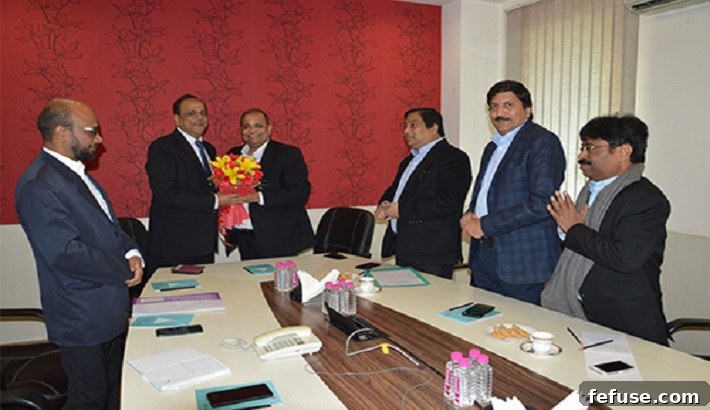
GJEPC and MMTC Forge Strategic Alliance to Drive India’s Gem & Jewellery Sector Growth
In a crucial move aimed at bolstering India’s position as a global leader in the gem and jewellery industry, a high-level delegation from The Gem & Jewellery Export Promotion Council (GJEPC) convened with MMTC Ltd on December 31, 2019. The meeting, held in Jaipur, brought together key figures including GJEPC Chairman Pramod Kumar Agrawal and MMTC Ltd Chairman Ved Prakash, alongside other significant representatives such as Vikram Meena, CGM In-charge, MMTC, Jaipur Regional office; Nirmal Kumar Bardiya, Regional Chairman, Jaipur; Rambabu Gupta, Convener, Silver Jewellery Panel; and Sanjay Kala, Member, Regional Committee, Jaipur. This pivotal gathering underscored the collaborative spirit between industry leaders and government agencies, focusing on resolving long-standing challenges and paving the way for enhanced export competitiveness and sustainable growth across both gold and silver segments.
The discussions were comprehensive, touching upon a spectrum of issues vital for the smooth functioning and expansion of the Indian gem and jewellery trade. The outcomes of this meeting are expected to have far-reaching implications, particularly for Micro, Small, and Medium Enterprises (MSMEs) which form the backbone of this vibrant sector. By addressing supply chain efficiencies, cost structures, regulatory hurdles, and market access, both GJEPC and MMTC demonstrated a shared commitment to fostering an environment conducive to innovation, value addition, and increased foreign exchange earnings for the nation.
Enhancing Precious Metal Supply for MSME Exporters
A primary agenda point raised by the GJEPC delegation was the critical need for MMTC to commence supplying duty-free precious metals in smaller, more accessible denominations. Specifically, the Council advocated for the provision of 100-gram gold bars and five-kilogram bags of silver granules. This request was not arbitrary; it directly addresses a significant operational challenge faced by a multitude of MSME exporters operating within both Special Economic Zones (SEZs) and the Domestic Tariff Area (DTA). Smaller denominations are paramount for these businesses, enabling them to procure exact quantities required for specific orders without tying up substantial capital in larger, less flexible consignments. This flexibility is crucial for managing inventory efficiently, optimizing working capital, and responding swiftly to international market demands. The ability to source smaller quantities of duty-free gold and silver directly from a trusted government agency like MMTC would significantly lower the entry barrier for smaller players, making them more competitive on the global stage by reducing procurement costs and improving overall liquidity. It allows them to fulfil diverse orders, from bespoke jewellery to bulk manufacturing, with greater agility.
MMTC’s response to this crucial request was largely positive. The Chairman confirmed that duty-free gold in 100-gram bars was already being supplied to exporters in the Jaipur SEZ. Furthermore, a firm assurance was given that this facility would be extended to exporters in the DTA upon demand, signaling a responsive approach to industry needs. In a significant win for the silver jewellery sector, MMTC also committed to making silver available in smaller quantities, mirroring the proposed flexibility for gold. This commitment from MMTC is poised to streamline the raw material acquisition process, inject greater efficiency into manufacturing, and ultimately empower countless MSMEs to scale their operations and enhance their export footprint. It represents a tangible step towards democratizing access to essential resources, ensuring that businesses of all sizes can thrive in the competitive international market.
Addressing the Competitiveness of Silver Supply
Another critical concern highlighted by the GJEPC delegation pertained to the cost of silver supplied by MMTC, which was observed to be higher compared to silver imported directly by SEZ and DTA units. This cost disparity directly impacts the profitability and competitiveness of silver exporters relying on MMTC. Acknowledging this valid observation, MMTC provided a clear explanation and a potential solution. MMTC clarified that its ability to offer silver at a more competitive price hinges on receiving permission to procure duty-free precious metal from Free Trade Warehousing Zones (FTWZ) against a transit bond for warehousing, followed by further supply into SEZs. This mechanism, if approved, would effectively align MMTC’s silver pricing with that of direct imports, thereby leveling the playing field for exporters.
MMTC further elaborated that a representation detailing this crucial demand is currently pending with the Directorate General of Export Promotion (DGEP). Encouragingly, this representation has garnered positive recommendations from key authorities, including the Development Commissioner (DC), Shree City, Tamil Nadu; the DC, NSEZ; and the Department of Commerce (DoC). Recognizing the profound impact this policy change would have on the industry, MMTC requested the GJEPC’s active intervention and support in pursuing this matter with both the DGEP and the DoC. The Council’s influence and advocacy are seen as instrumental in expediting the approval process, which would not only benefit MMTC but, more importantly, translate into significant cost savings and enhanced global competitiveness for the myriad silver jewellery exporters across India. Resolving this would unlock immense potential for a sector known for its intricate craftsmanship and design.
Streamlining Bank Guarantee Release for Exporters
The GJEPC team also brought to the fore a crucial administrative bottleneck affecting exporters: the prolonged duration taken by MMTC to release bank guarantees and securities after the submission of irrefutable proof of exports. For exporters, particularly MSMEs, bank guarantees represent blocked capital that could otherwise be utilized for business expansion, working capital, or fulfilling new orders. Delays in releasing these guarantees create significant financial strain, impacting liquidity and overall operational efficiency. Prompt release of these securities is not merely an administrative convenience; it is a vital component of fostering a healthy cash flow cycle, which is essential for business sustainability and growth.
To address this backlog and expedite the process, the GJEPC delegation earnestly requested the MMTC Chairman to allocate additional staff to their Jaipur office. An increase in human resources dedicated to this specific task would significantly improve processing times, thereby alleviating the financial burden on exporters and fostering a more efficient business environment. The request highlights the importance of efficient administrative processes in supporting the export ecosystem, demonstrating how seemingly minor procedural delays can have substantial financial implications for businesses striving to meet international commitments and grow their market share.
Facilitating Raw Material Access and Gemstone Mining
In a forward-looking proposal aimed at enhancing India’s value addition capabilities, the GJEPC urged MMTC to initiate the import of rough precious and semi-precious stones. This strategic move would directly benefit MSME units across the country, providing them with a reliable and regulated source of raw materials. These units, renowned for their expertise, could then cut and polish these stones for both domestic trade and international exports, thereby significantly increasing the value of the raw material within India. This initiative aligns perfectly with the ‘Make in India’ vision, promoting domestic manufacturing and skill development in the intricate art of gemstone processing.
Furthermore, the GJEPC also suggested that a dialogue be initiated with various State Governments holding significant gemstone deposits. The objective would be to secure permissions for MMTC, or other designated entities, to undertake mining activities for these precious resources. Indigenous sourcing of gemstones would not only reduce reliance on imports but also create local employment opportunities, foster regional development, and establish a more robust and self-sufficient supply chain for the Indian gem and jewellery industry. MMTC Chairman expressed a positive inclination towards this proposal, assuring the GJEPC that active steps would be taken to work on its implementation. This dual approach of importing rough stones and exploring domestic mining holds immense promise for the long-term sustainability and growth of India’s gemstone sector.
Promoting Indian Jewellery Through MMTC’s Retail Network
Recognizing MMTC’s extensive retail presence, the GJEPC put forth a suggestion for MMTC to actively promote and market exquisite jewellery manufactured in various gems and jewellery clusters across India through its network of retail shops. This initiative would provide a valuable platform for Indian artisans and manufacturers to showcase their craftsmanship and reach a wider consumer base, both domestically and potentially internationally. Leveraging MMTC’s brand credibility and retail infrastructure could significantly boost the visibility and sales of ‘Made in India’ jewellery, highlighting the diversity and quality of Indian designs.
However, MMTC identified a significant hurdle in implementing this proposal, stemming from a recent amendment in the provisions of Goods and Services Tax (GST). According to MMTC, this amendment now requires Public Sector Undertakings (PSUs) to deposit Tax Deducted at Source (TDS) on the value of goods taken on a delivery challan. This regulatory change makes it difficult for MMTC to take goods on an “approval basis” – a common practice in the jewellery trade where retailers take items from manufacturers with the option to return unsold stock. Instead, MMTC is now compelled to purchase goods on full payment, inclusive of GST, upfront. The major challenge this poses is the risk of accumulating “dead stock” if the goods remain unsold, leading to substantial capital blockage for MMTC. To resolve this critical GST-related hindrance, MMTC requested the Council’s assistance, proposing that a representation be submitted to the relevant authorities to seek an amendment or clarification that would facilitate the “on approval” model for PSUs in the jewellery trade.
MMTC’s Requests to GJEPC for Policy Advocacy
During the productive meeting, the MMTC Chairman also put forward several requests to the GJEPC, seeking their support in advocating for policy changes that would benefit the industry and government agencies alike. Firstly, MMTC requested the Council to pursue the Government to allow Nominated Agencies, especially those owned by the Government, to export coins. This policy change would diversify the export portfolio of these agencies and potentially streamline the process of gold coin exports from India, tapping into new market opportunities. Such a move would leverage the inherent trust and infrastructure of government-backed entities.
Secondly, MMTC sought GJEPC’s advocacy to enable the provision of gold on loan for DTA units, mirroring the successful schemes already offered by commercial banks. This ‘gold on loan’ facility is crucial for manufacturers, allowing them to access raw material without immediately committing their working capital, thus improving financial liquidity and operational flexibility. Extending this facility through government-nominated agencies like MMTC would provide an alternative, potentially more stable, and reliable channel for DTA units to secure gold, ultimately boosting their production capabilities and export volumes. Both these requests highlight MMTC’s proactive approach to expanding its role as a facilitator for the industry and its reliance on GJEPC’s influence in driving crucial policy reforms.
A Collaborative Path Forward for India’s Gem and Jewellery Sector
The meeting between GJEPC and MMTC Ltd was more than just a formal discussion; it was a testament to the synergistic relationship between India’s apex gem and jewellery export promotion body and a pivotal government trading enterprise. The comprehensive dialogue, addressing issues from the granular detail of precious metal supply in smaller denominations to broader strategic points like gemstone mining and export policy, underscores a shared vision for elevating the Indian gem and jewellery sector. By actively tackling challenges related to supply chain efficiency, cost competitiveness, administrative bottlenecks, and market access, both organizations are committed to fostering a more robust, agile, and globally competitive industry. The collaborative efforts to resolve issues like the GST impact on retail promotion and advocating for favorable policies such as gold on loan schemes for DTA units signal a proactive approach to industry development. This partnership is crucial for enhancing India’s footprint in the global gem and jewellery trade, ensuring sustained growth, creating employment, and contributing significantly to the national economy through increased exports and value addition. The outcomes of such engagements continue to shape a promising future for millions involved in this illustrious sector.
News Source: gjepc