
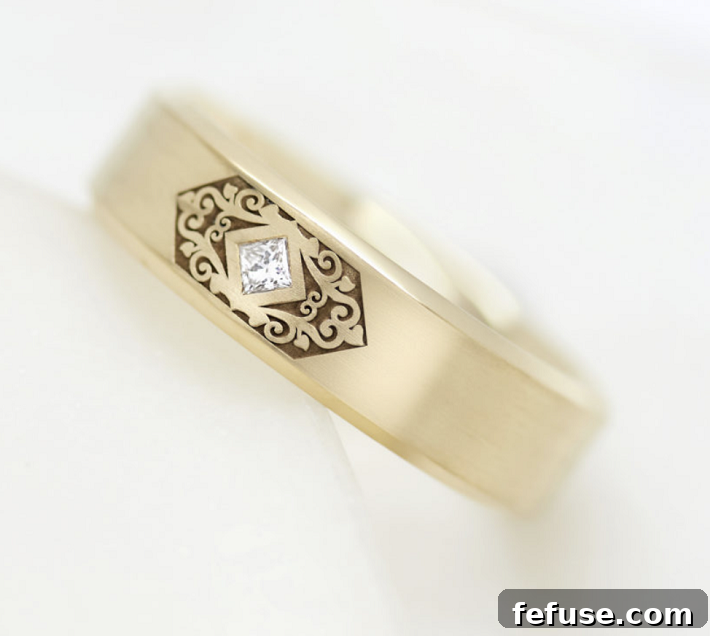
The world of fine jewelry is undergoing a profound transformation, driven by evolving societal norms and a desire for authentic self-expression. A groundbreaking new study conducted by renowned bespoke jewelry brand, Taylor & Hart, illuminates this significant shift, revealing a staggering 228% surge in demand for ‘genderless jewelry’. Furthermore, interest in ‘male engagement ring designs’ has soared by an impressive 69% year-on-year, unequivocally demonstrating a paradigm shift in consumer behavior and preferences across the globe. This comprehensive research not only highlights these compelling statistics but also identifies the key countries leading this exciting new trend, paving the way for a more inclusive and expressive future in adornment.
But what exactly constitutes genderless jewelry, and why is it rapidly capturing the attention of a new generation of buyers? At its core, genderless jewelry refers to accessories meticulously crafted to transcend conventional gender associations. These pieces deliberately eschew design elements traditionally attributed solely to either men or women, focusing instead on universal appeal, individual style, and narrative. From the avant-garde runways of international fashion weeks to the dazzling red carpets and accessible high street stores, the once rigid boundaries of gender are progressively blurring within the fashion industry. This fluidity is not merely a fleeting trend but a reflection of a broader cultural movement towards inclusivity and personal freedom, where adornment serves as a powerful medium for identity rather than predefined roles. Genderless jewelry empowers individuals to choose pieces based purely on aesthetic preference, emotional connection, and personal style, rather than societal expectations tied to their gender.
Global Phenomenon: Demand for Male Engagement Rings Reaches Unprecedented Heights
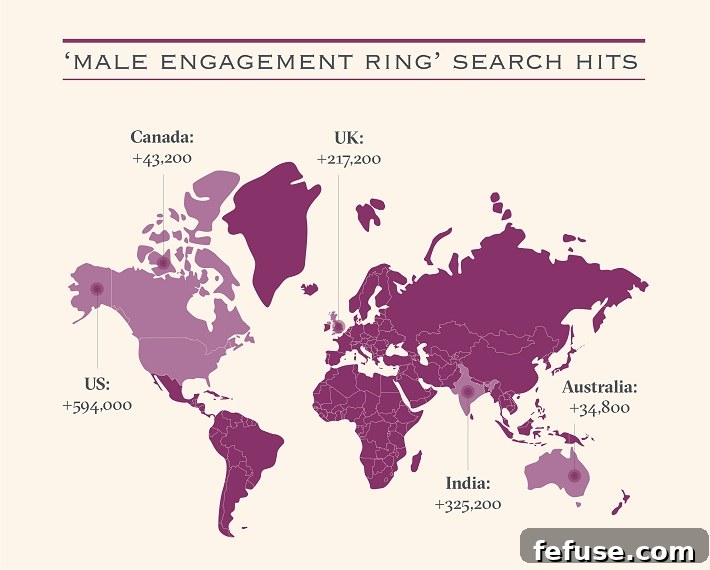
The Taylor & Hart study provides compelling evidence that the search for male engagement rings is not just a niche phenomenon but a burgeoning global movement. Leading this charge is the United States, which records an astonishing 594,000 yearly Google searches for this emerging trend. This robust interest underscores a cultural shift in how American couples approach proposals and marriage, embracing a more egalitarian vision of commitment. Following closely is India, securing the second position with 325,200 annual Google searches. This figure is particularly noteworthy given that men traditionally wearing engagement rings is not an inherent part of historical Indian custom. However, a growing number of modern Indian couples are enthusiastically adopting this Western tradition, signifying a beautiful fusion of cultures and a contemporary redefinition of marital rites. In some pre-wedding ceremonies within India, there has long been a tradition of couples exchanging rings, but the formal “male engagement ring” as a distinct concept is gaining traction. The United Kingdom rounds out the top three, demonstrating significant interest with 217,200 yearly Google searches, showcasing Europe’s active participation in this progressive shift in relationship norms. These figures collectively paint a clear picture: the male engagement ring is no longer an anomaly but a rapidly mainstreaming symbol of commitment across diverse cultures.
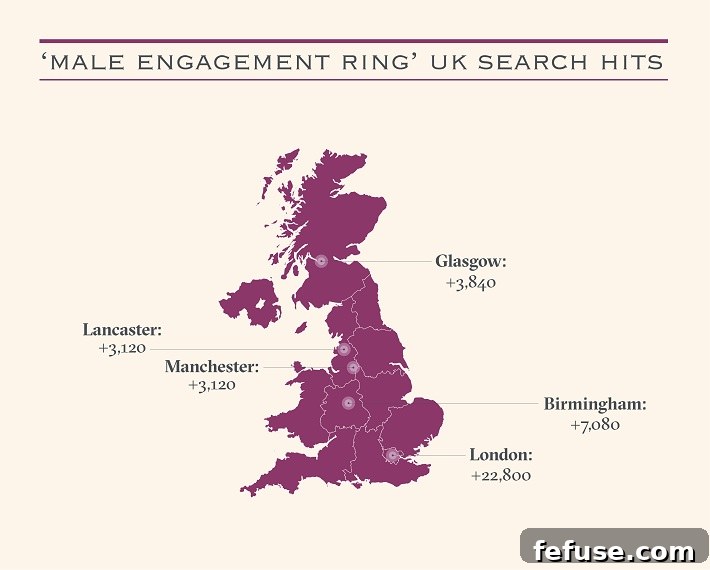
Delving deeper into regional specifics, the study pinpoints London as the undisputed capital of male engagement rings within the UK, registering an impressive 22,800 yearly searches. This high concentration of interest in the British capital can be attributed to several factors. London is a global hub for fashion, culture, and progressive ideas, consistently at the forefront of social change. Its vibrant fashion scene, coupled with a growing acceptance of non-conformity and diverse expressions of identity, creates fertile ground for such trends to flourish. This concentrated demand strongly suggests that genderless engagement rings are not just a passing fad, but are poised to become the next significant trend in the bridal jewelry market, influencing design and purchasing decisions for years to come. The city’s diverse population and openness to new customs further fuel this particular market segment, indicating a strong desire among Londoners to challenge traditional gender roles within matrimony and celebrate commitment in a more balanced and equitable way. The momentum building in London serves as a powerful indicator for the wider fashion and jewelry industries.
Redefining Engagement Ring Design for a Modern Era
This monumental shift in consumer demand naturally prompts an essential question: what implications does this hold for engagement ring design? The industry is now faced with the exciting challenge and opportunity to innovate, moving beyond traditional feminine designs to create pieces that resonate with a broader spectrum of identities and preferences. Kate Earlam-Charnley, the esteemed Design Director at Taylor & Hart, offered her insightful perspective on this evolving landscape, sharing a personal anecdote that encapsulates the essence of this change.
“A few years ago, I had a customer who was planning to propose to her boyfriend. Her reasoning was beautifully simple and profoundly true: marriage is unequivocally a two-way commitment, a mutual pledge of love and partnership. Therefore, she questioned, why should the responsibility and symbolic gesture of proposing fall solely to the man? She absolutely cherished the experience of designing an expressive and deeply personal engagement ring specifically for her boyfriend, a piece that truly reflected his style and their shared journey. Since that pivotal moment, I’ve had the privilege of working with more and more women who echo this sentiment, eager to take the initiative and present their partner with a symbol of their unwavering commitment. I wholeheartedly believe the entire jewelry industry should not only acknowledge but enthusiastically embrace this new normal, recognizing it as a progressive step towards greater equality and individuality in relationships.” Kate’s reflections highlight the growing desire for personalized, meaningful jewelry that challenges outdated gendered expectations and celebrates the unique bond between two individuals, irrespective of traditional roles. This opens up vast possibilities for design innovation, from minimalist bands to bolder, gemstone-focused creations tailored to masculine or gender-neutral aesthetics.
The Rise of the Female Proposer: Challenging Age-Old Traditions

Is the classic stereotype of a man gracefully getting down on one knee to propose a romantic relic of the past? Taylor & Hart’s extensive study strongly suggests a resounding yes. The research reveals a significant sociological shift: the number of women initiating marriage proposals has dramatically tripled since 2010. This compelling statistic indicates that modern couples are actively and thoughtfully challenging long-standing attitudes towards dated traditions, opting for more equitable and personalized approaches to their commitments. In a complementary survey conducted by Taylor & Hart, a remarkable 70% of men expressed that they would be genuinely happy and honored if a woman proposed to them. While this widespread acceptance undoubtedly contributes significantly to the escalating demand for male engagement rings, it is absolutely crucial to acknowledge and credit the profound influence and pioneering spirit of the LGBTQA+ community. For years, same-sex couples have organically forged their own proposal traditions, often involving dual engagement rings or proposals initiated by either partner, effectively normalizing the concept of both men and women wearing engagement rings and actively participating in the proposal process. Their journey and advocacy have played a pivotal role in broadening societal perspectives and paving the way for more inclusive and diverse expressions of love and commitment for all couples. This collective movement underscores a broader cultural desire for relationships built on mutual respect, equality, and individual choice, rather than rigidly adhering to historical gender roles.
Genderless Fashion: The Future of Style, Embraced by Gen Z
The last few years have witnessed an undeniable and accelerating growth in fluidity when it comes to expressions of gender, with its impact most visibly felt in the realms of fashion and jewelry. The comprehensive study from Taylor & Hart further corroborates this cultural phenomenon, revealing that online searches for ‘genderless clothing’ have been consistently on the rise since 2014, demonstrating a sustained and growing interest. More strikingly, the research highlights that a significant 57% of Gen Z consumers are actively shopping for genderless fashion, underscoring this generation’s foundational belief in individuality and self-expression over binary categories. Gen Z, often characterized by their digital fluency and progressive values, are not just adopting trends; they are actively shaping the future of fashion and challenging conventional sartorial norms.
Prominent global fashion houses such as Gucci are not merely participating in this movement but are unequivocally leading the charge. The brand’s influential face, Harry Styles, is frequently seen effortlessly sporting their innovative gender-neutral pieces, serving as a powerful style icon for millions. His groundbreaking appearance as the first man to grace the cover of Vogue wearing a dress sent a clear, emphatic message to the world about the liberation of style beyond gender. This high-profile visibility from luxury brands cascades down to more accessible markets. High street retailers like ASOS are actively blurring the lines of gendered clothing by offering extensive gender-neutral ranges, making inclusive fashion accessible to a wider audience. These initiatives, from haute couture to everyday wear, signify a collective move towards a fashion landscape that prioritizes individual expression and comfort over outdated gender definitions.
While the average man might not be immediately transitioning to red carpet-worthy gowns for daily wear, there is a clear and growing trend for men to experiment more freely with different styles, textures, and notably, to embrace wearing more jewelry. A prime example of this burgeoning interest was observed with the infamous Connell’s chain from the critically acclaimed TV show, Normal People. When the show aired in 2020, searches for “men’s chain necklaces” and similar terms saw an astonishing 500% increase, demonstrating the powerful influence of popular culture in shaping perceptions of masculine style and adornment. This shows a subtle yet significant shift, where men are increasingly comfortable using jewelry as a form of personal statement, moving beyond a simple watch or wedding band to more diverse accessories. This cultural permission to accessorize more boldly extends from necklaces to rings, bracelets, and even earrings, driven by a desire for individuality and a rejection of archaic gendered aesthetics. The ripple effect from fashion’s cutting edge is inevitable and already being felt across the jewelry sector.
Indeed, while the fashion industry may be setting the pace, the jewelry sector is poised to follow suit, adapting and innovating at an accelerated rate. From bold statement necklaces and classic signet rings to the increasingly sought-after genderless engagement rings, Gen Z is actively carving out new avenues for self-expression that intentionally challenge the status quo and dismantle restrictive gender stereotypes. They are not merely buying jewelry; they are investing in pieces that reflect their identity, values, and a future where personal style knows no boundaries. This generation’s influence is catalyzing a shift towards bespoke, personalized, and universally appealing jewelry designs, ensuring that the adornments of tomorrow are as diverse and fluid as the individuals who wear them. The future of jewelry is bright, inclusive, and undeniably genderless, promising an exciting era of creativity and authentic self-expression for all.