
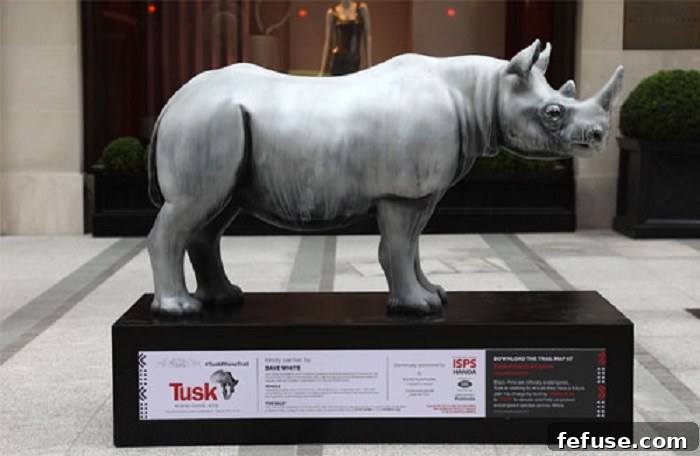
The majestic rhino, an iconic symbol of Africa’s rich biodiversity, stands at a critical crossroads. Faced with an alarming surge in poaching and relentless habitat destruction, these magnificent creatures, particularly the black and white rhino populations across Sub-Saharan Africa, are teetering on the brink of extinction. In response to this urgent crisis, a powerful coalition of art, commerce, and conservation has emerged to ignite public consciousness and generate vital support. The Tusk Rhino Trail, a breathtaking public art installation across central London, spearheaded by the renowned UK-registered charity Tusk, represents a beacon of hope in the fight to secure a future for rhinos and their fellow African species.
This ambitious initiative, designed not only to raise critical funds but also to elevate global awareness, transforms London’s vibrant urban landscape into an open-air gallery dedicated to conservation. Twenty-one uniquely designed, decorated, and embellished rhino sculptures, each a masterpiece in its own right, grace iconic locations throughout the city. These extraordinary artworks are the result of invitations extended to a diverse array of internationally respected and collected artists and designers, each contributing their unique vision to highlight the precarious existence of these ancient animals. The fusion of artistic expression with a profound environmental message creates an immersive and thought-provoking experience for residents and visitors alike, compelling them to confront the realities of the rhino crisis.
Among the distinguished partners supporting this monumental endeavor, Forevermark, the diamond brand synonymous with rarity, responsibility, and beauty, has taken a prominent role. Their commitment to ethical practices extends beyond their industry, embracing the crucial cause of wildlife conservation. Forevermark proudly partnered with contemporary British Artist Dave White, celebrated for his dynamic and expressive interpretations of popular culture and emotive issues. White’s artistic sensibility, known for its ability to convey powerful narratives through vibrant and textured canvases, proved a perfect match for the solemn yet hopeful message of the Tusk Rhino Trail. This collaboration underscores a growing trend where leading brands leverage their platforms and resources to champion global environmental challenges.
Dave White’s contribution to the trail, a profound sculpture titled “Fragile,” serves as a poignant visual metaphor for the delicate balance of life on Earth. White eloquently describes his creation: “Reflecting a realistic vision from a distance, with an abstraction of expressive paint marks upon closer viewing, my work represents the fragile balance of order and chaos in the natural world and the impact that we are having on our environment.” This duality in perception—a seemingly whole creature at first glance, revealing its inherent vulnerability upon closer inspection—masterfully encapsulates the precariousness of the rhino’s existence. He further articulated his aspiration for the artwork, stating, “I hope that by inspiring generations of all ages with this project, it will be one small positive step to support Tusk in their vital work protecting endangered species.” His words resonate deeply, underscoring the power of art to provoke thought and inspire action across all demographics, fostering a collective responsibility towards our planet’s wild inhabitants.
The gravity of the situation was powerfully articulated by Charlie Mayhew, Tusk’s CEO, who underscored the dire urgency facing rhino populations. “We’re at a crisis point where the threat to rhino from poaching means a very real risk of losing this near prehistoric species forever to extinction,” Mayhew emphasized. His statement is a stark reminder of the irreversible consequences of inaction, highlighting that the loss of rhinos would not just be the extinction of a single species, but a significant diminishment of Earth’s natural heritage. Tusk, an organization with a formidable track record in African conservation, understands that such complex challenges demand collaborative solutions. Mayhew expressed immense gratitude, stating, “Tusk is incredibly grateful to all the amazing artists, generous sponsors, and partners involved in the Tusk Rhino Trail for joining forces with us to work toward a future for rhino and other threatened species across Africa. Through the Trail we hope to inspire as many people as possible to join us in the fight.” This sentiment encapsulates the core ethos of the trail: uniting diverse stakeholders for a singular, critical cause.
Echoing this appreciation, Dan Bucknell, Tusk’s Executive Director, specifically lauded Forevermark’s significant contribution. “We’re delighted to have the generous sponsorship of Forevermark for the Tusk Rhino Trail, which comes as part of their commitment to help protect rhinos in the wild and to support our wider conservation work,” Bucknell commented. This partnership extends beyond mere financial support; it signifies a shared philosophical alignment between a global luxury brand and a dedicated conservation charity. Forevermark’s involvement serves as a testament to its broader commitment to sustainability and responsible practices, demonstrating that corporate responsibility can, and must, play a pivotal role in addressing global environmental crises. Such collaborations provide essential funding and lend considerable public visibility to the often-overlooked struggles faced by wildlife on the front lines of conservation.
Costantino Papadimitriou, Chief Marketing Officer at Forevermark, articulated the brand’s profound connection to the initiative. “We are proud to partner with Tusk and Dave White on the Tusk Rhino Trail,” he stated, highlighting the synergy between art, philanthropy, and corporate responsibility. Papadimitriou further elaborated on the impact of White’s artwork: “The emotional and realistic sensation that White has created with his design perfectly captures the fragility of the rhino’s survival and just how important it is, for each and every one of us, to proactively be a part of protecting one of nature’s treasures.” This powerful assertion emphasizes that conservation is not solely the domain of experts or charities, but a collective human duty. He affirmed Forevermark’s unwavering dedication, adding, “Forevermark is committed to raising awareness around rhino conservation, and supporting partners in shared conservation efforts is a key focus for both De Beers and Forevermark.” This statement solidifies the depth of their long-term commitment, framing it within a broader organizational mandate.
The commitment to rhino conservation by Forevermark is intrinsically linked to the legacy of its parent company, De Beers. Papadimitriou underscored this deep-rooted ethos, stating, “De Beers has been active in the conservation of rhinos for many years and it is our shared belief that all species, including the white and black rhino which are critically endangered, belong to the planet and must be protected for future generations.” This longstanding engagement highlights a holistic approach to sustainability that extends far beyond the confines of their mining operations. De Beers has a notable history of supporting biodiversity initiatives and managing vast conservation areas, including several that provide safe havens for rhinos. This established track record lends significant credibility and strategic depth to Forevermark’s participation in the Tusk Rhino Trail, demonstrating a consistent and deeply held conviction in the importance of protecting Earth’s invaluable natural heritage for the benefit of all, particularly the generations to come who deserve to inherit a world rich in wildlife.
The Tusk Rhino Trail itself offered a unique opportunity for public engagement, transforming central London into an immersive educational experience. The 21 striking sculptures were strategically placed at a selection of iconic London sites, inviting discovery and interaction. From the luxury shopping haven of New Bond Street to the historic grandeur of Trafalgar Square, the bustling cultural hub of Covent Garden, and the vibrant, fashion-forward Carnaby Street, each location provided a distinct backdrop for these powerful artistic statements. This strategic placement maximized public exposure, drawing the attention of millions and fostering countless conversations about rhino conservation. The trail served as a living exhibition, culminating with the global observance of World Rhino Day on September 22, 2018, a fitting end to a period of heightened awareness and celebration of these magnificent creatures.
However, the journey of these remarkable artworks did not conclude with their public display. Following the successful public installation, the unique sculptures embarked on their final, crucial phase: an exclusive auction designed to translate public admiration into tangible support. On October 9, 2018, at a prestigious event hosted by the leading London auction house, Christies, these twenty-one masterpieces went under the hammer. This high-profile auction provided a unique opportunity for collectors and philanthropists to acquire a piece of art history while directly contributing to Tusk’s vital conservation programs. The funds raised from this event were channeled directly towards anti-poaching initiatives, community education programs, habitat protection, and vital research aimed at safeguarding rhino populations across Africa. The Tusk Rhino Trail, therefore, represents a complete cycle of awareness, engagement, and direct action, demonstrating how innovative partnerships can drive significant impact in the urgent fight for wildlife survival.
In conclusion, the Tusk Rhino Trail, powered by the generous sponsorship of Forevermark and the creative genius of artists like Dave White, stands as a powerful testament to what can be achieved when diverse sectors unite for a common, vital cause. It eloquently conveyed the precariousness of the rhino’s existence while simultaneously showcasing the immense potential of human creativity and collective will to effect positive change. More than just an art exhibition, it was a poignant call to action, reminding us all of our shared responsibility to protect Earth’s most vulnerable species. The reverberations of this trail continue to inspire conservation efforts worldwide, offering a blueprint for future initiatives that leverage art and collaboration to secure a thriving future for all wildlife, ensuring that the ancient lineage of the rhino endures for generations to come.
News Source: gjepc.org