
Business Rates Relief and High Street Revival: A Deep Dive into UK Government Support and Industry Skepticism
The future of the British high street, a cornerstone of local communities and the national economy, has been a topic of intense debate and concern for years. As traditional brick-and-mortar retailers contend with seismic shifts in consumer behaviour, the relentless rise of e-commerce, and increasing operational costs, the government has been under pressure to provide meaningful support. It was in this context that then-Chancellor Philip Hammond’s announcements regarding business rates relief and high street rejuvenation, originally made on October 26th and subsequently confirmed, were met with a mix of cautious optimism and significant skepticism from industry experts.
Chancellor Hammond’s Commitment: A Lifeline for Small Businesses and Struggling High Streets
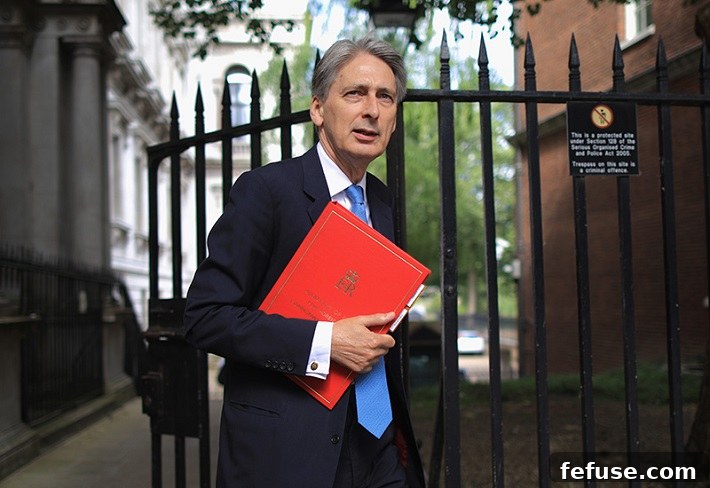
In a pivotal address to the House of Commons, Chancellor Philip Hammond officially ratified a financial package designed to bolster small enterprises and breathe new life into ailing shopping districts. Central to these measures was a substantial £900 million allocation for business rates relief, earmarked specifically for smaller businesses. Complementing this, a further £650 million was designated for the broader rejuvenation of high streets across the United Kingdom. These figures, initially unveiled earlier in the autumn, underscored the government’s recognition of the acute pressures faced by Britain’s retail sector.
Hammond articulated a clear understanding of the difficulties plaguing small retailers, acknowledging their “struggle to cope” with an array of high fixed costs, prominent among them being business rates. This acknowledgment signaled the government’s intent to actively intervene and support what many perceive as the embattled heart of local economies: Britain’s high streets and the myriad independent shops that populate them. The commitment was framed as a direct response to pleas from various business groups and a broader public sentiment advocating for greater state intervention to prevent the further decline of these vital commercial hubs.
The Mechanics of Relief: Who Benefits and For How Long?
The specifics of the business rates relief scheme were detailed to provide clarity on its implementation and scope. Starting from April of the following year, and extending for a two-year period, small retail businesses will be eligible for a discount on their rates bill. The eligibility threshold is set at a rateable value of less than £51,000. This measure is designed to remain in effect until the next comprehensive revaluation of business rates, scheduled for 2021, providing a temporary but significant reprieve for qualifying enterprises.
The Treasury, in its official pronouncements, projected that this rates relief initiative could slash a small business’s rates bill by a substantial one-third. Furthermore, it was estimated that an impressive 90% of small retailers across the country would stand to benefit from these newly introduced measures. For many independent operators, especially those in sectors with historically thin margins such as jewellery retail, this relief was anticipated to be a welcome intervention. Firms in this category could foresee enjoying savings of several thousand pounds annually, funds that could be reinvested into their operations, staffing, or simply contribute to their survival amidst challenging economic conditions.
A Closer Look: The Plight of the British High Street and the Burden of Business Rates
To fully appreciate the significance, or indeed the perceived inadequacy, of the government’s relief package, it is crucial to understand the broader context of the British high street’s struggles. For decades, these vibrant centres of commerce have faced an evolving landscape, but recent years have presented an unprecedented “perfect storm” of challenges.
Understanding Business Rates: A Persistent and Often Unfair Burden
At the heart of the retail sector’s grievances lies the system of business rates. This property tax, levied on commercial properties, is based on a property’s “rateable value,” which is an estimate of its annual rent on the open market. Unlike corporation tax, business rates must be paid regardless of a business’s profitability. This distinction is critical, as it means even struggling businesses with dwindling sales are still obligated to pay their rates bill in full. For many, particularly independent retailers operating in prime high street locations with higher rateable values, this fixed cost represents a significant, often crippling, overhead.
Critics of the current system argue that it is outdated, punitive, and disproportionately burdens physical retailers. They highlight that online businesses, often operating from cheaper out-of-town warehouses, face a much lower business rates burden relative to their turnover, creating an uneven playing field. This disparity has fuelled calls for a fundamental overhaul of the system, suggesting that anything less than systemic reform will merely serve as a temporary sticking plaster on a gaping wound.
Beyond Rates: The ‘Perfect Storm’ Facing Retailers
While business rates are a major concern, they are but one element of the “perfect storm” that Helen Dickinson, CEO of the British Retail Consortium (BRC), so aptly described. This multifaceted crisis encompasses:
- Technological Disruption: The unstoppable rise of e-commerce has fundamentally altered consumer shopping habits. Shoppers increasingly prefer the convenience, wider selection, and often lower prices offered by online retailers. This shift has led to reduced footfall on high streets, impacting sales for physical stores.
- Rising Public Policy Costs: Retailers are also grappling with a raft of other rising costs stemming from government policies. These include increases in the National Living Wage, apprenticeship levies, and pension auto-enrolment contributions. While these policies aim to improve worker welfare, they simultaneously inflate the operational expenses for businesses, particularly those with large workforces.
- Softening Consumer Demand: Economic uncertainties, wage stagnation, and inflationary pressures can lead to reduced consumer confidence and discretionary spending. When consumers tighten their belts, non-essential purchases, which form a significant part of the retail sector, are often the first to be cut.
- Changing Town Centre Dynamics: The role of high streets is evolving beyond mere shopping. They are increasingly expected to offer experiential elements, leisure activities, and community spaces. Retailers must adapt to this broader vision, which often requires significant investment in store remodelling and service diversification.
These interconnected factors create a challenging environment where even efficiently managed businesses can struggle to maintain profitability, making the fixed burden of business rates feel all the more crushing.
Industry Voices: Skepticism and Calls for Deeper Reform
Despite the government’s efforts to project a sense of proactive support, the relief measures were met with considerable apprehension and criticism from prominent industry bodies and experts. Their concerns revolved around the scale of the intervention and whether it truly addressed the fundamental issues at play.
Colliers International: Questioning the True Scope of Impact
John Webber, the influential head of rating at Colliers International, one of the world’s largest real estate services companies, quickly emerged as a vocal critic of the government’s claimed impact. Webber’s firm undertook its own calculations, which dramatically contrasted with the Treasury’s optimistic projections. He revealed that if the announced £900 million cost for the new measures was spread over two years, the relief would realistically affect approximately 100,000 properties, rather than the 500,000 suggested by government estimates.
Webber further elucidated his concerns, explaining: “Given about 60% of these 100,000 properties are not pure retail (following the government’s definition), that means they will impact on around 40,000 retail units out of 1.9 million rateable properties in the UK. This will not have a major impact on the high street as suggested.” This analysis suggests that the lion’s share of the relief might not even reach genuine retail businesses, and that the overall proportion of commercial properties benefiting is miniscule compared to the total number. Such a limited reach, Colliers argued, would render the measures largely ineffective in stemming the tide of high street decline and would fail to provide the “major impact” the government claimed.
British Retail Consortium (BRC): Temporary Aid vs. Systemic Change
The British Retail Consortium (BRC), the trade association for UK retailers, whilst welcoming any temporary support for small businesses, echoed Colliers’ sentiment regarding the inadequacy of the package. Helen Dickinson, the BRC’s chief executive officer, did not mince words in her assessment, stating: “The Government has missed a much-needed opportunity to help the retail industry. While we welcome measures to assist smaller retailers, the majority of the UK’s 3.1 million retail workers are employed in businesses that will not benefit from today’s business rates announcement.”
Dickinson’s critique highlighted a significant flaw: the measures predominantly target small businesses, leaving larger retailers – often major employers and anchors for high streets – largely unaffected. This oversight, according to the BRC, fails to address the systemic challenges facing the industry as a whole. She passionately argued: “If the Government is to truly back business, it must engage in more extensive business rates reform to help all retailers and their employees through this period of transformation.”
She continued her powerful plea for comprehensive change, emphasizing that retailers are caught “in the midst of a perfect storm of factors – technology changing how people shop, rising public policy costs and softening demand.” Dickinson concluded that superficial adjustments are simply not enough: “Rather than tinkering around the edges, struggling high streets require wholesale reform of business rates in order to thrive. The issue remains that the business rates burden is simply too high.” The BRC’s stance underscored the urgent need for a more holistic, forward-thinking approach to tax reform that supports the entire retail ecosystem, not just a segment of it.
Beyond High Street Relief: The Digital Services Tax
In addition to the high street support, Chancellor Hammond’s budget also included another significant policy aimed at modernizing the UK’s tax framework: a new 2% digital services tax. This levy is designed to target the UK revenues generated by large technology companies, often referred to as ‘big tech’ giants.
This tax, slated to come into effect from April 2020, was proposed as a means to ensure that highly profitable global digital businesses contribute their fair share to the UK exchequer. It reflects a growing international consensus that current tax rules, designed for a physical economy, are ill-equipped to capture the value generated by digital services that often operate across borders with minimal physical presence. The introduction of such a tax signals the government’s intent to level the playing field between traditional brick-and-mortar businesses, which are heavily taxed through business rates, and their online counterparts, which have historically faced lower tax burdens relative to their market capitalization and revenue.
The Road Ahead: Navigating Retail’s Future
The announcements by Chancellor Hammond, while offering some immediate relief, serve as a stark reminder of the complex and deeply entrenched challenges facing the UK retail sector and its high streets. The debate between providing targeted, temporary support and implementing systemic, comprehensive reform remains at the forefront of policy discussions.
The immediate future for small businesses, particularly those like independent jewellers who stand to benefit from the rates relief, will undoubtedly be more manageable. However, the broader picture remains clouded by the persistent issues of high business rates, evolving consumer preferences, and the relentless pressure from online competition. For the British high street to truly flourish, a multifaceted approach is essential – one that combines government intervention, innovative business strategies, community engagement, and a fundamental rethinking of the tax system to create a truly equitable and sustainable environment for all retailers.
Balancing immediate financial relief with the pressing need for long-term vision and structural change is a delicate act. The success of these measures, and indeed the vitality of UK retail, will ultimately depend on whether the government, industry leaders, and local communities can collectively forge a path towards a resilient and vibrant future for Britain’s cherished high streets.
NewsSource: professionaljeweller