
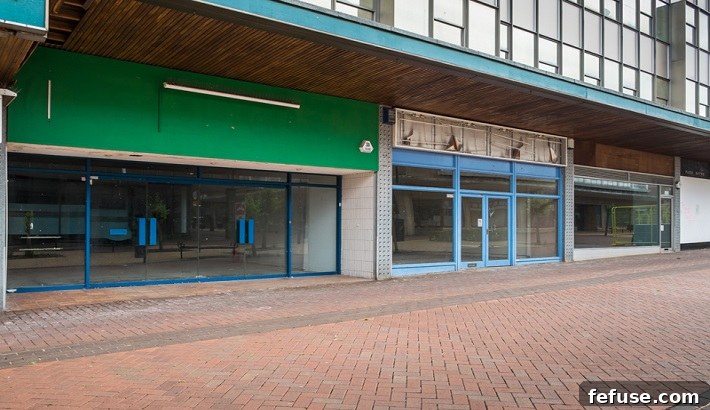
Revitalizing the High Street: A Call to Action Amidst Rising Store Closures
The landscape of the British high street is undergoing an unprecedented transformation, marked by a disturbing acceleration in shop closures. Retailers and unions alike are raising alarm bells, urging the government to implement decisive measures to support struggling physical stores. New data reveals a grim reality: the rate of store closures has reached its highest point since records began in 2010, signaling a critical juncture for the future of urban retail spaces.
The Stark Reality of Retail Decline: An Unprecedented Challenge
Recent analysis by PwC paints a worrying picture of the challenges confronting the high street. In the first half of 2019 alone, approximately 16 stores ceased operations permanently every single day. This alarming rate significantly outpaced new store openings, which stood at a mere nine per day. The cumulative effect was a net decline of 1,234 chain stores across Britain’s top 500 high streets. This significant contraction not only reflects shifting consumer habits but also underscores the intense economic pressures, rising operating costs, and the relentless competitive landscape dominated by e-commerce giants. The dwindling number of physical outlets directly impacts local economies, employment rates, and the very fabric of community life, necessitating a comprehensive and urgent response from all stakeholders.
This escalating crisis isn’t merely a statistic; it represents a fundamental shift in how consumers shop and interact with brands. Traditional retail models are struggling to adapt to an environment where convenience, personalization, and seamless digital integration are paramount. Factors such as prohibitive business rates, inflexible lease agreements, and the sheer overheads associated with maintaining a physical presence increasingly make brick-and-mortar operations less viable for many businesses, forcing them to re-evaluate their strategies or, in many cases, close their doors for good.
Case Studies in Flux: Industry Giants and Legacy Businesses Adapt
The impact of this retail upheaval is evident across the spectrum, from long-standing independent businesses to major retail chains. Just recently, several independent jewellers announced their intentions to close their physical premises. A poignant example is R A Braithwaite, a revered establishment that, after 72 years of trading on the high street, made the difficult decision to transition to an online-only model. This move by a legacy business highlights a broader trend: even well-established retailers with deep roots in their communities are finding it increasingly challenging to justify the costs and diminishing returns of a physical storefront.
Similarly, the retail giant Signet, which operates prominent jewellery brands, revealed it had closed four Ernest Jones and four H Samuel stores within the year. Such strategic consolidations by large corporations are often indicative of efforts to optimize portfolios, shed underperforming locations, and reallocate resources towards more profitable ventures, which frequently include strengthening their online presence and investing in fewer, but higher-quality, flagship stores. These examples underscore the urgent need for innovation and adaptation across the entire retail ecosystem.
Expert Perspectives on the Way Forward: Investment, Agility, and Technology
Industry leaders are offering critical insights into the necessary steps for navigating this challenging period and securing a future for the high street.
Investment and Adaptation: Crafting Relevant Propositions for Modern Consumers
Lisa Hooker, Consumer Markets Leader at PwC, emphasizes the dual responsibility of retailers and stakeholders. She states, “While retailers need to keep investing to make sure their stores and propositions are relevant to today’s consumers, it’s also critical that all stakeholders find ways to ease the burden on operators, keep investing in the high street, and encourage new and different types of operators to fill vacant space.” This perspective highlights that merely opening stores is not enough; the stores themselves must evolve. Modern consumers seek more than just transactional spaces; they desire experiences, convenience, and a clear value proposition that complements their digital lives. This means investing in inviting store designs, curated product selections, exceptional customer service, and seamless omnichannel integration.
Furthermore, easing the burden on operators could involve governmental reforms related to business rates, fairer landlord-tenant agreements, and local council initiatives to improve infrastructure and public spaces. Encouraging a diverse mix of tenants – beyond traditional retail to include leisure, hospitality, health, and community services – can create vibrant hubs that draw people in for multiple reasons, thus increasing footfall for remaining retail establishments.
Agility and Opportunity: The Nimble Approach to Retail
Zelf Hussain, Retail Restructuring Partner at PwC, points out an intriguing silver lining amidst the turmoil. He observes, “The PwC and LDC research also shows that successful operators are taking advantage of the current turmoil to either open stores that were not economically feasible in the past, or to move stores to better locations or to take advantage of lower rents. And it’s this nimbleness that will set apart winning retailers in years to come.” This suggests that the current retail climate, while challenging, also presents opportunities for innovative and agile businesses. Lower rents and increased availability of prime retail spaces can enable brands to secure more desirable locations or experiment with new formats, such as pop-up shops, experiential showrooms, or hybrid retail-leisure concepts, which were previously out of reach. Retailers who can quickly adapt to changing market conditions, consumer preferences, and property dynamics are best positioned to thrive.
Technological Transformation: Bridging the Physical-Digital Divide
Will Broome, CEO and Founder of Ubamarket, expresses profound concern over PwC’s report, describing it as “hugely worrying” for the high street. He stresses the urgency of action, asserting, “Urgent action needs to be taken to stop the rot and retailers would be wise to look at alternative ways of bringing in customers and expand their offering to take on their e-commerce rivals.” Broome firmly believes that technology holds the key to the high street’s revival. He advocates for the integration of 21st-century solutions: “Incorporating technology, such as in-app payments, stock checkers and personalised offers, to make the high street offering as convenient as possible will help to resurrect the high street using 21st-century solutions.”
This technological integration goes beyond simple online shopping. It encompasses creating a seamless, interactive, and personalized experience within the physical store. Imagine shoppers using an app to check real-time stock availability, receive personalized discounts based on their loyalty profile as they browse, or make swift, contactless in-app payments to skip queues. Augmented reality (AR) mirrors could allow customers to virtually try on clothing or jewellery, while interactive displays could provide in-depth product information. Such innovations not only enhance convenience but also transform the physical store into an exciting, data-rich environment that offers unique advantages over pure online shopping, encouraging repeat visits and fostering stronger customer loyalty.
The Unique Resilience of Niche Sectors: The Jewellery Industry’s Advantage
In the fierce competition for consumer spending on the British high street, certain sectors possess inherent advantages. The jewellery industry, in particular, stands out. Jewellery remains a deeply emotive purchase, often associated with significant life events, personal milestones, and expressions of love or commitment. Many consumers still strongly desire to physically touch, feel, and try on pieces before making such an important investment. The tactile experience of examining craftsmanship, feeling the weight of a precious metal, or seeing the sparkle of a gemstone in person is often irreplaceable by even the most sophisticated online imagery.
This inherent need for a sensory and personal experience provides jewellers with a distinct competitive edge. Whether consumers are in the initial research phase, simply wanting to browse and gather information, or ready to make a purchase, they are actively walking into jewellery stores. The onus then falls upon the individual retailer to capitalize on this footfall by providing an exceptional and memorable in-store experience. This involves not only offering exquisite products but also delivering unparalleled customer service, expert advice, a comfortable and secure environment, and a personalized approach that builds trust and fosters a lasting relationship with the client. By focusing on bespoke services, storytelling around the pieces, and creating an atmosphere of luxury and personal connection, jewellers can continue to draw customers away from purely online alternatives and solidify their vital role on the revitalized high street.
A Collaborative Path Forward for High Street Regeneration
Ultimately, the future of the high street hinges on a collaborative effort involving retailers, government bodies, landlords, and local communities. While retailers must embrace innovation and customer-centric strategies, the government needs to address systemic issues like business rates reform and invest in urban infrastructure. Landlords have a role in offering flexible leasing options and supporting diverse retail mixes. Local communities, in turn, can foster vibrant high streets by participating in local events, supporting independent businesses, and demanding quality amenities.
The challenges are undeniable, but so are the opportunities for transformation. By combining digital advancements with the enduring human desire for physical interaction and community, the British high street can evolve from a struggling relic into a dynamic, experiential hub tailored for the 21st century consumer. The call for urgent action is not just about survival; it’s about reimagining and rebuilding a vital part of our urban landscape.