
Navigating the Diamond Landscape: Terminology, Branding, and the Future of Natural vs. Lab-Grown
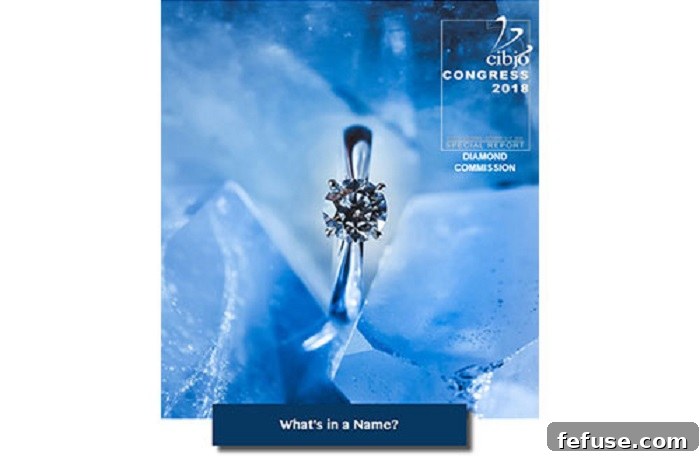
The global diamond industry stands at a pivotal juncture, grappling with evolving consumer perceptions and technological advancements that have brought lab-grown diamonds into the mainstream. In response to this dynamic landscape, the CIBJO Diamond Commission released its Special Report in anticipation of the 2018 CIBJO Congress in Bogotá, Colombia. This landmark report meticulously scrutinizes the proper application of diamond terminology, emphasizing the crucial distinction between naturally occurring diamonds and those created in a laboratory environment. Its findings underscore a fundamental challenge: how to maintain clarity and integrity in a market where both products coexist, appealing to different segments yet sharing a similar physical composition.
Upholding Authenticity: The Unqualified Use of “Diamond”
At the heart of the CIBJO report lies a firm stance on nomenclature. Udi Sheintal, head of the Diamond Commission, unequivocally reiterated that despite recent revisions to the US Federal Trade Commission (FTC) guides, the “bottom line when it comes to the unqualified use of the word ‘diamond’” remains unchanged. He emphasized that, fundamentally, the term “diamond” on its own can only refer to a stone mined from the earth. This assertion is critical for preserving the historical and geological significance associated with natural diamonds, which have been formed over billions of years deep within the earth’s mantle through immense pressure and heat. This natural origin imbues them with a unique story and inherent rarity that lab-grown alternatives, despite identical chemical composition, cannot replicate.
Sheintal further detailed that the FTC’s revised guidelines, while acknowledging the presence of lab-grown alternatives, continue to mandate clear and conspicuous disclosure from marketers of these products. Companies are required to use descriptors such as “laboratory-grown,” “laboratory created,” or “[manufacturer name]-created” to unequivocally indicate that their product did not originate from mining in nature. This requirement ensures consumer transparency and prevents any ambiguity regarding the origin of the gemstone, thereby fostering trust in the marketplace. Conversely, the report highlights the rejection of a suggestion that producers of natural diamonds should be compelled to label their products as “industrially-mined diamonds.” This decision reinforces the industry’s view that natural diamonds are the default standard, requiring no special modifier to denote their authentic, earth-mined origin. The emphasis on distinguishing terms for lab-grown diamonds aims to protect consumer confidence and prevent potential deception in a market increasingly populated by diverse offerings, ensuring consumers make informed purchasing decisions based on clear information about a diamond’s provenance.
Acknowledging Evolution: Synthetic Producers as Industry Participants
While firmly advocating for strict terminology to protect the integrity of natural diamonds, the CIBJO report also reflects the evolving reality of the diamond sector. It acknowledges that the “new FTC guides clearly recognize the synthetic diamond producers as fully-fledged participants in our industry.” This recognition signifies a maturation of the market, where lab-grown diamonds are no longer merely a niche or disruptive anomaly but an established segment contributing to the overall jewelry ecosystem. This shift brings with it both opportunities and responsibilities, particularly concerning ethical practices, sustainability claims, and continued consumer education about the distinct characteristics and value propositions of each product category. The inclusion of lab-grown diamonds as legitimate participants necessitates a robust framework for fair competition, accurate representation, and adherence to industry standards that protect all market segments and, most importantly, the consumer.
De Beers’ Lightbox: A Market Game Changer and Strategic Re-evaluation
One of the most significant developments discussed in the report, and indeed across the industry, is De Beers’ strategic decision to launch Lightbox Jewelry. Sheintal characterized this move as a “game changer,” suggesting it “would appear to be putting daylight between natural diamonds and synthetics.” Historically, De Beers, a dominant force in natural diamond mining, had been a vocal proponent against lab-grown diamonds, viewing them as a potential threat to the natural diamond mystique. Their entry into the lab-grown market, particularly with a distinct brand like Lightbox and an accessible, fixed pricing model (e.g., $800 per carat), fundamentally reshaped market expectations and dynamics. This strategic pivot created a clearer pricing tier for lab-grown diamonds, distinct from the more complex and variable pricing of natural stones, effectively segmenting the market based on both origin and price point.
The implications of Lightbox’s strategy extend far beyond De Beers itself, reverberating throughout the entire diamond value chain. Sheintal critically observes that its approach “also seems to undermine the business models of other synthetic producers, which contend that the price of natural diamonds will always be the benchmark for the prices at which they can sell their own products.” By offering lab-grown diamonds at a lower, more standardized price point, De Beers effectively challenged the direct price competition model that many other lab-grown producers had adopted, where their primary marketing angle was often “a diamond for less.” This move encourages lab-grown diamonds to establish their own value proposition based on affordability, accessibility, and modern appeal, rather than solely benchmarking against natural diamonds. It forces the lab-grown sector to innovate in branding and marketing, carving out a unique space that does not solely rely on being a cheaper alternative to a natural product. This separation is crucial for the long-term health and distinct identity of both market segments, allowing each to thrive on its own merits and cater to different consumer desires and purchasing power.
The Future of Value: One Price or Distinct Identities?
The evolving market also brings differing perspectives on future pricing structures and the very definition of value in diamonds. Analysts Chaim Even-Zohar and Pranay Narvekar have posited that, “over the long term there will be only one diamond price, without premiums,” suggesting an eventual convergence in valuation where physical properties alone dictate price. However, Udi Sheintal strongly disagrees with this prognosis, stressing that it is the industry’s imperative to “create an identity for naturally-created goods that is different from those grown in a laboratory or factory.” This divergence of opinion highlights the fundamental debate surrounding the perceived value of natural versus lab-grown diamonds. Is intrinsic physical composition the sole determinant of value, or do other factors – rarity, heritage, story, emotional connection, and brand – play an equally, if not more, significant role in establishing premium value?
Sheintal’s compelling argument for distinct branding is rooted in a powerful analogy that resonates beyond the diamond industry: “We now have to create a separate brand identity for diamonds mined in nature,” he concludes. “This is a not an impossible exercise. A white cotton t-shirt can be bought in a supermarket for $5, or at a Ralph Lauren store for $70. The physical composition of the two products may be similar, but their legends are very different. While the one is a generic product, the other is a luxury item backed by a sophisticated branding structure. Both are viable from a business perspective.” This analogy is particularly insightful because it moves beyond the purely scientific definition of a product and delves into the realm of intangible, perceived value. The physical attributes of a t-shirt (or a diamond) might be functionally similar, but the “legend”—the story, the brand heritage, the emotional connection, the rarity, the cultural significance, and the perceived luxury—is what commands a premium. For natural diamonds, this legend encompasses billions of years of geological formation, the romance of discovery, the enduring symbol of love and commitment passed down through generations, their intrinsic rarity as finite resources, and the human stories intertwined with their journey from earth to adornment. These elements contribute to an unparalleled narrative that lab-grown diamonds, while impressive technological feats, cannot replicate.
Therefore, the crucial task for the natural diamond industry is not merely to sell a stone, but to tell a compelling, authentic story that resonates deeply with consumers on an emotional and aspirational level. It involves investing in sophisticated branding strategies that highlight the unique journey of a natural diamond from the earth’s depths to the ring finger, its ethical sourcing practices, its contribution to local communities through sustainable mining, and its enduring value as an heirloom. By emphasizing these intrinsic and extrinsic qualities – the rarity of nature, the history, the emotional depth, the unique sparkle, and the investment in a timeless treasure – the industry can solidify the perception of natural diamonds as true luxury items, distinct from the more accessible and technologically-driven appeal of lab-grown alternatives. This differentiation is vital for maintaining distinct market segments where both product types can thrive by appealing to different consumer motivations, preferences, and ethical considerations, ensuring a robust and diverse future for the entire diamond market.
CIBJO’s Role: Ensuring Integrity and Consumer Confidence
The CIBJO Diamond Commission’s Special Report serves as a critical guide for the industry during this period of profound transformation. CIBJO, as the international confederation of jewelry, aims to protect consumer confidence and promote ethical practices globally. By providing clear directives on terminology, emphasizing the importance of distinct branding, and advocating for transparent disclosure, CIBJO empowers industry stakeholders—from miners and manufacturers to retailers and consumers—to navigate the complexities of the modern diamond market with clarity and integrity. Their commitment to precise language and transparent communication is paramount for ensuring that the unique value propositions of both natural and lab-grown diamonds are understood and appreciated by all, thereby fostering a healthy, competitive, and trustworthy marketplace that serves the diverse needs of consumers worldwide.
The Road Ahead: A Differentiated Diamond Future
The challenges and opportunities outlined in the CIBJO Special Report highlight a dynamic and evolving future for the diamond industry. The co-existence of natural and lab-grown diamonds necessitates a clear differentiation, not just in scientific terms but also in branding, marketing, and market positioning. While lab-grown diamonds offer an accessible, technologically advanced, and often more budget-friendly option, natural diamonds continue to hold an unparalleled allure rooted in rarity, heritage, deep emotional significance, and their status as tangible assets formed over geological eons. The industry’s ability to successfully articulate these distinct “legends” will determine the long-term health and consumer perception of both categories. As Sheintal’s analogy powerfully illustrates, it’s not just about the product itself, but the story, the experience, the perceived value, and the brand that truly define value in the luxury market. The mandate for the natural diamond industry is clear: embrace and champion its unique identity, its timeless appeal, and its authentic story to secure its premium position in the hearts and minds of consumers worldwide, ensuring that each type of diamond finds its rightful place in a vibrant global market.
News Source: gjepc.org