
The global jewellery industry finds itself at a pivotal juncture, navigating a complex landscape shaped by post-pandemic recovery and evolving economic realities. As the world emerges from the significant constraints imposed by the Covid-19 pandemic, the sector faces a recalibration of strategic advantages and an economic slowdown affecting numerous regions worldwide. This critical assessment was shared by CIBJO President Dr. Gaetano Cavalieri at the prestigious Global Pearl Development Conference, held in Zhuji, China – renowned as the country’s pearl capital – on May 21, 2023. Dr. Cavalieri’s insights provide a roadmap for understanding the challenges ahead while underscoring the enduring strengths and future potential of the fine jewellery market.
Addressing an assembly of industry leaders and stakeholders, Dr. Cavalieri reflected on the recent past, highlighting the remarkable resilience demonstrated by the fine jewellery market during an unprecedented period. “The entire Covid period showcased the inherent resilience of the fine jewellery market, despite the immense pressures imposed by lockdowns and disruptions to supply chains worldwide,” he stated. While the initial phase of the pandemic saw a natural decline in demand as consumers grappled with uncertainty and adjusted to a “new normal” of restricted movement and altered priorities, the industry quickly rebounded. This recovery was not merely a return to previous levels; in many instances, sales trajectories surpassed pre-crisis figures. Dr. Cavalieri further elaborated, “In fact, in 2021, most indicators showed better results compared not only to 2020 but also to 2019, pre-pandemic.” This surge was partly driven by a shift in consumer spending, with disposable income previously allocated to travel and experiences being redirected towards tangible luxury goods and personal indulgences.
Navigating the Evolving Post-Pandemic Landscape
However, as the global economy gradually reopens and consumer behaviors normalize, the unique advantages that benefited the jewellery sector during the pandemic have begun to diminish. Dr. Cavalieri acknowledged this shift, noting that “the industry’s advantages during the pandemic have diminished, further compounded by the eagerness of consumers to travel and experience the physical world after years of confinement.” The desire for experiential spending, deferred for so long, now competes directly with the demand for luxury goods. This broader trend coincides with a palpable economic slowdown across many countries, creating a dual challenge for the market. Even in significant markets such as China, which are showing signs of improvement, Dr. Cavalieri cautioned against overly optimistic expectations. “Even in markets like China, where conditions are improving, we cannot expect a return to the double-digit growth rates seen in the past,” he explained. The industry must adapt to a landscape characterized by more measured growth, increased competition for consumer spending, and heightened economic scrutiny.
The economic headwinds manifesting in various forms—inflationary pressures, supply chain vulnerabilities, geopolitical uncertainties, and tightening consumer budgets—demand strategic foresight. These factors collectively contribute to a more cautious purchasing environment, particularly for discretionary luxury items. Jewellery businesses, from mining to retail, are compelled to re-evaluate their operational models, marketing strategies, and product offerings to align with these new economic realities. The emphasis shifts from simply meeting demand to strategically stimulating it through innovation, value, and compelling narratives that resonate with contemporary consumer values. This period of adjustment requires agility and a deep understanding of market dynamics to sustain growth and profitability.
The Enduring Appeal and Future Optimism of Fine Jewellery
Despite these immediate challenges, Dr. Cavalieri expressed profound optimism regarding the long-term future of the industry, grounding his confidence in the fundamental human connection to jewellery. He underscored the sector’s inherent strength, which lies in the timeless human inclination to express emotions, commemorate significant life events, and convey appreciation through valuable and beautiful objects. “This fundamental aspect of our industry has remained unchanged for centuries,” he emphasised. Jewellery transcends mere adornment; it serves as a powerful medium for storytelling, preserving memories, and transmitting cultural heritage across generations. This intrinsic emotional and symbolic value provides a robust foundation against transient economic fluctuations.
However, remaining relevant in the modern era demands more than just relying on tradition. Dr. Cavalieri highlighted the imperative for the industry to be acutely aware of evolving consumer demands. Today’s consumers, particularly younger generations, are increasingly prioritising factors beyond aesthetic appeal and material value. They seek transparency, ethical practices, and a clear demonstration of positive societal and environmental impact. “We must be aware of evolving consumer demands, which increasingly prioritise responsible sourcing and societal benefits,” he urged. This shift means that the true value of jewellery now extends far beyond its tangible components. Integrity, both in the product itself and throughout the entire supply chain, has become a non-negotiable factor. Brands that can authentically demonstrate their commitment to ethical sourcing, fair labor practices, and environmental stewardship will undoubtedly gain a significant competitive advantage and foster deeper consumer trust and loyalty.
For the jewellery industry, this means an increased focus on traceability, certifications, and clear communication about the journey of each piece, from its raw materials to its final exquisite form. Consumers want to know that their purchases contribute positively to the world, not just to their personal adornment. Brands are responding by investing in sustainable practices, engaging in community development programs in sourcing regions, and embracing new technologies to ensure transparency. This dedication to integrity not only enhances brand reputation but also reinforces the inherent emotional value of fine jewellery, making each piece a symbol of conscious luxury and thoughtful expression.
Cultured Pearls: A Beacon of Sustainability and Market Potential
Within this context of evolving consumer values and the drive for sustainability, Dr. Cavalieri singled out cultured pearls as a jewellery category with exceptionally high market potential. He specifically highlighted their outstanding sustainability credentials from both social and environmental perspectives. “Cultured pearls, when responsibly farmed in pristine environments, represent a jewellery category that is truly sustainable,” he explained. The process of culturing pearls, when managed with ecological mindfulness, can actively contribute to marine ecosystem health rather than detract from it. Pearl farms often act as natural purifiers, filtering water and supporting biodiversity in coastal areas. This symbiotic relationship between pearl cultivation and environmental well-being makes them a standout choice for eco-conscious consumers.
Moreover, the social aspects of cultured pearl farming are equally compelling. Many pearl farms provide stable employment and economic opportunities for coastal communities, fostering sustainable livelihoods in remote regions. This approach not only benefits the environment through responsible aquaculture practices but also significantly enhances the quality of the end product, as healthy oysters in clean waters produce more lustrous and beautiful pearls. “It’s a win-win situation,” Dr. Cavalieri affirmed, encapsulating the dual benefits of ecological responsibility and superior product quality. The growing demand for sustainable luxury positions cultured pearls as a key driver of future growth in the jewellery sector, appealing to a discerning clientele that values both beauty and ethical provenance. Their natural elegance, versatility, and unique origin story further enhance their appeal, making them a timeless yet modern choice for the ethical consumer.
CIBJO’s Global Leadership and Strategic Collaboration in China
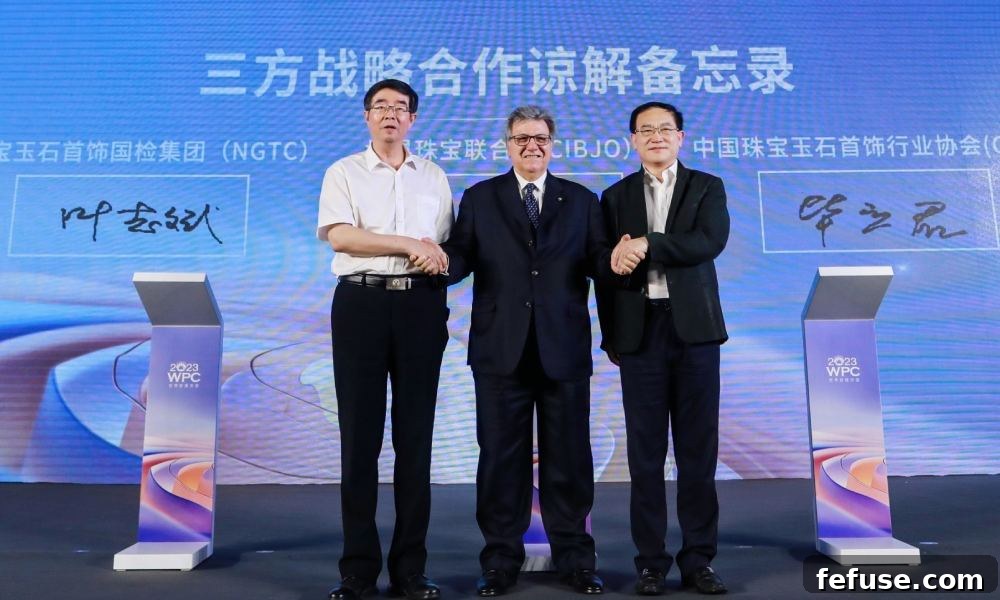
Underscoring CIBJO’s commitment to fostering global cooperation and upholding industry standards, Dr. Cavalieri’s visit to China marked a significant milestone. During his stay, he formally signed a Memorandum of Understanding (MoU) with two pivotal Chinese industry bodies: Ye Zhibin, Chairman of the National Gemstone Testing Centre (NGTC) of China, and Bi Lijun, General Secretary and Vice President of the Gems and Jewellery Trade Association of China (GAC). This landmark agreement solidifies a commitment to enhanced cooperation, extensive knowledge sharing, and the development of joint programs aimed at advancing the jewellery sector within China and globally.
A cornerstone of this MoU is the mutual commitment to adopting international standards and nomenclature developed by CIBJO within China. CIBJO, often referred to as the World Jewellery Confederation, plays a crucial role in establishing harmonised global standards for diamonds, colored gemstones, pearls, precious metals, and responsible sourcing practices. The integration of these internationally recognized standards into the Chinese market is profoundly significant. It will not only ensure greater consistency, transparency, and consumer confidence within one of the world’s largest and fastest-growing jewellery markets but also facilitate smoother international trade by creating a common language and framework for evaluation and ethical practice. This strategic partnership highlights CIBJO’s enduring mission to unite the global jewellery trade under a banner of integrity, quality, and sustainability, ensuring a prosperous and responsible future for the entire industry.
In conclusion, the insights shared by Dr. Gaetano Cavalieri at the Global Pearl Development Conference paint a comprehensive picture of an industry in transition. While facing contemporary challenges such as economic slowdowns and shifting consumer priorities, the jewellery sector stands firm on its inherent resilience and the timeless human desire for meaningful objects. The future, Dr. Cavalieri suggests, lies in embracing responsible sourcing, promoting sustainable practices like those found in cultured pearl farming, and fostering robust international collaborations. CIBJO’s proactive engagement in shaping these standards and forging partnerships, as exemplified by the MoU in China, positions it as a vital catalyst for guiding the global jewellery industry towards a future defined by integrity, innovation, and sustained growth.