
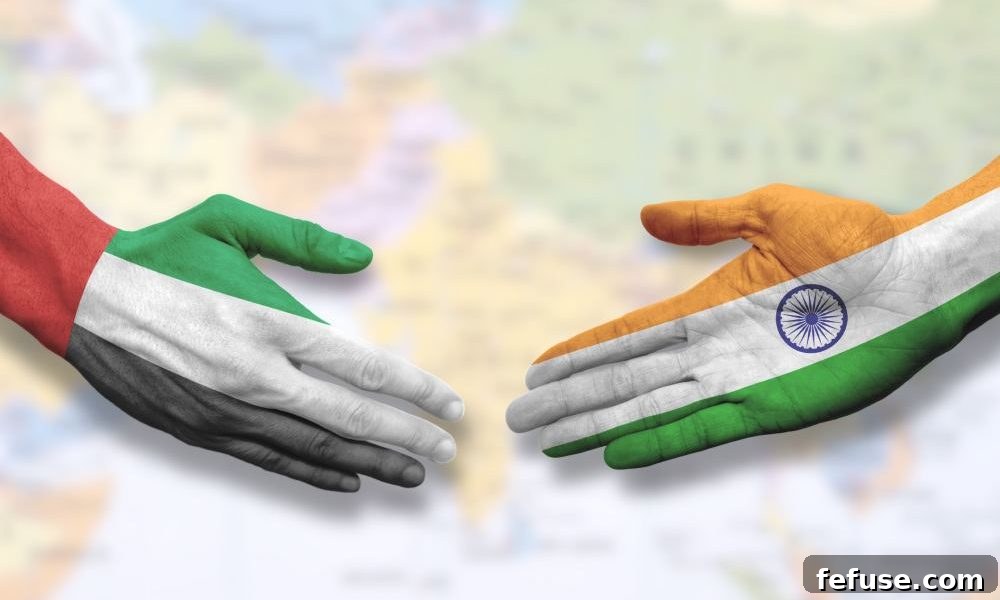
Unlocking Prosperity: How the India-UAE CEPA is Revolutionizing the Gem & Jewellery Sector
The landscape of global trade is continually evolving, with strategic partnerships playing a pivotal role in shaping economic futures. Among these, the Comprehensive Economic Partnership Agreement (CEPA) between India and the United Arab Emirates (UAE) stands out as a landmark accord. Since its enforcement on May 1st, 2022, this ambitious trade pact has ushered in a new era of growth and expansion, particularly for India’s vibrant gem and jewellery industry within the lucrative UAE market. With significant advantages such as more affordable gold, reduced operational costs, and enhanced competitiveness, Indian jewellers are experiencing an unprecedented surge in exports and retail sales. This article delves deep into the multifaceted ways in which the India-UAE CEPA is transforming the sector, creating a pathway to sustained prosperity for businesses on both sides.
The Genesis of a Game-Changing Partnership: Understanding the India-UAE CEPA
The India-UAE CEPA, a meticulously crafted and extensive agreement, was formally signed on February 18th, 2022, during a momentous virtual summit. This historic event brought together the Prime Minister of India, Shri Narendra Modi, and His Highness Sheikh Mohamed bin Zayed Al Nahyan, the President of the UAE and Ruler of Abu Dhabi, underscoring the high-level commitment to strengthening bilateral economic ties. While the signing marked the official commitment, the agreement’s practical benefits began to materialize with its implementation on May 1st, 2022. This crucial distinction between the signing and effective dates is important, as it allowed businesses and governments time to prepare for the new trade environment.
The primary objective of the CEPA is to significantly boost bilateral trade, investment, and overall economic growth between India and the UAE. It aims to eliminate or reduce tariffs on a wide range of goods, streamline customs procedures, and create a more transparent and predictable regulatory framework for businesses. Recognizing the mutual benefits, both nations continue to collaborate actively to further enhance the ‘Ease of Doing Business,’ a critical factor for sustained economic engagement. On May 1st, 2023, marking the first anniversary of CEPA’s implementation, Commerce Secretary Shri Sunil Barthwal extended his congratulations, highlighting the agreement’s pivotal role in driving bilateral trade growth over the preceding eleven months and reaffirming the ongoing commitment to foster a seamless business environment.
Economic Catalysts: Direct Benefits for Indian Jewellers
The CEPA’s provisions have directly addressed some of the most pressing challenges faced by the Indian gem and jewellery industry, turning them into significant opportunities. These core benefits are primarily centered around cost reduction and improved market access.
Reduced Gold Costs: A Golden Advantage
Gold, being the primary raw material for a significant portion of Indian jewellery, dictates production costs and, consequently, market competitiveness. The CEPA has made gold more affordable for Indian manufacturers by facilitating access to 1% cheaper gold from the UAE, capped at 140 tonnes annually. This seemingly modest 1% reduction translates into substantial savings for manufacturers, especially considering the high volume and value of gold utilized in the industry. Lower raw material costs enable Indian jewellers to offer more competitive prices in both domestic and international markets, boosting their profit margins and allowing for greater flexibility in pricing strategies. This direct cost benefit is a significant boon, enhancing the overall economic viability of jewellery manufacturing in India.
Enhanced Export Competitiveness: Outperforming Rivals
Beyond cheaper gold, the CEPA has made Indian jewellery exports to the UAE approximately 5% cheaper compared to products from other competing nations such as Malaysia and Turkey. This preferential tariff treatment provides a considerable competitive edge. In a highly competitive global market, even a small price advantage can significantly influence buyer decisions. The reduction in export costs means Indian-made jewellery is now more attractive to UAE-based buyers and consumers, leading to increased demand and market share. This enhanced competitiveness is crucial for solidifying India’s position as a leading global exporter of gems and jewellery.
A Surge in Exports and Retail Growth
The tangible impact of these cost reductions and competitive advantages is clearly reflected in the trade figures. In just one year since CEPA’s implementation, Indian jewellery exports to the UAE witnessed a remarkable 16.5% increase. This impressive growth underscores the immediate positive effects of the agreement. If this robust trend continues, the value of jewellery exports from India to the UAE is projected to rapidly return to its pre-Covid levels, which stood at a robust $9 billion. This not only signifies a recovery but also indicates a strong trajectory for future growth, fueled by sustained demand and favorable trade conditions. Alongside export growth, the CEPA has also stimulated remarkable growth in retail sales of Indian jewellery within the UAE, as consumers benefit from more diverse and competitively priced offerings.
Strategic Market Access and Global Ambitions
The CEPA extends beyond immediate cost savings, offering Indian jewellers unparalleled strategic market access and opportunities to broaden their global reach.
The UAE as a Gateway to Emerging Economies
As His Excellency Shri Sunjay Sudhir, Ambassador of India to the UAE, eloquently stated to GJEPC, “The historic India-UAE CEPA is a major trade agreement to transform bilateral economic, trade and investment ties and propel economic growth. The agreement also holds promise as a gateway for the Indian exporters to emerging economies in the Middle East and Africa.” This perspective highlights the UAE’s crucial role not just as a primary market, but as a strategic re-export hub. Indian jewellers can leverage Dubai’s advanced logistics and connectivity to efficiently access other high-growth markets across the Middle East and the vast African continent, significantly expanding their global footprint without needing to establish direct presence in each country.
Capitalizing on Dubai’s Global Business Hub Status
Dubai, an integral part of the UAE, has long been recognized as one of the world’s most interconnected free ports and a premier global business hub. Its sophisticated infrastructure, robust regulatory framework, and strategic geographical location make it an ideal platform for international trade. The CEPA further streamlines trading experiences for Indian jewellers, allowing them to capitalize on Dubai’s efficiency and extensive network. This includes simplified customs procedures, world-class warehousing facilities, and access to a diverse pool of international buyers and distributors. The seamless trading environment fostered by Dubai’s ecosystem, enhanced by CEPA, significantly reduces logistical hurdles and operational costs for businesses looking to expand internationally.
GJEPC’s Vision: The India Jewellery Exposition Centre (IJEX)
Recognizing the immense potential unleashed by the CEPA, the Gem & Jewellery Export Promotion Council (GJEPC) has taken proactive steps to maximize these benefits. Building on the thriving pre-CEPA trade relationship between the UAE and India, GJEPC launched the India Jewellery Exposition Centre (IJEX) in Dubai. This innovative platform serves as a continuous showcase for Indian jewellers to present their exquisite designs, exceptional craftsmanship, and high-quality products to a global audience. Shri Vipul Shah, Chairman, GJEPC, proudly announced the launch on the first anniversary of the CEPA, stating, “The GJEPC, with the support of the Ministry of Commerce & Industry, has taken the initiative to establish IJEX as a much-needed avenue for MSME jewellers to exhibit their products on a continuous basis in the Middle East market, which accounts for 40% of India’s gem and jewellery exports.” IJEX is particularly vital for Micro, Small, and Medium Enterprises (MSMEs), providing them with a cost-effective and continuous presence in a key export market, thereby democratizing access to international trade opportunities.
Favorable Regulatory Frameworks: A Win-Win for Both Nations
The success of the CEPA is also rooted in the mutually beneficial regulatory adjustments implemented by both Indian and UAE governments, creating an environment ripe for growth.
Mutually Beneficial Tax Regimes
A cornerstone of the CEPA’s financial advantages lies in its tax provisions. The Indian government provides a 1% discount on bullion import duty, directly benefiting manufacturers. Concurrently, the UAE government waives import duty on jewellery manufactured in India. This two-pronged approach creates a highly advantageous scenario for the entire supply chain. Indian manufacturers gain from cheaper raw materials, while their finished products enter the UAE market without additional tariffs. This significantly reduces the overall cost burden, making Indian jewellery more competitively priced for the end consumer and more profitable for traders and retailers in the UAE. This intelligent alignment of tax policies exemplifies the spirit of comprehensive partnership.
Enhanced Ease of Doing Business
Beyond tariff reductions, the CEPA facilitates broader improvements in the ease of doing business between the two nations. This includes simplifying customs procedures, recognizing each other’s standards, and fostering a more predictable legal and regulatory environment. Reduced bureaucracy, streamlined documentation, and faster clearance times contribute to operational efficiencies and lower transaction costs for businesses engaged in cross-border trade. These systemic improvements are vital for sustainable growth, encouraging greater investment and participation from businesses of all sizes.
Retail Expansion and Brand Presence in the UAE
The confidence generated by the CEPA has spurred significant investment and expansion within the retail sector, particularly by leading Indian jewellery brands.
Leading Indian Jewellers Enter the UAE Market
The positive impact of the CEPA has attracted major Indian jewellery retail chains to expand their footprint in the UAE. Prominent names such as Tanishq, Malabar Gold & Diamonds, and Senco are actively setting up new stores and increasing their presence across the Emirates. This expansion by established brands is a clear indicator of the market’s robust potential and the favourable business environment created by the agreement. These brands bring with them a legacy of trust, quality, and exquisite designs, catering to the diverse tastes of expatriates and local populations alike.
Remarkable Growth in Retail Sales
As Shri Sabyasachi Ray, Executive Director, GJEPC, noted, “The CEPA agreement has attracted big Indian jewellery retail chains… The retail sales of Indian jewellery are growing at a remarkable pace, thanks to the CEPA agreement. This growth is a testament to the positive impact of the agreement on the Indian gem and jewellery industry.” The expansion of these retail giants, coupled with enhanced consumer confidence due to competitive pricing and wider availability, has fueled this remarkable growth in retail sales. Consumers in the UAE are benefiting from a richer selection of Indian jewellery, renowned for its intricate craftsmanship and cultural significance, at more attractive price points. This retail boom completes the cycle of benefits, from raw material sourcing to direct consumer engagement.
Beyond Trade: Strengthening Bilateral Ties and Future Prospects
The India-UAE CEPA is more than just a trade agreement; it’s a foundational pillar strengthening the bilateral relationship between two dynamic economies. It paves the way for deeper collaboration, not just in trade but also in investment, technology, and cultural exchange.
For the Indian gem and jewellery industry, the CEPA has undeniably been a transformative force. By significantly reducing costs, stimulating exponential growth in exports and retail sales, and strategically leveraging the UAE’s free trade environment, Indian jewellers are now better equipped to compete and thrive on a global scale. This landmark agreement has not only fortified the existing trade relationship but has also unlocked new avenues for Indian jewellers to expand their businesses, innovate, and reach previously untapped markets. With the industry demonstrably poised for even more substantial growth in the coming years, the India-UAE CEPA has truly set the stage for a remarkably prosperous and expansive future for the Indian gem and jewellery sector, cementing its position as a global leader.
Source: GJEPC/Solitaire