
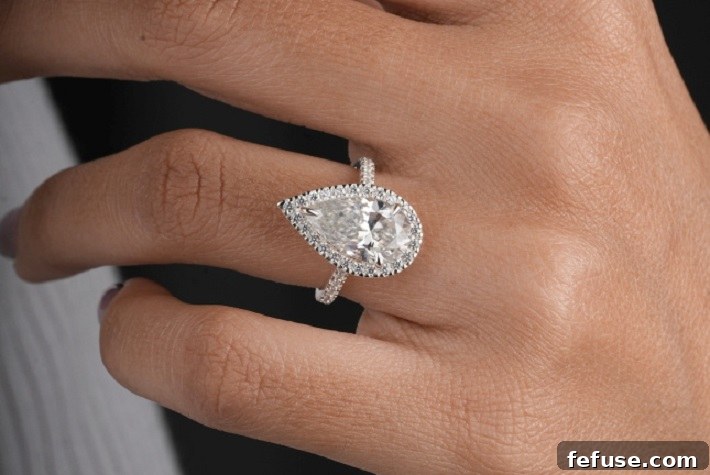
The $50,000 Lie: How a Lab-Grown Diamond Shattered a Wedding and Sparked a Profound Betrayal
In a story that has captivated online communities and sparked discussions about trust, value, and the true meaning of commitment, a bride-to-be, identified only as Lydia, abruptly called off her highly anticipated wedding. The dramatic decision came after a shocking revelation: her supposedly “very expensive” $50,000 diamond engagement ring, which she and her fiancé Seth had proudly flaunted, was in fact a lab-grown gemstone with a significantly lower value. This tale, initially brought to light by Brides magazine after originating on the popular social networking site Reddit, serves as a poignant reminder that deception, regardless of its perceived scale, can unravel the very fabric of a relationship.
The Revelation: A Jeweler’s Keen Eye Uncovers the Truth
The truth emerged not from a professional appraisal, but through a heartfelt favor from Lydia’s sister, Katie, who happens to be a skilled jeweler. In a gesture of sisterly affection, Katie offered to clean and polish the engagement ring, ensuring it would sparkle perfectly for Lydia’s upcoming nuptials. What began as a routine task quickly turned into a moment of alarming discovery. As Katie meticulously examined the ring, her professional instincts kicked in. She immediately noticed that the setting and band were crafted from what appeared to be “cheap materials,” far from the premium metals typically associated with a diamond ring of such a purported high value.
Upon closer inspection, Katie’s suspicions grew stronger. Using her expertise and specialized tools, she was able to conclusively determine that the centerpiece of the ring – the magnificent diamond that Lydia and Seth had so proudly boasted about – was not a natural, earth-mined diamond, but rather a lab-grown equivalent. This distinction is crucial, as while lab-grown diamonds are chemically and physically identical to their natural counterparts, their market value is substantially different. The implications of her discovery were immense, threatening to shatter not just a piece of jewelry, but an entire future built on a perceived foundation of honesty and shared dreams.
Beneath the Sparkle: The True Cost of Deception
Before Katie’s startling revelation, Lydia and Seth had made no secret of their excitement over the ring’s ostensible value. They had, according to the accounts, openly bragged to their circle of friends and family about the “very expensive diamond,” creating an image of prosperity and a lavish commitment. This public display of perceived wealth and the story behind the costly ring undoubtedly contributed to Lydia’s sense of pride and security in her relationship. The emotional investment in the ring went beyond its material worth; it symbolized Seth’s supposed dedication, generosity, and the financial stability they were building together.
When Katie finally delivered the devastating news, stating that the ring was “worth no more than $30,” Lydia’s immediate reaction was one of disbelief, followed by an assumption that Seth himself must have been a victim of an elaborate scam. It was inconceivable to her that the man she was about to marry would knowingly present her with a cheap, misrepresented ring, especially one they had both paraded as a symbol of their extravagant love. The idea that Seth, the person she trusted most, could have been duped seemed more plausible than the agonizing alternative that he might have intentionally deceived her. This initial reaction highlights the deep-seated trust Lydia had placed in Seth, making the subsequent revelation even more crushing.
Confrontation and a Stinging Confession
Armed with the irrefutable evidence from her sister, Lydia confronted Seth. The moment of truth must have been agonizing, a turning point that would forever alter the course of their relationship. What Lydia hoped would be an explanation of how Seth was swindled, turned into a chilling confession. Seth admitted that he had knowingly purchased the bargain-basement sparkler, fully aware it was a lab-grown diamond and not the natural, high-value gem he had allowed Lydia and everyone else to believe it was. He had, by his own admission, perpetrated a deliberate deception, allowing the lie to fester and grow as they publicly celebrated their engagement.
Katie, Lydia’s sister, later conveyed the profound impact of this admission in a post on Reddit’s “Am I the A**hole” section, stating simply but powerfully: “She’s just very upset that Seth lied to her.” This sentence encapsulates the core of the issue. While the monetary value of the ring was undoubtedly a factor – the stark contrast between $50,000 and $30 being undeniably shocking – it was the betrayal of trust that truly shattered Lydia. The lie itself, the intentional misrepresentation, and the subsequent cover-up, struck at the very heart of the commitment she believed they shared. It wasn’t merely about the diamond’s origin or its price; it was about Seth’s character and his willingness to deceive the woman he claimed to love and intended to marry.
Beyond the Price Tag: The Erosion of Trust
This story transcends the simple economics of jewelry and delves deep into the fundamental principles of a healthy relationship: honesty, transparency, and trust. An engagement ring is more than just a piece of jewelry; it is a powerful symbol of a promise, a visible representation of commitment and fidelity. For many, its value lies not just in its carat weight or clarity, but in the sincerity of the gesture and the integrity of the person offering it. Seth’s deliberate misrepresentation of the ring’s value and origin wasn’t just a minor oversight; it was a calculated act of deception that called into question his entire character and his future intentions.
The lie created a chasm of doubt. If Seth was willing to lie about something as significant as the engagement ring, what else might he be willing to lie about in their married life? Financial honesty is a cornerstone of many successful partnerships, and this incident suggested a concerning lack of it. The emotional fallout for Lydia was immense. Her dream of a future with Seth, built on what she believed was a foundation of mutual respect and truth, crumbled under the weight of his admission. The wedding was called off not because the ring was cheap, but because the trust was broken beyond repair. This illustrates a universal truth: once trust is eroded, especially at such a foundational moment, rebuilding it can be an insurmountable challenge, often leading to the painful conclusion that the relationship cannot continue.
Natural vs. Lab-Grown Diamonds: Understanding the Difference
The story also highlights a common misunderstanding in the modern jewelry market regarding natural versus lab-grown diamonds. For clarity, it’s essential to understand the distinctions. Natural diamonds are formed deep within the Earth over billions of years, under immense pressure and heat, making each one a unique geological marvel. They are mined from the earth and then cut and polished to bring out their brilliance. Their rarity and the extensive process of extraction contribute to their higher market value and historical perception of luxury and prestige.
Lab-grown diamonds, conversely, are cultivated in highly controlled laboratory environments using advanced technological processes that replicate the natural conditions under which diamonds form. Chemically, physically, and optically, they are identical to natural diamonds. They possess the same brilliance, hardness, and durability. However, because they are manufactured rather than mined, their supply is not constrained by natural geological processes, making them significantly more affordable. A lab-grown diamond can cost anywhere from 30% to 70% less than a comparable natural diamond. The choice between the two often boils down to personal preference, budget, and ethical considerations regarding mining practices or environmental impact.
While lab-grown diamonds offer a more ethical and sustainable alternative for many consumers, and allow buyers to get a larger stone for their budget, the critical point in Lydia’s story is not the nature of the diamond itself, but the deliberate misrepresentation. There is no inherent problem with choosing a lab-grown diamond for an engagement ring, provided the buyer is transparent about its origin and value. The deception occurred when Seth knowingly presented a lab-grown diamond as a high-value natural gem, allowing Lydia to live under a false impression and boast about a non-existent extravagance. This intentional obfuscation of the truth, rather than the intrinsic characteristics of the diamond, became the ultimate deal-breaker.
The Lingering Questions: What This Story Tells Us About Relationships and Value
Lydia and Seth’s experience serves as a cautionary tale, prompting reflection on several crucial aspects of modern relationships and societal values. Firstly, it underscores the paramount importance of honesty and open communication, particularly concerning financial matters. Marriage is a partnership built on shared understanding and mutual trust, and any form of deceit can critically undermine its foundation. Secondly, the narrative brings into question the societal pressure surrounding engagement rings and their perceived value. The idea that a ring must be of a certain expense to signify true love can lead individuals to make ill-advised decisions, or worse, resort to dishonesty to meet perceived expectations.
Finally, the story encourages a broader discussion on what truly constitutes value in a relationship. Is it the price tag of an engagement ring, or is it the unwavering honesty, integrity, and genuine affection shared between two individuals? For Lydia, the realization that Seth was willing to lie about something so symbolic revealed a deeper flaw in his character, one that outweighed any material consideration. The decision to call off the wedding, while undoubtedly painful, was a testament to her valuing truth and integrity over a superficial symbol of wealth, ensuring that her future would be built on a foundation of sincerity, not deceit.
Conclusion
The story of Lydia, Seth, and the lab-grown diamond is a stark reminder that true wealth in a relationship is measured not in carats or cash, but in trust, honesty, and transparency. A lie, however small it may seem to the deceiver, can carry an unbearable weight, capable of crushing dreams and dissolving futures. For Lydia, the discovery of her “bargain basement sparkler” led to the painful but necessary decision to walk away from a relationship built on a foundation of deception, choosing integrity and self-respect over a gilded illusion.