
The End of an Era? Breitling’s Exit Signals Major Shift in the Luxury Watch Trade Show Landscape
The luxury watch industry is currently navigating a period of profound transformation, with traditional trade shows, once the undisputed epicenters of product launches and industry networking, increasingly facing an existential crisis. The latest significant development underscores this shift: Breitling’s official confirmation of its withdrawal from Baselworld. This move, announced on a Tuesday, adds another prominent name to a growing list of brands opting to forge their own paths, raising critical questions about the future relevance of venerable exhibitions like Baselworld and SIHH.
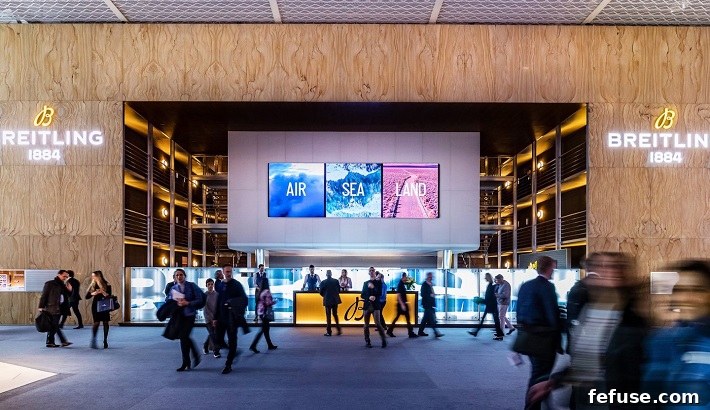
Breitling’s departure is particularly noteworthy given its substantial presence at Baselworld, a fair that has experienced a steady decline in attendance and exhibitor numbers. This trend was dramatically accelerated last year when Swatch Group CEO Nick Hayek declared that the conglomerate, representing the world’s largest watch producer, would pull all its prestigious brands from the 2019 show. While Rolex and Tudor are reportedly expanding their footprints to occupy some of the newly vacated space, Breitling’s exit further exacerbates the void, forcing industry observers to confront the deep-seated challenges facing these long-standing events.
The Erosion of Traditional Trade Shows: A Deeper Look
For over a century, since its inception in 1917, Baselworld has been held every spring in Basel, Switzerland, serving as a global stage for horological innovation and commerce. However, the prestige and influence of such events have undeniably waned. This year alone, attendance at Baselworld plummeted by 22 percent, a stark indicator of the broader disillusionment among brands and, perhaps, even consumers. Its counterpart, the Salon International de la Haute Horlogerie (SIHH) in Geneva, held in January, hasn’t been immune to these seismic shifts either. High-profile independent brands like Richard Mille and Audemars Piguet announced their complete withdrawal from the traditional trade show format last year, signaling a definitive shift in strategy across the luxury sector.
The reasons behind this exodus are multifaceted. Brands are increasingly perceiving these grand platforms as outdated, inefficient, and prohibitively expensive. The exorbitant costs associated with booth rentals, elaborate stand construction, staffing, travel, and marketing at major fairs often yield a questionable return on investment (ROI). Instead of pouring millions into temporary exhibition spaces, many luxury watchmakers are now choosing to reinvest these funds into their own meticulously curated mono-brand experiences. These bespoke events offer unparalleled advantages:
- Direct Client Engagement: In an increasingly direct-to-consumer (DTC) focused world, brands can interact personally with their clients, media, and retail partners without the noise and competition of a multi-brand environment.
- Brand Storytelling: Exclusive events allow for complete control over the brand narrative, fostering deeper emotional connections and showcasing products within a context that truly reflects the brand’s identity and values.
- Flexibility and Agility: Brands gain the freedom to schedule product launches and presentations at optimal times, adapting to market demands and their own production cycles rather than being dictated by a fixed fair calendar.
- Cost Efficiency: While not inexpensive, well-executed brand events can often be more cost-effective in achieving specific marketing and sales objectives compared to the broad, less targeted reach of a massive trade show.
Breitling’s Strategic Pivot: Timing and Direct Engagement
Breitling’s CEO, Georges Kern, explicitly articulated the brand’s primary reason for exiting Baselworld: the timing. “The decisive factor is the timing of Baselworld at the end of April, which cannot be reconciled with our scheduling,” Kern explained to WatchPro. For a brand like Breitling, launching new collections significantly later in the year poses challenges for retail partners, seasonal purchasing cycles, and overall market momentum. The conventional wisdom for luxury product launches often favors earlier in the year to capitalize on purchasing patterns and allow ample time for distribution and marketing before key retail periods.
Kern further emphasized Breitling’s commitment to its “Summit platform,” a direct-to-consumer and direct-to-partner engagement model that offers unparalleled flexibility. “The Summit platform, which has already been introduced, allows us to be flexible regarding where and when we inform our target groups about new brand developments and product launches,” he stated. This platform enables Breitling to host targeted events globally, reaching specific demographics—customers, media representatives, sales partners, and collectors—with personalized experiences and timely product unveilings. This bespoke approach fosters intimacy and allows for immediate, unmediated feedback, a stark contrast to the often-impersonal atmosphere of a vast trade show floor.
The Swatch Group’s Pioneering Move and “Time to Move”
Breitling’s decision, while impactful, follows a precedent set by the Swatch Group, whose departure in 2018 sent shockwaves through the industry. The sheer scale of the Swatch Group’s absence—encompassing powerhouses like Omega, Breguet, Blancpain, Glashütte Original, Harry Winston, Jaquet Droz, and others—left a gaping hole at Baselworld. Despite speculation about a potential return, company insiders have firmly indicated an “emphatical no” internally, cementing their commitment to alternative strategies.
Swatch Group has successfully pivoted to its own series of exclusive events, notably “Time to Move.” Instead of a single, sprawling exhibition, “Time to Move” offers a more intimate and in-depth experience, focusing on each of its prestige brands. The format includes personalized tours of manufactures, detailed product presentations, and direct interactions with brand leadership. This approach not only provides a more focused and engaging experience for press and retailers but also reinforces the unique craftsmanship and heritage inherent in each of their distinct luxury marques. By bringing attendees directly to the source of creation, Swatch Group creates a powerful narrative of authenticity and exclusivity, something difficult to replicate in a trade show booth.
Other Brands Charting New Courses: Bremont and Independent Voices
The trend of brands creating their own platforms isn’t exclusive to major conglomerates. British watchmaker Bremont has been a pioneer in this space, initiating its “townhouse events” in London and New York after withdrawing from Baselworld in 2017. These events offer a more relaxed, boutique-like environment where clients and media can engage with the brand’s collections and philosophy in a setting that feels both luxurious and personal. Similarly, the departures of Richard Mille and Audemars Piguet from SIHH underscore the sentiment among independent luxury brands that traditional shows no longer align with their high-end, exclusive positioning.
It seems Georges Kern may have been planning Breitling’s strategic shift well before the public announcement, having hosted the brand’s first Summit in London in October 2018. This event showcased a new product launch to press and partners, famously featuring the brand’s celebrity ambassadors, known as its “Squad.” This proactive approach mirrors the growing desire across the industry to control the narrative, engage directly, and present products in an environment that truly reflects the brand’s ethos.
Baselworld’s Attempts at Reinvention: Too Little, Too Late?
In an effort to stem the tide of departures and boost attendance, organizers made a significant decision in December 2018: scheduling Baselworld and SIHH back-to-back in April 2020. This move aimed to create a concentrated period for industry professionals to attend both major fairs, theoretically optimizing their time and travel. However, as Breitling’s withdrawal clearly illustrates, this revised timing still proved problematic for key players, pushing product launches too late in the year for their business models.
Michel Loris-Melikoff, the managing director of Baselworld, is reportedly spearheading efforts to transform the venerable fair into a more “experiential show.” The vision is to move beyond mere product display to offer immersive, engaging, and unique experiences that justify the attendance and investment. However, the challenge is immense. With more brands preferring to host their own exclusive events—often without the direct presence of competitors—Baselworld must now offer an absolutely incomparable, almost indispensable experience to regain its competitive edge and secure its future.
The Future Landscape of Watch Exhibitions
The current turbulence in the watch exhibition landscape suggests a future where diversity and specialization will likely dominate. While large-scale, multi-brand trade shows may not disappear entirely, their role and format will undoubtedly evolve. We might see a shift towards:
- Hybrid Models: Combining physical events with robust digital platforms for broader reach and year-round engagement.
- Smaller, Niche Fairs: Focused exhibitions catering to specific segments like independent watchmakers, vintage collectors, or specific regional markets.
- Experiential Hubs: Trade shows transforming into centers for education, networking, and thought leadership, where the focus extends beyond immediate sales.
- Manufacturer-Led Events: The continued rise of brands hosting their own spectacular, global events, blurring the lines between product launch, marketing campaign, and direct sales.
Ultimately, the luxury watch industry is at an inflection point, driven by changing consumer behaviors, technological advancements, and brands’ increasing desire for autonomy and direct communication. The traditional trade show model, once the backbone of the industry, is being fundamentally re-evaluated. While the camaraderie and networking opportunities of a central gathering remain valuable, the economics and strategic benefits of bespoke brand experiences are proving too compelling for many to ignore. The departures of Breitling and the Swatch Group are not merely isolated incidents; they are powerful harbingers of a new era in luxury watch marketing and engagement, an era where flexibility, directness, and unparalleled brand experience reign supreme.