
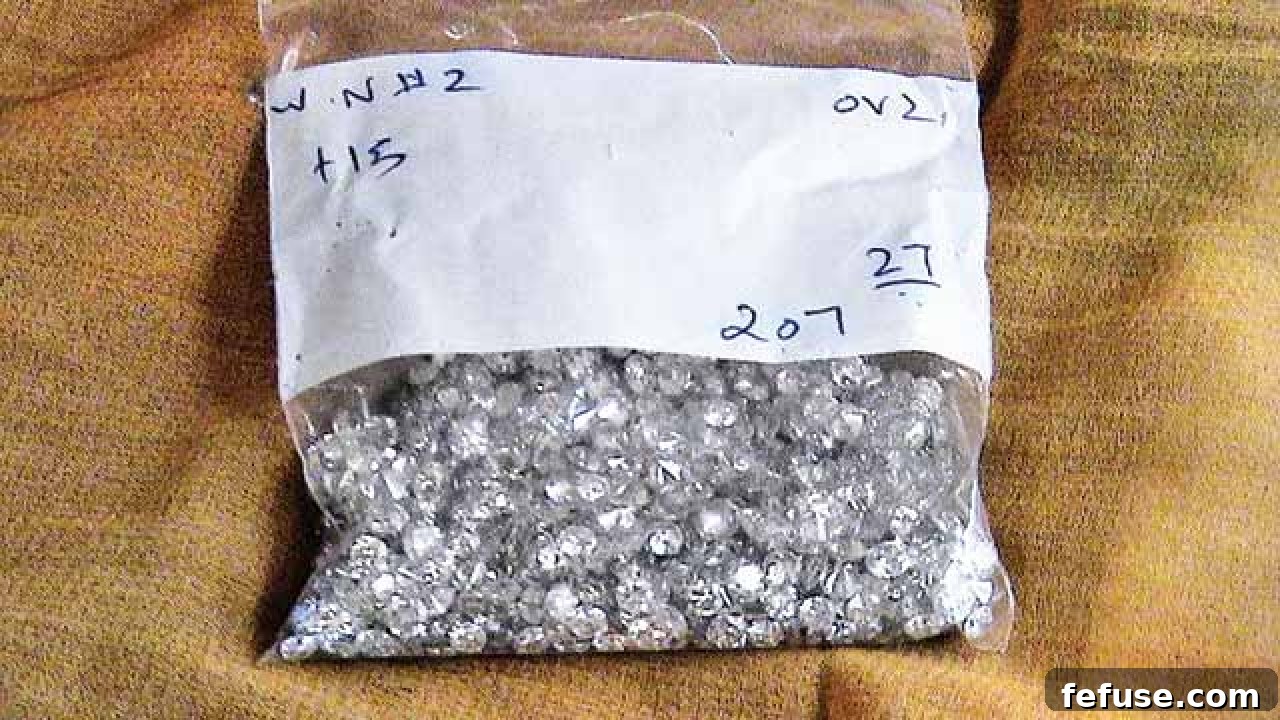
The Diamond Industry’s Dual Challenge: Economic Slump and Lab-Grown Diamond Fraud
The global diamond industry is currently navigating through an unprecedented storm, facing a convergence of significant challenges. On one hand, it grapples with a persistent financial slump, echoing broader economic uncertainties that have dampened consumer spending on luxury goods. On the other, a far more insidious threat is emerging: the rampant and deceptive practice of ‘mixing’ synthetic, lab-grown diamonds with genuine, natural stones. This fraudulent activity is not merely an ethical dilemma; it’s a direct assault on the industry’s foundational principles of trust and transparency, pushing traders, particularly in key hubs like Surat and Mumbai, to the brink of substantial losses and even bankruptcy.
A Market Under Pressure: Economic Woes and Deceptive Practices
The downturn in the global economy has exerted immense pressure on the luxury sector, with diamonds being no exception. Demand has softened, inventory levels have risen, and profit margins have tightened, creating a challenging environment for diamond dealers and manufacturers worldwide. This economic fragility, however, is being exacerbated by a more profound issue that strikes at the very heart of the diamond trade.
The Alarming Rise of Diamond Mixing
The core problem isn’t the existence of lab-grown diamonds themselves, which represent a legitimate and growing segment of the market, but rather their fraudulent misrepresentation. Malicious actors are deliberately blending lab-grown diamonds, often indistinguishable from natural stones without specialized equipment, into parcels of natural diamonds. This deceptive mixing is a severe breach of trust, impacting every level of the supply chain, from wholesalers to retailers, and ultimately, the end consumer.
Sanjay Kothari, a past chairman of the Gem and Jewellery Export Promotion Council (GJEPC), articulates the gravity of the situation: “The entire diamond industry across the world is feeling the pinch of the slack financial season. The problem for us is not the synthetic diamonds but their mixing with the natural stones. People are getting cheated, traders are facing losses, and to top it all, the credibility — which has been built over the years — is grossly damaged.” This sentiment underscores the widespread concern that the industry’s hard-earned reputation for authenticity and value is at stake, risking long-term consumer confidence for short-term illicit gains.
Lab-Grown Diamonds: Innovation Meets Integrity Crisis
Lab-grown diamonds, created using advanced technological processes such as High-Pressure, High-Temperature (HPHT) and Chemical Vapor Deposition (CVD), possess the exact same chemical, physical, and optical properties as their natural counterparts. They offer an alternative for consumers seeking more affordable diamonds, larger stones, or options with perceived ethical and environmental benefits. However, their physical similarity to natural diamonds makes them prime candidates for fraudulent mixing when not disclosed honestly.
The rapid advancement and decreasing cost of these technologies have made lab-grown diamonds increasingly prevalent in the market. Industry experts predict a continued downward trend in prices for most diamonds over the next two years, with lab-grown stones capturing a larger market share. This trend is particularly relevant for smaller and lower-quality diamonds, while high-quality, large natural diamonds are expected to retain their unique value proposition.
While the overall volume of lab-grown diamonds in circulation (around 1.5 to 2 million carats annually) is significantly smaller than that of rough natural diamonds (over 130 million carats imported), their impact is disproportionately felt due to the mixing fraud. Sanjay Kothari acknowledges the competitive future: “More than 130 million carat rough diamonds are imported as against 1.5 or 2 million carat synthetic stones. However, in future, the diamonds may become popular given the lower cost of diamonds with same hardness, purity, and clarity of the stone in comparison with expensive precious natural mined diamonds.” He reiterates that legitimate competition from lab-grown diamonds isn’t the primary concern, but rather the dishonest practice of intermingling them with natural stones without proper disclosure, which severely compromises market integrity.
Safeguarding Consumers and Market Standards
In this turbulent environment, protecting consumers and preserving the sanctity of the diamond trade has become paramount. Industry leaders are issuing stern warnings and implementing robust measures to combat fraud and restore trust. Sanjay Shah, chairman of Nine Diam, offers crucial advice to consumers:
- Exercise Extreme Caution During Exchanges: Consumers considering exchanging old diamonds for new ones must proceed with utmost care. The risk of inadvertently trading precious natural stones for synthetic alternatives is real.
- Rely on Reputable Traders: Stick to established, trusted traders who have a vested interest in maintaining their market credibility. These dealers are less likely to risk their reputation by engaging in deceptive practices.
- Demand Government-Certified Cards: Always ensure that any diamond purchased comes with a government-certified card, which serves as an independent assurance of the stone’s authenticity and characteristics.
- Insist on Buyback Guarantees: A buyback guarantee provides an additional layer of consumer protection, ensuring that the retailer stands behind the quality and authenticity of their product.
Industry’s Firm Stance: Bharat Diamond Bourse Leads the Way
The Bharat Diamond Bourse (BDB), a cornerstone of the Indian diamond trade, has taken a decisively serious stance on this issue, implementing stringent measures to curb the malpractice of mixing lab-grown diamonds with natural ones. Access to the prestigious diamond hub in Mumbai’s Bandra-Kurla Complex (BKC) is now heavily restricted for any entity found to be involved in handling mixed packets.
Sanjay Shah elaborates on the BDB’s firm approach: “Entry to the diamond hub in BKC is restricted for those who are found handling mixed packets. Trading ties are snapped with them. If we don’t take such measures, credibility built over years would get ruined for greed of few to make quick bucks.” This clear message signifies the industry’s collective resolve to protect its long-term reputation over the illicit gains of a few. Such actions are critical not only for punishing offenders but also for deterring others and reassuring legitimate players and consumers that the industry is actively fighting against fraud.
Navigating a Shifting Landscape: Market Dynamics and Future Prospects
The emergence of lab-grown diamonds has undeniably altered the market landscape, prompting discussions about their long-term coexistence with natural diamonds. Adish Shah, CEO of Jewellery Mart, an online platform for natural mined diamonds, draws an insightful parallel: “The relationship between lab-grown and mined diamonds in the future will be the same as cultured and natural pearls at this moment.” This suggests a future where both categories coexist, catering to different consumer preferences and price points, provided transparent disclosure is maintained.
Financial Impact: A Significant Downturn
The financial ramifications of these challenges are stark. The total turnover of import and export for mined natural diamonds, which stood impressively at Rs 50,000-60,000 crore until early last year, has now plummeted by half, settling around Rs 30,000 crore. Furthermore, the industry has experienced a substantial dent of at least 15 percent in imports, as the nascent yet rapidly growing lab-grown diamond market begins to capture a portion of this share.
The dramatic reduction in the cost of lab-grown diamonds illustrates the rapid evolution of this sector. As Adish Shah highlights, “In December 2015, CVD diamonds which would cost around US $80 per carat, has now come down to US $4 per carat.” This staggering price decrease signifies a fundamental shift in value proposition and accessibility, posing both opportunities for a broader market and significant challenges for the traditional natural diamond sector, especially concerning pricing and market differentiation.
Conclusion: Towards a Transparent and Sustainable Diamond Future
The diamond industry stands at a critical juncture. The dual pressures of a global economic slowdown and the pervasive threat of diamond mixing demand a multifaceted response. While the allure and intrinsic value of natural diamonds remain enduring, the rapid technological advancements in lab-grown diamond production necessitate clear market segmentation and unwavering transparency.
For the industry to navigate these challenges successfully, continuous investment in detection technologies, rigorous certification processes, and strict enforcement of ethical trading practices are essential. Consumers, too, must arm themselves with knowledge, prioritizing reputable sources and demanding clear disclosure regarding the origin and nature of their diamonds. Only through collective action – from industry bodies enacting stringent regulations to traders upholding integrity and consumers making informed choices – can the diamond industry preserve its cherished credibility, ensure fair trade, and secure a transparent, sustainable future for both natural and lab-grown diamonds.