
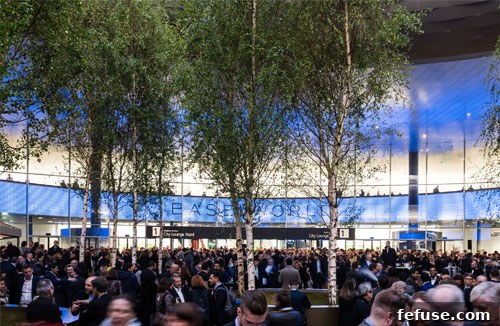
Baselworld 2018: A Landmark Transformation in the World of Luxury Watches and Jewellery
Baselworld, historically renowned as the premier global event for the watch and jewellery industry, marked a significant turning point with its 101st edition in 2018. Opened in Basel, Switzerland, this year’s show was notably different, signalling a strategic transformation in response to evolving market dynamics. Federal Councillor Doris Leuthard and Christoph Brutschin, member of the State Council of the Canton of Basel-Stadt, were present at the inauguration of an exhibition that, while smaller in scale, aimed to redefine its purpose and impact.
For decades, Baselworld was synonymous with grandeur, sprawling exhibition halls, and an eight-day spectacle. However, the 2018 edition boldly diverged from this tradition. The show ran for a condensed six days, from March 22-27, a deliberate reduction designed to enhance focus and efficiency. This shorter duration was just one aspect of a broader restructuring. The number of exhibitors saw a dramatic decrease, falling to under 700 from nearly 1,300 in the previous year. Correspondingly, the physical footprint of the exhibition was also scaled down, with fewer exhibitor halls utilized. These profound changes were not merely superficial adjustments; they represented a fundamental re-evaluation of how a major luxury trade fair can thrive in the 21st century.
Despite these visible contractions, a strong message of enduring value and purposeful evolution resonated throughout the event. René Kamm, Chief Executive Officer of the MCH Group, which orchestrates Baselworld, articulated this vision during his welcome address. He emphasized that while Baselworld was undeniably undergoing a “process of transformation,” its intrinsic identity remained steadfast. It continued to be, at its core, “a unique meeting place for the best in the industry.” This sentiment underscored the organizers’ commitment to preserving Baselworld’s prestige and its vital role as a nexus for key industry players, even as its operational model adapted.
Indeed, the exhibition continued to host an unparalleled gathering of leading companies that collectively represent the overwhelming majority of Switzerland’s watch exports. This included a formidable presence from five of the six highest-earning Swiss watch companies, alongside an impressive roster of prominent firms within the jewellery and gemstone industries. Such a concentration of high-calibre brands reaffirmed Baselworld’s indispensable position as a global showcase and a crucial platform for discerning the pulse of the luxury market. It served as a powerful testament to Switzerland’s enduring legacy and innovation in watchmaking, a tradition that Baselworld has long championed.
The organizers were transparent about the forces driving these significant shifts, explicitly acknowledging the “changes wrought by online technology.” The pervasive influence of digital platforms and e-commerce had undeniably contributed to the decline in exhibitor numbers, compelling a re-evaluation of the fair’s primary function. Baselworld was consciously pivoting away from being solely a transactional hub for “buying and selling.” Instead, it was becoming increasingly “oriented toward previewing products, networking, and meeting other business partners in person.” This strategic refocus highlighted a profound understanding that in an era where transactions can occur digitally, the irreplaceable value of face-to-face interaction, brand storytelling, and relationship building becomes paramount.
Leading industry figures echoed this refreshed perspective. François Thiébaud, President of the Baselworld Swiss Exhibitors Committee and President of Tissot, articulated the fair’s renewed purpose in a concise statement: “Baselworld is a central meeting place, where all the actors of the sector come together, from production to distribution and even clients, consumers and enthusiasts.” This holistic view emphasized the exhibition’s role not just as a trade show, but as a vibrant community hub. It envisioned a space where designers, manufacturers, retailers, media, and ultimately, the end consumers and passionate enthusiasts, could converge, exchange ideas, and foster connections that transcend mere commercial transactions. This inclusive approach was designed to strengthen the industry ecosystem from every angle.
The deliberate downsizing of the fair, while initially seen by some as a challenge, was also perceived as a distinct advantage by others within the industry. Yves Vulcan, manager of the press agency for the Swiss exhibitors, articulated this positive outlook. He suggested that in previous years, the show “was too huge,” creating an environment where it was “impossible to see everything” and truly appreciate the vast offerings. Vulcan concluded that the more focused format of 2018 would lead to an enhanced experience: “the quality will be better because people will have more time to see the brands.” This perspective highlighted a critical shift from sheer volume to meaningful engagement, allowing visitors to delve deeper into brand narratives, product innovations, and bespoke craftsmanship without feeling overwhelmed by the sheer scale.
In line with this emphasis on fostering deeper personal interaction and enriched engagement, Baselworld 2018 also embraced technological innovation to personalize the visitor experience. A bespoke “chatbot” news service was introduced, designed to allow visitors to dynamically filter information about specific brands or product categories directly on their smartphones as they navigated the exhibition. This forward-thinking digital integration was a clear move towards a more interactive and immediate communication strategy. Sylvie Riter, Managing Director of Baselworld, elaborated on the benefits of this innovation, stating that it “allows us to offer more interactive, instantaneous, direct and personalized communication… moving from global communication to direct and personalized communication in real time, which allows us to bring exhibitors and visitors closer together more quickly.” This initiative underscored Baselworld’s commitment to leveraging technology not to replace human connection, but to facilitate and enhance it, making information more accessible and relevant to individual interests.
The strategic changes implemented at Baselworld 2018 were more than just a reaction to external pressures; they represented a proactive blueprint for the future of luxury exhibitions. By embracing a more focused, quality-driven approach and integrating cutting-edge digital tools, Baselworld aimed to redefine its relevance in a rapidly changing world. It sought to cultivate an environment where meaningful conversations, genuine connections, and immersive brand experiences could flourish. This transformation set a precedent for how traditional trade fairs in the luxury sector could adapt, innovate, and continue to serve as indispensable platforms for industry collaboration, discovery, and growth in the digital age. The evolution of Baselworld became a microcosm of the luxury industry itself – resilient, adaptable, and perpetually seeking new ways to connect with its discerning global audience.
Ultimately, Baselworld 2018 served as a pivotal moment, signalling a clear direction for the future. It demonstrated that even the most venerable institutions must embrace change to maintain their leadership and appeal. By prioritizing quality interactions, streamlining its format, and thoughtfully integrating technology, Baselworld positioned itself not merely as an exhibition, but as a dynamic and essential platform for the global watch, jewellery, and gemstone industries, ready to meet the demands and opportunities of tomorrow.