
Namibia is actively pursuing closer ties with India’s diamond trading network as new tax incentives and India’s extensive manufacturing capacity open opportunities for direct sales of rough diamonds. The move reflects a strategic effort to link Namibia’s high-value output with India’s vast diamond market and processing infrastructure.
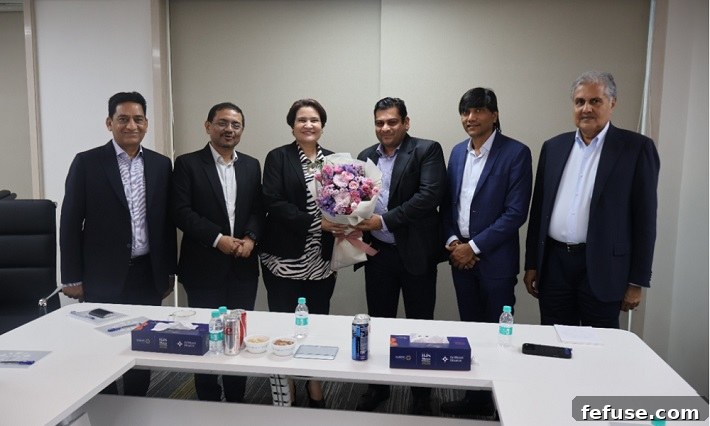
A senior Namibian delegation led by Gaudentia Krohne, Deputy Minister at the Ministry of Industries, Mines and Energy, visited Mumbai on 11 August for targeted business-to-business discussions aimed at strengthening connections between Namibia’s diamond sector and Indian buyers. The delegation included officials from Namibia’s Diamond Affairs division and was accompanied by Balchand Jain, Honorary Consul of Namibia in Mumbai.
During the visit, the delegation toured key components of India’s diamond ecosystem, including the GJEPC office, Bharat Diamond Bourse and Indian Diamond Trading Centre, along with customs facilities and other elements of India’s trading infrastructure. These meetings and site visits were intended to explore practical ways Namibia might market and sell rough diamonds directly into the Indian market.
The timing of the visit dovetails with India’s proposed changes under the Taxation and Other Laws (Amendment) Bill, 2026, which envisages a 15-year income-tax exemption for income from the sale of rough diamonds through designated Special Notified Zones at the Bharat Diamond Bourse and Surat Diamond Bourse. If enacted, the exemption would begin on 1 October 2026 and extend through the tax year ending 31 March 2041. This measure is intended to attract international mining companies, sightholders, brokers, aggregators and auction businesses into India’s rough diamond trading ecosystem by offering a long-term incentive to establish operations in the country.
Namibia Brings High-Value Rough Diamonds
Namibia’s strength in the global diamond market lies not in sheer volume but in the high average value of the stones it produces. Kimberley Process figures for 2025 show Namibia produced 2.09 million carats valued at $721.4 million, an average of about $343.88 per carat—the highest per-carat value among producing countries that year. This high valuation makes Namibian diamonds particularly attractive to cutting and polishing centres seeking premium rough material.
In terms of global rankings, Namibia placed fifth by production value in 2025 and accounted for roughly 8% of global rough diamond production by both volume and value. During that year the country exported around 2.04 million carats worth $578.4 million. Krohne emphasized Namibia’s reputation for quality stones and expressed interest in increasing access for Indian buyers to Namibian rough diamonds.
The delegation viewed India’s extensive trading infrastructure as a potential platform for showcasing, marketing and selling Namibian rough diamonds directly to a wide base of Indian manufacturers and traders.
India Offers Scale and Processing Capacity
India’s central role in global rough diamond trade enhances its appeal as a trading partner. In 2025, India imported 106.09 million carats of rough diamonds valued at $11.07 billion, representing more than 40% of global rough diamond imports by volume and over 43% by value. That massive import base, combined with India’s cutting and polishing expertise and established manufacturing clusters, gives producer countries an opportunity to link directly with one of the world’s largest diamond manufacturing centres.
The Mumbai programme offered the Namibian delegation a comprehensive view of India’s diamond ecosystem. At the Bharat Diamond Bourse they received an overview of the industry, met with the BDB Managing Committee and visited the Indian Diamond Trading Centre. The delegation was also scheduled to review manufacturing operations and infrastructure at SEEPZ, highlighting how Indian facilities could handle both large-scale and smaller consignments.
The Indian Diamond Trading Centre is especially relevant for smaller manufacturers because it facilitates access to international rough diamonds without requiring buyers to travel to overseas trading hubs, making it easier for a wide range of Indian firms to work with imported stones.
A Potential New Route for Namibian Diamonds
Closer engagement with India could create a direct and efficient route from Namibian mines to one of the world’s largest cutting and polishing markets. For India, attracting additional producer countries like Namibia would broaden the diversity and supply of rough diamonds available through its Special Notified Zones.
The proposed long-term tax incentive adds a strategic consideration by potentially offering greater certainty and commercial viability for international diamond companies considering India as a trading destination. If the framework successfully attracts more mining companies and producer nations, Namibia could become an important early participant in India’s initiative to strengthen its role as a global hub for rough diamond trading.
The Mumbai visit therefore signals more than a routine diplomatic exchange: it underscores growing interest in creating a direct India–Namibia rough diamond corridor that pairs Namibia’s high-value production with India’s extensive trading, manufacturing and distribution capabilities.