
Angola’s Diamond Industry: A Jewel in the Making – Navigating Production Shifts and Eyeing Global Leadership
Angola, a nation historically rich in natural resources, is steadfastly carving out a significant niche in the global diamond market. While the year 2022 presented a fascinating paradox of reduced export volume but substantially increased revenue, the overarching narrative is one of ambition, reform, and immense untapped potential. As the country looks to diversify its economy beyond oil, the diamond sector stands as a pivotal pillar in its development strategy, drawing renewed international interest and setting the stage for an aspirational future.
A Glimpse into 2022: Production Dynamics and Revenue Resilience
The Paradox of Volume vs. Value
The Angolan diamond sector’s performance in 2022 offered a compelling study in market dynamics. The nation exported a total of 8.75 million carats, a notable decline from its initial optimistic forecast of 13.8 million carats. Even compared to the revised forecast of 10.5 million carats set in January 2022, the actual output fell short. This reduction in volume could be attributed to a confluence of factors, including operational adjustments at key mines, geological challenges, or even a strategic shift in production focus. However, what truly underscored the resilience and strategic depth of Angola’s diamond industry was its financial outcome.
Despite the lower caratage, the total revenue generated from diamond exports soared to an impressive $1.95 billion. This figure represents a remarkable increase of almost a quarter compared to the $1.5 billion recorded in 2021. This significant uptick in revenue, in the face of reduced production volume, suggests a substantial rise in the average price per carat. Several factors could explain this phenomenon: a higher proportion of premium, larger, or higher-quality diamonds being extracted and sold; a robust global demand for specific types of rough diamonds; or an effective marketing and sales strategy that maximized the value of the available output. This performance highlights Angola’s growing capacity to optimize its diamond resources for greater economic benefit, moving beyond mere volume to focus on value enhancement.
Economic Significance and Market Influences
The $1.95 billion in revenue generated by the diamond sector in 2022 is a critical contribution to Angola’s national economy. It provides vital foreign exchange and supports government programs aimed at infrastructure development, social services, and economic diversification. For a nation striving to reduce its dependence on volatile oil prices, a robust and high-value diamond industry offers a stable and sustainable revenue stream. Furthermore, Angola’s performance reflects broader trends within the global diamond market, where demand for luxury goods, particularly high-quality diamonds, has often remained strong even amidst economic uncertainties. The ability of Angolan diamonds to command higher prices on the international market positions the country favorably for sustained growth and increased profitability.
Angola’s Bold Vision: Towards Becoming a Global Diamond Powerhouse by 2030
Minister Azevedo’s Strategic Blueprint
Under the visionary leadership of Diamantino de Azevedo, Angola’s Minister for Mineral Resources, Oil and Gas, the country has articulated an ambitious goal: to ascend to the position of the world’s second-biggest producer of rough diamonds by 2030. This is not merely an aspiration but a strategic blueprint backed by tangible reforms and investment drives. The plan encompasses several key pillars: intensifying exploration efforts across its vast, underexplored territories; attracting major international mining companies; enhancing transparency and governance within the sector; and potentially moving up the value chain through local cutting and polishing initiatives. This vision is a testament to Angola’s commitment to harnessing its mineral wealth for long-term national prosperity and establishing itself as a dominant force in the global diamond supply chain.
Benchmarking Global Ambitions
Achieving the status of the world’s second-biggest rough diamond producer by 2030 would be a monumental feat for Angola. This ambition places Angola in direct competition with established giants like Russia, Botswana, and Canada. To realize this goal, Angola will need to significantly ramp up its annual production volume while maintaining or even increasing the high average price per carat witnessed in 2022. It implies a substantial increase in mining operations, both from existing mines and through the development of new projects. Such a trajectory requires not only significant capital investment but also advancements in technology, skilled labor development, and a stable regulatory environment to assure investors of long-term returns. The clarity of this objective provides a powerful guiding principle for government policy and industry stakeholders alike.
The Cornerstone of Production: The Mighty Catoca Mine
Catoca’s Operational Dominance
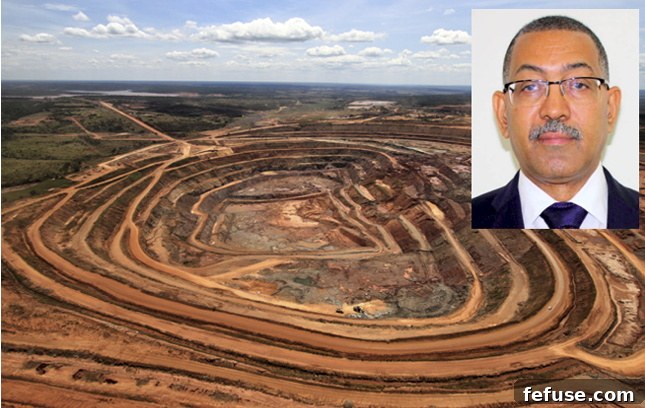
At the heart of Angola’s diamond production landscape lies the formidable Catoca mine, a crucial asset that exemplifies the nation’s rich geological endowments. This kimberlite mine consistently leads national output, accounting for an impressive almost 65 percent of Angola’s total diamond production. Its sheer scale and consistent performance make it a cornerstone of the Angolan diamond industry, underpinning much of the country’s export revenue and contributing significantly to local employment and infrastructure development. The continued robust operation of Catoca is essential for Angola’s current production stability and its future growth trajectory.
Strategic Partnerships and Future Prospects
The Catoca mine operates under a joint ownership structure, bringing together the Angolan government, through its state-owned diamond company Endiama, and the Russian diamond giant Alrosa. This partnership leverages international expertise and capital with national resources, a model that has proven successful in optimizing extraction and operational efficiencies. The collaboration with Alrosa, one of the world’s leading diamond producers, provides Catoca with access to advanced mining technologies and global market insights. As Angola looks to expand its overall production, the experience and operational excellence demonstrated at Catoca will undoubtedly serve as a benchmark and a foundation for developing other diamond-rich areas across the country.
Unlocking Pristine Riches: Vast Untapped Potential and Renewed Investor Confidence
Exploring Angola’s Uncharted Diamond Territories
Despite its significant current production and ranking as one of the world’s fourth-biggest diamond producers, Angola’s true diamond potential remains largely untapped. The country has explored only a fraction of its diamond-rich territories, with an astounding 60 percent still awaiting comprehensive geological assessment and exploration. This vast expanse of unexplored land represents an incredible opportunity for future discoveries and a pipeline of new mining projects that could catapult Angola to the forefront of global diamond production. These unexplored regions are believed to hold substantial kimberlite and alluvial deposits, promising a long and prosperous future for the Angolan diamond industry. The systematic exploration and development of these areas are crucial for realizing Minister Azevedo’s 2030 ambition.
De Beers’ Resurgence: A Testament to Angolan Reforms
A powerful indicator of the growing confidence in Angola’s diamond sector and its reform agenda is the renewed interest from major international players. De Beers, a global titan in the diamond industry, has notably revived its plans to invest in Angola. This decision comes after a period of absence and is directly attributed to what De Beers describes as “substantive and consistent reforms” within the country. For decades, Angola was embroiled in a devastating 27-year civil war, which severely hampered foreign investment and development across all sectors, including mining. The stability and transparent governance that have emerged in recent years have created an environment conducive to large-scale, long-term investments.
The reforms have likely encompassed a wide range of improvements, including revised mining legislation to enhance investor protection, efforts to combat corruption, streamlined licensing processes, and a general commitment to improving the ease of doing business. The return of a company with the stature of De Beers, known for its rigorous investment criteria and extensive experience, sends a strong signal to the international mining community that Angola is now a reliable and attractive destination for diamond exploration and mining. This move is not merely about De Beers’ investment; it’s a vote of confidence that could unlock further capital and expertise from other leading mining houses.
The Impact of Major Investment
De Beers’ re-engagement is expected to have a transformative impact on the Angolan diamond sector. It will likely lead to significant investments in advanced exploration techniques, uncovering new deposits and expanding the country’s resource base. Furthermore, the development of new mines will create thousands of direct and indirect jobs, stimulate local economies, and foster the transfer of modern mining technologies and best practices. De Beers’ commitment to responsible mining and ethical sourcing also aligns with global demands for conflict-free diamonds, enhancing Angola’s reputation on the international stage. This partnership, alongside existing collaborations like that at Catoca, will be instrumental in modernizing the Angolan diamond industry and ensuring its sustainable growth.
Navigating the Path Forward: Challenges, Opportunities, and Sustainable Growth
Overcoming Hurdles in the Diamond Sector
While Angola’s diamond future appears bright, the path to becoming a global leader is not without its challenges. The country must continue to address issues such as infrastructure development, particularly in remote mining areas, to facilitate efficient operations and transport. Ensuring a steady supply of skilled labor through vocational training and education programs is also crucial. Furthermore, navigating the complexities of global diamond market fluctuations, maintaining environmental stewardship, and combating illegal mining activities will require continuous vigilance and robust regulatory frameworks. Geopolitical stability and transparent governance will remain paramount to retaining investor confidence and fostering long-term growth.
Leveraging Opportunities for National Development
Beyond the immediate economic gains, the expansion of Angola’s diamond industry presents numerous opportunities for broader national development. It can serve as a catalyst for economic diversification, reducing the country’s historical reliance on oil. The sector can create substantial job opportunities, not just in mining but also in related services, logistics, and potential downstream industries like diamond cutting and polishing, which would add significant value locally. Moreover, the revenue generated can be strategically invested in education, healthcare, and sustainable development initiatives, uplifting communities and fostering inclusive growth across Angola. Adherence to international best practices in environmental and social governance will also enhance Angola’s standing and attract responsible investment.
Conclusion: Angola’s Shining Future in the Global Diamond Market
Angola’s journey in the global diamond market is marked by both historical challenges and a resurgent spirit of ambition. The impressive revenue generation in 2022, despite lower production volumes, signals a maturing industry focused on value. With a strategic vision to become the world’s second-biggest rough diamond producer by 2030, supported by ongoing reforms and the return of major players like De Beers, Angola is poised for significant growth. The vast unexplored territories represent a promise of future discoveries, while established operations like the Catoca mine provide a strong foundation. By continuing to foster a transparent and investor-friendly environment, and by leveraging its immense natural endowments responsibly, Angola is well on its way to cementing its position as a true jewel in the global diamond crown, shining brightly on the international stage.