
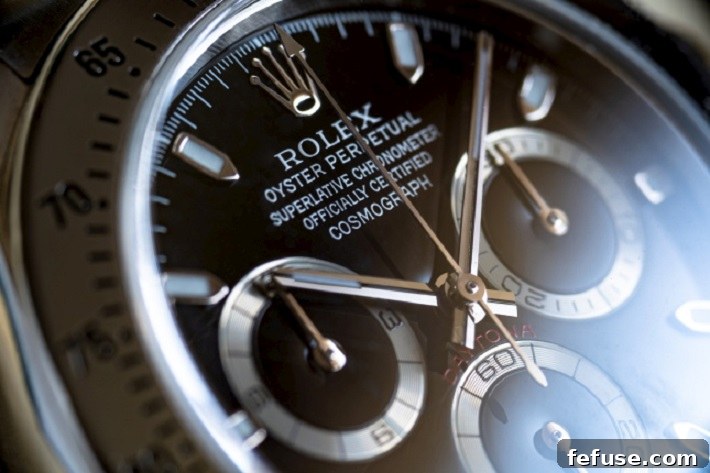
Swiss Supreme Court Sounds Off on Customized Watches in Rolex Case: A Landmark Ruling
In a pivotal decision that resonates throughout the global luxury watch industry, Switzerland’s highest judicial body, the Swiss Federal Supreme Court, has delivered a landmark ruling. This crucial judgment addresses the intricate legality surrounding third-party entities that sell customized Rolex watches, drawing a clear and significant distinction between permissible personalization services and unauthorized general marketing of modified timepieces. The implications of this ruling are far-reaching, shaping the future landscape for iconic brands seeking to protect their intellectual property and for independent customizers operating within the luxury aftermarket.
The heart of the court’s decision lies in its nuanced differentiation: while personalized watch modifications commissioned by an individual client may be deemed acceptable, the broader marketing and sale of pre-modified Rolex watches by a third party, particularly when bearing both the original and customizer’s trademarks, is largely deemed impermissible. This distinction aims to uphold brand integrity, prevent consumer confusion, and clarify the boundaries of intellectual property rights in the burgeoning market of luxury customization.
The Case at Hand: Rolex vs. the Customizer
The legal battle that led to this significant ruling pitted the world-renowned watchmaker Rolex against an unnamed Geneva-based company. This third-party entity specializes in altering the aesthetic and, in some cases, the technical characteristics of high-end timepieces, including those produced by Rolex. A key element of the dispute centered on the fact that these modified watches were marketed and sold bearing not only Rolex’s globally recognized coronet logo but also the customizer’s own trademark. This dual branding strategy became a focal point of Rolex’s complaint, raising questions about implied affiliation and brand endorsement.
Rolex, a brand synonymous with precision, quality, and exclusivity, vigilantly protects its intellectual property and brand image. The company argued that the customizer’s activities, particularly the co-branding of modified watches, could mislead consumers into believing there was an official collaboration or endorsement from Rolex, thereby diluting its brand and potentially impacting its reputation. The case highlighted the ongoing tension between a brand’s control over its image and the consumer desire for unique, personalized luxury items.
The Lower Court’s Initial Ruling and Subsequent Appeal
In 2020, an initial judgment by a lower court sided with Rolex, prohibiting the defendant from selling any customized watches that displayed Rolex’s trademarks. This decision was a strong affirmation of Rolex’s brand protection efforts, suggesting a broad interpretation of trademark infringement in the context of aftermarket modifications. The lower court’s stance likely focused on the potential for consumer confusion and the unauthorized use of a protected trademark in commercial activities, regardless of the nature of the modification service.
However, the customizer promptly appealed this decision to the Swiss Federal Supreme Court. The appeal contended that the lower court had failed to adequately distinguish between different forms of commercial activity related to watch customization, arguing that not all modifications or subsequent sales should be treated equally under trademark law. This appeal proved instrumental in prompting the Supreme Court to delve deeper into the nuances of brand ownership versus the rights associated with product modification and resale.
The Supreme Court’s Crucial Distinction: Personalization vs. General Marketing
The Swiss Federal Supreme Court, in its thorough review, acknowledged what it described as a “profound misunderstanding of the difference between two distinct commercial activities” by the lower court. This key insight formed the bedrock of its revised ruling, establishing clear parameters for what is permissible and what is not in the realm of luxury watch modification. The court meticulously delineated between:
1. Watch Personalization for a Client (Acceptable)
This category encompasses bespoke services where an individual client commissions a third party to modify their existing Rolex watch or a watch they specifically purchase for this purpose. In such instances, the modification is a service tailored to the client’s explicit request, and the client is fully aware that the watch has been altered by an independent entity, not by Rolex itself. The Supreme Court’s reasoning here often aligns with the principle of “exhaustion of rights,” meaning that once a branded product is legitimately purchased, the owner generally has the right to modify it for personal use or commission modifications. As long as the service provider clearly communicates its independent status and does not actively misrepresent an affiliation with the original brand, such personalization is typically considered acceptable.
2. General Marketing and Sale of Modified Rolex Watches (Not Acceptable)
This category refers to the business model where a third-party customizer acquires new or pre-owned Rolex watches, modifies them, and then markets and sells these altered watches to the general public as distinct products. The critical issue here, according to the Supreme Court, is the potential for consumer deception, especially when the customizer’s brand appears alongside Rolex’s trademark. Such marketing practices can easily lead consumers to believe that there is an official collaboration, licensing agreement, or endorsement from Rolex, which is typically not the case. This scenario directly impinges on Rolex’s intellectual property rights, specifically its trademarks, which serve to identify the source and quality of its original products.
The Supreme Court explicitly ruled that advertising watches featuring both the Rolex trademark and that of the modifying company would likely mislead consumers into perceiving a collaboration or partnership between the two entities. This act constitutes a form of brand dilution and unauthorized association, which can harm the brand’s reputation and its ability to control its market presence and image.
Implications for Brand Protection and the Luxury Aftermarket
This landmark Swiss Supreme Court ruling sends a powerful message to both luxury brands and third-party customizers worldwide. For brands like Rolex, it reinforces their ability to protect their intellectual property and maintain stringent control over their brand narrative and quality standards. It provides a legal framework to challenge aftermarket entities that exploit established brand recognition for their own commercial gain without explicit authorization.
For customizers, the ruling underscores the necessity of operating with transparency and diligence. It compels them to re-evaluate their marketing strategies and ensure that their services and products are presented in a way that unequivocally distinguishes them from the original brand. This might include:
- Clear Disclaimers: Prominently stating that they are an independent entity and have no affiliation or endorsement from the original manufacturer.
- Trademark Usage: Avoiding co-branding or any visual representation that could suggest a partnership. The use of the original brand’s name should be limited to descriptive purposes (e.g., “customized Rolex watches” rather than implying a new branded product).
- Service-Oriented vs. Product-Oriented: Focusing on providing customization services for client-owned watches rather than selling pre-modified branded items.
The decision also highlights the unique challenges faced by luxury brands in an era where consumers increasingly seek personalization and exclusivity. While brands acknowledge this demand, they must balance it with the imperative to safeguard their heritage, quality, and the significant investment made in building their global reputation. Some luxury brands have responded by offering their own official customization programs, thereby capturing this market demand while retaining full control over the process and ensuring product integrity.
The Broader Context of Luxury Customization
The luxury customization market has exploded in recent years, spanning industries from automotive to fashion and, prominently, watches. Consumers are often willing to pay a premium for items that reflect their individual style and stand out from mass-produced luxury goods. This trend has fostered a thriving ecosystem of independent designers and modifiers who cater to this niche. However, this growth has also brought about legal complexities as established brands grapple with how to respond to unauthorized modifications and sales.
This ruling from the Swiss Federal Supreme Court serves as a crucial legal precedent, not just for Rolex and the watch industry, but potentially for other luxury sectors facing similar challenges with aftermarket modification. It provides a framework for courts in other jurisdictions to consider when evaluating similar cases of brand protection versus modification rights. The core principle established is that while customization itself might not be inherently problematic, the way these modified products are presented and marketed is paramount to avoiding trademark infringement and consumer deception.
Conclusion: A New Era for Brand Integrity and Customization
The Swiss Federal Supreme Court’s ruling marks a significant moment in intellectual property law, particularly for the luxury goods sector. By meticulously differentiating between legitimate personalized services and unauthorized general marketing of modified products, the court has provided much-needed clarity. It empowers brands like Rolex to continue protecting their identity and reputation, while simultaneously guiding third-party customizers toward more transparent and legally compliant business practices. This decision reaffirms the importance of brand integrity in the competitive luxury market, ensuring that the allure of an iconic name remains untarnished by unauthorized associations and that consumers can confidently distinguish between original products and independent modifications. As the luxury market continues to evolve, this ruling will undoubtedly serve as a foundational reference point for navigating the delicate balance between brand protection and the growing demand for unique, customized experiences.