
The Pearl Industry’s Deep Dive into Ocean Conservation: A Commitment to Sustainability
In an era where global environmental challenges dominate headlines, a recent report from the World Jewellery Confederation (CIBJO) offers a shining example of industry-led conservation. The report casts a well-deserved spotlight on the pearl industry’s profound and growing commitment to safeguarding the marine environment, demonstrating how a sector intrinsically linked to nature can become a beacon of sustainability.
CIBJO Spotlights the Pearl Sector’s Green Initiatives
Prepared by the esteemed CIBJO Pearl Commission, under the expert guidance of industry veteran Kenneth Scarratt, the special report meticulously details the relentless efforts of pearl farmers worldwide. Far from being passive observers, these dedicated individuals are actively setting a gold standard for marine protection, proving that economic prosperity and ecological stewardship can indeed go hand-in-hand.
Kenneth Scarratt articulated the industry’s long-standing dedication with evident warmth: “We are greatly warmed by the fact that our own pearling community has recognised the need to keep our oceans clean for several decades now, and has been setting a global example with outstanding efforts in sustainability, both in numerous cultural pearl farms as well as in the waters surrounding some natural pearling beds.” This sentiment underscores a proactive ethos that predates much of the mainstream environmental movement, positioning the pearl sector as a pioneer in sustainable aquaculture practices.
The report serves as a comprehensive overview, highlighting various ongoing projects and initiatives that exemplify this commitment. From grassroots community empowerment to large-scale collaborative efforts, the pearl industry is actively investing in the health of our oceans, understanding that its future is inextricably linked to the vitality of marine ecosystems. CIBJO, as the international confederation of national jewellery trade organisations, plays a crucial role in documenting and promoting these best practices, fostering a global standard for ethical and sustainable operations within the jewellery sector.
Why Pearls Pave the Way for Marine Protection
The Intrinsic Link Between Pearls and Pristine Waters
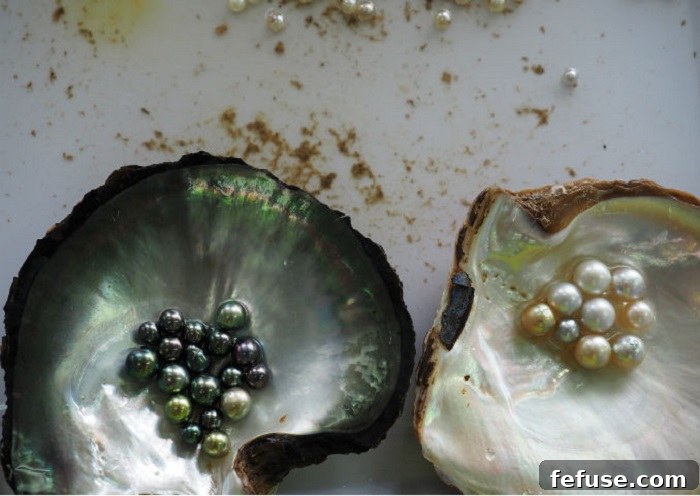
Unlike many other industries that might view environmental protection as an external cost or regulatory burden, the pearl industry’s very existence is predicated on pristine water conditions. Pearl oysters, the living laboratories where these natural wonders are formed, are incredibly sensitive to their surroundings. Any degradation in water quality directly threatens their health, their ability to produce high-quality pearls, and ultimately, their survival. This fundamental biological requirement transforms environmental protection from an optional good deed into an essential business imperative.
Pearl farmers are, by necessity, some of the most diligent stewards of coastal and marine environments. Their daily operations involve constant monitoring of water parameters, understanding local ecosystems, and implementing practices that not only minimize negative impact but actively enhance marine biodiversity. This inherent connection means that investing in ocean health is not just about corporate social responsibility; it’s about safeguarding their livelihood and the future of their industry. This unique relationship fosters a deep-seated respect and understanding of marine ecosystems that is often unparalleled in other commercial ventures.
Pearl Oysters as Bio-Indicators: A Natural Early Warning System
Justin Hunter of J Hunter Pearls of Fiji eloquently articulated this crucial point: “Pearl oysters are filter feeders that require pristine water conditions in order to produce high-quality pearls. They are also recognised as an indicator species, meaning that any decline in water quality has a direct impact on oyster health, pearl quality, and oyster mortality.” This highlights the pearl oyster’s dual role: not only do they create beautiful gems, but they also serve as vital sentinels of marine health.
As filter feeders, oysters play an active role in cleaning their aquatic environment by siphoning water and removing particulates, thus contributing positively to water clarity and quality. More importantly, their sensitivity makes them exceptional bio-indicators. A struggling oyster population, characterized by reduced growth, disease, or mortality, signals broader ecological distress in the surrounding waters. For pearl farmers, this serves as an immediate and undeniable alert system, prompting swift action to identify and mitigate environmental threats, long before they might be detectable by other means. This direct feedback loop reinforces the urgency and effectiveness of their conservation efforts.
Leading the Charge: Key Initiatives and Industry Players
The CIBJO report shines a light on several pioneering initiatives that exemplify the pearl industry’s commitment. These projects are not isolated efforts but are part of a broader, concerted movement towards sustainable and ethical practices that resonate globally.
The Save Palawan Seas Foundation (SPSF): Nurturing Communities and Coasts
A prime example of impactful local action is the Save Palawan Seas Foundation (SPSF), a non-profit organization strongly supported by the Philippines-based pearl specialist Jewelmer Joaillerie. The SPSF’s mission extends beyond mere environmental protection; it strategically aims to provide sustainable livelihood alternatives for the communities inhabiting Palawan, a region renowned for its breathtaking natural beauty and rich marine biodiversity.
By empowering local populations with alternative, environmentally friendly sources of income, SPSF helps reduce pressure on fragile marine resources that might otherwise be exploited unsustainably. These initiatives often include promoting eco-tourism, developing sustainable fishing practices, supporting marine sanctuary management, and fostering waste management and recycling programs. This holistic approach recognizes that true environmental protection must go hand-in-hand with socio-economic development, creating a virtuous cycle where thriving communities become the most effective guardians of their natural heritage.
The Blue Pledge: A Collaborative Vision for a “Blue Economy”
Another groundbreaking initiative highlighted in the report is The Blue Pledge, recently launched by J Hunter Pearls of Fiji. This initiative represents a significant step towards unifying pearl farmers globally who are not just talking about ocean health but are taking demonstrable, actionable steps to contribute to the well-being of the oceans and the global climate. The core idea behind the Blue Pledge is the creation of a “blue economy” – a marine equivalent of the green economy – fundamentally based on sound environmental and social practices.
A “blue economy” emphasizes sustainable use of ocean resources for economic growth, improved livelihoods, and ocean ecosystem health. It champions principles such as resource efficiency, circularity, innovation in marine industries, and the creation of sustainable jobs, all while ensuring the long-term productivity and resilience of marine ecosystems. The Blue Pledge brings together influential partners in this venture, including industry giants like Paspaley Pearling and Jewelmer, signifying a collective commitment to transform the global pearl sector into a leading model for responsible marine resource management. This collaborative spirit amplifies the impact of individual efforts and fosters a shared responsibility for our planet’s most vital resource.
Other Industry Leaders: Jewelmer, Paspaley, and Beyond
While SPSF and The Blue Pledge are prominent examples, the CIBJO report implicitly acknowledges a wider industry commitment. Companies like Jewelmer and Paspaley, mentioned as partners, have long histories of implementing their own robust sustainability programs. These often include strict environmental monitoring protocols, habitat restoration projects, community engagement, and research into aquaculture best practices. Their involvement underscores that the principles of marine conservation are deeply embedded within the operational DNA of leading pearl producers, extending beyond specific initiatives to form the foundation of their entire business model.
Beyond the Report: The Broader Impact of Sustainable Pearl Farming
The implications of the pearl industry’s proactive stance on marine protection extend far beyond the direct benefits to pearl production. Their efforts contribute significantly to broader global sustainability goals and offer valuable lessons for other industries.
Economic Sustainability and Local Communities
Sustainable pearl farming directly supports countless coastal communities, often in remote areas where economic opportunities might otherwise be scarce. By providing stable, long-term employment, these farms foster local economic resilience. The income generated from pearl cultivation allows communities to invest in education, healthcare, and infrastructure, leading to improved living standards. Moreover, the emphasis on pristine environments for pearl cultivation indirectly supports other local industries reliant on healthy marine ecosystems, such as sustainable fishing and eco-tourism, creating a diversified and robust local economy that benefits all stakeholders.
Setting Global Standards for Aquaculture
As the world looks for more sustainable food and resource production methods, the aquaculture industry is under increasing scrutiny. The pearl industry, with its decades-long commitment to water quality and ecosystem health, offers a compelling blueprint for how aquaculture can be conducted responsibly. By demonstrating that high-value production can coexist with, and even enhance, environmental well-being, pearl farmers are setting crucial benchmarks and sharing valuable knowledge that can inform best practices across the broader aquaculture sector. Their experiences in managing marine habitats, monitoring environmental indicators, and engaging with local communities provide a rich source of learning for sustainable development globally.
Educating Consumers: The Power of Ethical Choices
In today’s marketplace, consumers are increasingly demanding transparency and ethical sourcing. The pearl industry’s documented commitment to marine conservation provides a powerful narrative that resonates with environmentally conscious buyers. By choosing ethically sourced pearls, consumers can actively support an industry that is a positive force for ocean health. This connection between product and environmental impact empowers consumers to make choices that align with their values, driving market demand for sustainable practices and encouraging other sectors to follow suit. The story of a pearl becomes not just one of beauty, but one of hope for our oceans.
The Future of Pearls: A Sustainable Legacy
The future of the pearl industry is intrinsically tied to the future of our oceans. As climate change and human activities continue to pose significant threats to marine ecosystems, the commitment of pearl farmers to conservation becomes even more critical. Their ongoing research into resilient oyster species, innovative farming techniques, and collaborative conservation initiatives will play a vital role in adapting to environmental shifts and ensuring the longevity of both the industry and the precious marine environments they depend on. The CIBJO report is not just a snapshot of current efforts but a forward-looking declaration of intent, affirming the industry’s dedication to leaving a sustainable legacy for generations to come.
Conclusion: A Beacon of Hope from the Ocean Depths
In his report, Kenneth Scarratt offered a profound reflection: “Thus, while the world around us appears to be desperately struggling with man’s ineptitudes, let us take comfort in the fact that our pearling community can stand proudly as shining examples to the rest of humanity.” This powerful statement encapsulates the essence of the CIBJO report. Amidst global environmental challenges, the pearl industry stands as a testament to what is possible when an industry aligns its economic goals with deep ecological responsibility.
Through dedicated efforts like the Save Palawan Seas Foundation and the visionary Blue Pledge, pearl farmers are not merely producing exquisite gems; they are cultivating healthier oceans, empowering communities, and demonstrating a path towards a truly sustainable blue economy. Their work serves as a compelling reminder that humanity has the capacity to foster industries that not only thrive economically but also contribute meaningfully to the preservation of our planet’s invaluable natural heritage. The luminous beauty of a pearl now carries an even deeper significance – it is a symbol of hope, stewardship, and a sustainable future for our marine world.
News Source
jewellerynet.com