
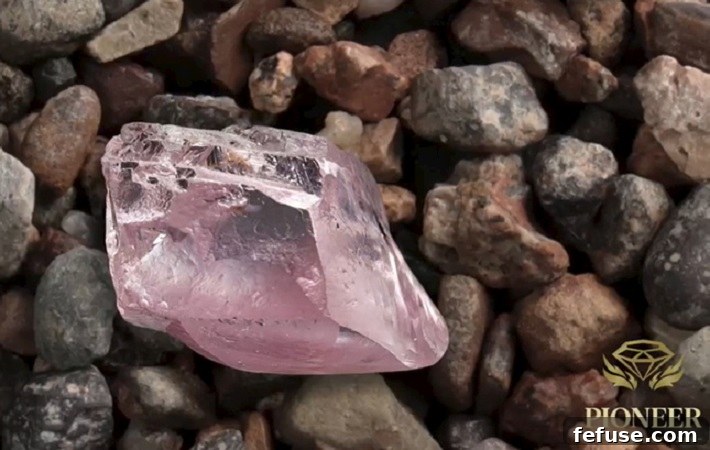
In a truly momentous discovery that resonates throughout the international gem world, a colossal 29.52-carat pink diamond, described as a “once in a lifetime” find, is set to go on tender tomorrow, June 30th. This extraordinary rough diamond, unearthed from the mineral-rich alluvial deposits along the middle Orange River in South Africa, promises to be one of the most significant sales in recent memory, captivating collectors, investors, and master diamantaires alike. Its unique blend of size, color, and pristine clarity positions it as a geological marvel and a testament to the enduring treasures hidden within Earth’s crust.
The Unveiling of the Protea Pink: A Jewel of Unparalleled Beauty
Christened the ‘Protea Pink’ – a name that elegantly honors South Africa’s iconic national flower, symbolizing diversity and unique beauty – this Type II rough diamond possesses characteristics that set it apart from virtually any other discovery. Geologists and diamond experts have highlighted its “unusual depth of color and exceptional clarity,” attributes that are incredibly rare in a diamond of this magnitude. Pink diamonds themselves are among the rarest of all colored diamonds, and to find one of almost 30 carats with such vibrant saturation and crystalline purity is an event that occurs perhaps once in a generation, if ever.
The Type II classification further underscores its rarity and value. Type II diamonds are chemically the purest of all diamonds, containing virtually no nitrogen impurities. This molecular perfection often contributes to their superior optical properties, including exceptional transparency and, notably, allows for the formation of rare colors like pink. Such diamonds are known for their spectacular brilliance and fire, promising that the Protea Pink, once expertly cut and polished, will yield a finished gem of breathtaking beauty and immense value, potentially redefining the standards for pink diamonds in the global market.
A Journey Through Time: From Ancient Kimberlite to Riverbed Treasure
The remarkable journey of the Protea Pink diamond began an astonishing 90 million years ago, deep within the Earth’s mantle. According to Lyndon de Meillon, a distinguished geologist at Pioneer Diamond Tender House in Johannesburg, the company overseeing the sale, the diamond is believed to have originated in the ancient kimberlite pipes of Lesotho. These volcanic pipes, rich in diamond-bearing rock, are geological time capsules, having brought countless precious stones to the surface through powerful eruptions over millennia.
Once liberated from its subterranean birthplace, the diamond embarked on an epic 500-kilometer odyssey. Carried by the powerful currents of what would become the Orange River, it tumbled and journeyed downstream for millions of years. This incredible fluvial transport process, known as alluvial deposition, eventually led to the diamond being trapped within an ancient river terrace along the middle section of the Orange River. It lay dormant, a silent testament to geological forces, until its recent rediscovery by a diligent junior alluvial miner earlier this year – a discovery that has now placed it on the cusp of global renown.
The Orange River: A Highway of Hidden Riches
The middle section of the Orange River, South Africa’s longest river stretching over 1,500 miles, holds a truly unique and paradoxical distinction in the world of diamond mining. As de Meillon points out, this specific stretch boasts the highest average value per carat globally for diamonds recovered, yet simultaneously presents the lowest grade in carats per hundred tonnes of any actively mined area. This means that while diamonds are scarce in this region, those that are found are typically of extraordinarily high quality and significant size, often commanding premium prices. The Orange River’s turbulent waters and ancient geological history have acted as a natural sorting mechanism, concentrating only the most durable, valuable, and robust diamonds within its alluvial deposits, making every discovery a potential world-beater.
The Profound Rarity and Allure of Pink Diamonds
Pink diamonds are not merely rare; they exist in a category of their own, representing less than 0.1% of all diamonds mined globally. Unlike most other colored diamonds, whose hues are often attributed to chemical impurities like nitrogen (yellow diamonds) or boron (blue diamonds), the precise cause of the pink color in diamonds remains a subject of scientific debate. The prevailing theory suggests that the color is a result of structural deformation in the diamond’s crystal lattice during its formation, which selectively absorbs light and reflects a mesmerizing pink hue. This enigmatic origin only adds to their mystique and allure, making each pink diamond a unique marvel of nature.
The market for pink diamonds has consistently demonstrated remarkable resilience and appreciation, far outstripping that of white diamonds and even many other fancy colors. Icons such as the Argyle Pink Diamonds from Western Australia, which dominated the market for decades before the mine’s closure, and the historic Graff Pink, a 24.78-carat emerald-cut gem, have consistently fetched record-breaking prices at auction. The Protea Pink, with its impressive size and exceptional characteristics, is poised to join this exclusive pantheon of legendary gems, further cementing the global fascination with these magnificent treasures and setting a new benchmark for rough diamond values.
The Alluvial Miner’s Fortune and the Tender House Process
The discovery of the Protea Pink by a junior alluvial miner represents not just a significant geological find, but also a life-changing event for the individual involved. Alluvial mining, often characterized by painstaking manual labor and reliance on traditional methods, involves sifting through riverbeds and ancient terraces for diamonds that have been washed down from their primary sources. It is a challenging endeavor, where luck and perseverance play pivotal roles, and discoveries of this magnitude are truly once-in-a-lifetime occurrences that can transform fortunes. The find highlights the potential for remarkable discoveries even in well-prospected areas, reaffirming the allure and ongoing importance of South Africa’s alluvial diamond fields.
The Protea Pink is being sold through Pioneer Diamond Tender House in Johannesburg, a reputable institution specializing in the valuation and sale of exceptional rough diamonds. A tender process for a diamond of this caliber is a highly specialized and discreet affair. Prospective buyers, typically major diamond manufacturers, luxury jewelers, and private collectors from across the globe, are invited to inspect the rough stone. They submit sealed bids, and the highest bidder secures the right to acquire this unparalleled gem. This process ensures transparency and maximizes the diamond’s market value, reflecting its true rarity and significance to a discerning international clientele.
Beyond the Sale: The Legacy of the Protea Pink
The sale of the Protea Pink diamond tomorrow marks just the beginning of its next chapter. Once acquired, the rough stone will undergo meticulous planning, cleaving, and polishing by master cutters – a process that can take many months, or even years, and requires immense skill and precision to unlock its ultimate brilliance and maximize its value. The world will eagerly await the unveiling of the finished gem, which is almost certain to become one of the most famous polished pink diamonds in history, potentially taking its place in a museum, a royal collection, or as the centerpiece of an iconic piece of jewelry.
This discovery is not only a triumph for the individual miner and the diamond industry but also a source of national pride for South Africa. It reinforces the country’s rich legacy as a primary source of extraordinary diamonds and continues to highlight the incredible geological wealth still waiting to be uncovered. The Protea Pink stands as a powerful symbol of nature’s enduring artistry and the timeless human fascination with rare, beautiful, and profoundly valuable treasures, inspiring future generations to continue the quest for Earth’s most precious secrets.