
Steven Singer Jewelers Makes a Bold Statement: Giving Away Lab-Grown Diamonds to Champion Natural Stones
In a move that has sent ripples through the jewelry industry, Steven Singer Jewelers, a renowned retailer based in Philadelphia, USA, has announced an unprecedented giveaway of hundreds of one-carat lab-grown diamonds. This isn’t just a marketing gimmick; it’s a profound statement from a company deeply committed to the enduring value and authenticity of natural, earth-born diamonds. With a pledge never to sell stones that “will be worthless one day,” Steven Singer is drawing a clear line in the sand, positioning himself as a staunch advocate for traditional mined diamonds in an increasingly complex market.
The Unprecedented Diamond Giveaway: A Strategic Masterstroke
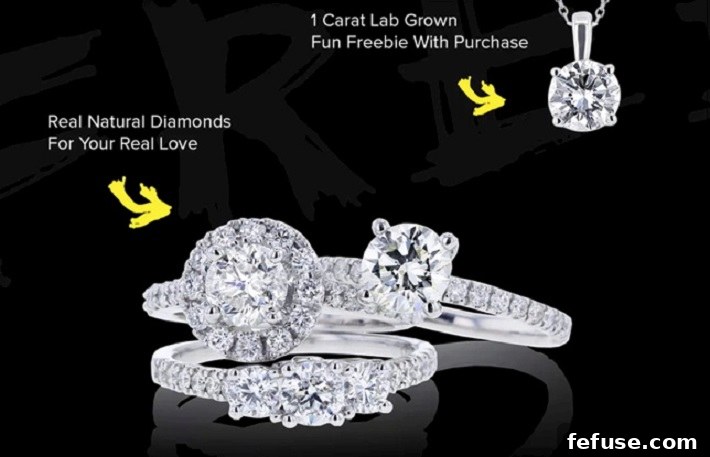
Steven Singer Jewelers isn’t just talking the talk; they’re walking the walk with a remarkable promotion designed to highlight their philosophy. The company is currently giving away 600 exquisite one-carat lab-grown diamonds. This generous offer is tied to any purchase from their extensive collection of natural, mined diamond engagement rings, with prices starting from an accessible $548. This strategy not only drives sales of their core product – natural diamond engagement rings – but also physically demonstrates the lab-grown diamonds they critique.
To generate initial excitement and buzz, the promotion kicked off with an additional, equally captivating event. On Saturday, August 12th, the retailer distributed 100 half-carat lab-grown stones on a no-purchase-necessary, first-come, first-serve basis. This initial giveaway served as an instant magnet, drawing attention to the jeweler’s bold stance and setting the stage for the larger, ongoing promotion. By offering these stones for free, Singer effectively underscores his belief in their depreciating value, transforming what others sell into a compelling promotional item.
Steven Singer’s Unwavering Philosophy: The Truth About Diamond Value
Steven Singer is no stranger to unconventional marketing. Famous for building an entire campaign around the provocative slogan, “I Hate Steven Singer,” he understands the power of a strong, often contrarian, message. His latest venture is rooted in a deeply held conviction about the future of lab-grown diamonds. “There’s been a debate in the industry,” Singer states, “but I knew anything that can be mass produced infinitely will rapidly lose value, which is exactly what happened as production scaled.” This candid assessment challenges the increasingly popular narrative surrounding lab-grown stones.
Singer elaborates on his perspective, emphasizing the economic realities of mass production: “Lab grown diamond value continues to plummet and I just don’t feel right about selling them knowing they will be worthless one day.” This ethical stance forms the cornerstone of his brand’s commitment to natural diamonds. For Singer, it’s not merely about business; it’s about integrity and ensuring his customers invest in something that retains its intrinsic and monetary value over time. He believes that to sell a product with a predictable trajectory towards worthlessness would be a disservice to his clientele, particularly when dealing with significant emotional purchases like engagement rings.
The Great Diamond Debate: Natural vs. Lab-Grown
Understanding Natural Diamonds: Rarity and Enduring Value
Natural diamonds are geological marvels, formed deep within the Earth’s mantle over billions of years under immense heat and pressure. Their journey to the surface, through volcanic eruptions, imbues them with a unique history and an undeniable rarity. Each natural diamond is a one-of-a-kind creation, possessing subtle variations in clarity, color, cut, and carat that contribute to its individuality. This scarcity, combined with the significant effort required for extraction, has historically positioned natural diamonds as a symbol of enduring value, luxury, and commitment. They are not merely gemstones; they are tangible pieces of Earth’s ancient history, carrying an inherent mystique that has captivated humanity for centuries. For many, a natural diamond represents timeless love, an heirloom to be passed down through generations, holding both sentimental and financial worth.
The Rise of Lab-Grown Diamonds: Innovation and Price Decline
In contrast, lab-grown diamonds are created in controlled laboratory environments using advanced technological processes that replicate the conditions under which natural diamonds form. Techniques such as High-Pressure/High-Temperature (HPHT) and Chemical Vapor Deposition (CVD) allow for the rapid production of diamonds that are chemically, physically, and optically identical to their mined counterparts. While initially expensive, the technology has advanced dramatically, leading to increased production efficiency and a steady decrease in manufacturing costs.
This exponential growth in production capacity is precisely what fuels Steven Singer’s concerns. As the supply of lab-grown diamonds continues to expand without the inherent limitations of natural resource extraction, their market value inevitably faces downward pressure. Consumers are increasingly offered larger, seemingly more perfect lab-grown stones at significantly lower price points compared to natural diamonds of similar characteristics. While this accessibility is attractive to some, Singer argues that this trajectory points towards a future where their perceived and actual monetary value could diminish significantly, potentially becoming little more than decorative stones with minimal resale value.
The Hard Evidence: A $3 Million Value Plunge
To underline his point, Steven Singer Jewelers provides a compelling example. The company asserts that the very 600 lab-grown diamonds they are now giving away were collectively valued at an astonishing $3 million just five years ago. This dramatic figure serves as a stark illustration of the rapid depreciation Singer has observed in the lab-grown diamond market. While the company refrains from stating their current estimated worth, the implication is clear: their value has plummeted drastically, validating Singer’s prediction of future worthlessness. This tangible example offers a powerful counterpoint to the notion that lab-grown diamonds offer a lasting investment or a stable store of value.
Beyond Price: The Emotional and Symbolic Value of Diamonds
For many, an engagement ring is more than just a piece of jewelry; it’s a profound symbol of commitment, love, and future dreams. This deeply personal and emotional aspect often transcends mere monetary value. Steven Singer taps into this sentiment directly, proclaiming on his website: “Nothing says I love you less than a fake diamond.” This bold statement aims to distinguish between what he considers authentic and what he perceives as a manufactured substitute in the context of enduring love and significant life milestones.
The company further reinforces its brand identity by stating: “Steve only sells REAL Natural Earth Born Diamonds. Steven has never, and will never sell lab grown diamonds, but he WILL give them away for FREE!” This declaration isn’t just about the geological origin of a stone; it’s about the narrative, the tradition, and the perceived authenticity associated with natural diamonds. For centuries, mined diamonds have been intertwined with rituals of love and marriage, carrying a legacy that, for Singer and his clientele, synthetic alternatives simply cannot replicate. The act of giving away lab-grown diamonds for free reinforces the idea that their value is not commercial, but rather symbolic of the choice one makes when investing in true love.
Navigating Consumer Choices in the Evolving Diamond Market
The modern diamond market presents consumers with a diverse range of choices, each with its own set of appeals and considerations. When purchasing an engagement ring, individuals typically weigh several key factors:
- Price: Lab-grown diamonds often offer a more budget-friendly option for those desiring a larger stone or a specific aesthetic at a lower cost. Natural diamonds, due to their rarity and extraction costs, generally command a higher price point.
- Ethics and Sustainability: Some consumers are drawn to lab-grown diamonds due to perceived ethical concerns associated with diamond mining or for their potential environmental benefits, though the energy consumption of labs is also a factor. Natural diamonds, however, increasingly come with certifications ensuring responsible sourcing.
- Perceived Value and Investment: This is where Steven Singer’s campaign heavily focuses. He argues that natural diamonds maintain or increase in value over time, serving as a tangible asset and a family heirloom. He posits that lab-grown diamonds, conversely, are susceptible to significant depreciation.
- Symbolism and Tradition: For many, the deep-rooted tradition and natural origin of a mined diamond are paramount, embodying a sense of timelessness and connection to the Earth’s ancient history.
Steven Singer’s marketing strategy directly addresses these considerations, particularly focusing on the “perceived value” and “symbolism” aspects. By emphasizing the “realness” and “earth-born” nature of his diamonds, he aims to reassure customers that they are making a wise and emotionally resonant choice, one that will stand the test of time both monetarily and symbolically.
Steven Singer’s Marketing Prowess: Turning Controversy into Conversation
Steven Singer’s brand identity is built on a foundation of bold, memorable, and often provocative marketing. His iconic “I Hate Steven Singer” campaign was a masterclass in generating buzz and creating a distinct personality for his business. This latest venture, the lab-grown diamond giveaway coupled with a strong critique of their long-term value, is another testament to his marketing genius. By taking a clear, uncompromising stance on a contentious industry topic, Singer not only garners significant media attention but also solidifies his position as an authoritative voice in the diamond market.
This approach isn’t just about selling diamonds; it’s about selling a belief system. He isn’t just a jeweler; he’s a curator of “real” experiences and “real” value. By challenging the growing popularity of lab-grown diamonds, he creates a narrative that resonates with consumers who prioritize tradition, lasting value, and authenticity. His willingness to openly criticize a segment of the market, even by giving away the very products he disparages, makes his message all the more potent and memorable. It frames his natural diamond offerings not just as a choice, but as the *right* choice for those seeking enduring significance.
Conclusion: A Statement That Resonates Beyond the Storefront
Steven Singer Jewelers’ audacious move to give away hundreds of lab-grown diamonds marks a pivotal moment in the ongoing debate between natural and synthetic stones. Far from a simple promotional event, it is a meticulously crafted statement designed to underscore the perceived long-term depreciation of lab-grown diamonds and re-assert the enduring value and emotional significance of natural, earth-born stones. By boldly claiming that lab-grown diamonds “will be worthless one day,” Singer is challenging industry norms and compelling consumers to deeply consider what they truly value in a diamond.
This Philadelphia jeweler, with his characteristic blend of marketing savvy and unwavering conviction, is not merely selling engagement rings; he is selling a philosophy. A philosophy that champions authenticity, tradition, and lasting value in an age where synthetic alternatives are increasingly prevalent. Whether one agrees with his controversial stance or not, Steven Singer has undeniably ignited a powerful conversation, forcing both consumers and industry players to re-evaluate the intrinsic worth of diamonds and the precious sentiments they represent.