
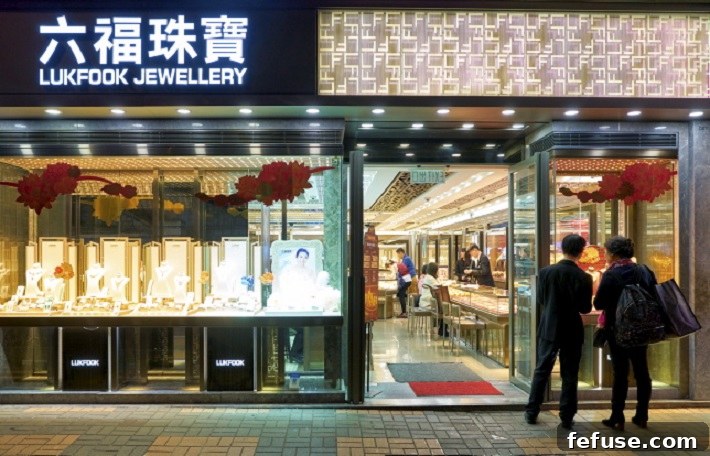
Luk Fook Faces Significant Headwinds: Revenue Slump, Profit Decline, and Strategic Store Closures
In a challenging economic climate marked by surging gold prices and a palpable decline in consumer confidence, Luk Fook Holdings, a prominent Hong Kong-based jewelry chain, has reported a significant downturn in its latest financial results. The company announced a substantial 27 per cent slump in its half-year revenue, alongside the strategic closure of 175 retail jewelry stores. This move represents a considerable rationalization of its extensive network, which previously boasted over 3,500 outlets, signaling a period of introspection and adaptation for the luxury retailer.
Financial Performance Under Pressure: A Closer Look at the Numbers
The six-month period ending September 30 proved particularly demanding for Luk Fook. Earnings for this critical half-year plummeted to approximately $700 million, a stark indicator of the prevailing market difficulties. The company attributed this challenging performance to a confluence of “various challenges including macroeconomic uncertainties, further rising gold prices and cautious consumer sentiment, coupled with a high base effect.” These factors collectively painted a grim picture for the discretionary spending sector, particularly within the luxury goods market.
Delving deeper into the financial specifics, the impact of escalating gold prices was undeniably profound. Over the six-month reporting period, gold prices soared by an impressive 23 per cent. This sharp increase had a direct and adverse effect on consumer purchasing behavior, leading to a notable 24 per cent drop in the sales volume of gold and platinum products. This highlights a critical conundrum for jewelers: while the intrinsic value of their primary commodity rises, the affordability and willingness of consumers to purchase at higher price points diminishes significantly.
The broader retail landscape for Luk Fook also reflected this downturn, with overall same-store sales experiencing a substantial 34 per cent reduction. This metric, often considered a key indicator of retail health, underscores the widespread nature of the slump across the company’s operational footprint. Such a decline suggests that the challenges are not isolated to specific regions or product lines but rather represent a systemic shift in market dynamics.
Beyond top-line revenue, the impact on profitability was equally, if not more, pronounced. Gross profits for the six months fell by 14 per cent, settling at $228 million. However, the net profit suffered an even steeper decline, plummeting by a staggering 56 per cent to just $54 million. This disparity between gross and net profit reductions suggests that operating costs, administrative expenses, or other non-revenue factors played a significant role in eroding the company’s bottom line, magnifying the pressure from reduced sales.
Strategic Responses and CEO’s Outlook
In response to these challenging conditions, CEO Wong Wai Sheung offered a nuanced perspective on the company’s strategy and future outlook. Acknowledging the immediate impact of the gold price surge, Wong stated, “Although the spike in gold prices may affect sales performance, an increase in profit margin will help mitigate the impact of the decline in sales.” This suggests a strategic focus on maximizing the profitability of each sale, potentially through higher markups on existing inventory purchased at lower costs, or by focusing on higher-margin items despite reduced volume.
Wong Wai Sheung expressed optimism regarding consumer adaptation, projecting that “Sales of the gold products are expected to resume to the normal levels after consumers adapt to the high gold prices.” This outlook hinges on the belief that consumers will eventually adjust their purchasing expectations to the new price reality, either by accepting higher costs, opting for smaller or less intricate pieces, or shifting their perceived value proposition for gold jewelry. This adaptation period, however, could be prolonged, requiring sustained strategic effort from Luk Fook.
The decision to close 175 stores, representing a significant portion of its total retail presence, is a bold strategic move designed to streamline operations, reduce overheads, and optimize the company’s retail footprint. This rationalization is likely a response to shifting consumer habits, including a greater propensity for online shopping, as well as an effort to shed underperforming locations in a period of reduced foot traffic and diminished discretionary spending. Such consolidation can lead to a more efficient and profitable business model in the long run, albeit with short-term restructuring costs.
Understanding the Macroeconomic Undercurrents
The “macroeconomic uncertainties” cited by Luk Fook are multifaceted. Globally, inflationary pressures have eroded consumer purchasing power, while rising interest rates have made borrowing more expensive and curtailed overall economic growth. In key markets like Hong Kong and mainland China, specific economic challenges, including property market instability and slower than expected post-pandemic recovery, have directly impacted consumer confidence. When households face job insecurity or financial strain, luxury items like jewelry are often among the first categories to see reduced spending.
The “high base effect” mentioned by Luk Fook is also a crucial contextual factor. Just months prior, in March, the company reported a robust 28 per cent increase in revenue. This surge was primarily driven by a post-COVID influx of tourists and a pent-up demand for luxury goods. Comparing the current half-year performance against such a strong prior period inevitably makes the current decline appear more dramatic than it might otherwise be. This highlights the volatility inherent in luxury retail, especially one heavily reliant on tourism and cross-border spending.
The Broader Jewelry Market and Future Prospects
Luk Fook’s challenges are not isolated; they mirror broader trends observed across the global luxury jewelry market. Jewelers worldwide are grappling with the dual pressures of fluctuating precious metal prices and discerning consumers who are increasingly value-conscious. The rise of “investment gold” purchases, where consumers buy gold bars or coins as a hedge against inflation, sometimes at the expense of gold jewelry, further complicates the landscape for retailers like Luk Fook. The psychological barrier of seeing gold as an investment rather than an adornment can shift purchasing patterns significantly.
For Luk Fook, navigating these choppy waters will require more than just waiting for consumer adaptation. Diversification of product offerings, potentially incorporating more non-gold precious stones or alternative materials, could buffer against gold price volatility. Enhancing the online shopping experience and integrating omnichannel strategies will also be crucial as consumer preferences continue to evolve towards digital platforms. Furthermore, targeted marketing campaigns that emphasize craftsmanship, design, and emotional value rather than just material worth could help reignite demand.
While the immediate outlook presents significant hurdles, the long-term resilience of the luxury jewelry market, particularly in Asia, remains robust. As macroeconomic conditions stabilize and consumer confidence potentially recovers, demand for finely crafted jewelry is expected to rebound. Luk Fook’s strategic adjustments, including store rationalization and a focus on profit margins, position it to emerge leaner and potentially stronger once the market recalibrates. The ability to adapt swiftly to changing consumer behaviors and economic realities will be the ultimate determinant of its sustained success in this competitive landscape.
In conclusion, Luk Fook’s recent financial report serves as a clear indicator of the formidable challenges currently facing the luxury retail sector. The interplay of soaring gold prices, cautious consumer sentiment, and broader macroeconomic uncertainties has created a difficult operating environment. However, the company’s proactive measures, including strategic store closures and an articulated focus on profit optimization, suggest a determined effort to adapt and ensure long-term viability. The coming quarters will reveal the extent to which these strategies can effectively mitigate the ongoing pressures and position Luk Fook for a sustainable recovery in a dynamic global market.