
Global Silver Market Insights: Record Demand and Persistent Deficits Shaping the Future
The global silver market experienced a landmark year in 2022, with demand reaching an unprecedented all-time high of 1.242 billion ounces (Boz). This remarkable surge, detailed in the authoritative World Silver Survey 2023 – a collaborative effort by the Silver Institute and Metals Focus, a renowned independent precious metals consultancy – signals robust health across all primary sectors. As the global economy steadily recovers from the lingering effects of the recent pandemic, silver’s multifaceted utility and enduring appeal have driven its consumption to new heights. However, this escalating demand has not been met by a corresponding increase in supply, leading to significant structural deficits that are reshaping market dynamics and investor sentiment.
The comprehensive findings of the 2023 World Silver Survey illuminate the critical trends and underlying factors driving silver’s exceptional performance. The report serves as a vital resource for investors, industry stakeholders, and policymakers, offering a detailed analysis of supply-demand fundamentals and future projections. The narrative for silver in 2022 was one of vigorous expansion across diverse applications, from high-tech industrial uses to traditional jewelry and investment products, underscoring its unique position as both a crucial industrial commodity and a coveted precious metal.
Unprecedented Global Silver Demand: A Sector-by-Sector Breakdown
The monumental achievement of 1.242 Boz in global silver demand represents a substantial 38% increase from 2020 levels, illustrating the speed and strength of economic recovery worldwide. Each major category contributed significantly to this milestone, highlighting the broad-based nature of silver’s utility. This collective growth underscores silver’s critical role in an evolving global economy, which increasingly prioritizes both technological advancement and sustainable practices.
Surging Silver Jewelry Demand
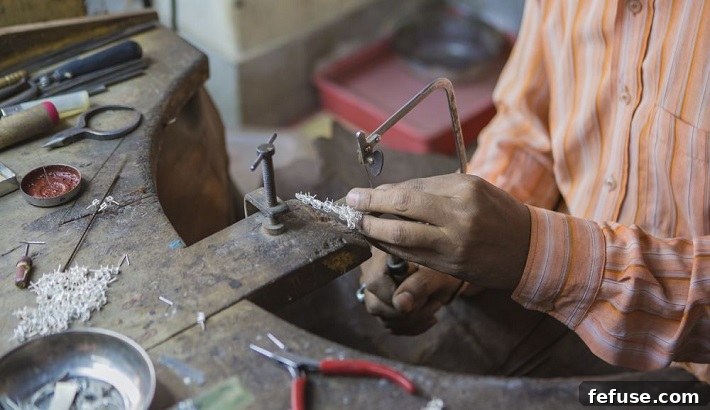
Silver jewelry fabrication witnessed an extraordinary 29% increase, reaching a record 234.1 Moz in 2022. This impressive growth was predominantly fueled by a resurgence in demand from India, a country with a deep cultural affinity for silver. In India, a combination of pent-up consumer demand, a preference for higher purity silver, and aggressive restocking initiatives by retailers led to a doubling of volumes compared to 2021. This indicates a robust return of consumer confidence and disposable income in key emerging markets. Beyond India, other regions also contributed, albeit to a lesser extent, as global fashion trends continue to embrace silver for its versatility, aesthetic appeal, and relative affordability compared to other precious metals. The intricate craftsmanship and diverse designs available in silver jewelry cater to a wide demographic, ensuring its continued popularity in both traditional and contemporary markets. The increased demand also signifies a broader economic recovery, as consumers become more willing to spend on discretionary items like jewelry, which often symbolize celebration and cultural identity.
The Revival of Silverware
Echoing the trends observed in jewelry, silverware demand experienced an astonishing 80% growth in 2022. Once again, India was the primary catalyst for this remarkable expansion. The report specifically notes that demand in India more than doubled last year, propelled by the normalization of employment and income levels to their pre-pandemic status. Silverware, in many cultures, particularly in India, holds significant cultural and ceremonial importance, often passed down through generations. The return of social gatherings, festivals, and celebratory events following pandemic-induced restrictions played a crucial role in stimulating this demand. This category’s strong performance highlights not only economic recovery but also the enduring cultural value placed on silver artifacts, reflecting traditions that continue to thrive alongside modern trends. The investment in silverware often goes beyond mere utility; it represents a commitment to heritage and a tangible store of value, making it an attractive purchase during periods of economic stability.
Robust Industrial Silver Applications
Industrial demand for silver, a cornerstone of its market value, saw a solid 5% increase in 2022. Silver’s unique properties – its unparalleled electrical and thermal conductivity, ductility, malleability, and photosensitivity – make it indispensable across a wide array of high-tech and emerging industries. Key drivers for this growth include the rapid expansion of the solar photovoltaic (PV) sector, where silver paste is crucial for solar cells, and the continuous innovation within the electronics industry. As the world transitions towards greener energy sources and more advanced digital technologies, silver’s role becomes increasingly pivotal. It is utilized in everything from touchscreens and RFID chips to medical devices and automotive electronics. The ongoing global push for decarbonization and electrification ensures a sustained and growing appetite for industrial silver. Furthermore, the automotive industry’s shift towards electric vehicles (EVs) is also a significant growth area, as EVs typically use a greater amount of silver in their complex electrical systems compared to traditional internal combustion engine vehicles. The rise of 5G technology and the Internet of Things (IoT) further cement silver’s indispensability, as it is a critical component in the myriad of sensors, connectors, and circuits that power these advanced networks. This continuous technological evolution underpins the robust and future-proof nature of industrial silver demand.
Climbing Physical Silver Investment
Physical silver investment marked its fifth consecutive year of growth, reaching an impressive new high of 332.9 Moz in 2022. This sustained interest reflects investors’ increasing recognition of silver as a valuable asset class, serving multiple functions within a diversified portfolio. Silver is often viewed as a tangible store of wealth, a hedge against inflation, and a safe haven asset during periods of economic uncertainty. Its dual role as both a precious metal and an industrial commodity adds an additional layer of appeal, offering potential upside from both investment and industrial demand drivers. Geopolitical tensions, persistent inflationary pressures, and a desire for tangible assets outside of traditional financial systems contributed significantly to this robust investment demand. Investors acquired silver in various forms, including bullion bars, sovereign and private mint coins, and physically-backed exchange-traded products (ETPs), seeking to capitalize on its potential for capital appreciation and its intrinsic value. The accessibility of physical silver, combined with its historical performance during times of economic volatility, continues to attract a diverse range of investors, from retail enthusiasts to institutional players. This consistent upward trend in investment demand highlights a deepening confidence in silver’s long-term value proposition.
The Supply Side: Challenges and Persistent Deficits
While demand soared to historic levels, the supply side of the global silver market faced considerable challenges in 2022. Despite increased exploration efforts and rising silver prices, mine production experienced a slight decline, contributing significantly to the widening supply-demand imbalance. This disparity resulted in the second consecutive annual structural deficit, reaching a substantial 237.7 million ounces (Moz) last year. This deficit is not merely a statistical anomaly but a critical indicator of underlying market pressures that have far-reaching implications for prices and future supply strategies.
Mine Production Trends
Mine production, the primary source of newly supplied silver, struggled to keep pace with the burgeoning demand. Silver is often mined as a byproduct of other metals such as lead, zinc, copper, and gold. This co-product nature means that silver output is largely dependent on the production economics of these primary metals. Factors such as declining ore grades in existing mines, increasing operational costs, labor shortages, and stringent environmental regulations can all impact the overall volume of silver brought to market. Furthermore, capital expenditure in the mining sector can be slow to react to price signals, with new projects taking many years to move from discovery to full production. The complexities of developing new mines, including securing permits and managing community relations, further constrain rapid increases in supply. These inherent challenges on the supply side underscore the structural nature of the current deficits and highlight the difficulty in quickly scaling up production to meet sudden spikes in demand.
The Role of Silver Recycling
Recycling activity, while growing, still couldn’t bridge the widening gap. Recycling rose for a third consecutive year in 2022, primarily driven by a 7% rise in industrial scrap. This suggests that rising silver prices made it more economically viable for companies to recover silver from spent electronics and industrial waste. However, recycling from jewelry and silverware saw only marginal gains. This disparity indicates that while industrial recycling is responsive to price signals and technological advancements in recovery methods, consumer-driven recycling of jewelry and silverware is often influenced by cultural factors, sentimental value, and slower turnover rates. Many silver jewelry items are kept for generations or are of too low value to justify individual recycling efforts, contributing to a longer lifecycle before being re-entered into the supply chain. Despite the increases, total recycled silver volumes were insufficient to offset the robust growth in demand and the flatlining mine output, thus exacerbating the overall market deficit.
Implications of Consecutive Silver Deficits
The successive years of significant structural deficits carry profound implications for the global silver market. A deficit signifies that more silver is being consumed than produced, drawing down existing above-ground inventories. Such sustained drawdowns inevitably lead to tighter market conditions, which typically exert upward pressure on prices. For investors, this signals a potential for increased volatility and capital appreciation. For industrial users, it raises concerns about long-term supply security and potential cost increases, which could impact manufacturing processes and product pricing. The depletion of global silver inventories, particularly in major vaults, is a tangible sign of this imbalance, demonstrating that the market is consuming its reserves at an accelerated pace. This situation encourages greater focus on efficient resource management, technological innovation in recycling, and potentially, increased investment in new mining projects, though these take time to materialize. The current deficit situation reinforces silver’s appeal as a commodity facing genuine supply constraints against a backdrop of consistently growing demand across vital sectors.
The 2023 Outlook: Another Year of Scarcity?
The forecast for 2023 indicates that the global silver market is poised for another challenging year, with experts predicting a substantial deficit of 142.1 Moz. This would represent the second-largest deficit in over two decades, signaling a continuation of the supply-demand imbalance that characterized 2022. The prediction stems from an anticipated modest gain in overall supply coupled with a healthy and sustained demand across virtually all sectors. While bar and coin demand and jewelry fabrication are expected to fall slightly short of last year’s exceptional highs, they are still projected to remain at historically elevated levels, reflecting enduring investor interest and consumer appetite. Industrial demand, driven by the ongoing green energy transition and technological advancements, is expected to remain robust.
By contrast, silver supply is only expected to achieve low single-digit gains in 2023. This sluggish growth in supply, primarily from mine production and recycling, will continue to struggle to keep pace with the persistent strength in demand. The cumulative effect of these deficits is becoming increasingly apparent. When accounting for the supply shortfalls from 2021 through 2023, global silver inventories are projected to have fallen by an astonishing 430.9 Moz from their peak at the end of 2020. To put this figure into perspective, this represents more than half of the forecasted annual mine production for 2023 and also exceeds half of the current inventories held in London vaults that provide custodian services. Such a significant depletion of readily available silver inventories highlights the severe tightness in the physical market and raises questions about future price stability and accessibility for both industrial users and investors. The sustained deficit environment is likely to keep silver prices well-supported and reinforce its status as a strategic metal with significant long-term potential.
Conclusion: Silver’s Enduring Value and Future Potential
The global silver market is currently navigating an unprecedented era of high demand and constrained supply, as evidenced by the record-breaking consumption in 2022 and the significant structural deficits projected for 2023. Silver’s indispensable role in modern technology, particularly in renewable energy and electronics, ensures a baseline of robust industrial demand that is only set to grow. Simultaneously, its traditional appeal as a precious metal, a hedge against inflation, and a safe haven asset continues to attract substantial investment. The detailed analysis from the World Silver Survey 2023 paints a clear picture: silver is not just a metal of the past but a crucial commodity for the future, deeply integrated into the world’s technological and economic advancements. The ongoing depletion of global inventories underscores the critical balance between burgeoning consumption and the challenges of increasing supply. As the world continues to industrialize, electrify, and seek sustainable energy solutions, silver’s strategic importance will only intensify, cementing its position as a dynamic and essential asset in the global economy for years to come.