
Strengthening Bilateral Bonds: India and Thailand Charting a Course for Enhanced Gems & Jewellery Trade
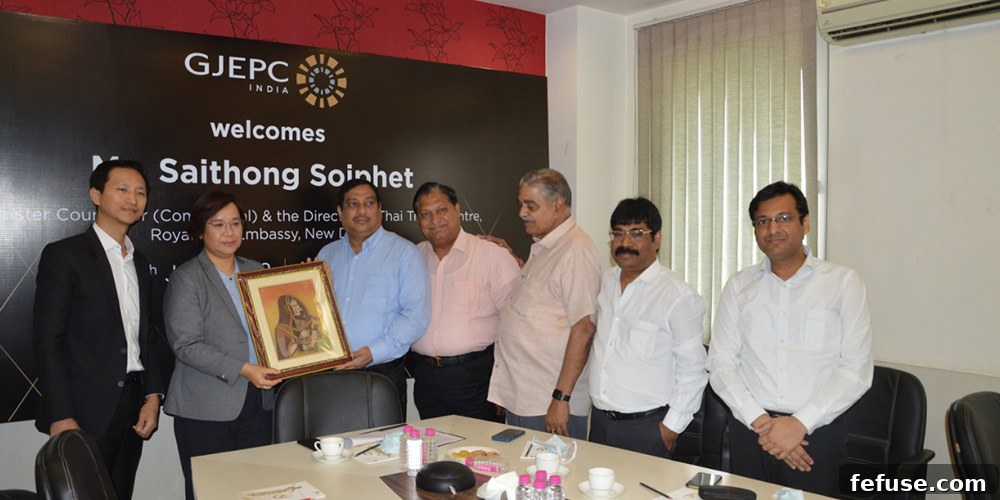
In a significant move to invigorate and expand bilateral trade relations, particularly within the vibrant gems and jewellery sector, a high-level delegation from Thailand visited India. On July 25, 2022, Saithong Soiphet, the esteemed Minister Counsellor (Commercial) and Director of the Thai Trade Centre, Office of Commercial Affairs, Royal Thai Embassy, New Delhi, spearheaded this pivotal delegation. The visit to GJEPC’s Jaipur Regional Office underscored a mutual commitment to fostering stronger economic ties and exploring new avenues for collaboration between the two nations. This proactive engagement is a testament to the enduring partnership between India and Thailand, aiming to unlock the full potential of their complementary strengths in the global jewellery market.
The Thai delegation, comprising key figures instrumental in trade promotion, included Counsellor Commercial, Narathip Raksakit, and Trade Officer, Bobby J. Gupta. Their presence highlighted the strategic importance Thailand places on its economic relationship with India, particularly in a sector where both countries possess rich heritage and significant expertise. The meeting in Jaipur, a city renowned globally as a hub for coloured gemstones and jewellery craftsmanship, provided an ideal backdrop for substantive discussions focused on practical steps to enhance trade, investment, and cultural exchange through commerce.
A Warm Welcome and Strategic Dialogue
Upon their arrival at the GJEPC (Gem & Jewellery Export Promotion Council) Regional Office, the Thai officials received a warm and enthusiastic welcome from their Indian counterparts. GJEPC Regional Chairman Nirmal Bardiya led the Indian contingent, embodying the spirit of cooperation and partnership. He was joined by several prominent figures from India’s gems and jewellery industry, each representing crucial facets of the sector. These included Mahendra Kumar Agarwal, Convener of the Coloured Gemstones Panel, whose insights into the gemstone trade are invaluable; Rambabu Gupta, Convener for Silver Jewellery, highlighting India’s prowess in this segment; and B.N. Gupta, Convener for the Sales To Foreign Tourists, Synthetic Stones & Costume Fashion Jewellery Panel, underscoring the diversity and retail potential of the Indian market. This diverse representation from both sides ensured a comprehensive dialogue, covering various aspects of the gem and jewellery value chain, from raw materials and manufacturing to design, retail, and tourism.
The meeting served as a vital platform for both nations to exchange perspectives, identify common goals, and address existing challenges. Discussions delved into the intricacies of bilateral trade, exploring ways to streamline processes, improve market access, and encourage greater participation from businesses in both countries. The emphasis was on creating a more conducive environment for trade and investment, ensuring that policies and initiatives support sustained growth and mutual benefit. This strategic dialogue is crucial for cementing long-term relationships and building trust between key stakeholders from India and Thailand, ultimately paving the way for a more integrated and prosperous regional economy.
Unlocking Opportunities: The 67th Bangkok Gem and Jewellery Fair (BGJF)
A cornerstone of the Thai delegation’s visit was the enthusiastic invitation extended to GJEPC members to participate in the prestigious 67th Bangkok Gem and Jewellery Fair (BGJF). Scheduled from September 7th to 11th, 2022, the BGJF is recognized as one of Asia’s most significant and comprehensive trade shows for the gems and jewellery industry. The Thai officials meticulously presented the fair as an unparalleled gateway for Indian businesses to explore the dynamic Southeast Asian market, establish valuable international connections, and showcase their exquisite craftsmanship on a global stage. Participation in such a renowned event offers Indian manufacturers, designers, and exporters an invaluable opportunity to gauge international trends, source raw materials, and engage directly with buyers from across the globe, thereby significantly boosting their export potential.
The BGJF has a long-standing reputation for bringing together a diverse array of exhibitors, from raw gemstone suppliers to finished jewellery manufacturers, and attracting a high calibre of international buyers. For Indian companies, particularly those specializing in cut and polished diamonds, coloured gemstones, and intricately designed gold and silver jewellery, the fair presents a strategic advantage. It allows them to not only present their unique collections but also to understand emerging consumer preferences and market demands in Thailand and the broader ASEAN region. Furthermore, the fair facilitates direct business-to-business interactions, which are crucial for forging new partnerships, securing orders, and expanding market reach. The Thai delegation emphasized that BGJF is more than just a trade show; it’s a vibrant hub for innovation, networking, and celebrating the artistry of the global gems and jewellery community.
Beyond direct sales, participation in BGJF also offers significant opportunities for knowledge exchange and technology transfer. Indian businesses can gain insights into advanced manufacturing techniques, sustainable practices, and innovative design concepts prevalent in the international market. This exposure is vital for enhancing competitiveness and adapting to evolving global standards. By actively engaging with the BGJF, Indian firms can strengthen their brand presence, identify potential collaborators for joint ventures, and ultimately contribute to the growth and modernization of India’s gems and jewellery sector. The fair truly embodies the spirit of international collaboration, making it an indispensable event for anyone serious about expanding their footprint in the global jewellery trade.
Addressing Logistical Hurdles: Calls for Enhanced Connectivity
In a reciprocal exchange of proposals, the Indian officials articulated key requests aimed at improving connectivity and ease of travel between India and Thailand. A primary appeal was for the resumption of direct Jaipur-Bangkok flights, specifically mentioning Thai Smile Airways, which had been a popular route before its unfortunate suspension following the COVID-19 pandemic. The re-establishment of this direct air link holds immense significance for the gem and jewellery industry. Jaipur, as a major manufacturing and trading hub for coloured gemstones and jewellery, has strong business ties with Bangkok, a crucial gateway for international trade and a significant market for finished jewellery. Direct flights would drastically reduce travel time and logistical complexities for business travellers, making it easier for buyers, sellers, and designers to move between these two pivotal cities. This ease of access is paramount for fostering continuous engagement and efficient transaction flow in a high-value, time-sensitive industry.
The absence of direct flights forces travellers to endure longer, multi-stop journeys, leading to increased costs, travel fatigue, and wasted time – all significant deterrents for frequent business trips. The resumption of direct flights would not only benefit the gems and jewellery sector by facilitating the swift movement of goods and personnel but also provide a substantial boost to tourism and general business travel between the two countries. It would symbolize a return to normalcy and a proactive step towards rebuilding and strengthening the economic bridges disrupted by the pandemic. Indian officials highlighted that reliable and direct air connectivity is a fundamental enabler for robust bilateral trade, unlocking new opportunities for businesses and tourists alike. Such a step would undoubtedly stimulate economic activity in both Jaipur and Bangkok, benefiting local economies through increased footfall, spending, and trade volumes.
Beyond air travel, the Indian delegation also strongly advocated for the reinstatement of the long-term multiple entry visa facility for Indian business travellers. This request addresses a critical need for sustained business engagement and investment. For entrepreneurs, traders, and industry professionals who frequently travel between India and Thailand for sourcing, sales, exhibitions, and partnership meetings, a long-term multiple entry visa significantly simplifies travel logistics. It eliminates the need for repeated visa applications, reducing bureaucratic hurdles, saving valuable time, and minimizing administrative costs. This facility is crucial for building and maintaining strong, enduring business relationships, which often require multiple visits over an extended period. The ability to travel freely and frequently encourages greater investment, fosters deeper collaboration, and promotes a more seamless exchange of ideas and resources.
The reintroduction of a long-term multiple entry visa would send a strong signal of Thailand’s commitment to facilitating ease of doing business with India. It would empower Indian businesses to plan and execute their strategies more effectively, knowing that their travel requirements are simplified. This policy adjustment would directly support the growth of various sectors, not just gems and jewellery, by enabling consistent engagement and fostering a climate of trust and convenience. It aligns with global best practices for promoting international trade and investment, where ease of movement for business professionals is recognized as a key driver of economic prosperity. By addressing these logistical and administrative challenges, both nations can collectively build a more robust and accessible trade corridor, leading to sustained growth and mutual benefit.
Paving the Way for a Prosperous Future
The meeting between the Thai and Indian delegations transcended mere discussions, laying down a tangible roadmap for future collaborations. The earnestness demonstrated by both sides in promoting trade and resolving impediments reflects a shared vision for a more integrated and prosperous regional economy. The engagement showcased a proactive approach to overcoming challenges posed by global events like the pandemic and underscored the resilience and adaptability of the gems and jewellery industry. This sector, being a significant foreign exchange earner and employment generator for both countries, stands to gain immensely from such high-level strategic dialogues and practical policy implementations.
Looking ahead, the commitment from both the Royal Thai Embassy and GJEPC to continue these dialogues promises a brighter future for India-Thailand trade. Initiatives such as reciprocal participation in trade fairs, streamlined travel procedures, and ongoing communication will undoubtedly strengthen the commercial fabric that binds these two nations. The discussions on July 25, 2022, were not just about trade numbers; they were about fostering trust, building lasting partnerships, and creating an ecosystem where businesses from both India and Thailand can thrive in a globally competitive landscape. This collaborative spirit is essential for navigating the complexities of international trade and leveraging collective strengths to achieve greater economic resilience and shared prosperity for generations to come.