
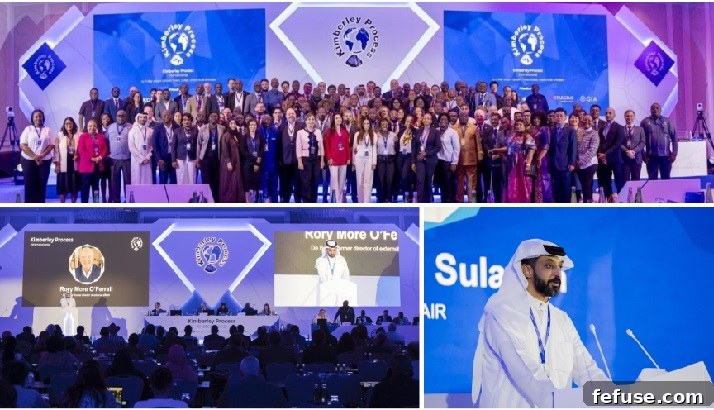
The global natural diamond industry recently converged in Dubai, UAE, for the UN-mandated Kimberley Process (KP) Intersessional and a historic special plenary session. Concluding on May 17th, this pivotal gathering marked significant strides in key areas poised to reshape and enhance the global trade in natural diamonds. The decisions and discussions held are expected to have a profound and lasting impact on the transparency, ethics, and sustainability of the entire diamond supply chain, ensuring greater accountability and consumer confidence in the origin of these precious stones.
Hosted within the impressive Uptown Tower in Uptown Dubai, the strategic headquarters of DMCC (Dubai Multi Commodities Centre), the KP intersessional and special plenary brought together a diverse and influential assembly. Hundreds of representatives from the international diamond industry, dedicated civil society organizations, and delegates from world governments participated in robust discussions, collaborative efforts, and strategic planning. The UAE holds the distinguished position of chairing the UN-mandated Kimberley Process for an unprecedented second time in 2024, under the visionary leadership of DMCC’s CEO and Executive Chairman, Ahmed Bin Sulayem. This repeated chairmanship underscores the UAE’s growing influence and commitment to fostering responsible practices within the global diamond sector.
During the intensive sessions, several critical administrative decisions were meticulously deliberated, subsequently passed, and formally adopted. These decisions aim to streamline the operational framework of the Kimberley Process and enhance its effectiveness in upholding its core mandate. Furthermore, the plenary served as a vital platform for acknowledging and endorsing best practices from across the industry, promoting their wider adoption to elevate standards of transparency and ethical conduct globally. The exchange of knowledge and successful strategies among participating nations and organizations is instrumental in strengthening the KP’s collective impact against conflict diamonds.
A Pivotal Step Towards Central African Republic’s Reinstatement
One of the most significant and eagerly anticipated developments during the Dubai plenary centered on the Central African Republic (CAR). The country has been under a temporary ban on the import and export of rough diamonds since 2013, a measure imposed by the Kimberley Process in response to significant civil unrest and concerns over the potential for diamonds to fuel conflict. This restriction has had profound economic and social repercussions for CAR, a nation where artisanal diamond mining is a vital source of livelihood for thousands.
Following extensive discussions and diplomatic efforts during the Special Plenary, a definitive date for a crucial review mission to CAR has been officially confirmed for September 2024. This represents a monumental step forward, offering a clear pathway for the country’s potential reintegration into the legitimate global diamond trade. The KP Chair, Ahmed Bin Sulayem, has been a particularly vocal and active proponent for this review mission, citing verifiable improvements in the country’s security situation and the CAR government’s renewed commitment to complying with KP requirements. His advocacy highlights a compassionate yet firm approach to upholding the KP’s mandate while supporting member states in their efforts towards peace and stability.
Understanding the Kimberley Process and its Global Importance
The Kimberley Process Certification Scheme (KPCS) is an international certification scheme that originated in 2003 with the primary goal of preventing “conflict diamonds” from entering the mainstream legitimate diamond market. Conflict diamonds, often referred to as ‘blood diamonds,’ are rough diamonds used by rebel movements to finance wars against legitimate governments. The KPCS brings together governments, industry, and civil society to stem the flow of these illicit stones, thereby promoting peace and stability in diamond-producing regions. Its mandate is crucial for ensuring that consumers can purchase diamonds with confidence, knowing they have not contributed to human rights abuses or armed conflict.
Over the years, the KP has faced evolving challenges, prompting ongoing discussions about its scope and effectiveness. Critics have sometimes called for an expansion of its definition of ‘conflict diamonds’ to include a broader range of human rights abuses. Nevertheless, its foundational role in establishing a framework for transparency and accountability remains indispensable. The recent Dubai meeting underscored the collective desire among stakeholders to adapt and strengthen the KP to meet contemporary demands and challenges, maintaining its relevance in an ever-changing global landscape.
UAE’s Strategic Vision and “Year of Delivery” Agenda
Under Ahmed Bin Sulayem’s leadership, the UAE’s second chairmanship of the Kimberley Process has been characterized by a bold and ambitious “Year of Delivery” agenda. This agenda is designed to transcend political impasses and catalyze concrete actions aimed at significant reforms within the KP. Among the key initiatives being championed is the establishment of a permanent secretariat in Gaborone, Botswana. This move is intended to provide greater institutional stability, continuity, and efficiency to the KP’s administrative functions, moving away from the rotating chairmanship model that can sometimes lead to inconsistencies in long-term strategy.
Furthermore, the UAE chairmanship is committed to the completion of the KP review and reform cycle. This comprehensive undertaking involves a critical examination of the KP’s existing framework, rules, and procedures to identify areas for improvement and modernization. The goal is to enhance the scheme’s adaptability to emerging threats and opportunities, ensuring it remains robust and relevant in addressing the complexities of the 21st-century diamond trade. The UAE’s proactive stance reflects a deep understanding of the industry’s needs and a genuine desire to fortify the KP’s impact on global ethical sourcing.
Fostering Innovation: Provenance, Traceability, and Technology
A dedicated sideline event at the Dubai plenary brought crucial additional focus to the increasingly vital themes of provenance, traceability, and the transformative potential of technology within the diamond trade. In an era where consumers are more conscious than ever about the origin and ethical journey of their purchases, understanding a diamond’s complete story – from mine to market – has become paramount. This event provided an invaluable forum to explore cutting-edge innovative technologies and robust traceability solutions that are readily available or under development to address current and future challenges in the global diamond trade landscape.
Discussions delved into various technological advancements, including blockchain technology, artificial intelligence, and advanced scanning and inscription techniques. These innovations offer unprecedented levels of transparency, allowing stakeholders to meticulously track each diamond’s journey, verify its origin, and authenticate its characteristics at every stage of the supply chain. Such solutions are critical not only for combating illicit trade and ensuring compliance with KP standards but also for building unwavering consumer confidence and driving sustainable practices across the industry. The emphasis on technology underscores a forward-thinking approach to safeguarding the integrity of natural diamonds.
Voices from the Industry: A Collaborative Vision
The collaborative spirit and a shared desire to drive meaningful change within the Kimberley Process were palpable throughout the Dubai sessions. This sentiment was echoed by key figures representing various facets of the diamond ecosystem.
Ahmed Bin Sulayem, the UAE Kimberley Process Chair, articulated this enthusiasm, stating: “We are delighted with the collaborative spirit and desire to drive change in the Kimberley Process. Under our ‘Year of Delivery’, the UAE has pushed a bold agenda to overcome political gridlocks and drive concrete actions, including the establishment of a permanent secretariat in Botswana and the completion of the KP review and reform cycle, among other things.” His remarks highlighted the significant progress achieved and the ambitious roadmap that lies ahead for the KP under the UAE’s guidance.
Jaff Bamenjo, a prominent representative of the Civil Society Coalition, offered a cautious yet optimistic perspective on the developments concerning the Central African Republic. He observed: “We are encouraged by the incremental, but fragile progress made regarding the Central African Republic, which has been under KP restrictive measures since 2013. The renewed engagement of the CAR government with the CAR Monitoring Team, signifies a positive move towards cooperation.” Bamenjo’s statement underscores the importance of continued vigilance and support to ensure CAR’s sustainable and ethical return to the diamond trade, recognizing the delicate balance required in such complex situations.
Feriel Zerouki, the esteemed President of the World Diamond Council, passionately highlighted the profound positive impact of natural diamonds on developing nations. She powerfully stated: “For the majority, natural diamonds are a source of development. They have and continue to provide free education, healthcare in nations like Botswana and support the livelihoods for 10 million people around the world.” Her remarks serve as a poignant reminder of the socio-economic benefits derived from a responsibly managed diamond industry, showcasing its capacity to uplift communities and foster prosperity in regions that rely on this valuable resource. The ethical sourcing framework, championed by the KP, is fundamental to sustaining these positive impacts.
Zerouki further expressed satisfaction with the productive dialogues regarding CAR’s future: “We are also pleased that the discussions on the Central African Republic maintained a similar positive tone, including advancing plans for the Review Mission in CAR in the near future.” This collective relief and hope from industry leaders signal a unified approach to addressing critical issues and ensuring that the benefits of the diamond trade are equitable and sustainable for all stakeholders, particularly the communities directly involved in diamond mining.
Shaping the Future of the Natural Diamond Sector
The Kimberley Process Intersessional and Special Plenary in Dubai was more than just a series of meetings; it was a reaffirmation of the global commitment to an ethical and transparent natural diamond trade. The progress made, particularly regarding the Central African Republic and the discussions on technological advancements, sets a promising trajectory for the industry. The leadership demonstrated by the UAE, coupled with the active participation of governments, industry, and civil society, exemplifies a collaborative spirit essential for tackling complex global challenges. The ongoing reform cycle and the pursuit of a permanent secretariat are indicative of a mature organization striving for greater efficiency and long-term impact.
As the natural diamond sector navigates an evolving landscape shaped by consumer demands for ethical sourcing and technological innovation, the role of the Kimberley Process remains central. It is the bedrock upon which trust and integrity in the supply chain are built. The outcomes from Dubai underscore a collective resolve to continually strengthen this foundation, ensuring that natural diamonds continue to be a source of beauty, value, and sustainable development for generations to come. The journey towards a fully transparent and ethically robust diamond trade is continuous, and the Dubai plenary served as a powerful testament to the unwavering dedication of all involved parties to this vital mission.
Conclusion: A Collective Commitment to Ethical Practices
In conclusion, the UN-mandated Kimberley Process Intersessional and historic special plenary in Dubai concluded with tangible progress and renewed vigor. The robust dialogues, the confirmation of the CAR review mission, and the emphasis on embracing cutting-edge traceability technologies collectively signal a strong and forward-looking commitment to ethical practices within the natural diamond industry. Under the dynamic leadership of the UAE, the Kimberley Process continues to evolve, adapting to new challenges and reinforcing its crucial mandate. The collaborative efforts witnessed among governments, the diamond industry, and civil society pave the way for a more transparent, responsible, and sustainable future for natural diamonds, ensuring their enduring legacy as symbols of integrity and positive global impact.