
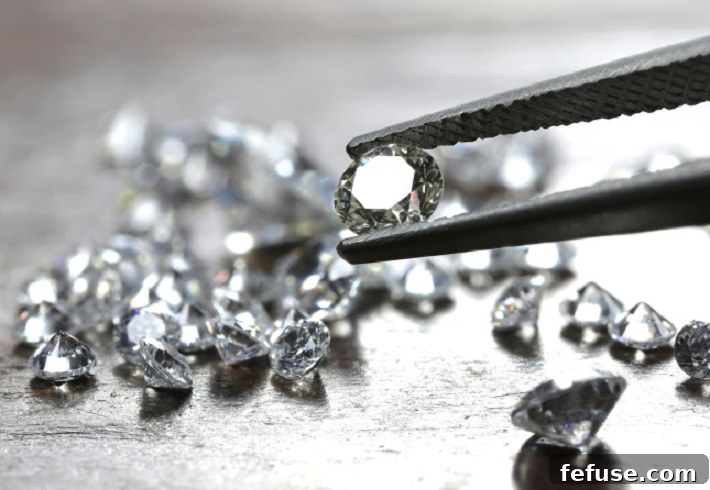
Diamond Market Rebound: A Glimmer of Hope Amidst Shifting Trends
The global diamond market is currently experiencing a fascinating period of transition, marked by tentative signs of recovery following a prolonged downturn. Recent data, particularly from December, indicates a discernible shift in sentiment and pricing, especially within the round diamond segment. After nearly two years of relentless price declines, there’s a growing consensus among industry observers that prices are beginning to stabilize and, in many areas, are poised for an upward trajectory. This cautiously optimistic outlook is a welcome development for stakeholders across the diamond pipeline, from miners and manufacturers to retailers and consumers.
While the overall direction appears positive, the path to full recovery is not without its complexities. Holiday spending in key markets, such as the United States, presented a mixed picture, with a modest 2.0 percent year-on-year decrease. This suggests that while consumer confidence may be improving, discretionary spending on luxury items like diamonds remains sensitive to broader economic conditions. However, the underlying currents of supply chain adjustments and evolving geopolitical factors are significantly influencing market dynamics, setting the stage for what could be a pivotal year for the industry.
Navigating Supply Squeezes and Sanction Uncertainties
A critical factor contributing to the current market recalibration is the tightening of rough diamond supplies. Several strategic initiatives and external pressures have converged to reduce the availability of uncut stones, which naturally supports an upward pressure on polished diamond prices. Notable among these was India’s voluntary two-month import ban on rough diamonds. As a global manufacturing hub, India’s decision had a significant ripple effect, temporarily constricting the flow of new polished diamonds into the market and allowing existing inventories to be absorbed. This proactive measure by the world’s largest diamond cutting and polishing center was instrumental in balancing supply and demand, providing a much-needed breather for a market grappling with oversupply.
Adding another layer of complexity and uncertainty are the impending G7 sanctions on Russian-origin diamonds. These sanctions, aimed at restricting the flow of diamonds originating from Russia, introduce a new paradigm for tracking and verifying diamond provenance. The exact mechanisms of implementation, including the role of new technologies for origin verification and potential certification processes, are still being defined. This ambiguity has naturally led to market apprehension, as participants strive to understand the full implications for sourcing, trade, and compliance. The potential for disruptions in traditional supply chains and the increased scrutiny on diamond traceability could profoundly reshape how rough and polished diamonds are traded globally, fostering greater transparency but also presenting logistical challenges. The industry is closely monitoring these developments, recognizing that effective and universally accepted implementation will be crucial to avoid prolonged market instability.
Round Diamonds: A Segment in Recovery
The round brilliant cut, historically the most popular and liquid diamond shape, has shown compelling signs of recovery. December witnessed a more balanced distribution of price increases and decreases compared to previous months, signaling a healthier market equilibrium. While larger goods, specifically those over 3.0 carats, continued to experience predominant price drops, indicating lingering inventory adjustments or more selective demand at the higher end, other key segments demonstrated remarkable resilience and growth. This divergence suggests a sophisticated market where consumer preferences and economic realities are creating distinct demand pockets.
Significant clusters of price increases were observed in the highly sought-after 0.70-carat to 0.79-carat range, as well as the 1.50-carat to 1.99-carat category. These specific carat weights are often popular choices for engagement rings and other significant jewelry purchases, suggesting robust consumer demand in the bridal and gift-giving sectors. The positive momentum in these sizes indicates a strong underlying desire for classic, well-proportioned diamonds at accessible price points. Furthermore, the 1.0-carat segment, a benchmark size for many buyers, showed more upward movement than downward, reinforcing the idea of a broad-based recovery in core diamond sizes. This rebalancing of prices, particularly in consumer-friendly carat weights, is a powerful indicator of renewed confidence among buyers and sellers alike, hinting at a potential market resurgence driven by steady end-consumer demand.
Fancy Cuts: Navigating a Shifting Landscape
Fancy cut diamonds, encompassing shapes like oval, princess, emerald, and cushion, have historically demonstrated greater price volatility but also periods of outperformance compared to rounds. However, the recent period saw fancy cuts face more widespread price drops across most sizes, a deviation from their recent trend of relative stability or even increases. This indicates a potential recalibration in demand for certain fancy shapes or an adjustment in inventory levels that had previously supported their prices.
Notably, there was limited price movement for fancy cuts under 0.50 carats, suggesting a baseline stability in the market for smaller, accent stones or those used in intricate designs. However, for most fancy cuts above 1.25 carats, price reductions were primarily observed among diamonds with better colors and clarities. This could imply a momentary softening in demand for top-tier fancy goods, perhaps as buyers become more price-sensitive or as retailers adjust their high-end inventory. Interestingly, some isolated clusters of price increases were noted, particularly in the 3.0-carat and 4.0-carat fancy categories. This phenomenon could be attributed to niche demand for unique, larger fancy stones, where scarcity drives premium pricing for exceptional pieces that appeal to discerning collectors or high-net-worth individuals. The mixed performance of fancy cuts highlights the nuanced nature of this segment, which is influenced by fashion trends, personal preferences, and the unique characteristics of each stone.
Detailed Market Insights: Highlighted Price Changes
To provide a clearer picture of the granular shifts occurring within the diamond market, let’s delve into specific price adjustments observed in December. These highlights offer crucial insights into which categories are gaining traction and which are still facing headwinds, enabling a more informed understanding of current market dynamics for both buyers and sellers.
Round Diamond Price Adjustments:
The performance of round diamonds illustrates a nuanced recovery, with certain specifications showing robust growth while others continue to experience price pressure. These shifts are reflective of evolving consumer preferences and inventory levels within specific quality and size categories:
- 1.50-1.99 ct. H-I / VVS1-SI3: +1-5%
This significant increase indicates strong demand for diamonds that balance size, quality, and value, particularly popular for engagement rings. - 1.50-1.99 ct. D / IF-SI1: -1-4%
Conversely, top-color D stones in this size range saw slight declines, possibly due to a temporary inventory surplus or a shift in focus towards slightly lower color grades for better value. - 2.00-2.99 ct. D-H / VVS2-VS2: -1.5-5%
Larger, higher-quality rounds experienced more pronounced price drops, suggesting continued adjustments for premium goods. - 2.00-2.99 ct. I-L / VS1-2: +1.5-3%
In contrast, diamonds of similar size but with slightly lower color grades (I-L) and strong clarities showed positive growth, highlighting a value-driven segment of the market. - 4.00-4.99 ct. D-I / IF-VVS2: -0.5-4%
The very large, high-quality rounds faced continued price pressure, albeit at a more moderate rate, reflecting the specialized and often investment-driven nature of this market.
Fancy Cut Price Adjustments:
Fancy cuts present a more varied landscape, with specific niches showing growth even as broader trends indicate a softening in certain areas. This segment often reflects unique aesthetic preferences and fashion trends:
- 0.70-0.79 ct. D-E / VS2-SI1: +1-3.5%
This positive movement in smaller, high-quality fancy cuts indicates healthy demand for accessible yet beautiful stones, often used in intricate jewelry or as centerpieces in more modest designs. - 0.70-0.79 ct. E-F / IF-VVS2: -1-2%
Conversely, the very top-tier clarity and color in this size range saw minor adjustments, possibly due to a slight oversupply or a re-evaluation of premium pricing. - 1.25-1.49 ct. D-F / IF-SI1: -1-4%
Mid-sized, high-quality fancy cuts experienced notable price declines, suggesting a correction after a period of strong performance or a shift in consumer focus towards larger sizes at more competitive prices. - 2.00-2.99 ct. D-F / IF-VS1: -0.5-4.5%
Larger fancy cuts in the premium color and clarity ranges also saw consistent downward pressure, reinforcing the trend of adjustments in the high-end fancy market.
Future Outlook: Cautious Optimism and Strategic Adaptations
The current state of the diamond market, while still recovering, presents a compelling narrative of resilience and adaptation. The general sentiment that prices are bottoming out is supported by several factors: strategic supply management, a gradual return of consumer confidence in key segments, and the anticipation of new market structures arising from sanction implementations. However, the path forward is likely to be characterized by continued volatility and the need for agile responses from all market participants.
Looking ahead, several factors will dictate the pace and nature of the recovery. Global economic stability, particularly consumer discretionary spending power, will remain a crucial driver. The effective and transparent implementation of G7 sanctions will be paramount to building trust and ensuring market functionality. Additionally, evolving consumer trends, including a growing emphasis on sustainability and ethical sourcing, will continue to shape demand and push the industry towards greater transparency and responsible practices. As the diamond market embarks on this new chapter, strategic foresight, adaptability, and a deep understanding of these intricate dynamics will be essential for success.
For an exhaustive analysis and comprehensive data on these market trends, IDEX Online subscribers are invited to delve into the full report. Please click here to access the complete detailed insights and exclusive market intelligence.