
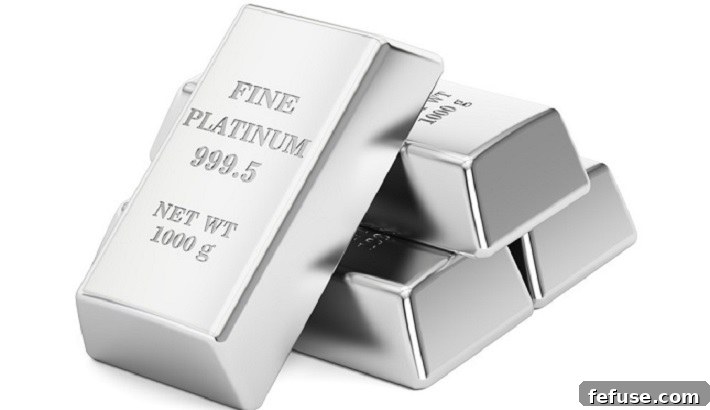
The Evolving Landscape of the Platinum Group Metals Market: A Deep Dive into Platinum’s Trajectory
The global market for Platinum Group Metals (PGMs) is a complex interplay of supply, demand, technological advancement, and investor sentiment. Recent trends highlight a significant shift in platinum’s fortunes, projecting a nine percent gain in gross demand for 2019. This resurgence is primarily underpinned by a surge in investment buying and robust growth in automotive consumption, effectively offsetting a lingering softness within the Chinese platinum jewelry market. The latter segment continues to face intensified competition from high-karat gold jewelry, reflecting evolving consumer preferences and price sensitivities in a crucial market.
Platinum’s Resurgence: A Blend of Investment and Industrial Growth
The narrative surrounding platinum has seen a remarkable turnaround. For several years, the metal traded at significant discounts to its sister PGM, palladium, and even gold, leading many to question its long-term viability. However, an improving outlook for industrial demand, particularly from the automotive sector, coupled with heightened uncertainties surrounding global supply, has captivated the attention of investors. This confluence of factors has positioned platinum as a potentially undervalued asset, prompting a dramatic shift in market sentiment. The first quarter of 2019 alone witnessed substantial investment, with nearly 700,000 ounces of platinum Exchange Traded Funds (ETFs) being acquired by investors, indicating a clear wave of net new investment rather than a mere reallocation from other PGMs.
Global Demand Outlook: Beyond the Headlines
The projected nine percent increase in platinum demand for 2019 signifies a healthy appetite for the metal across diverse applications. While investment and automotive sectors are the primary drivers, platinum’s unique properties also find essential uses in various industrial processes, medical devices, and even fuel cell technology. Its resistance to corrosion, high melting point, and catalytic properties make it indispensable in numerous high-tech applications, ensuring a foundational level of industrial demand that complements speculative investment. Understanding these varied demand channels is crucial to appreciating the holistic health of the platinum market, which extends far beyond the more publicized automotive and jewelry sectors.
The Shifting Sands of Jewelry Demand: Platinum vs. Gold
For decades, platinum held a prestigious position in the jewelry market, particularly in Asia, renowned for its rarity, purity, and enduring luster. However, the dynamics in key markets like China have evolved. The significant price premium historically commanded by platinum over gold has diminished, and in some periods, even reversed. This, combined with aggressive marketing from gold producers and a cultural preference for high-karat gold, has chipped away at platinum’s market share. Consumers increasingly perceive gold as a more liquid investment and a traditional store of value, particularly during economic uncertainties. While platinum jewelry retains a niche of discerning buyers who value its distinctive aesthetic and durability, the broader market trend leans towards gold, necessitating strategic shifts from platinum marketers to re-engage consumers and highlight the metal’s unique attributes.
Automotive Sector: The Engine of Platinum Demand Growth
The automotive industry remains the single largest consumer of platinum, primarily due to its pivotal role in catalytic converters. These devices are essential for mitigating harmful emissions from internal combustion engines. In 2019, automotive demand for platinum is forecast to rise by three percent, a seemingly modest figure that masks significant underlying shifts, particularly the increased platinum usage in heavy-duty vehicles and the advent of stringent new emissions legislation across major global economies.
Strict Emissions Standards: Catalysts for Change
The tightening of global emissions regulations is arguably the most significant long-term driver for PGM demand in the automotive sector. Nowhere is this more evident than in China, where the groundbreaking China VI emissions legislation began its phased implementation in some provinces and cities starting July 2019, with a nationwide rollout slated for July 2020. These new standards represent a substantial leap in stringency, comparable to or even exceeding Euro VI standards. For heavy-duty vehicles, such as trucks and buses, meeting China VI mandates a substantial increase in PGM loading within their catalytic systems. Platinum, with its superior performance in diesel particulate filters and nitrogen oxide reduction systems, is critical for compliance. Similarly, India is poised to introduce its own stringent Bharat Stage VI (BS VI) emissions regulations for trucks and other vehicles in 2020, further amplifying the demand for PGMs, including platinum, in this crucial market.
The Technical Edge: Why Platinum in Catalytic Converters?
Platinum’s efficacy in catalytic converters stems from its exceptional ability to facilitate chemical reactions that convert toxic pollutants into less harmful substances. In diesel engines, which historically have been the primary domain for platinum, it plays a vital role in oxidizing carbon monoxide and unburnt hydrocarbons, as well as acting as a catalyst in diesel particulate filters (DPFs) and selective catalytic reduction (SCR) systems to reduce nitrogen oxides (NOx). While palladium has become the preferred PGM for gasoline engine catalysts due to its cost-effectiveness and performance in reducing emissions from lean-burn engines, platinum’s unique properties continue to make it indispensable for heavier-duty diesel applications and certain hybrid technologies. As emissions standards become universally stricter, the precise combination and loading of PGMs are continuously optimized by automakers to meet regulatory compliance, ensuring platinum’s enduring relevance.
Future Projections and Global Regulatory Trends
Beyond China and India, other regions continue to refine and strengthen their emissions frameworks. The long-term trajectory unequivocally points towards cleaner vehicles, regardless of powertrain type. Even with the gradual shift towards electric vehicles, internal combustion engines, especially in the heavy-duty segment, are expected to remain a significant part of the global fleet for decades. This sustained reliance on conventional engines, coupled with ever-tightening environmental mandates, guarantees a baseline demand for PGMs. Furthermore, advancements in fuel cell technology, where platinum serves as a critical catalyst, present an exciting long-term growth avenue that could further bolster platinum demand as the world transitions towards a hydrogen economy.
The Supply Side Conundrum: South Africa’s Pivotal Role
The supply side of the platinum market has consistently presented challenges and uncertainties. South Africa, being the undisputed leader in platinum production, accounts for a vast majority of the world’s newly mined platinum. Consequently, any disruptions in this region have a magnified impact on global supply and, by extension, on market prices.
South Africa: The Dominant Yet Volatile Supplier
South African platinum supplies have remained largely flat for several years, a reflection of the deep and complex geological nature of its deposits, increasing operational costs, and persistent socio-economic challenges. While there is a possibility for a slight increase in 2019 if producers successfully clear processing backlogs – inventories of unprocessed ore that accumulate during operational stoppages or logistical hurdles – this potential is tempered by significant downside risks. The country’s mining sector is highly sensitive to disruptions, making consistent and stable production a perennial challenge.
Navigating Risks: Power Shortages, Labor Unrest, and Geopolitical Factors
Two primary factors consistently threaten South African platinum production: electricity shortages and labor strikes. South Africa’s aging power infrastructure, primarily reliant on coal-fired power plants, frequently struggles to meet industrial demand, leading to planned and unplanned power cuts (load shedding) that cripple mining operations. Such interruptions not only halt production but also incur significant costs in restarting and maintaining complex mining equipment. Furthermore, the platinum mining sector has a long history of intense labor relations, with periodic strikes over wages and working conditions capable of bringing vast swathes of production to a standstill. These internal challenges, combined with broader geopolitical and economic factors, create an environment of inherent volatility for global platinum supply, directly influencing market prices and investor confidence.
Diversifying Supply: A Global Perspective
While South Africa dominates, other notable producers include Russia, North America (primarily Canada and the US), and Zimbabwe. However, their combined output is significantly smaller and often subject to different operational and geopolitical risks. Recycling, particularly from end-of-life catalytic converters, also constitutes a crucial, albeit secondary, source of platinum supply. As primary mining becomes more challenging and costly, the efficiency and scale of PGM recycling are gaining increasing importance, providing a more sustainable and less geopolitically exposed source for meeting a portion of global demand.
Investor Sentiment and Price Dynamics: Platinum vs. Palladium
The PGM market has witnessed a remarkable divergence in price trajectories between platinum and palladium in recent years, drawing considerable attention from investors and analysts alike.
The Great Divergence: Platinum’s Undervaluation Amidst Palladium’s Surge
Between mid-2018 and early 2019, the platinum price languished near ten-year lows, often trading at a discount of several hundred dollars per ounce to gold and a significant discount to palladium. This period contrasted sharply with palladium’s meteoric rise, which saw it setting a series of all-time record highs. The roots of this divergence can be traced back to several factors. The “dieselgate” scandal, which erupted in 2015, severely impacted consumer perception and sales of diesel vehicles, traditionally the largest consumers of platinum. Conversely, the booming sales of gasoline-powered vehicles, especially SUVs in key markets like China and the US, fueled an insatiable demand for palladium, which is predominantly used in gasoline catalytic converters. The perceived long-term decline of diesel, combined with persistent oversupply concerns for platinum and an ever-widening structural deficit for palladium, led to a sustained bearish sentiment for platinum and a bullish one for palladium.
Investment Vehicles and the Q1 2019 Turnaround
However, the market narrative began to pivot in early 2019. Astute investors started viewing platinum as fundamentally “under-priced” relative to its historical values and its sister metal, palladium. The improving outlook for automotive demand, driven by stringent new emissions standards globally, and the ever-present uncertainties surrounding South African supply, created a compelling investment case. This led to a dramatic turnaround in investor sentiment during the first quarter of 2019, culminating in significant inflows into platinum Exchange Traded Funds (ETFs). These purchases, totaling nearly 700,000 ounces, represented fresh capital entering the platinum market, signaling a belief among a growing cohort of investors that platinum’s long-term prospects were improving and that its market value was poised for a correction.
The Strategic Appeal of Platinum: A Long-Term Perspective
For many, platinum now represents a strategic long-term investment. Its diversified applications, from traditional industrial uses to burgeoning green technologies like hydrogen fuel cells, provide a robust demand foundation. Furthermore, its current relative undervaluation compared to gold and palladium makes it an attractive proposition for those seeking a value play in the precious metals space. The potential for substitution of platinum for palladium in certain catalytic applications, should the price divergence persist or widen further, also adds an intriguing dynamic, potentially increasing platinum’s future demand profile.
Palladium’s Meteoric Rise: A Market in Deficit
In stark contrast to platinum’s earlier struggles, palladium enjoyed an unprecedented bull run, reaching record highs and surpassing the $1,600 per ounce mark. This exceptional performance was almost entirely driven by the relentless boom in automotive demand, particularly from the gasoline vehicle segment.
The Anatomy of a Supply-Demand Imbalance
The palladium market has been operating in a structural deficit for several years, meaning demand consistently outstrips new supply from mines and recycling. This deficit is primarily fueled by the strong global demand for gasoline vehicles, particularly in China and North America, where emissions legislation necessitates higher palladium loadings in catalytic converters. Unlike platinum, whose supply is dominated by South Africa, palladium supply is more diversified, with Russia and South Africa being the largest primary producers. However, neither country has been able to significantly ramp up production to meet the soaring demand, leading to a tightening market. In 2019, autocatalyst demand for palladium climbed by an impressive nine percent, exacerbating the supply-demand imbalance and further widening the market deficit.
Price Performance and Investor Exuberance
As the structural deficit deepened and physical availability became constrained, palladium prices soared. Investor selling, which could typically temper price rallies, dried up as market participants became convinced of palladium’s strong fundamentals and limited downside risk. Speculative buying, coupled with industrial purchases, created a powerful upward momentum. This price exuberance reflects not just current demand but also expectations of continued tightness in the market, especially given the lead times required for new mining projects to come online and the increasing difficulty of ramping up existing operations.
The Substitution Debate: Can Platinum Bridge the Gap?
The significant and sustained price divergence between palladium and platinum has inevitably led to discussions about substitution. Theoretically, platinum can replace palladium in some gasoline catalytic converter applications, although it often requires technical adjustments, recalibrations, and potentially larger loadings to achieve equivalent emissions performance. Historically, when prices diverged significantly, automakers would consider such substitutions. However, the re-engineering process is costly, time-consuming, and carries certification risks, making rapid or widespread substitution challenging. While some incremental substitution may occur at the margins, a wholesale shift would require a substantial and sustained price differential to justify the engineering investment. Nonetheless, the mere possibility of substitution acts as a long-term ceiling for palladium prices and a potential floor for platinum, adding a strategic dimension to PGM market analysis.
The Broader PGM Landscape: Interconnectedness and Future Outlook
The PGM market is characterized by a high degree of interconnectedness. The supply-demand dynamics of one metal often influence the others, creating a complex and ever-evolving landscape.
Technological Advancements and New Applications
Beyond their established roles, PGMs are at the forefront of various technological advancements. Platinum and ruthenium are vital for catalysts in proton exchange membrane (PEM) fuel cells, offering a clean energy alternative. Rhodium, another PGM, is indispensable in three-way catalytic converters for gasoline engines. Ongoing research explores new applications in medical technology, electronics, and even carbon capture. These emerging uses, while currently smaller in scale than automotive demand, represent significant long-term growth opportunities that could reshape the PGM market.
Economic Implications and Market Volatility
The volatility and price movements in the PGM market have significant economic implications for mining companies, automotive manufacturers, investors, and even national economies. Major PGM-producing nations like South Africa rely heavily on the revenue generated from these metals. For automakers, PGM prices directly impact vehicle production costs, while investors seek to capitalize on price movements and hedge against market risks. Understanding these interdependencies is crucial for navigating the inherent volatility of the PGM market and formulating robust economic strategies.
Strategic Importance and Future Trends
PGMs are not just commodities; they are strategic metals vital for modern industrial economies and environmental protection. The interplay of tightening emissions standards, technological innovation, geopolitical stability, and investor sentiment will continue to shape their future trajectory. As the world strives for cleaner air and more sustainable energy sources, the demand for these extraordinary metals, with their unparalleled catalytic properties, is set to remain robust, ensuring their continued importance in the global economy.