
Navigating the Ethical Landscape: Insights from the CIBJO Congress on Gem & Jewellery Industry Responsibility and Consumer Trust
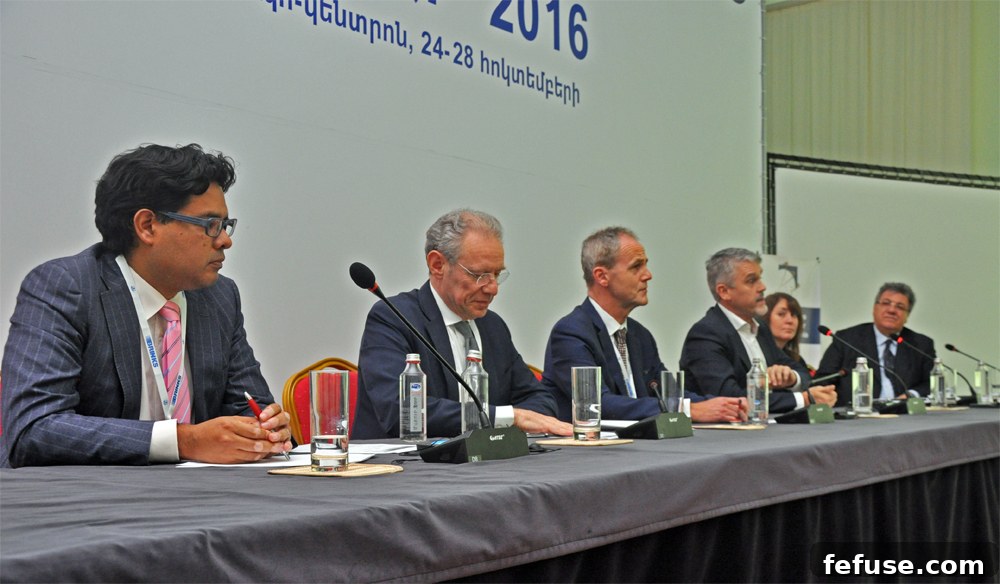
The global gem and jewellery industry, a sector steeped in tradition and luxury, finds itself at a pivotal juncture. As consumer awareness grows and demand for ethical practices intensifies, the industry’s commitment to Corporate Social Responsibility (CSR) and sustainability has become paramount. These pressing issues took center stage at the 2016 CIBJO Congress, where leading voices from various segments converged to discuss how the industry is perceived by consumers and the critical need not only for robust CSR initiatives but also for effective communication of these efforts to the broader public.
The discussions illuminated a fundamental truth: enhancing the reputation of the gem and jewellery industry hinges on transparency, accountability, and a genuine commitment to responsible sourcing and ethical operations. Experts from diverse backgrounds, including diamond producers, colored gemstone miners, and industry standard-setting bodies, unanimously underscored this aspect, elaborating on its significance within their respective spheres of influence. Their insights offered a comprehensive look at the challenges and opportunities facing an industry striving to align its opulent image with a strong ethical foundation.
The Kimberley Process: Effectiveness, Evolution, and Broadening Horizons
One of the central discussions revolved around the Kimberley Process (KP), its demonstrable achievements, and its evolving perception. Stephane Fischler, President of the Antwerp World Diamond Centre (AWDC), acknowledged the KP’s effectiveness in its foundational mission. He stated, “There is no doubt that the KP’s narrow focus has proven to be effective.” This assertion highlights the KP’s success in curbing the trade of conflict diamonds, a specific and critical objective that brought a much-needed layer of ethical assurance to the diamond supply chain.
However, Fischler also emphasized that the industry’s responsibilities extend beyond the strict confines of conflict diamond prevention. He advocated for a broader dialogue within the industry about core values. “Our members must understand that CSR is an opportunity, not a risk for their businesses,” he urged. This perspective shifts the narrative from compliance as a burden to CSR as a strategic advantage. Embracing responsible practices can foster innovation, build consumer loyalty, and open new market opportunities, transforming ethical considerations into drivers of long-term business success rather than mere regulatory hurdles.
Beyond Definitions: The Imperative for Greater Industry Action
Echoing the call for expanded responsibility, Ian Harebottle, President and CEO of Gemfields, a prominent colored gemstone mining company, posed a pertinent question regarding the scope of definitions used by international organizations. He queried whether some of these definitions might be too narrow or, conversely, too wide, leaving a vacuum that the industry itself needs to proactively fill. Harebottle contended that the industry must do more to meet escalating consumer expectations.
He articulated the unique pressure on the luxury sector: “Jewellery is still seen as luxury, not a necessity, and companies dealing in them are expected to do more.” This expectation translates into a higher bar for ethical conduct and sustainability compared to industries producing essential goods. Harebottle substantiated Gemfields’ commitment by revealing that the company allocates approximately one percent of its revenue to sustainability programs – an investment that remarkably accounts for about 20 percent of its net income. This significant financial commitment underscores a deep-seated belief in the commercial and ethical value of responsible operations.
Furthermore, Harebottle detailed Gemfields’ proactive approach to supply chain integrity. “We work with our downstream participants to ensure they are working ethically – no child labour and that they are paying taxes and other commitments as responsible firms,” he explained. This commitment to due diligence across the supply chain ensures that ethical standards are maintained from mine to market. He also underscored the critical role of disclosure, asserting, “Disclosure is also critical and we believe that it brings a return on investment.” Transparency, in this context, is not merely a moral obligation but a strategic business decision that builds trust and ultimately enhances financial performance.
The Crucial Role of Retailers and Global Unification
Andrei Polyakov, President of the World Diamond Council and Vice President of ALROSA, the world’s largest diamond producer, highlighted the indispensable role of jewellery retailers within the industry pipeline. “Jewellery retailers are the most important part of the pipeline because of their interface with consumers,” Polyakov stated. This direct connection positions retailers as the primary communicators of the industry’s ethical commitments, making their adherence to responsible practices paramount for maintaining consumer confidence.
Polyakov also emphasized the vital significance of organizations like CIBJO, the World Jewellery Confederation. “That is why CIBJO is so important for the jewellery industry. It unites the global business. Its work on the Blue Books is critical. Your work in responsible business practices is crucial.” The CIBJO Blue Books are internationally recognized sets of harmonized standards, nomenclature, and working methods for the gem and jewellery industry. They provide a common language and framework for ethical conduct, ensuring consistency and integrity across diverse markets. CIBJO’s role in establishing and promoting these guidelines is fundamental to fostering a globally unified approach to responsible business practices, ensuring that the entire supply chain operates under a shared ethical understanding.
Building Trust: Standards, Growth, and Staying Ahead of Detractors
Andrew Bone, then Executive Director of the Responsible Jewellery Council (RJC), provided further insights into the industry’s collective efforts to uphold ethical standards. While acknowledging the excellent work done by the Kimberley Process, Bone noted that media discourse, often focusing on areas beyond the KP’s initial mandate, could inadvertently create an impression that its mission was not fully met. This highlights a common challenge in public perception: the distinction between an organization’s specific achievements and broader societal expectations.
Bone emphasized the transformative shift in industry culture. “There have been enormous changes in the last decade or so, and that has changed the culture for the good regarding Corporate Social Responsibility. These changes are now accepted,” he affirmed. This signifies a maturation of the industry, where CSR is no longer a peripheral concern but an integrated component of business operations. He added a strategic imperative: “We must continue to cooperate to stay one step ahead of our detractors.” This proactive stance underscores the need for continuous improvement, innovation in ethical practices, and transparent communication to safeguard the industry’s reputation against criticism and misinformation.
Further elaborating on the RJC’s crucial role, Bone described it as the singular standards organization encompassing the entire gem and jewellery supply chain, from mines to retail. This comprehensive scope ensures that ethical considerations are addressed at every stage of a product’s journey. He highlighted the RJC’s impressive growth rates, citing ALROSA as its latest significant member. At the time, the RJC boasted 856 members across 66 countries, collectively employing 400,000 individuals, with an ambitious target of reaching 1,000 members by the following year. This expansion reflects a growing recognition within the industry that adherence to robust, verifiable standards is essential for maintaining consumer trust and ensuring long-term viability.
Bridging the Gap: Environmental Responsibility and Future Action
Eduardo Escobedo, Executive Director of the Responsible Ecosystems Sourcing Platform (RESP), contributed to the discourse by acknowledging the extraordinary progress made in sustainability efforts over the preceding two decades. This recognition of past achievements provides a foundation for future endeavors, demonstrating that the industry is capable of significant positive change.
However, Escobedo also drew attention to persistent challenges, particularly in environmental stewardship. He spoke of the urgent need for responsible action in business, providing examples of areas where members could intensify their efforts to protect the environment. “We believe there is still a large gap between what is being done and what needs to be done to help the environment,” he cautioned. This stark assessment serves as a call to action, reminding the industry that while progress has been made, there remains substantial work to be done to minimize its environmental footprint and promote sustainable practices across all operations.
The Path Forward: Sustaining Trust and Embracing Opportunity
The insights shared at the CIBJO Congress painted a clear picture of an industry grappling with, and actively responding to, the imperative for greater responsibility. The collective sentiment was one of recognizing both the progress achieved and the significant journey that still lies ahead. Consumer expectations for ethical sourcing, environmental responsibility, and transparent business practices are not ephemeral trends but fundamental shifts that will continue to shape the global marketplace. For the gem and jewellery industry, often symbolic of love, commitment, and beauty, aligning its practices with these values is not just a moral obligation but a strategic necessity.
By actively embracing CSR, communicating their efforts transparently, and collaborating through organizations like CIBJO and RJC, industry players can build lasting consumer trust, mitigate risks, and unlock new opportunities for growth. The future success of the gem and jewellery sector hinges on its ability to evolve, adapt, and consistently demonstrate that its products are not only beautiful but also ethically sound and responsibly produced, ensuring a legacy that is as radiant and enduring as the gems themselves.
Pic caption: Panel discussion in progress at CIBJO Congress 2016
– News Source : gjepc.org