
The luxury market, particularly the watch and jewelry sector, is a dynamic landscape often reflecting broader economic currents and shifting consumer sentiments. Recent data from the United States presents a nuanced picture, characterized by encouraging upticks following earlier sluggishness, alongside some cautionary notes from international luxury markets. As we delve into the latest figures, it becomes clear that adaptability and a keen understanding of consumer behavior are paramount for sustained growth in this vibrant industry. This analysis provides an in-depth look at the current state of the market, identifying key drivers, challenges, and future prospects.
US Watch and Jewelry Sales: A Glimmer of Optimism in February
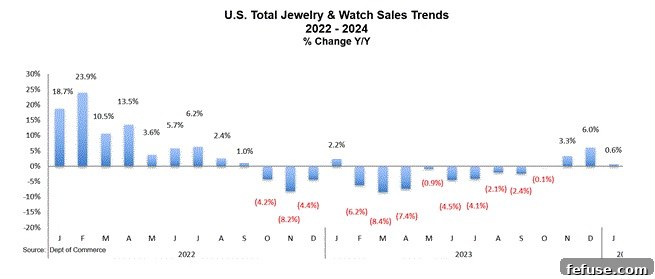
After a somewhat disappointing start to the year, the U.S. watch and jewelry market showed robust signs of recovery in February. Sales soared by an impressive 5.8 percent, a significant rebound from the modest 0.6 percent increase recorded in January. This surge in spending offers a welcome boost to retailers and manufacturers alike, signaling renewed consumer confidence and potentially marking a turning point after a period of cautious spending that followed the busy holiday season. Such growth figures are critical indicators of market health, especially in the discretionary spending categories.
This positive momentum in February can be attributed to several factors. Post-holiday seasonal adjustments often see a dip in January as consumers tighten their belts after extensive year-end spending. Therefore, February’s strong performance can be seen as a more accurate gauge of underlying market health, indicating that the desire for luxury items remains strong. Furthermore, the anticipation and early shopping for Valentine’s Day, a critical period for jewelry sales, undoubtedly played a pivotal role in driving consumers to make significant purchases. The luxury sector thrives on occasions, and Valentine’s Day consistently proves to be a powerful catalyst for demand, with consumers viewing jewelry as an ideal expression of affection and commitment.
Valentine’s Day: A Record-Breaking Affair for Jewelry
The predictive analytics from the National Retail Federation (NRF) painted an exceptionally optimistic picture for Valentine’s Day, forecasting a record-breaking $6.4 billion in spending specifically on jewelry. This substantial projection underscores the enduring appeal of fine jewelry as a cherished gift, symbolizing affection, commitment, and celebration. In an economy that has shown signs of relative stability, albeit with persistent inflation concerns, consumers appear more willing to invest in meaningful luxury items for their loved ones. The sustained growth in Valentine’s Day spending highlights the resilience of emotional purchasing in the luxury market, suggesting that special occasions continue to drive significant sales volumes regardless of broader economic volatility. This trend reinforces the timeless value consumers place on tangible tokens of love and appreciation.
Unpacking January’s Performance: The Loose Diamond Conundrum
While February brought cheer, January’s sluggish 0.6 percent growth warranted closer inspection and highlighted a particular vulnerability within the jewelry sector. A key contributing factor to this lukewarm performance has been identified as a significant drop in the sale of loose diamonds. Representing over a fifth of all jewelry sales, the performance of this specific segment carries considerable weight for the overall market’s health and direction. The decline raises questions about evolving consumer preferences, potential shifts towards more accessible or sustainable alternatives like lab-grown diamonds, or perhaps a more cautious approach to high-value, discretionary purchases in the immediate post-holiday period when budgets are often stretched.
Loose diamonds, often purchased for engagement rings, custom jewelry, or significant investment pieces, are highly sensitive to economic sentiment. When consumers face persistent inflation, rising interest rates, or general economic uncertainty, large, one-off purchases like loose diamonds are often among the first to be deferred or reconsidered. This trend suggests that while overall jewelry sales may be recovering, certain high-value categories might be experiencing a recalibration as consumers re-evaluate their spending priorities, seek greater value, or explore new options that align with evolving ethical and environmental considerations. The future of the loose diamond market will likely be influenced by how effectively the industry addresses these changing consumer values.
Revised Data: A Stronger Finish for 2023
Adding another layer of nuance to the market analysis are the updated figures from the U.S. Department of Commerce. Sales in December were notably better than initially reported, demonstrating a 6 percent increase rather than the preliminary 5.8 percent. This upward revision, based on actual rather than estimated transactions, indicates a stronger close to the year for the retail sector across various categories, including luxury goods. Furthermore, the overall sales figures for 2023 have also been slightly increased, painting a more robust picture of the previous year’s performance than originally perceived. These upward revisions can instill greater confidence in the market’s underlying strength and resilience, suggesting that consumer spending maintained a healthier pace towards the end of the year, potentially defying some earlier pessimistic forecasts. Such positive adjustments provide a more solid foundation for projections into the current year.
Swiss Watch Exports: A Contrasting Global Narrative
While the U.S. market shows signs of renewed vigor, the global luxury watch sector, particularly Swiss exports, presented a contrasting narrative in February. After more than two years of consistent and robust growth, a period fueled by post-pandemic demand and strong luxury spending, Swiss watch exports experienced their first significant decline, down by 3.8 percent. This downturn signals potential headwinds for a sector that has historically been a powerhouse of luxury performance and a key indicator of global high-end consumption. The deceleration points to a potential shift in international demand or broader economic pressures affecting major markets for Swiss timepieces.
Several factors could be at play regarding this decline. These include a general slowing of demand in key global markets like China and certain European nations, which have been significant drivers of growth for Swiss watchmakers. Inventory adjustments by retailers who might be carrying excess stock, currency fluctuations impacting purchasing power, or an overall softening in high-end discretionary spending worldwide could also contribute. The performance of Swiss watch exports is often considered a bellwether for the broader luxury market; therefore, a prolonged decline could indicate a more widespread shift in global consumer behavior or reflect increasing competition from other luxury categories. However, it’s also important to consider that a single month’s data might not define a long-term trend, and the market could stabilize or rebound in the coming months, contingent on global economic conditions and strategic brand initiatives to stimulate demand.
The Economic Undercurrents Shaping Luxury Spending
The performance of the watch and jewelry market is inextricably linked to broader economic conditions. In the U.S., relative economic stability, characterized by a robust job market, low unemployment rates, and moderating, albeit persistent, inflation, provides a fertile ground for discretionary spending. However, lingering concerns about high interest rates, geopolitical tensions, and consumer debt levels can temper enthusiasm, especially for big-ticket luxury items that require substantial financial commitment. These macroeconomic factors create a complex environment where consumer sentiment can shift rapidly.
Consumer confidence remains a critical indicator for the luxury sector. When individuals feel secure in their employment and confident about their financial future, they are more likely to invest in luxury goods. The revised positive sales data for late 2023 and the strong February performance suggest a cautious optimism among U.S. consumers, indicating a willingness to spend on quality and enduring value. Yet, the sensitivity of segments like loose diamonds highlights that this confidence is not universal across all luxury categories and price points, and consumers are becoming more discerning with their investments. The interplay between economic indicators and psychological factors will continue to shape spending patterns in the luxury segment.
Evolving Consumer Preferences and Industry Adaptations
Beyond macroeconomic factors, the luxury watch and jewelry industry is constantly evolving in response to changing consumer preferences and societal values. There’s a growing demand for transparency, ethical sourcing, and sustainability across the entire supply chain. Lab-grown diamonds, for instance, are gaining significant traction, offering a more affordable and often ethically perceived alternative to natural stones, which could partly explain the dip in sales of natural loose diamonds. Personalization, unique designs, limited editions, and the seamless integration of technology (especially in smartwatches and connected timepieces) also play significant roles in attracting and retaining modern luxury consumers.
Retailers and brands are adapting to these shifts by enhancing their omnichannel strategies, blending seamless online experiences with highly personalized in-store services. Digital marketing, sophisticated social media engagement, and influencer collaborations have become indispensable tools for reaching and connecting with contemporary luxury consumers, particularly younger demographics. Furthermore, brands are focusing on creating compelling narratives around their products, emphasizing exceptional craftsmanship, rich heritage, and the emotional value and longevity of each piece. This holistic approach is crucial for building brand loyalty and relevance in a highly competitive market where experiential luxury is gaining prominence.
Outlook for the Remainder of 2024
Looking ahead, the outlook for the U.S. watch and jewelry market appears cautiously optimistic, particularly if economic stability continues and consumer confidence holds firm. The strong performance in February sets a positive tone for the crucial spring and early summer seasons. However, industry players will need to closely monitor global economic shifts, especially given the cooling trend observed in Swiss watch exports, which could indicate broader challenges in international luxury demand that may eventually ripple into the U.S. market. Managing these global dynamics while focusing on domestic opportunities will be key.
Key areas of focus for retailers and brands will include navigating the delicate balance between upholding traditional luxury values and meeting modern consumer demands for sustainability, digital engagement, and personalized experiences. The ability to innovate, adapt swiftly to shifting tastes, and effectively communicate the unique value proposition of their products will be crucial for success. While the market may face periods of volatility stemming from various economic and geopolitical factors, the underlying demand for quality, exquisite craftsmanship, and the profound emotional significance of watches and jewelry is likely to endure, positioning the industry for continued, albeit carefully managed, growth in the coming months and years.
In conclusion, the U.S. watch and jewelry market is exhibiting encouraging signs of resilience and growth, particularly with a strong February performance and robust Valentine’s Day spending. However, the dip in loose diamond sales and the decline in Swiss watch exports serve as timely reminders of the complex and multifaceted nature of the luxury sector. Navigating these mixed signals with strategic foresight, continuous innovation, and an unwavering focus on consumer value and evolving preferences will define success for the industry in the year ahead. The ability to embrace change while honoring tradition will be paramount for securing a strong position in this dynamic market.