
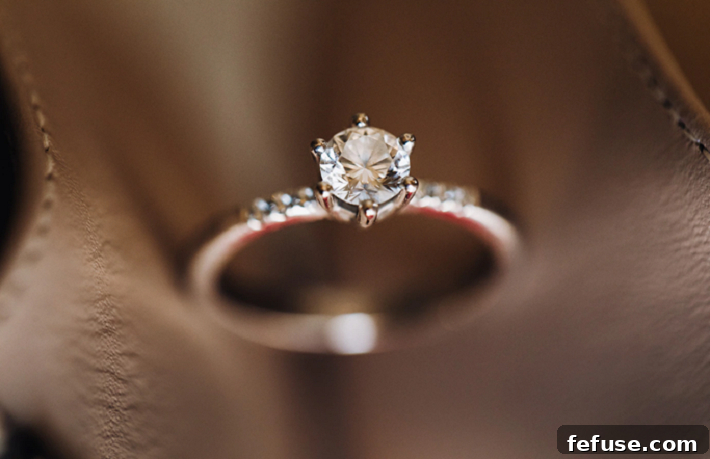
The journey of finding the perfect engagement ring is a momentous occasion, symbolizing a lifelong commitment and unwavering love. For centuries, a diamond has been the quintessential centerpiece for these cherished tokens. However, the modern market now presents couples with an intriguing and increasingly popular choice: lab-grown diamonds. Often sparking debates and questions, these magnificent gems are chemically, physically, and optically identical to their natural counterparts, yet they come with their own unique story and set of advantages. This comprehensive guide will delve into the world of both natural and lab-grown diamonds, exploring their origins, characteristics, benefits, and the essential factors to consider when selecting the ring that will forever mark your special bond.
Understanding Lab-Grown Diamond Engagement Rings: A Scientific Marvel
Lab-grown diamonds, sometimes referred to as synthetic or cultivated diamonds, are not imitations. They are genuine diamonds, created through advanced technological processes that replicate the natural conditions under which diamonds form deep within the Earth. This scientific breakthrough allows for the production of diamonds with the exact same brilliance, fire, and scintillation as mined diamonds, making them virtually indistinguishable to the naked eye. The primary difference lies solely in their origin: one is unearthed from the Earth, while the other is carefully cultivated in a controlled laboratory environment.
For those contemplating lab grown diamonds, understanding their creation process is key to appreciating their value and quality. There are two primary methods employed to grow high-quality diamonds in a lab setting, each designed to mirror nature’s incredible forces:
1. Chemical Vapor Deposition (CVD)
The Chemical Vapor Deposition (CVD) method is a sophisticated technique often favored for producing beautiful, typically square or rectangular-shaped diamonds. The process begins inside a vacuum chamber, where a small diamond “seed” (a thin slice of an existing diamond) is placed. The chamber is then heated to extreme temperatures, often around 700 to 1200 degrees Celsius. Carbon-rich gases, such as methane, are introduced into the chamber, along with other gases like hydrogen, which help to control the diamond’s growth and purity. Microwaves or other energy sources are used to break down the molecular bonds of the carbon-rich gases, causing the carbon atoms to “rain” down and deposit onto the diamond seed. Layer by layer, these carbon atoms bond with the seed, meticulously growing a new diamond crystal. This method allows for precise control over the diamond’s growth, enabling manufacturers to produce diamonds with exceptional clarity and specific desired characteristics.
2. High-Pressure, High-Temperature (HPHT)
The High-Pressure, High-Temperature (HPHT) method is designed to mimic the exact conditions under which natural diamonds form billions of years ago beneath the Earth’s surface. This process utilizes massive, specialized machinery capable of generating immense pressure and extremely high temperatures. A tiny diamond seed is placed in a growth cell along with a carbon source, typically graphite, and a metal solvent (such as iron, nickel, or cobalt). The entire assembly is then subjected to pressures exceeding 50,000 atmospheres and temperatures reaching over 1,300 degrees Celsius. Under these intense conditions, the metal solvent melts the carbon source, allowing the carbon atoms to dissolve and then crystallize around the diamond seed. Over several weeks, the diamond grows atom by atom, creating a robust and brilliant gem. HPHT diamonds are renowned for their strength and often exhibit unique internal growth patterns that differentiate them from CVD diamonds, though they share the identical chemical composition of natural diamonds.
Why Choose Lab-Grown Diamonds for Your Engagement Ring?
The increasing popularity of lab-grown diamond rings is not merely a trend; it’s a reflection of compelling advantages that resonate with modern couples. While they offer undeniable beauty, their appeal extends beyond aesthetics, touching upon ethical, environmental, and financial considerations. Here are the key benefits of opting for a lab-grown diamond engagement ring:
- Ethical and Eco-Friendly Sourcing: One of the most significant draws of lab-grown diamonds is their ethical and environmental footprint. Unlike mined diamonds, which involve extensive excavation and can sometimes be linked to conflict or human rights issues, lab-grown diamonds are created in controlled environments. This means no large-scale mining operations that disrupt ecosystems, consume vast amounts of energy, or potentially exploit labor. Experts often consider lab-created diamonds a more sustainable and ethical choice, offering peace of mind to conscientious consumers. They eliminate concerns about “blood diamonds” and provide a transparent origin story, aligning with values of sustainability and social responsibility.
- Uncompromising Quality and Beauty: To the unaided eye, lab-grown diamonds are indistinguishable from natural diamonds. They possess the same sparkle, brilliance, and fire because they share the identical chemical composition (pure carbon) and crystalline structure. In fact, due to the controlled growth environment, lab-grown diamonds can often be cultivated with fewer inclusions and blemishes, resulting in higher clarity grades. This means buyers can often acquire a diamond with superior color and clarity characteristics that might be significantly more expensive in a natural diamond. They are graded using the same universally accepted “4 Cs” system (Color, Clarity, Cut, Carat) by independent gemological laboratories like the IGI (International Gemological Institute) and GIA (Gemological Institute of America), ensuring their quality is objectively assessed.
- Exceptional Value and Affordability: While diamonds, regardless of origin, represent a significant investment, lab-grown diamonds typically offer a more accessible price point compared to natural diamonds of comparable size and quality. This difference in price, often 20-40% lower, allows couples to achieve their dream ring without exceeding their budget. For many, this means they can afford a larger stone, a higher clarity grade, or a more elaborate setting than they might otherwise have been able to with a natural diamond. This exceptional value makes lab-grown diamonds an attractive option for those who prioritize the diamond’s beauty and size over its natural origin, allowing their budget to stretch further.
- Variety and Customization: The controlled environment of a lab allows for the production of a wide array of diamond sizes, shapes, and even fancy colors (like blue, pink, or yellow) that are exceedingly rare and expensive in natural diamonds. This expanded variety offers greater flexibility for personalization and finding a truly unique gem that perfectly captures the wearer’s style and personality.
The Enduring Allure of Natural Diamonds
While lab-grown diamonds present a compelling alternative, the timeless appeal of natural diamonds remains undisputed. For many, a natural diamond holds a unique mystique and intrinsic value rooted in its ancient origins and remarkable journey. These gems represent billions of years of Earth’s geological processes, a tangible piece of history and rarity.
Similarly, only trained gemologists, using specialized equipment, can confidently tell the difference between natural and lab-grown diamonds. The distinctions are based on microscopic growth patterns and trace elements rather than visible characteristics. Two primary factors underpin the uniqueness of natural diamonds:
- Naturally Formed Over Eons: The earth is the source of real diamonds, formed deep within the Earth’s mantle under immense pressure and heat over periods stretching from 1 to 3.3 billion years ago. These geological marvels are brought closer to the surface through volcanic eruptions, where they are eventually mined. The intricate natural process involved in their creation, taking millions of years, contributes to their inherent rarity and perception as a precious, irreplaceable treasure. Each natural diamond is a unique geological fingerprint, shaped by the Earth itself. Once mined, these rough diamonds undergo meticulous cutting and polishing by expert artisans to unleash their inherent brilliance.
- Trace Element Signatures (e.g., Nitrogen Count): Gemologists often rely on the presence or absence of trace elements, such as nitrogen, to distinguish natural diamonds from lab-grown ones. The vast majority of natural diamonds (Type Ia) contain small, measurable amounts of nitrogen atoms within their crystal lattice. Lab-grown diamonds, depending on their creation method, either contain no nitrogen (CVD diamonds are often Type IIa, exceptionally pure) or exhibit different arrangements of nitrogen (HPHT diamonds may also contain nitrogen, but its configuration is distinct from natural diamonds). These subtle chemical signatures, detectable only with advanced spectroscopic equipment, serve as the definitive markers for identification.
Choosing Your Diamond Engagement Ring: The Essential 4 Cs and Beyond
Whether you opt for a natural or lab-grown diamond, the fundamental principles of evaluating a diamond remain the same. The universally recognized “4 Cs” — Cut, Color, Clarity, and Carat — provide a standardized framework for assessing a diamond’s quality and value. Understanding these elements is crucial for making an informed decision and finding a diamond that perfectly suits your preferences and budget.
1. Color
A diamond’s color refers to its absence of color. The GIA (Gemological Institute of America) color grading scale ranges from D (colorless) to Z (light yellow or brown). The less color a diamond possesses, the higher its grade and, typically, its value. A truly colorless diamond (D, E, F grades) allows more light to pass through, enhancing its brilliance and sparkle. While colorless diamonds are highly prized, nearly colorless diamonds (G, H, I, J grades) offer excellent value and often appear colorless once mounted. It’s important to verify that the color of the diamond you select will complement the ring band; for instance, a nearly colorless diamond will look dazzling in a white gold or platinum setting, while a slightly warmer diamond (K, L grades) can look stunning in a yellow gold band, which can subtly mask some of the diamond’s inherent tint. Professional guidance can easily help distinguish these subtle differences.
2. Clarity
Clarity measures the absence of inclusions (internal flaws) and blemishes (external imperfections) within a diamond. The GIA clarity scale ranges from Flawless (FL), meaning no inclusions or blemishes visible under 10x magnification, to Included (I1, I2, I3), where inclusions are visible to the naked eye. Most inclusions are microscopic and do not affect a diamond’s beauty or durability, often referred to as “eye-clean.” Experts use a grading scale including FL, IF (Internally Flawless), VVS1, VVS2 (Very, Very Slightly Included), VS1, VS2 (Very Slightly Included), SI1, SI2 (Slightly Included), and I1, I2, I3 (Included). For engagement rings, many couples seek diamonds that are “eye-clean” (typically VS2 or SI1, depending on the cut and size) as these offer excellent value without compromising visual appeal. This is where a knowledgeable jeweler can assist in identifying the best clarity grade for your budget and preferences.
3. Carat
Carat is the standard unit of weight for diamonds, not size. One carat equals 200 milligrams. While carat weight is directly related to a diamond’s size, two diamonds of the same carat weight can appear differently sized depending on their cut and shape. Higher carat weight diamonds are generally rarer and therefore more expensive, with price increasing exponentially as carat weight rises. It’s essential to learn how carat weight impacts both budget and visual impact. A larger carat weight often comes with a higher price tag, but strategic choices in cut and shape can maximize a diamond’s perceived size. The diamond’s hardness level (Mohs scale) is constant for all diamonds at 10, indicating supreme durability, while carat specifically refers to its weight.
4. Cut
Often considered the most important of the 4 Cs, the cut of a diamond refers to how well its facets interact with light, determining its brilliance (white light reflection), fire (dispersion of light into rainbow colors), and scintillation (the sparkle and pattern of light and dark areas). A well-executed cut is paramount, regardless of color or clarity, as it dramatically influences a diamond’s overall beauty and sparkle. Diamond cuts are graded from Excellent (or Ideal) to Poor. Beyond the quality of the cut, there are also various diamond shapes to choose from, each offering a unique aesthetic:
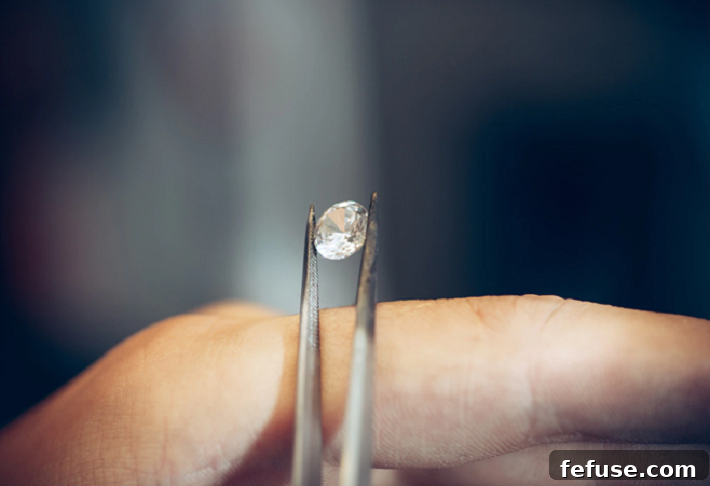
The popular round brilliant cut, for example, is highly sought after for its timeless appearance and exceptional sparkle, often commanding a higher price due to the rough diamond loss during its cutting process. Other popular shapes include princess, oval, emerald, pear, cushion, and marquise cuts, each offering a distinct personality. For instance, heart-shaped diamonds can be incredibly romantic and look best with larger stones that allow their intricate symmetry to shine, while elongated shapes like oval or marquise can make fingers appear longer and more slender. A well-cut diamond not only enhances its stylish appearance but also contributes to its resistance to damage.
5. Setting
The setting plays a pivotal role in the engagement ring’s overall aesthetic and how the diamond is presented and secured. A thoughtfully chosen setting can enhance the diamond’s brilliance, protect it, and reflect the wearer’s personal style. There are numerous popular setting styles, each with its own advantages:
- Prong/Claw Setting: This classic setting uses slender metal prongs to hold the diamond securely, allowing maximum light to enter the stone for brilliant sparkle. It’s a versatile choice for almost any diamond shape.
- Halo Setting: A halo setting encircles the center diamond with a “halo” of smaller pavé diamonds. This not only adds significant sparkle but can also make the center stone appear larger, offering a way to save money on a larger central diamond while still achieving a grand look.
- Bezel Setting: In this modern and secure setting, a thin metal rim completely encircles the diamond, holding it firmly in place. It offers excellent protection for the diamond’s girdle and creates a sleek, contemporary look.
- Pavé Setting: Tiny diamonds are set closely together with minimal visible metal, creating a surface that appears “paved” with diamonds. This setting adds continuous sparkle to the band or around the center stone.
- Channel Setting: Diamonds are set within a metal channel, flush with the band, providing a smooth and secure line of brilliance, often used for wedding bands or accent stones on an engagement ring.
- Tension Setting: This contemporary setting uses the natural tension of the metal band to hold the diamond in place, giving the illusion that the diamond is suspended in air. It offers a unique and minimalist aesthetic.
To make an engagement ring truly unique, consider adding intricate details to the band, like delicate filigree, milgrain, or a few tiny diamonds accentuating the sides. The choice of metal—platinum, white gold, yellow gold, or rose gold—also significantly impacts the ring’s final look and feel, contributing to its overall character and complementing the diamond.
Making Your Informed Decision: A Symbol of Love
Ultimately, the only fundamental difference between natural and lab-grown diamonds lies in their origin. Chemically, physically, and optically, they are identical. Neither is inherently superior to the other; rather, they offer distinct value propositions that cater to varying preferences, priorities, and budgets. The “best” choice is a deeply personal one, reflecting what resonates most with you and your partner.
When selecting your engagement ring, focus on choosing a diamond that speaks to your heart, demonstrates your enduring love, and makes a lasting impression. Prioritize the 4 Cs to ensure you acquire a high-quality gem that sparkles brilliantly for years to come. Whether you are drawn to the rare, ancient allure of a natural diamond or the ethical, modern brilliance and value of a lab-grown diamond, the most important aspect is the love and commitment it represents. Embrace this once-in-a-lifetime moment by making a choice that truly reflects your unique bond and brings joy for a lifetime.