
Oregon’s landscapes are not only breathtaking but also conceal a geological treasure: the unique gem-quality labradorite. Renowned globally, this exceptional feldspar variety stands out with its vibrant play of colors, typically showcasing fiery reds, vivid oranges, and lush greens. Beyond its dazzling iridescence, what truly distinguishes Oregon labradorite is the captivating phenomenon of aventurescence, a sparkling effect caused by microscopic exsolution platelets of native copper. These tiny metallic inclusions reflect light in a spectacular manner, giving the gem an internal glow that has captivated gem enthusiasts and collectors for decades.
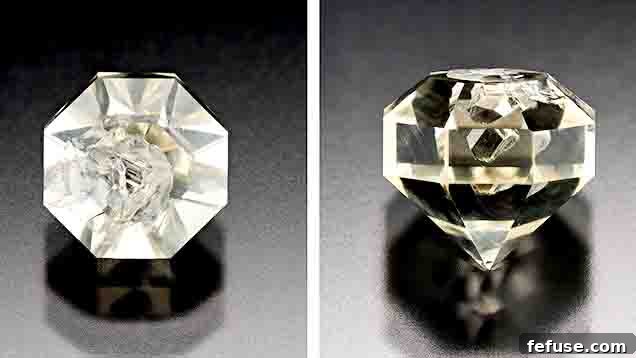
While the copper aventurescence is a signature characteristic, Oregon labradorite occasionally reveals other remarkable inclusions that serve as nature’s fingerprints, telling tales of the stone’s deep geological origins. Such rare internal features are invaluable to gemologists, offering critical clues about the gemstone’s formation environment and even its precise geographical provenance. One such extraordinary discovery recently came to light, featuring a unique olivine inclusion within an Oregon labradorite. This particular specimen, generously provided by Ken Lack of Gem Net LLC in Grants Pass, Oregon, offers a fascinating glimpse into the complex mineralogical interactions that occur within these precious gems.
The olivine inclusion in this specific labradorite exhibits a distinctive greenish-yellow bodycolor, a characteristic hue for the mineral often found in igneous rocks. However, what makes this inclusion particularly noteworthy are the discernible compression cracks radiating around it, indicative of significant strain within the gemstone’s structure. These cracks are a direct result of the immense pressure and differential thermal expansion between the host feldspar and the guest olivine mineral during the gem’s formation and subsequent cooling. Such internal stresses are well-documented in gemological literature, with comprehensive references like E.J. Gübelin and J.I. Koivula’s esteemed Photoatlas of Inclusions in Gemstones (Vol. 2, Opinio Verlag, Basel, Switzerland, 2005, pp. 419, 422) providing detailed insights into these fascinating interactions.
The presence of such internal strain poses considerable challenges for gem cutters. In this specific instance, the labradorite was reported to have fractured during the cutting process, a consequence almost certainly attributable to the inherent stresses surrounding the olivine inclusion. This highlights the delicate balance and profound expertise required in transforming rough gem material into a polished masterpiece, particularly when dealing with specimens that harbor complex internal structures. Despite the challenge, the gem was masterfully cut to deliberately showcase the inclusion, turning a potential flaw into a focal point of unique beauty. This artistic decision allows the olivine to be easily viewed and appreciated from multiple angles, enhancing the stone’s narrative and rarity.
The phenomenon of aventurescence in Oregon labradorite, often referred to as ‘Oregon Sunstone,’ is a unique optical effect that sets it apart from other feldspar varieties. Unlike the typical labradorescence seen in other labradorite, which creates broad flashes of spectral color, aventurescence in Oregon material is characterized by a glittering, spangled effect. This sparkle is caused by millions of minute, tabular copper platelets oriented within the feldspar crystals. As light penetrates the gemstone, it interacts with these metallic inclusions, reflecting and scattering to produce a shimmering, almost molten appearance. The size, density, and orientation of these copper inclusions dictate the intensity and color of the aventurescence, ranging from subtle glints to an intense, fiery glow that appears to emanate from within the stone’s core. The rich red, orange, and green hues are often intensified by this effect, making Oregon Sunstone a highly sought-after gem for its vibrant aesthetic appeal and distinct optical properties.
The geological history behind Oregon labradorite is as fascinating as the gem itself. It primarily originates from volcanic flows in central and eastern Oregon, making it one of the few feldspar varieties found in an igneous context in the United States. These ancient volcanic eruptions brought forth not only the feldspar but also the molten copper, which subsequently crystallized into the minute platelets responsible for aventurescence. The unique conditions during its formation, including specific cooling rates and elemental concentrations, allowed for the incorporation of these distinctive copper inclusions. This geological narrative underscores the rarity and specific origin of Oregon Sunstone, distinguishing it from labradorite found in other parts of the world, which typically derive their colors from Schiller effect rather than metallic inclusions.
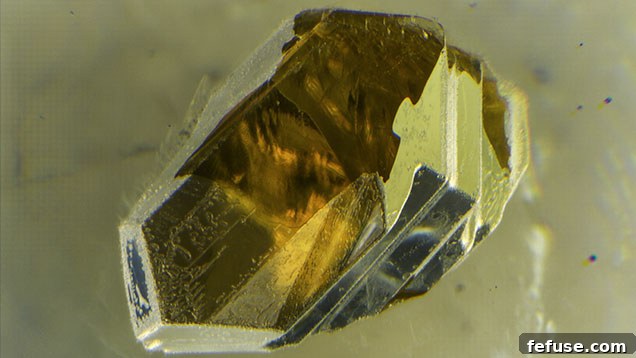
Studying these intricate inclusions often requires sophisticated gemological techniques. As depicted in Figure 2, the olivine inclusion was expertly photographed in an immersion liquid. This technique is indispensable for observing internal features within gemstones, especially those with surface-reaching fractures or complex internal structures. The immersion liquid, typically with a refractive index similar to the gemstone, effectively “wicks” into and fills the air gaps within the cracks. This process minimizes the reflective interface that would normally obscure the view of internal features, allowing for much clearer observation and detailed study of the inclusion itself. In this particular photomicrograph by Nathan Renfro, the 3.83 mm field of view perfectly captures the olivine’s characteristics and the surrounding stress fractures, providing invaluable insights into its nature and interaction with the labradorite host.
The discovery of olivine inclusions in labradorite feldspar is a truly rare event, and when encountered, it serves as a potent indicator of an Oregon origin. While not every Oregon labradorite contains olivine, its presence acts as a distinctive geological marker, distinguishing these gems from labradorite found in other localities worldwide. For gemologists and collectors alike, such unique internal features are not merely curiosities but crucial identifiers that contribute to a gem’s authenticity, provenance, and intrinsic value. The understanding of these inclusions enriches the appreciation of each gemstone as a unique product of Earth’s complex geological processes.
The allure of Oregon labradorite extends beyond its scientific interest; it holds significant cultural and economic value. The gem’s distinct beauty and unique origin story have made it a favorite among jewelers and collectors who appreciate its natural artistry and rarity. The designation “Oregon Sunstone” not only highlights its geographical origin but also evokes its brilliant, sun-like radiance. As awareness of sustainably and ethically sourced gemstones grows, Oregon labradorite, often mined by small, independent operations, offers a compelling choice for consumers seeking transparency and a direct connection to the source. Its vibrant hues and singular aventurescence make it an ideal choice for unique jewelry pieces, ranging from everyday wear to bespoke high-jewelry creations. The ongoing research and discovery of exceptional specimens, such as those featuring rare olivine inclusions, continue to elevate Oregon labradorite’s standing in the global gemstone market, cementing its status as a truly remarkable treasure from the American West.
In conclusion, Oregon labradorite is more than just a beautiful gem; it is a geological marvel. Its characteristic red, orange, and green colors, coupled with the unique aventurescence caused by copper platelets, set it apart. The occasional discovery of rare inclusions like olivine adds another layer of intrigue, providing gemologists with vital clues about its formation and origin. These inclusions, though sometimes presenting challenges during cutting, ultimately enhance the stone’s individuality and narrative. The scientific study of these features, aided by advanced techniques like immersion photomicrography, allows us to delve deeper into the Earth’s processes and appreciate the inherent beauty and complexity of natural gemstones. Ultimately, Oregon labradorite, with its distinctive features and fascinating inclusions, continues to captivate and inspire, solidifying its place as a truly exceptional and coveted gem.
News Source : jckonline.com