
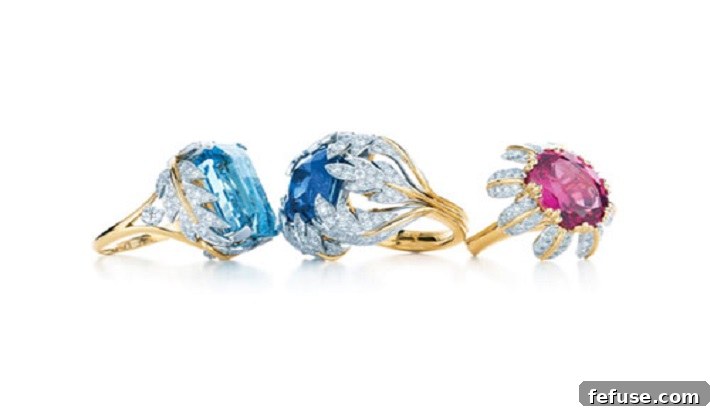
Tiffany & Co. Shines Bright in Q3 2020: Net Earnings Soar 52% Amidst E-commerce and Asia-Pacific Triumph
Amidst a globally challenging economic climate, New York-based luxury jeweler Tiffany & Co. demonstrated exceptional resilience and strategic acumen, reporting stellar financial results for the third quarter ended October 31, 2020. The iconic brand announced a remarkable 52% increase in its net earnings, reaching an impressive $119 million. This significant surge was primarily propelled by robust retail sales growth across key Asian markets, specifically Mainland China and Korea, alongside a groundbreaking near doubling of its e-commerce sales channels worldwide.
The luxury sector, often susceptible to economic downturns, saw Tiffany & Co. navigate these turbulences with agility. The company’s worldwide net sales successfully returned to the billion-dollar level, registering $1.0 billion for the quarter. While this represented a marginal decrease of 1% compared to the prior year, it underscored the brand’s strong recovery trajectory and ability to stabilize its top-line performance in a volatile market. This near-stabilization of global sales, coupled with a substantial boost in profitability, painted a picture of a company effectively executing its strategic vision.
The Digital Frontier: E-commerce Becomes a Powerhouse
One of the most compelling narratives from Tiffany’s Q3 2020 report was the extraordinary performance of its e-commerce division. Global e-commerce sales finished the third quarter with a staggering 92% increase compared to the previous year. This phenomenal growth wasn’t confined to specific regions but was universally positive across all markets where Tiffany operates. This surge highlights a pivotal shift in consumer behavior within the luxury segment, with more discerning buyers embracing online platforms for their high-value purchases. Tiffany’s investment in its digital infrastructure, user experience, and seamless online-to-offline integration clearly paid dividends, positioning the brand at the forefront of digital luxury retail.
The digital acceleration signifies more than just transactional growth; it reflects Tiffany & Co.’s successful adaptation to evolving shopping habits. By offering an accessible yet exclusive online experience, the brand managed to capture a broader audience and cater to existing clientele who preferred the convenience and safety of digital purchasing during the pandemic. This strategic pivot towards a robust omni-channel presence ensures long-term growth potential and reinforces the brand’s ability to connect with consumers wherever they choose to shop.
Asia-Pacific Dominance: China Leads the Charge
The Asia-Pacific region, particularly Mainland China, emerged as a crucial engine for Tiffany & Co.’s impressive Q3 performance. Sales in Mainland China dramatically accelerated during the third quarter, soaring by over 70% compared to the prior year. This explosive growth was further underscored by comparable sales in China nearly doubling within the same period. The remarkable rebound and surge in Chinese consumer spending on luxury goods reflect not only the country’s effective management of the pandemic but also a significant shift towards domestic consumption as international travel remained restricted. Korean markets also contributed positively to the region’s strong showing, indicating a broader trend of luxury market resilience and growth in East Asia.
The strong performance in Asia-Pacific demonstrates the strategic importance of these markets for global luxury brands. Tiffany’s localized marketing efforts, tailored product offerings, and robust retail presence in these high-growth regions enabled it to capitalize on pent-up demand and a flourishing luxury consumer base. The ability to generate such substantial growth in a key geographic segment was instrumental in offsetting softer performances in other parts of the world and reinforcing the brand’s global leadership.
Strategic Vision and Product Innovation Drive Sustained Growth
Alessandro Bogliolo, Chief Executive Officer of Tiffany & Co., expressed confidence in the company’s direction, stating, “We believe that the results we released today demonstrate that our strong continuing execution against the strategic priorities we set three years ago positions us to achieve sustainable sales, margin and earnings growth for this legendary brand.” This statement underscores a consistent and effective long-term strategy, focusing on brand elevation, product innovation, and market penetration.
A critical indicator of this successful strategy was the notable increase in the average unit retail price (AUR) during the third quarter. This rise in AUR was a direct response to Tiffany’s strategic initiatives designed to focus consumers on its finest products, both through online channels and within its iconic stores. By emphasizing high-value items and showcasing the brand’s heritage of exquisite craftsmanship and exceptional quality, Tiffany successfully enhanced its brand positioning and improved its profitability margins. This strategic focus ensures that while sales volume is important, the value and perception of the brand remain paramount.
Product innovation also played a vital role, particularly with the outstanding reception of the T1 collection. Bogliolo specifically highlighted, “Absolutely noteworthy is the performance of T1, our newest gold and gold with diamonds collection, which was received particularly well in all markets and channels.” The T1 collection, characterized by its bold, sculptural designs and modern appeal, successfully resonated with consumers globally. Its strong performance across all geographical markets and sales channels – online and in-store – signifies Tiffany’s ability to introduce fresh, compelling designs that capture contemporary tastes while maintaining the brand’s timeless allure. This ability to innovate while preserving core brand identity is crucial for long-term relevance and growth in the luxury sector.
Regional Sales Dynamics: A Mixed Global Picture
While the overall financial picture for Tiffany & Co. in Q3 2020 was positive, regional performance presented a mixed landscape, reflecting varying impacts of the global pandemic and economic recovery rates. In the Americas, total sales saw a decrease of 16% in the third quarter, settling at $354 million. Year-to-date figures for the region showed an even steeper decline of 36%, totaling $826 million. This downturn can be attributed to persistent challenges such as store closures, reduced tourism, and a cautious consumer spending environment that lingered through much of 2020 in North and South America.
Europe also experienced a decline, with total sales falling by 6% in the third quarter to $104 million. The year-to-date performance was down by 24%, reaching $249 million. Similar to the Americas, the European luxury market faced headwinds from travel restrictions, lockdowns, and a generally subdued economic climate. Despite these challenges, the smaller percentage decline in Q3 compared to the year-to-date figure suggests a nascent recovery or stabilization in the latter part of the quarter, albeit slower than in Asia.
In contrast to the Western markets, the Asia-Pacific region (excluding Japan) demonstrated remarkable strength, with total sales growing by an impressive 30% in the third quarter, reaching $382 million. Although year-to-date sales for the broader Asia-Pacific region still showed a 7% decrease, totaling $854 million, the robust Q3 performance significantly mitigated earlier losses, highlighting the region’s rapid rebound and strong consumer demand for luxury goods, particularly from local markets in China and Korea.
Japan, however, presented a unique scenario within Asia. Total sales in Japan decreased by 8% in the third quarter, settling at $156 million. The year-to-date performance showed a 25% decline, with sales reaching $353 million. While generally considered a strong luxury market, Japan’s specific economic conditions, local pandemic response, and potentially different consumer spending patterns or a slower return of tourism could account for this contrasting trend compared to other parts of Asia-Pacific.
Tiffany’s Enduring Legacy and Forward Momentum
The Q3 2020 results unequivocally affirm Tiffany & Co.’s position as a resilient and strategically agile leader in the global luxury jewelry market. The combination of soaring net earnings, monumental e-commerce growth, and exceptional performance in the Asia-Pacific region underscores the effectiveness of its long-term strategic initiatives. By focusing on elevated products, leveraging digital channels, and catering to high-growth markets, Tiffany has not only weathered a challenging period but has emerged stronger, with clear pathways to sustainable growth. The success of new collections like T1 and the improved average unit retail price further solidify the brand’s premium standing and its ability to continually innovate while honoring its storied heritage. These robust financial results lay a strong foundation for Tiffany & Co.’s continued success and reinforce its enduring appeal as a purveyor of timeless elegance and exceptional craftsmanship in the global luxury landscape.
News Source : gjepc