
Navigating the Shifting Tides: Key Insights into the Global Gemstone Market
Every year, the bustling corridors of the Tucson gem shows become a nexus for the global gemstone industry, drawing experts and enthusiasts alike. Amidst this vibrant gathering, Gemworld International consistently delivers crucial updates on market trends and other pivotal topics shaping the gem sector. This annual tradition offers an invaluable compass for professionals navigating the complex and ever-evolving landscape of precious stones.
During a recent illuminating session at the AGTA GemFair jewelry trade show, Gemworld International’s President Richard Drucker and Vice President Stuart Robertson shared their profound insights. Their presentation meticulously dissected the current health of the global market, pinpointing which gemstones are capturing consumer interest and delineating the fundamental shifts impacting supply chains, consumer behavior, and ethical considerations. The discussions highlighted a dynamic period for the industry, marked by significant transformations across various segments.
Here, we delve deeper into the six critical observations and strategic points illuminated by Drucker and Robertson, offering a comprehensive overview for anyone involved in or fascinated by the world of gemstones.
1. The Evolving Landscape of the U.S. Gemstone Market
Stuart Robertson commenced by highlighting a noticeable recalibration within the United States gemstone market. He noted a general trend towards lower price points, a direct reflection of changes in the American wealth structure. This economic shift has prompted a re-evaluation of consumer purchasing habits, impacting demand across various luxury categories, including gemstones.
While the U.S. traditionally remains the paramount market for the global gem trade, a significant migration of high-quality, high-value pieces is increasingly observed moving overseas. This phenomenon can be attributed to the burgeoning luxury markets in other regions, particularly in Asia, where a growing affluent class demonstrates a strong appetite for premium gemstones. Furthermore, the advent of the internet has profoundly condensed the market, dismantling geographical barriers and fostering an environment of intensified global competition. This digital transformation has not only broadened access for consumers worldwide but has also introduced new challenges for traditional retailers, compelling them to innovate and adapt their business models.
Robertson also cautioned against a skewed perception of the overall market health, often distorted by record-breaking prices achieved in specific categories, particularly at high-profile auctions. While these sales generate considerable buzz and indicate robust demand at the ultra-luxury end, they represent only a fraction of the market. The robust performance of these elite segments does not necessarily mirror the broader trends experienced by the majority of the industry, where competition for accessible price points and unique offerings is fierce.
2. The New Industry’s Embrace of Gemstone Narratives and Ethical Sourcing
A refreshing shift is taking root within the gemstone industry, largely propelled by its younger members. Stuart Robertson lauded this “new industry” for its astute understanding of ethical gem sourcing and its commitment to presenting the compelling stories behind gemstones directly to the consumer. This focus on provenance and narrative resonates deeply with modern consumers, who increasingly demand transparency and ethical integrity from the brands they support.
Today’s emerging designers, in particular, exhibit less interest in traditional “memo” consignment models. Their operational paradigm leans towards buying smaller quantities of material, often operating from intimate galleries or studios. This approach allows them to treat jewelry more as an art form, focusing on unique, bespoke pieces rather than mass production. They prefer to pay for materials as they go, fostering a direct connection with their supply chain and enabling them to verify the origin and ethical journey of each stone.
Robertson drew a sharp contrast between this burgeoning ethos and companies heavily reliant on memo goods. He suggested that such businesses often lack a genuine vested interest in understanding the intricate stories or detailed sourcing practices within the industry. When a company’s own capital isn’t directly invested in the inventory, the impetus to delve into ethical sourcing or narrative development can diminish. This distinction underscores a significant divergence in business philosophy: one driven by deep connection and transparency, the other by transactional convenience. The emphasis on storytelling not only builds consumer trust but also adds intrinsic value to the gemstone, transforming it from a mere commodity into a piece with history and heart.
3. Stricter Regulations and Beneficiation in Key Source Countries
A pivotal trend impacting the global supply chain is the escalating enforcement of mineral industry regulations in vital gemstone source countries. Stuart Robertson elucidated that this increased control over gem materials is primarily driven by a pressing need to foster greater “beneficiation” for local communities. Beneficiation, in this context, refers to the process of adding value to raw materials within the source country itself, rather than merely exporting them in their crude form. This includes activities such as cutting, polishing, designing, and manufacturing, which create local employment, develop skills, and retain more economic value within the producing nation.
Many of these countries are beginning to fully realize the immense importance and inherent value of their natural resources. Consequently, they are proactively evaluating and restructuring their mineral industries. Programs aimed at enhancing beneficiation are steadily spreading across significant gem-producing nations such as Burma (Myanmar), Tanzania, and Ethiopia. These initiatives often involve stricter export controls on rough material, incentives for local processing, and investments in training and infrastructure.
While these tighter regulations and beneficiation efforts will inevitably lead to higher prices for the trade, Robertson posited that these increases are likely occurring “for probably the right reasons.” The ultimate outcome is a more equitable distribution of wealth, improved livelihoods for artisanal miners and local communities, and a more sustainable and responsible gem industry overall. This trend signals a maturing global supply chain where the origin and ethical implications of gemstones are becoming as important as their aesthetic appeal.
4. The Persistent Bifurcation of the Gemstone Market
The gemstone sector continues to exhibit a pronounced two-tier market structure, a trend that Stuart Robertson confirmed is persisting with significant implications for buyers and sellers alike. This stratification delineates distinct dynamics for different categories of gemstones.
At the apex of this market stands the demand for high-end, natural goods, which remains exceptionally robust. This segment is characterized by tight supply, particularly for the “big four” – ruby, emerald, sapphire, and the rare Paraiba tourmaline. These exquisite gems, especially those of exceptional quality and untreated status, are increasingly viewed as investment assets and symbols of enduring value, driving their prices upward. The scarcity of truly fine material ensures sustained demand from discerning collectors and luxury brands.
Conversely, the lower end of the market, encompassing both lower-quality goods and less expensive, more common gemstones like blue topaz and citrine, faces considerable challenges. This tier is marked by overproduction, leading to softer prices and intense competition. Robertson observed that these commercial-grade stones are steadily losing market share to unique and lesser-known gems that offer comparable pricing but with distinctiveness and individuality. Consumers at this price point are often seeking something unique that stands out from the mass-produced offerings.
Adding to this complexity is the “middle portion” of the market, which has traditionally served as the bread-and-butter for many in the industry. This segment, typically characterized by mid-range quality and moderately priced stones, has been “disappointing” over the last few years. After showing some initial signs of upward momentum, it flattened out and has recently weakened again. This suggests that the middle market is being squeezed from both ends: by the strong, investment-driven demand for ultra-fine gems, and by the shift towards unique, affordable alternatives at the lower end. Jewelers must strategically navigate this segmented market, understanding that different approaches are required for each tier.
5. An In-Depth Look at the “Big Three”: Ruby, Sapphire, and Emerald
The “Big Three” gemstones—ruby, sapphire, and emerald—remain cornerstones of the industry, each with its own specific market dynamics and challenges. Stuart Robertson provided a detailed update on their current statuses.
Ruby: Production Surges and Price Implications
In Burma (Myanmar), ruby production has seen a notable resurgence. Miners are intensely focused on extracting sufficient material before anticipated government regulations are fully implemented, creating a rush to market. Meanwhile, East Africa continues to be a very strong source, with Mozambique emerging as the dominant producer. Here, large-scale industrial mining operations are increasingly displacing traditional artisanal mining, reshaping the regional supply landscape. Currently, the ruby market maintains a stable outlook. However, Robertson highlighted a trend where demand and prices for heated rubies—a common and accepted treatment—are slightly lower compared to their untreated counterparts. Historically, ruby’s market share has been about 20% of sapphire’s. Yet, recent years have witnessed such prolific production that ruby is now nearly on par with sapphire in terms of volume. This surge in supply raises critical questions about the future pricing of rubies, especially whether sustained demand will be robust enough to absorb such quantities. Robertson expressed caution, stating, “I think that does have some implications for the pricing going forward because the reality is there’s really nothing to suggest that the appetite for the material will equal that for sapphire. Long-term we do expect prices to soften, especially on heated material.” This underscores a potential future rebalancing in the ruby market.
Sapphire: Unchallenged Leadership and Rising Prices
Sapphires unequivocally retain their position as the top-selling gemstone in the global market, with a particular stronghold in Western markets. The timeless appeal of blue sapphires persists, alongside a growing popularity for blue-green and teal varieties, reflecting evolving color preferences. The supply of sapphires remains decent, supported by ongoing production from various Asian and African sources. However, pricing for natural, untreated sapphires, particularly higher-grade material, has been on an upward trajectory. This trend is expected to continue as source countries exert tighter control over their resources, reflecting the broader beneficiation efforts discussed earlier.
Emerald: Fading Excitement and Disclosure Debates
While demand for emeralds experienced a better-than-expected surge in 2018, that initial excitement is beginning to wane. A significant factor contributing to this instability, according to Robertson, is the persistent confusion surrounding emerald treatments. Among the “Big Three,” emeralds present the most complex treatment issues, ranging from traditional oiling to more controversial resin and polymer fillings. This complexity has fueled an ongoing and often contentious debate within the trade concerning how these treatments are disclosed and communicated on laboratory reports. Transparency remains a critical challenge, impacting consumer confidence and market stability. Colombian emeralds continue to serve as the benchmark for pricing across all emerald varieties, renowned for their unparalleled quality and vibrant green hues. In terms of production, Ethiopian emerald output has slowed as the government undertakes a comprehensive assessment of its resources. Zambian production is considered “OK,” contributing a steady supply, while Brazil’s output remains comparatively small, focusing on specific qualities.
6. The Market’s Must-Haves: Color Dominates and Garnets Resurge
Richard Drucker concluded the session by identifying the current “must-haves” in the gemstone market, revealing a strong preference among consumers for purchasing by color rather than strictly by gem varietal. This trend underscores a shift towards aesthetic appeal and personal expression, significantly boosting demand for specific color families across different gem species.
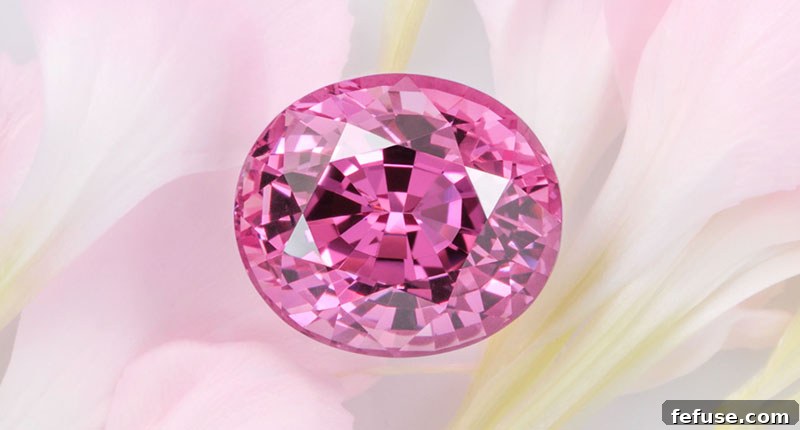
Pink and red colored gems continue to enjoy strong demand. This has particularly uplifted stones like morganite, celebrated for its delicate pink hues as a popular alternative to rarer pink diamonds; spinel, which offers a vibrant spectrum of reds and pinks with exceptional brilliance; and tourmaline, renowned for its incredible range of colors, including stunning pinks and reds. Drucker noted that blues remain perennially reliable sellers, consistently appealing to a wide consumer base. Additionally, gemstones exhibiting soft peach and subtle orange shades are performing exceptionally well, tapping into contemporary fashion and design trends that favor warm, inviting palettes.
However, the key to success in today’s competitive market is differentiation. Offering unique and unusual materials, such as sapphire slices or bespoke cuts, provides an edge and caters to consumers seeking individuality and artistic expression in their jewelry. This strategy aligns with the “jewelry as art” movement, providing distinctive options beyond traditional faceted stones.
Garnets are also experiencing a remarkable resurgence in popularity. Rhodolite garnet, with its attractive purplish-red tones, is making a significant splash with designers who appreciate its versatility and rich color. Spessartite garnet, known for its vibrant orange to reddish-orange hues, and tsavorite garnet, celebrated for its intense green, are now among the top-selling gems within their respective color categories. This renewed interest in garnets is driven by their diverse color range, durability, and relative affordability compared to the “Big Three.” Furthermore, other shades of zoisite are gaining traction, building on the high demand and established market presence of tanzanite, introducing consumers to the broader beauty of the zoisite family.
In conclusion, the gemstone market is undergoing a profound transformation, driven by shifts in global wealth, evolving consumer ethics, stricter regulations in source countries, and a dynamic interplay of supply and demand across various tiers. Adapting to these changes, embracing transparency, and offering distinctive, ethically sourced gems will be paramount for success in the years to come.