
Tragedy Strikes Burkina Faso: Unregulated Gold Mine Collapse Claims Nine Lives, Exposing Perils of Artisanal Mining
A devastating incident in Burkina Faso has once again cast a stark light on the perilous conditions prevalent within the country’s vast and largely unregulated artisanal gold mining sector. At least nine workers tragically lost their lives following a collapse at an informal mining site in the western Tuy province. This heartbreaking event serves as a grim reminder of the profound human cost associated with a sector that, while providing vital income for many, frequently operates with minimal safety oversight and poses significant risks to those who toil within it. The urgency for enhanced safety measures and robust regulatory frameworks across West Africa’s gold-rich nations has never been clearer.
Details of the Tuy Province Mine Disaster
The fatal collapse occurred at an unregulated gold mine nestled in Burkina Faso’s Tuy province, a region well-known for its numerous informal mining operations. Local rescuers launched an intensive search and recovery effort immediately after the incident. Their tireless work led to the initial discovery of four bodies on Tuesday night, February 7th, amidst the rubble and unstable ground. The grim search continued relentlessly into the following morning, ultimately uncovering an additional five victims. This brought the total confirmed fatalities to nine, each representing a life cut short and a family plunged into mourning. The circumstances of the collapse – specifically occurring at an unregulated site – highlight critical systemic failures, including a lack of proper geological surveys, structural engineering, and emergency preparedness that are often absent in such informal operations.
Burkina Faso: A Golden Nation with Deep-Seated Challenges
Burkina Faso, a landlocked nation situated in the heart of West Africa, holds a prominent position in the global gold market. Its rich mineral endowments have propelled it to become one of the world’s leading gold producers. In 2021 alone, the country’s gold output reached an impressive 102.8 tonnes, solidifying its rank as the 12th largest gold producer worldwide. Gold extraction forms a critical pillar of the Burkinabe economy, contributing significantly to its Gross Domestic Product (GDP), generating vital foreign exchange earnings, and providing employment for hundreds of thousands of people. However, this economic backbone is characterized by a stark duality: a formal, industrial mining sector operating alongside a sprawling and often dangerous artisanal and small-scale gold mining (ASGM) sector.
The Proliferation and Impact of Artisanal Mines
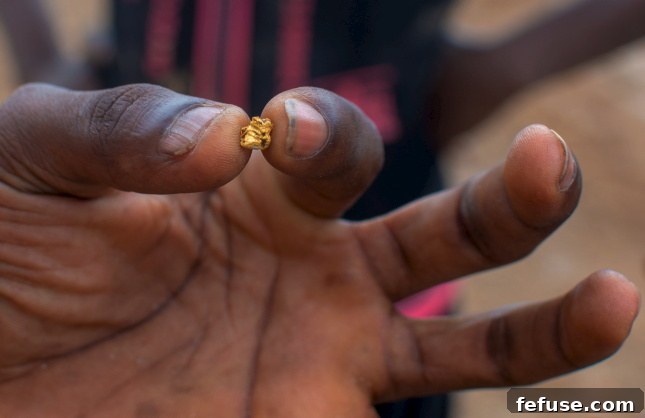
Beyond the large-scale corporate mining operations, Burkina Faso is estimated to host approximately 800 artisanal gold mining sites. These operations stand in stark contrast to their industrial counterparts. They typically involve rudimentary tools, intensive manual labor, and, most critically, an alarming absence of safety standards. Miners frequently work in poorly constructed, unstable shafts and tunnels, with little to no protective equipment or training. The magnetic pull of quick profits, particularly in a nation where alternative employment opportunities are scarce, draws a diverse workforce into this hazardous profession, including a significant number of women and even children. This informal sector, while crucial for the livelihoods of many rural communities, largely operates outside government oversight, creating a precarious environment rife with risks that extend far beyond the immediate dangers of a mine collapse.
The Multifaceted Perils of Artisanal and Small-Scale Gold Mining (ASGM)
The recent tragedy in Tuy province is a stark and painful illustration of the inherent dangers embedded within unregulated ASGM. These risks are not confined to isolated incidents but represent a systemic challenge, encompassing a broad spectrum of acute safety, severe health, devastating environmental, and complex socio-economic issues that profoundly impact miners, their families, and the broader communities.
Acute Safety Hazards and Structural Instability
Mine collapses, like the one that claimed nine lives, are regrettably common occurrences in artisanal sites. The primary culprits include the complete absence of professional engineering and geological assessments, leading to tunnels and shafts being dug in inherently unstable ground. Furthermore, rudimentary and often ineffective shoring techniques, or a complete lack thereof, significantly contribute to structural failures. Factors such as heavy rainfall can exacerbate these dangers by destabilizing poorly constructed underground workings, triggering sudden and catastrophic cave-ins. Beyond collapses, miners face risks from falling debris, the haphazard use of blasting materials, and the operation of makeshift or poorly maintained equipment, all of which contribute to a dangerously high accident rate.
Grave Health Risks and Environmental Contamination
The health of artisanal miners is severely compromised by constant exposure to hazardous substances and deplorable working conditions. Mercury, a highly toxic neurotoxin, is commonly used in the amalgamation process to extract gold, leading to widespread mercury poisoning among miners and surrounding communities. Prolonged exposure can result in severe neurological damage, kidney failure, birth defects, and developmental issues, particularly in children. Inhalation of silica dust generated during drilling and crushing is a pervasive problem, leading to silicosis, a debilitating and often fatal lung disease. Poor ventilation in deep, confined shafts can result in carbon monoxide poisoning or oxygen deprivation. Compounding these issues are unsanitary living conditions in mining camps, limited access to clean water, and inadequate healthcare, fostering the spread of infectious diseases.
The environmental footprint of ASGM is equally devastating. Widespread deforestation occurs as trees are felled for timber to support tunnels or for use as fuel. Precious water sources are frequently contaminated by mercury, cyanide, and other heavy metals used in gold processing, posing severe threats to aquatic ecosystems and the drinking water supply of downstream communities. Soil erosion, habitat destruction, and significant biodiversity loss are common consequences, creating long-term ecological damage that is often irreversible and contributes to desertification and land degradation.
Socio-Economic Challenges and Human Rights Concerns
Artisanal mining often exists in a legal grey area, creating an environment ripe for exploitation, social conflict, and insecurity. Child labor is an endemic and disturbing issue, with children as young as five forced to work in extremely dangerous conditions, sacrificing their education, health, and fundamental right to a safe childhood. Women are also heavily involved in the sector, frequently performing the most physically demanding and least remunerative tasks, often facing exploitation and gender-based violence. Disputes over land rights, resource access, and mining concessions can easily escalate into violent clashes, further destabilizing already fragile regions. In some areas, the informal nature of these operations has regrettably been linked to funding armed groups and criminal networks, thereby exacerbating regional instability and undermining governance efforts.
Addressing the Crisis: Government Initiatives and Stakeholder Engagement
Recognizing the severe multifaceted challenges presented by the unregulated ASGM sector, both the Burkinabe government and various international and local organizations are actively pursuing efforts to mitigate the crisis. These initiatives span from immediate, targeted interventions to comprehensive, long-term strategies aimed at formalization, improved safety, and environmental sustainability.
Government Crackdowns and Regulation Efforts
In a significant move just last month, the government of Burkina Faso publicly announced its intention to shut down numerous artisanal gold-mining sites across 20 villages located in the country’s center-east region. This decisive measure is likely an effort to curb illegal operations, reduce severe environmental damage, and enhance security in specific vulnerable areas. While such closures are often deemed necessary for public safety and environmental protection, they simultaneously highlight a complex socio-economic dilemma: the pressing need to provide viable alternative livelihoods for the thousands of miners who will be displaced by such actions. Effective regulation, including mandatory safety training, rigorous inspection regimes, and simplified permitting processes, is crucial but remains immensely challenging to implement uniformly across such a vast and predominantly informal sector.
The Vital Role of Advocacy and Support Organizations
Organizations such as the Artisanal Gold Council (AGC) play an indispensable role in advocating for and facilitating safer, more responsible, and environmentally sound ASGM practices globally. Following the recent tragedy in Tuy province, the AGC issued a statement expressing profound sorrow: “Accidents of this nature are unfortunately not uncommon in this sector, but we are working hard to change this. Our hearts go out to the families and friends of those who were killed in this accident.” The AGC’s extensive work typically involves developing and deploying cleaner technologies, such as mercury-free gold extraction methods, providing vital training on best practices, and collaborating with governments to formalize the sector. Their overarching goal is to transform ASGM into a more sustainable, equitable, and dignified livelihood, thereby significantly reducing its negative impacts while maximizing its potential for local and national development.
Towards a Safer and More Sustainable Future for Burkina Faso’s Gold Sector
The tragic loss of nine lives in Tuy province serves as a powerful and agonizing reminder of the urgent imperative for comprehensive and systemic reforms within Burkina Faso’s artisanal gold mining sector. Achieving a safer, more ethical, and truly sustainable future demands a multi-pronged approach that effectively addresses the root causes of informal mining and concurrently provides viable and appealing alternatives for vulnerable populations who currently rely on these perilous operations for survival.
Key strategies to forge this path forward include:
- Formalization and Legitimization: Establishing clear, accessible, and supportive legal frameworks, simplifying the licensing and permitting procedures, and providing robust institutional support for artisanal miners to transition into legal, regulated operations. This crucial step would enable much-needed oversight and enforcement of safety, environmental, and labor standards.
- Enhanced Safety Training and Provision of Equipment: Implementing comprehensive and mandatory safety training programs specifically tailored for artisanal miners, ensuring consistent access to essential personal protective equipment (PPE), and educating miners on modern, safer excavation and processing techniques.
- Introduction and Promotion of Cleaner Technologies: Actively promoting and facilitating the widespread adoption of mercury-free gold extraction methods, such as retorts for mercury capture or gravity concentration techniques, to significantly protect both human health and the environment from toxic contamination.
- Diversification of Livelihoods: Investing strategically in alternative economic activities and establishing vocational training programs within mining communities. This aims to reduce the heavy reliance on hazardous mining and offer more stable, safer, and sustainable income sources.
- Community Engagement and Empowerment: Actively involving local communities in all decision-making processes pertaining to mining activities, ensuring transparent and fair benefit-sharing mechanisms, and strengthening local governance structures to promote accountability and local ownership.
- Strengthening Enforcement and Monitoring: Augmenting the capacity of government agencies to effectively monitor, inspect, and enforce mining regulations. This includes robust measures to combat illegal and unregulated operations while providing support for legitimate ones.
While the journey towards transforming Burkina Faso’s artisanal gold mining sector is undoubtedly challenging and complex, the tragic human toll exacted by unregulated practices makes the pursuit of these comprehensive solutions an absolute imperative. The long-term well-being of Burkina Faso’s citizens, the health of its environment, and the sustainable future of its gold sector profoundly depend on a collective and unwavering commitment to prioritizing safety, environmental protection, human dignity, and equitable economic opportunity above all else.