
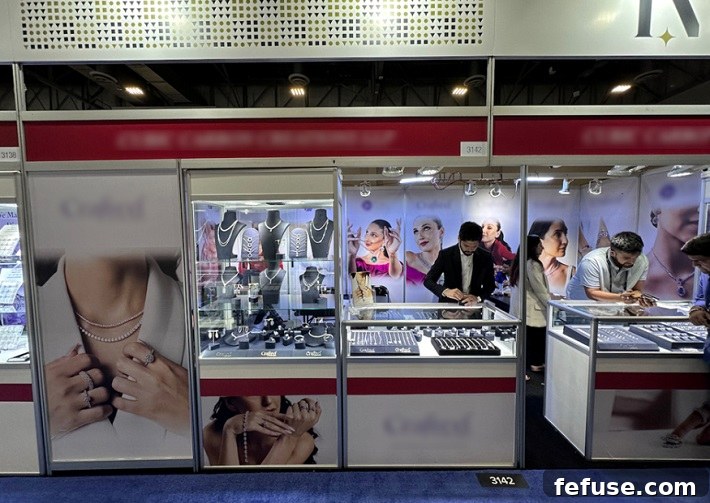
Navigating Jewellery Re-Import: DGFT Clarifies Policy for Unsold Exhibition Goods
A Critical Update for India’s Gems and Jewellery Sector
The Indian Ministry of Commerce & Industry has recently provided a significant clarification that directly impacts the nation’s vibrant gems and jewellery export industry. This pivotal announcement addresses the procedures for the re-importation of unsold jewellery pieces that were originally sent abroad for exhibition purposes. Coming at a time when import policies for specific jewellery categories have undergone notable changes, this directive from the Directorate General of Foreign Trade (DGFT) aims to ensure stability and predictability for businesses operating in this high-value sector. The clarification is a welcome relief for exporters who frequently showcase their exquisite collections on international platforms, helping them navigate the complexities of global trade regulations with greater ease and confidence, thereby bolstering India’s position in the global jewellery market.
Understanding the Recent Policy Shift: From ‘Free’ to ‘Restricted’
The background to this crucial clarification lies in a recent amendment to India’s import policy. Previously, several categories of jewellery items, identified under specific ITC (HS) codes, were classified under the “Free” import category. This classification meant that their import was generally unrestricted and did not require any special licensing. However, a significant shift occurred with Notification No. 17/2024-25, issued on June 11, 2024, which reclassified these items from “Free” to “Restricted.” The affected ITC (HS) codes include 71131912, 71131913, 71131914, 71131915, and 71131960. These codes typically pertain to various types of gold jewellery, often set with precious or semi-precious stones, highlighting the broad impact of this reclassification across a significant segment of the industry.
The transition from “Free” to “Restricted” status generally implies that imports of these items would henceforth require a specific import license from the DGFT. This change usually signals a governmental intent to monitor, regulate, or even curtail the inflow of certain goods, potentially to protect domestic industries, manage foreign exchange, or address trade imbalances. For businesses, such a reclassification can introduce substantial administrative hurdles, increased processing times, and uncertainty regarding the continuity of their operations. The prospect of needing a license for every re-import, even for goods that were originally exported from India, presented a considerable challenge, particularly for those engaged in international exhibitions where returns are a common occurrence.
The Role of ITC (HS) Codes in International Trade
ITC (HS) codes, or Indian Trade Classification (Harmonized System) codes, are an indispensable tool in international trade. They are a standardized numerical method of classifying traded products. Developed by the World Customs Organization (WCO), the Harmonized System is used by customs authorities worldwide to identify products, assess duties and taxes, and collect trade statistics. In India, the ITC (HS) classification is maintained by the Directorate General of Foreign Trade. Each digit in the code specifies a particular category, making it highly granular and precise. Understanding these codes is paramount for exporters and importers, as they determine the applicable tariffs, regulations, and policy restrictions. The reclassification of these specific jewellery codes underscores their significance in shaping trade dynamics and highlights the government’s strategic approach to managing the trade flow of high-value commodities, ensuring alignment with national economic objectives.
DGFT’s Definitive Clarification: Easing the Path for Exhibitors
Responding to potential concerns and ensuring operational continuity for the trade, the Directorate General of Foreign Trade (DGFT), under the Ministry of Commerce & Industry, issued Policy Circular No. 05/2024-25 on June 13, 2024. This circular, widely disseminated to Customs Authorities, Regional Authorities (RAs) of DGFT, and members of the Trade & Industry, provides a clear and unambiguous stance on the re-import of unsold exhibition jewellery. The swiftness of this clarification highlights the government’s understanding of the time-sensitive nature of international trade and its commitment to supporting the export community.
The core of the clarification states that the re-import of unsold jewellery, originally exported for exhibition purposes under the newly restricted ITC (HS) codes (71131912, 71131913, 71131914, 71131915, and 71131960), will be permitted by Customs authorities without the prerequisite of an import license. This is a crucial exemption that directly addresses the specific scenario of exhibition returns, distinguishing them from fresh imports of restricted items. This decision acknowledges the unique nature of goods exported temporarily for display and sale in international markets, which, if unsold, must eventually return to their country of origin. This provision helps maintain liquidity for businesses and prevents unnecessary logistical and financial burdens.
Conditions for Re-Import without License
While the need for an import license has been waived for these specific re-imports, the DGFT circular explicitly underlines that this permission is contingent upon “compliance with all applicable Customs provisions.” This clause is vital, as it ensures that while the process is streamlined, the regulatory oversight remains robust and prevents any potential misuse. Exporters must ensure meticulous adherence to all Customs regulations, which typically include:
- Proper Documentation: Maintaining thorough and accurate records of the original export, including shipping bills, exhibition participation certificates, invoices, and detailed lists of items. These documents serve as proof that the jewellery was indeed exported for exhibition purposes.
- Identification of Goods: Ensuring that the re-imported jewellery can be unequivocally identified as the same goods that were previously exported for exhibition. This often involves specific marking, serial numbers, unique designs, or photographic evidence, matching the initial export records.
- Valuation: Accurate valuation of the goods for customs purposes, even if they are unsold and returning. While duties might not apply on return goods under specific schemes, proper valuation is essential for statistical purposes and potential assessment of any charges related to services or modifications abroad.
- Adherence to Temporary Export Schemes: Many countries have specific provisions for temporary exports for exhibitions, often involving bonds or undertakings. Compliance with these initial export conditions is essential for smooth re-import, ensuring that all obligations assumed at the time of export are duly fulfilled.
- Time Limits: Adhering to any prescribed time limits for re-importation, as typically outlined in Customs regulations for goods exported temporarily. Goods re-imported beyond specified periods might be subject to different rules or duties.
The Significance of International Exhibitions for the Jewellery Industry
International exhibitions play an indispensable role in the growth and global outreach of the Indian gems and jewellery industry. These platforms serve as vital showcases for Indian craftsmanship, design innovation, and quality on a global scale. By participating in leading trade fairs in global hubs like Hong Kong, Dubai, Las Vegas, and Basel, Indian manufacturers and designers gain unparalleled exposure to international buyers, retailers, and distributors, extending their market reach beyond domestic borders.
Such exhibitions facilitate direct interactions, enabling businesses to understand global market trends, gather immediate feedback on their designs, and forge new, strategic partnerships. They are critical for brand building, order generation, and maintaining India’s position as a major player and a sought-after sourcing destination in the global jewellery market. The ability to export goods for exhibition, and smoothly re-import unsold stock, is fundamental to the operational model of many jewellery exporters. Without such a mechanism, the financial and logistical risks associated with international participation would be prohibitively high, potentially stifling India’s presence on the global stage and hindering its export ambitions.
Impact and Benefits for the Trade and Industry
This timely clarification from the DGFT brings several tangible benefits to the Indian gems and jewellery trade, ensuring that a crucial sector continues to thrive in an increasingly complex global trade environment:
- Reduced Bureaucracy and Expedited Processes: By eliminating the requirement for an import license for specific re-imports, the DGFT has significantly reduced the administrative burden on exporters. This translates into faster processing times at Customs, minimizing delays, storage costs, and potential demurrage charges, which are critical for high-value goods.
- Enhanced Business Confidence: The certainty provided by this circular allows businesses to plan their participation in international exhibitions with greater confidence, knowing that unsold inventory can be repatriated without unforeseen regulatory hurdles or excessive paperwork. This fosters a more predictable and stable trading environment.
- Support for Export Promotion: This move reinforces the government’s commitment to supporting export promotion activities, recognizing the importance of international marketing and direct customer engagement for the industry’s sustained growth and diversification of export markets.
- Operational Efficiency: Jewellery is a high-value commodity, and its efficient movement is paramount. Streamlining its re-import, even for return shipments, contributes directly to the operational efficiency and profitability of businesses. It allows for better inventory management, efficient allocation of capital, and reduced risk exposure.
- Level Playing Field: It ensures that Indian exporters can compete effectively with their global counterparts, who often benefit from similar re-import facilitations in their home countries. This prevents Indian businesses from being at a competitive disadvantage due to procedural bottlenecks.
The Broader Context: Handbook of Procedure, 2023
The DGFT’s clarification is issued in the context of the Handbook of Procedure, 2023, which serves as a comprehensive guide detailing the operational aspects and procedural requirements for various provisions of India’s Foreign Trade Policy. This handbook is an essential reference document for understanding the practical implementation of trade regulations, licenses, and exemptions. The fact that the re-import conditions are rooted in the established procedures outlined in this handbook provides a structured framework and continuity, assuring the trade that these provisions are part of a well-defined and established regulatory ecosystem rather than ad-hoc measures. Exporters are always advised to refer to the latest edition of the Handbook of Procedure for detailed operational guidelines pertinent to their specific trade activities, ensuring full compliance and leveraging available facilitations.
Looking Ahead: Navigating Future Trade Policies
While this clarification offers immediate relief, it also underscores the dynamic nature of international trade policies. Businesses in the gems and jewellery sector must remain vigilant and proactive in monitoring regulatory changes to adapt swiftly and effectively. Future policy adjustments, whether in response to global economic shifts, environmental concerns, or domestic priorities, are always a possibility.
- Continuous Engagement: Industry associations and bodies play a crucial role in representing the concerns of the trade to governmental authorities, facilitating timely clarifications and policy adjustments. Active participation in such forums is vital.
- Meticulous Record-Keeping: The emphasis on “compliance with all applicable Customs provisions” necessitates impeccable record-keeping, comprehensive documentation, and a thorough understanding of customs procedures for temporary exports and re-imports. Robust internal processes are key to seamless operations.
- Seeking Expert Advice: Given the complexities of trade law and the high value of goods involved, consulting with trade experts, customs brokers, and legal advisors can prove invaluable in ensuring full compliance, mitigating risks, and avoiding potential pitfalls. Investing in expert guidance can save significant costs and time in the long run.
Conclusion: A Step Towards Trade Facilitation
The Ministry of Commerce & Industry, through the Directorate General of Foreign Trade, has demonstrated its responsiveness and commitment to the needs of the Indian gems and jewellery industry with this pivotal clarification. By allowing the re-import of unsold exhibition jewellery without an import license, even after its reclassification to a ‘Restricted’ category, the government has effectively removed a potential barrier to trade and streamlined a critical aspect of international business for the sector. This proactive measure not only supports the industry’s continued participation in prestigious global exhibitions but also reaffirms India’s dedication to trade facilitation and maintaining a stable, predictable regulatory environment for its key export sectors. This will undoubtedly bolster confidence among exporters and contribute significantly to the sustained success and global prominence of India’s exquisite jewellery craftsmanship, reinforcing its status as a world leader in the industry.