
GJSCI Empowers West Bengal’s Jewellery Artisans with Major RPL Goldsmith Program Launch
In a significant stride towards formalizing and uplifting India’s vast artisanal workforce, the Gem and Jewellery Skill Council of India (GJSCI) proudly announces the launch of its transformative Recognition of Prior Learning (RPL) Goldsmith Program in West Bengal. This landmark initiative, undertaken in strategic collaboration with Edujobs Academy, Kolkata, is poised to bring formal recognition and professional advancement to over 8,000 talented jewellery karigars currently operating within the state’s unorganised sector. The program marks a crucial step in standardizing skills, enhancing employability, and fostering sustainable growth within the nation’s illustrious gem and jewellery industry.
A Pivotal Inauguration: Government and Industry Unite for Skill Development
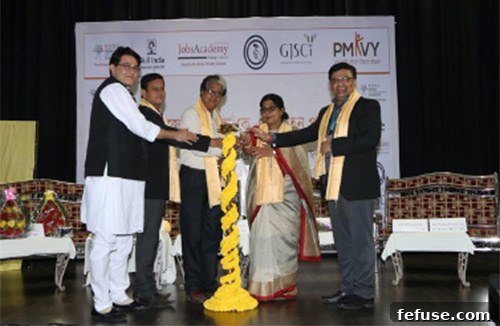
The official inauguration of this crucial RPL program in West Bengal was a notable event, graced by the presence of distinguished dignitaries and key stakeholders. The ceremony underscored the collaborative spirit between government bodies, industry leaders, and local implementing partners, all committed to the advancement of India’s skilled workforce. Those in attendance included:
- Shri. Sadhan Pande: The esteemed Minister for Consumer Affairs, Self Help-Group and Self-Employment, Government of West Bengal, whose presence highlighted the state government’s direct support and commitment to empowering its citizens through skill development initiatives.
- Smt. Smita Bakshi: A respected Member of the West Bengal Legislative Assembly, Government of West Bengal, signifying the legislative backing and local political will behind such impactful programs.
- Shri. Binit Bhatt: The dynamic Chief Executive Officer of GJSCI, who articulated the council’s vision for skill enhancement and the broader national implications of the RPL program. His leadership has been instrumental in conceptualizing and driving such large-scale skilling initiatives across the country.
The collective presence of these leaders not only added gravitas to the launch but also sent a strong message about the importance of skill recognition and formalization for economic development and social mobility in West Bengal and beyond.
Understanding the RPL Program: Formalizing Experience, Unlocking Potential
The Recognition of Prior Learning (RPL) program is a cornerstone of GJSCI’s mission to professionalize the gem and jewellery sector. It is meticulously designed to assess and certify the existing skills, knowledge, and talent of experienced artisans who, despite years of dedicated work, often lack formal qualifications. This program aims to bridge the gap between informal learning and accredited certification, thereby empowering skilled and semi-skilled karigars by providing them with a formal qualification that validates their invaluable expertise.
Why RPL is a Game-Changer for India’s Jewellery Artisans:
India’s gem and jewellery industry is a global powerhouse, renowned for its intricate craftsmanship and heritage. At its heart are millions of talented karigars, many of whom have honed their skills through generations of family tradition or on-the-job training. However, the absence of formal certification often confines them to the unorganised sector, leading to several challenges:
- Lack of Formal Recognition: Their skills, though exceptional, remain unaccredited, limiting access to formal employment channels and professional growth opportunities.
- Income Instability: Work in the unorganised sector can often be precarious, with fluctuating wages and limited social security benefits.
- Limited Career Progression: Without certified qualifications, advancing to higher roles, starting their own ventures, or accessing financial support for entrepreneurship becomes significantly challenging.
- Absence of Social Security: Many artisans lack access to vital benefits like health insurance, provident funds, and pension schemes, leaving them vulnerable.
The RPL program directly addresses these issues by:
- Validating Expertise: Officially recognizing years of hard-earned experience and traditional knowledge.
- Boosting Employability: Providing a national certification (aligned with the National Skill Qualification Framework – NSQF) that opens doors to better job prospects within the organised sector.
- Enhancing Earning Potential: Certified karigars can command better wages and enjoy greater stability in their employment.
- Facilitating Social Inclusion: Enabling access to government schemes, financial services, and social security benefits, thereby integrating them into the mainstream economy.
- Fostering Entrepreneurship: Providing a recognized qualification that can support applications for loans or grants to establish independent businesses.
By bringing an estimated 3.5 million skilled individuals working in the industry into a more organised and structured environment, the RPL program contributes significantly to their economic stability and overall quality of life. This, in turn, strengthens the entire supply chain of the gem and jewellery sector, promoting higher standards of quality and productivity.
West Bengal: A Hub for Artisanal Excellence
The choice of West Bengal for this significant launch is particularly strategic. The state boasts a rich heritage in jewellery craftsmanship, especially in gold jewellery, making it a vital hub for manufacturing and design. Kolkata, its capital, is historically known for its intricate goldwork and houses a large concentration of highly skilled, yet often uncertified, karigars. Targeting over 8,000 jewellery artisans in this region through the RPL Goldsmith Program is expected to have a cascading positive effect, enhancing the skills ecosystem and reinforcing the state’s position as a centre of excellence in jewellery making.
Edujobs Academy, Kolkata, as GJSCI’s local partner, plays a critical role in the effective implementation of the program. Their regional expertise and logistical capabilities ensure that the assessment and certification processes are efficiently delivered to the vast number of eligible artisans, making the program accessible at the grassroots level.
GJSCI’s Ambitious Vision and Proven Track Record
The Gem and Jewellery Skill Council of India (GJSCI) operates with a clear mandate to develop a skilled workforce for the sector, aligning with the national ‘Skill India’ mission. Their efforts extend beyond merely training; they aim to create a robust framework for skill development that meets global standards and industry demands. The RPL program is a testament to this commitment.
Since the inception of the RPL initiatives, GJSCI has achieved remarkable milestones, demonstrating its effectiveness and reach:
- Over 80,000 Candidates Trained: A testament to the extensive outreach and dedicated training methodologies employed by the council.
- More Than 20,000 Certified: Highlighting the successful formalization of skills for a significant number of artisans, integrating them into the formal economy.
These achievements underscore GJSCI’s capacity to deliver on its promises and make a tangible difference in the lives of countless artisans. Looking ahead, GJSCI has set an ambitious target to train a further 2.7 million individuals across various trades within the gem and jewellery sector. This forward-looking approach ensures a continuous pipeline of skilled professionals, capable of sustaining and growing India’s global leadership in the industry.
The Future of Jewellery Craftsmanship: Formalized, Empowered, and Global
The launch of the RPL Goldsmith Program in West Bengal is more than just a certification drive; it is an investment in human capital, a recognition of traditional artistry, and a strategic move towards a more organized and globally competitive Indian gem and jewellery sector. By formalizing the skills of thousands of karigars, GJSCI is not only providing them with enhanced livelihood opportunities and social security but also ensuring the preservation and evolution of India’s rich jewellery heritage. This initiative will empower artisans to take pride in their work with formal validation, contribute more effectively to the economy, and secure a brighter, more stable future for themselves and their families. It represents a shining example of how targeted skill development programs can drive socio-economic transformation on a grand scale.
News Source: gjepc.org