
Empowering India’s Gem & Jewellery MSMEs: GJEPC’s Comprehensive Outreach in Surat
The Micro, Small, and Medium Enterprises (MSME) sector serves as a dynamic engine for economic growth and innovation across India, playing an especially crucial role within the globally renowned Indian gem and jewellery industry. Recognizing the immense potential and unique challenges faced by these businesses, the Gem & Jewellery Export Promotion Council (GJEPC) is steadfast in its commitment to foster their sustainable development. Through a series of strategically organized awareness-raising workshops and seminars, GJEPC aims to arm MSME entrepreneurs with the critical knowledge and practical tools necessary for navigating a competitive global market.
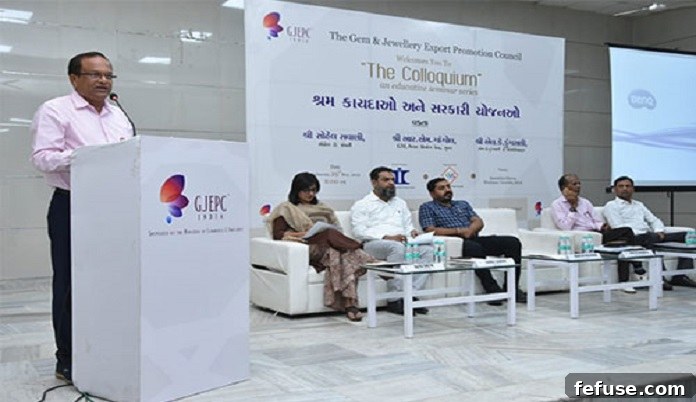
These meticulously designed programs address a diverse array of topics, from regulatory compliance to leveraging government support, all intended to equip participants with actionable insights. By disseminating vital information, GJEPC empowers these enterprises to optimize their operations, enhance their market presence, and ultimately contribute significantly to India’s position as a leading exporter of gems and jewellery. A recent highlight of these initiatives was a highly successful workshop held in Surat, a city intrinsically linked to the heart of India’s diamond and jewellery manufacturing sector.
Surat: A Strategic Nexus for Gem & Jewellery Development
The selection of Surat as the venue for this significant GJEPC event underscores its unparalleled importance in the landscape of the Indian gem and jewellery industry. Widely celebrated as the ‘Diamond City of India’, Surat stands as a formidable global hub for diamond cutting and polishing, in addition to its burgeoning capabilities in modern jewellery manufacturing. The success of this particular workshop was a testament to robust local collaboration, benefiting from the strong support of the Ratnakala Vikas Sangh, a respected industry association dedicated to the welfare and advancement of artisans. Furthermore, the District Industries Commissionerate (DIC), Surat, played an integral role as an event partner, exemplifying the powerful synergy that can be achieved when governmental bodies and industry associations unite for regional economic upliftment.
The Surat event was specifically tailored to address two paramount concerns for MSMEs operating within the sector: the array of beneficial schemes extended by the government and a thorough understanding of labour laws applicable in Surat and across the nation. For MSME owners, a clear grasp of these regulations is not merely about compliance; it’s about establishing an ethical, sustainable, and legally sound business foundation. Leveraging available government support, coupled with diligent adherence to labour standards, constitutes the bedrock upon which long-term business viability and competitive advantage are built. These focused discussions provided a vital platform for local businesses to gain clarity, adopt best practices, and contribute to a more formalized and responsible industry ecosystem.
Unlocking Growth Potential: State Government Schemes for MSMEs
A substantial portion of the Surat workshop was dedicated to an in-depth exploration of the various State Government schemes meticulously crafted to support the MSME sector. A representative from the District Industries Commissionerate (DIC), Surat, delivered a comprehensive and highly informative presentation, meticulously outlining these critical programs. The session was designed to go beyond a mere listing of available schemes; it provided practical, step-by-step guidance on the application processes, eligibility criteria, and the most effective ways for MSME owners to access and benefit from these initiatives.
These government schemes are incredibly diverse, offering a broad spectrum of assistance that can significantly impact a business’s growth trajectory. They typically include financial subsidies for technological upgrades, preferential credit facilities, marketing support for both domestic and international outreach, skill development programs aimed at workforce enhancement, and infrastructure development initiatives. For small businesses aspiring to scale up, innovate, and thrive in a highly competitive market, understanding and utilizing these avenues of support is not just advantageous but often essential. Such targeted governmental assistance can alleviate financial burdens, stimulate innovation, and foster an environment where MSMEs can expand their operations, create more employment opportunities, and become powerful contributors to both regional and national economic prosperity.
The GJEPC’s role in facilitating this direct interaction between MSMEs and government bodies like DIC is invaluable. Many smaller enterprises, due to limited resources or a lack of awareness, often struggle to navigate the complexities of government programs. By simplifying access to crucial information and guidance, these workshops effectively bridge that gap, empowering entrepreneurs to leverage resources that are specifically designed to bolster the Indian gem and jewellery industry’s resilience and growth. This direct outreach is indispensable for ensuring the sustainable development and global competitiveness of the sector.
Navigating the Legal Landscape: Comprehensive Insights into Labour Laws
For any enterprise, particularly within the labour-intensive gem and jewellery sector, a profound understanding and diligent adherence to labour laws are paramount for fostering ethical growth and ensuring operational stability. The Surat seminar brought together seasoned experts to demystify these critical regulations. Sohail Sawani from Sohail & Co and Shri L. K. Dugrani from L. K. Dungarani & Associates delivered detailed presentations, elucidating the nuances of various labour law provisions. Their insights ensured that participants gained a clear understanding of their legal obligations as employers and, equally importantly, the rights and entitlements of their employees.
A significant portion of the discussion was dedicated to two foundational social security schemes: the Provident Fund (PF) and the Employees’ State Insurance Corporation (ESIC). These schemes are cornerstones of India’s social welfare framework, providing essential safety nets for workers and their families, thereby contributing significantly to their long-term well-being and financial security. The experts provided comprehensive explanations on several key aspects:
- Provident Fund (PF): This mandatory savings scheme is designed to provide financial security for employees upon retirement. The experts delved into the intricacies of contribution calculations for both employers and employees, outlining the statutory percentages and their importance. They also clarified the comprehensive process for claiming funds, as well as the various conditions under which partial or full withdrawals can be made, which include specific provisions for housing, medical emergencies, education, and marriage. Emphasizing the long-term benefits, the discussion highlighted how PF contributions accrue interest over time, creating a substantial corpus for an employee’s post-retirement life.
- Employees’ State Insurance Corporation (ESIC): ESIC operates as a comprehensive social security and healthcare scheme, offering robust protection against various eventualities. The session meticulously covered the contribution structure, detailing how both employers and employees contribute to this fund. Participants learned about the simplified claim process for accessing benefits and the extensive network of medical facilities available at ESIC hospitals, ensuring quality healthcare for covered individuals. Beyond medical care, the experts elaborated on other crucial benefits such as sickness allowance (financial support during periods of illness), unemployment allowance (temporary financial relief for job loss under specific conditions), disability benefits (support for both temporary and permanent disablement), and maternity benefits (financial and medical support during pregnancy and childbirth). A vital takeaway was the emphasis on ESIC’s holistic coverage, which extends its protective umbrella not only to the insured worker but also to their registered dependents, significantly alleviating financial burdens during unforeseen health crises or economic hardships.
Adherence to these aspects of labour law compliance transcends mere legal obligation; it fundamentally shapes a responsible, humane, and productive work environment. Businesses that champion worker welfare invariably experience enhanced employee morale, reduced attrition rates, increased loyalty, and ultimately, higher productivity. Through initiatives like this workshop, GJEPC actively promotes a culture of ethical employment practices and robust compliance across the entire Indian gem and jewellery industry, fostering a more equitable and sustainable future for its workforce.
GJEPC Leadership Underscores Long-Term Worker Welfare
The critical importance of prioritizing worker welfare and embracing long-term financial planning was passionately highlighted by Dinesh Nevadiya, GJEPC’s esteemed Regional Chairman for Gujarat. In his address, he strongly advocated for all workshop participants, particularly MSME owners, HR managers, and unit heads, to proactively ensure their employees are duly enrolled in both the Provident Fund (PF) and Employees’ State Insurance Corporation (ESIC) schemes. His compelling message resonated with the conviction that these are not merely statutory requirements but rather profound and indispensable investments in the future security and well-being of employees and their families.
Nevadiya articulately explained how these comprehensive social security schemes provide an invaluable financial safety net against life’s inherent uncertainties. Enrolling employees in PF and ESIC offers a crucial financial cushion in the unfortunate event of permanent disability, ensuring that individuals and their families are not plunged into financial hardship during such challenging times. Similarly, in the tragic scenario of an unforeseen death, these schemes provide essential financial support and stability to the dependents left behind. Furthermore, the robust retirement benefits accrued through PF contributions are fundamental for securing financial independence in later years, enabling workers to transition into retirement with dignity and peace of mind. This forward-thinking leadership perspective from GJEPC unequivocally demonstrates a deep-seated commitment that extends beyond mere export promotion and business growth. It embodies a dedication to cultivating a socially responsible, equitable, and sustainable ecosystem for the entire workforce that forms the very foundation of the Indian gem and jewellery industry, solidifying its ethical standing on the global stage.
Elevating Skills: Recognition of Prior Learning and Apprenticeship Schemes
Beyond the critical discussions on financial schemes and labour law compliance, the workshop thoughtfully addressed initiatives vital for skill enhancement and the formalization of expertise within the gem and jewellery workforce. Participants received comprehensive insights into the Recognition of Prior Learning (RPL) and Apprenticeship schemes, both of which are indispensable components of India’s broader skill development agenda and crucial for the industry’s sustained competitiveness.
- Recognition of Prior Learning (RPL): This transformative scheme directly tackles a significant challenge prevalent in the informal sector, where numerous highly skilled artisans possess years of invaluable practical experience but lack formal certifications. RPL provides a structured mechanism to assess, validate, and officially certify these existing skills. The benefits of RPL are multi-dimensional: for artisans, it translates into enhanced professional recognition, improved career progression opportunities, and often, significantly higher earning potential; for employers, it guarantees a formally recognized and skilled workforce, which in turn leads to higher quality standards, improved productivity, and reduced training overheads; and for the overall industry, it contributes to standardization, formalization, and a more transparent talent pool.
- Apprenticeship Scheme: This program is expertly designed to bridge the often-cited gap between theoretical academic learning and the practical demands of the industry. It offers a structured and immersive pathway for new entrants to acquire valuable, hands-on trade skills directly within a working environment, under the mentorship of seasoned professionals. For employers, apprenticeships cultivate a robust pipeline of highly trained talent, specifically tailored to their operational needs, thereby significantly reducing future recruitment and training costs. For apprentices, it provides invaluable real-world experience, leading to enhanced employability, smoother career transitions, and accelerated professional growth within the dynamic gem and jewellery sector.
Collectively, the RPL and Apprenticeship schemes are instrumental in formalizing the workforce, promoting a culture of continuous learning, and ensuring that the Indian gem and jewellery industry maintains its competitive edge on the global stage by nurturing a highly skilled, adaptable, and formally recognized labour force.
Formalizing Artisans: The Gem & Jewellery Parichay Card Initiative
A truly significant milestone accomplished during the Surat event was the formal execution of a Memorandum of Understanding (MoU) between the GJEPC and the Ratnakala Vikas Sangh. This landmark agreement paves the way for the systematic issuance of the Gem & Jewellery Parichay Card to artisans, representing a profound step forward in the formalization, recognition, and empowerment of the skilled artisan community—the true custodians of the industry’s intricate craftsmanship and heritage.
Comprehensive details about the Parichay Card scheme were extensively shared with all participants, generating considerable enthusiasm. The card is envisioned as a multi-functional identification and recognition tool, providing artisans with a formal and verifiable identity within the industry. Its benefits are far-reaching and transformative: it will facilitate direct access for artisans to various government welfare schemes and support programs, simplify their access to credit and essential financial services, and ensure greater transparency and fairness in employment practices. For the industry as a whole, the Parichay Card creates a robust, verifiable database of skilled artisans, which will significantly streamline talent management, promote ethical sourcing of labour, and foster better direct support mechanisms. This vital initiative stands as a powerful testament to GJEPC’s unwavering commitment to uplift, empower, and formally recognize the artisan community, acknowledging their invaluable contributions to India’s rich cultural heritage and its formidable economic strength within the global gem and jewellery industry.
Broad Participation for Widespread and Sustainable Impact
The resounding success of the Surat workshop was undeniably underscored by the impressive attendance, with over 400 participants actively engaging in the session. This diverse audience was comprised not only of the highly skilled artisans themselves but also critical industry stakeholders such as HR managers from various firms and numerous SME unit holders. Such broad and representative participation vividly demonstrates the wide-ranging relevance and pressing importance of the topics covered, spanning from essential labour laws and comprehensive social security benefits to critical skill development initiatives and invaluable government support schemes. This high level of engagement ensures that the vital information disseminated during the workshop effectively reaches a diverse cross-section of the industry, thereby maximizing its practical impact on the ground.
This widespread involvement is absolutely crucial for fostering collective growth, promoting collaborative problem-solving, and addressing the multifaceted challenges confronting the industry in a comprehensive manner. By bringing together various segments of the gem and jewellery sector onto a common platform, GJEPC effectively facilitates invaluable knowledge exchange, encourages robust networking opportunities, and inspires cooperative approaches to industry-wide issues. These workshops are much more than mere information dissemination sessions; they are pivotal in building a more resilient, knowledgeable, ethically sound, and globally competitive Indian gem and jewellery industry. They equip businesses and individuals alike to confidently face future challenges, strategically capitalize on emerging opportunities, and continually elevate India’s standing in the international market. GJEPC’s continuous and dedicated efforts through such extensive outreach programs are truly indispensable for ensuring the sustained prosperity, ethical practices, and international competitiveness of this vitally important sector.