
Navigating the New Era: The Jewellery Industry’s Path Forward Amidst Evolving Global Dynamics
The global jewellery industry finds itself at a pivotal juncture, navigating a complex and evolving landscape as it emerges from the profound disruptions of the Covid-19 pandemic. CIBJO President Dr. Gaetano Cavalieri articulated these pressing challenges and opportunities at the prestigious Global Pearl Development Conference, held in Zhuji, China – renowned as the world’s pearl capital – on May 21st, 2023. Dr. Cavalieri highlighted a significant reduction in the strategic advantages the industry once enjoyed, compounded by an ongoing economic slowdown affecting numerous regions worldwide. This confluence of factors necessitates a thoughtful and adaptive approach from all stakeholders within the precious metals and gemstones sector.
The Post-Pandemic Jewellery Market: Challenges and Resilience
Reflecting on the unprecedented period of global lockdowns and supply chain disruptions, Dr. Cavalieri acknowledged the inherent resilience that defined the fine jewellery market. “The entire Covid period showcased the inherent resilience of the fine jewellery market, despite the immense pressures imposed by lockdowns and disruptions to supply chains worldwide,” he stated. While the initial onset of the pandemic brought an understandable decline in demand as consumers adjusted to a new reality, the industry demonstrated a remarkable capacity for recovery. This was often driven by a shift in consumer spending habits, where disposable income, previously allocated to travel and experiences, was redirected towards luxury goods, including jewellery, seen as tangible assets or symbols of comfort and enduring value during uncertain times.
Unveiling the Industry’s Robustness During Lockdowns
Indeed, the period following the initial shock witnessed a significant resurgence, with sales frequently surpassing pre-crisis levels. Dr. Cavalieri pointed out that “In fact, in 2021, most indicators showed better results compared not only to 2020 but also to 2019, pre-pandemic.” This rebound underscored the deep-seated cultural and emotional significance of jewellery, which continued to resonate with consumers seeking meaningful purchases. The industry’s ability to adapt swiftly to digital channels, coupled with consumers’ desire for self-gifting and investment pieces, played a crucial role in sustaining its momentum. The premium placed on personal adornment and enduring value proved to be a powerful counterweight to the economic anxieties and logistical hurdles of the pandemic era.
Economic Headwinds and Shifting Strategic Advantages
However, Dr. Cavalieri also cautioned that the unique advantages enjoyed by the jewellery sector during the pandemic have begun to diminish. As global travel restrictions ease and economies reopen, consumers are increasingly eager to re-engage with the physical world, prioritizing travel, dining, and experiential activities that were largely unavailable for years. This shift in consumer spending priorities presents a direct challenge to the luxury goods market, including jewellery. Furthermore, the global economic landscape is marked by widespread slowdowns in many countries, impacting consumer confidence and discretionary spending. Even in dynamic markets like China, which is showing signs of recovery, a return to the historic double-digit growth rates seen in previous decades is not a realistic expectation. The industry must now contend with a more competitive environment for consumer attention and expenditure, necessitating a refined approach to marketing, product development, and customer engagement.
Evolving Consumer Priorities and Global Economic Shifts
The post-pandemic consumer is characterized by a heightened awareness of global issues and a renewed appreciation for experiences. This fundamental shift requires the jewellery industry to re-evaluate its value proposition and how it connects with its target audience. The “experience economy” is gaining momentum, challenging traditional luxury sectors to innovate and provide more than just exquisite products.
The Allure of Experiences Over Goods
For years, travel, hospitality, and entertainment were severely restricted, leading many consumers to allocate their disposable income to tangible luxury items that could be enjoyed at home. Now, with borders reopening and social activities resuming, there’s a palpable eagerness among consumers to compensate for lost time and seek out novel experiences. This trend directly impacts the demand for luxury goods, as budget allocations shift away from high-value purchases towards memorable trips, cultural events, and social engagements. The jewellery industry must creatively demonstrate how its products can complement or enhance these experiences, perhaps by linking pieces to special occasions, milestones, or as enduring mementos of significant life events, rather than simply competing on a purely transactional basis.
Navigating the Global Economic Slowdown: A Regional Perspective
Beyond changing consumer preferences, the overarching shadow of an economic slowdown looms large. Rising inflation, interest rate hikes, and geopolitical uncertainties are collectively dampening consumer purchasing power and confidence across various major markets. While some regions exhibit greater resilience than others, the general trend indicates a more cautious spending environment. In markets that traditionally drove significant growth, such as China, the recovery is proving to be more measured. The CIBJO President noted, “This coincides with an economic slowdown in many countries, and even in markets like China, where conditions are improving, we cannot expect a return to the double-digit growth rates seen in the past.” This highlights the need for the jewellery sector to diversify its market strategies, focusing on sustainable growth, value proposition, and innovation rather than relying solely on volume-driven expansion in historically dominant regions.
Enduring Optimism: The Fundamental Value of Jewellery
Despite the myriad challenges, Dr. Cavalieri conveyed a strong sense of optimism regarding the future of the jewellery industry. His confidence stems from an understanding of the industry’s profound and enduring connection to human nature and emotional expression. This fundamental strength, he asserted, remains a constant amidst fluctuating market conditions and evolving consumer trends.
Jewellery: A Timeless Expression of Emotion and Appreciation
“This fundamental aspect of our industry has remained unchanged for centuries,” Dr. Cavalieri emphasized. Jewellery, across cultures and epochs, has served as a powerful medium for expressing love, commitment, celebration, remembrance, and personal identity. It is an artifact of profound emotional significance, transcending its material value to become a symbol of intangible sentiments. This intrinsic human inclination to mark special occasions, demonstrate affection, or convey status through valuable and beautiful objects ensures a perpetual demand for jewellery. Whether as an heirloom, a gift, or a personal indulgence, fine jewellery continues to hold a unique place in human experience, acting as a tangible embodiment of abstract emotions and cherished memories. This deep-rooted cultural importance provides a stable foundation for the industry, even as external factors shift.
The Imperative of Integrity and Responsible Practices
However, Dr. Cavalieri also stressed that this enduring appeal must be balanced with a keen awareness of evolving consumer demands. Modern consumers, particularly younger generations, are increasingly prioritizing responsible sourcing, ethical practices, and societal benefits. “The value of jewellery extends beyond the tangible; integrity, both in the product and the supply chain, plays a crucial role,” he explained. This means ensuring that every piece of jewellery not only meets high standards of craftsmanship and beauty but also aligns with strong ethical principles. Consumers today want to understand the provenance of their gems and metals, demanding transparency regarding their environmental impact, labor practices, and contribution to local communities. Jewellery brands that demonstrate a genuine commitment to these values will build stronger trust and loyalty, setting themselves apart in a competitive marketplace. Integrity, therefore, is not just a moral obligation but a strategic imperative for long-term success.
Cultured Pearls: A Beacon of Sustainability and Market Potential
Among the various categories within the jewellery industry, Dr. Cavalieri specifically highlighted the immense market potential of cultured pearls, drawing attention to their unique sustainability credentials from both social and environmental perspectives. As consumers increasingly seek out luxury goods that align with their ethical values, cultured pearls are ideally positioned to capture a growing segment of the market.
Embracing Environmental and Social Responsibility
“Cultured pearls, when responsibly farmed in pristine environments, represent a jewellery category that is truly sustainable,” Dr. Cavalieri affirmed. Unlike mined resources, pearl farming often has a symbiotic relationship with its environment. Healthy oyster populations require clean, unpolluted waters, making pearl farmers natural custodians of marine ecosystems. This practice can contribute to biodiversity and support local marine life. Furthermore, responsible pearl farming operations typically provide stable employment opportunities in coastal communities, fostering economic development and improving livelihoods. These operations often adhere to fair labor practices, ensuring that the social impact is as positive as the environmental one. The narrative of a gem that originates from a living organism, thriving within a well-maintained ecosystem, resonates deeply with environmentally conscious consumers who are increasingly looking for transparent and ethical origins for their luxury purchases.
Unlocking New Growth Avenues Through Ethical Sourcing
The CIBJO President further elaborated, “This approach not only benefits the environment but also enhances the quality of the end product. It’s a win-win situation.” When pearls are cultivated in optimal conditions, free from stress and pollution, they tend to exhibit superior luster, nacre quality, and overall beauty. This intrinsic link between sustainable practices and product excellence offers a compelling story for brands and retailers. For the jewellery industry, investing in and promoting responsibly sourced cultured pearls presents a significant opportunity to meet rising consumer demand for ethical luxury. It allows companies to diversify their offerings with a product that inherently embodies sustainability, appealing to a new generation of buyers who value purpose as much as prestige. This category has the potential to drive substantial growth, reinforcing the industry’s commitment to a more responsible and future-proof business model.
Forging Stronger Bonds: CIBJO’s Strategic Alliance in China
A significant development during Dr. Cavalieri’s visit to China was the formalization of a strategic alliance aimed at strengthening international cooperation and promoting best practices within the global jewellery sector. This crucial step underscores CIBJO’s commitment to fostering a unified and ethical industry worldwide.
Harmonizing Standards for a Global Market
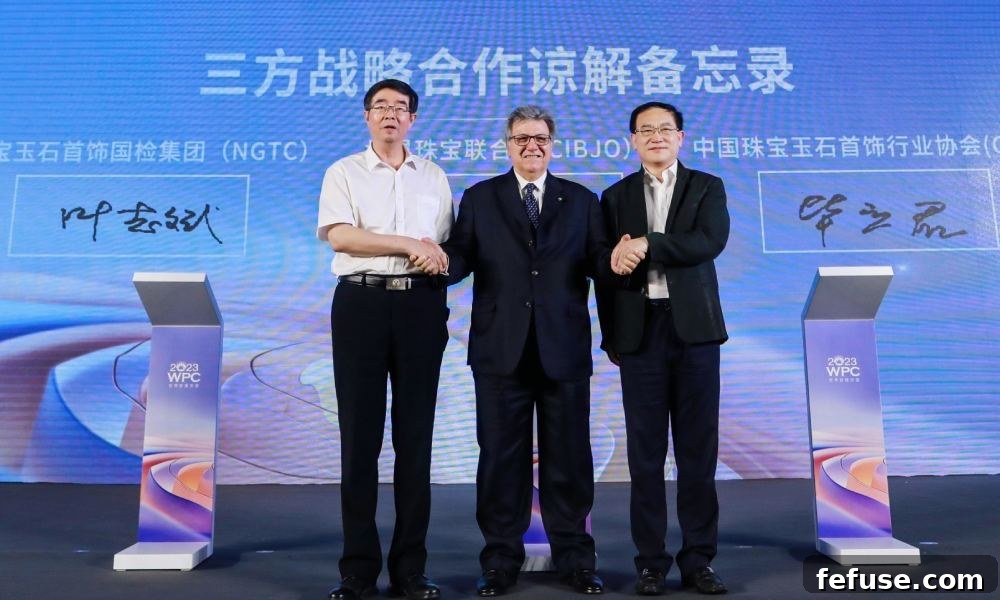
In a move designed to enhance transparency and consumer confidence, Dr. Cavalieri signed a Memorandum of Understanding (MoU) with two key Chinese industry organizations: Ye Zhibin, Chairman of the National Gemstone Testing Centre (NGTC) of China, and Bi Lijun, General Secretary and Vice President of the Gems and Jewellery Trade Association of China (GAC). This landmark agreement solidified a commitment to robust cooperation, facilitating comprehensive knowledge sharing, and establishing joint programs. Crucially, the MoU stipulates the adoption of international standards and nomenclature developed by CIBJO within China. This harmonization is vital for a global industry, ensuring consistency in grading, disclosure, and ethical practices across borders. For consumers, it means greater trust and clarity when purchasing jewellery, regardless of its origin. For businesses, it simplifies international trade and reduces potential ambiguities arising from differing national standards.
Collaborative Endeavors for Industry Advancement
The agreement goes beyond mere standardization, envisioning a collaborative framework that will significantly benefit the global jewellery industry. Joint programs could encompass a range of initiatives, including research into new technologies for gem identification, educational workshops on sustainable sourcing practices, and the development of unified consumer protection guidelines. By sharing expertise and resources, CIBJO, NGTC, and GAC aim to elevate industry standards, foster innovation, and address shared challenges more effectively. This strategic alliance with China, a powerhouse in both jewellery production and consumption, is a testament to CIBJO’s ongoing efforts to build a more responsible, transparent, and globally aligned jewellery trade. It represents a proactive step towards ensuring the long-term health and integrity of the industry, fostering an environment where ethical practices and consumer trust are paramount.
Conclusion: Charting a Course for Future Success
The jewellery industry stands at a critical juncture, facing both significant challenges and compelling opportunities in a post-pandemic world. While the economic slowdown and evolving consumer preferences for experiences over goods present headwinds, the inherent resilience and emotional resonance of fine jewellery provide a robust foundation for future growth. Dr. Gaetano Cavalieri’s optimistic outlook, underscored by the timeless human connection to valuable objects and the growing demand for integrity, points towards a path of sustainable and ethical development. The emphasis on responsibly sourced cultured pearls as a truly sustainable luxury option, coupled with strategic international collaborations like the MoU with China’s NGTC and GAC, highlights the industry’s commitment to adapting and thriving. By embracing transparency, prioritizing ethical supply chains, and harmonizing global standards, the jewellery industry can not only overcome current obstacles but also forge a brighter, more responsible, and profoundly meaningful future for generations to come, ensuring that the sparkle of fine jewellery continues to captivate and inspire.