
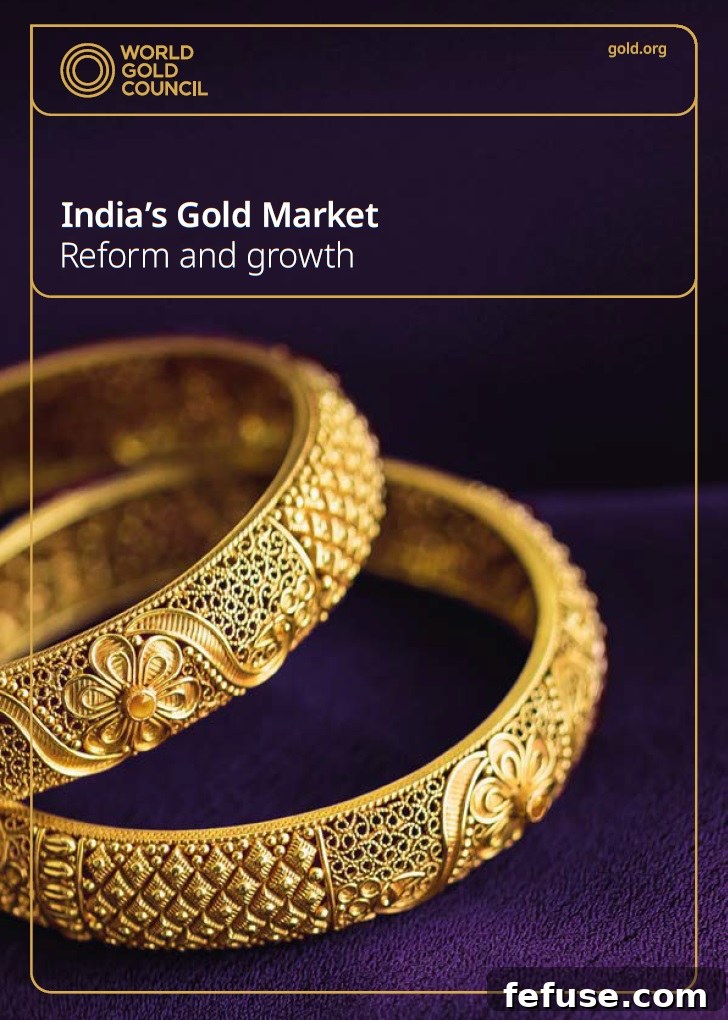
India’s Gold Market: Reforms, Growth, and Future Prospects – A Deep Dive by the World Gold Council
The World Gold Council (WGC) has recently unveiled a comprehensive new report titled ‘India Gold Market – Reform and growth’, offering an in-depth analysis of one of the world’s most pivotal gold markets. This seminal document meticulously examines the multifaceted factors that shape gold demand and supply dynamics across India, concurrently highlighting the significant challenges and burgeoning opportunities that lie ahead for this vital sector. The report serves as a crucial update to the WGC’s previous influential publication from 2017, ‘India’s Gold Market – evolution and innovation’, which notably underscored the immense potential and unique characteristics of India’s gold market, proudly holding its position as the second largest globally, surpassed only by China.
This latest WGC report is an exhaustive exploration, dissecting various critical facets of India’s gold ecosystem. It delves into the intricate drivers that propel Indian gold demand, meticulously analyzing the nuances of jewellery demand and its associated trade flows. The report also scrutinizes the structural complexities of the jewellery market, illuminates the evolving landscape of gold investment and its increasing financialisation, and provides insights into the robust bullion trade. Furthermore, it offers a detailed examination of gold refining and recycling capacities, alongside an assessment of the current state and future potential of gold mining activities within India.
Reflecting on Evolution: From 2017 to the Present Landscape
In his insightful foreword to the report, Juan Carlos Artigas, the Global Head of Research at the World Gold Council, articulated the compelling rationale behind this updated analysis. He stated, “In 2017 we produced ‘India’s Gold Market – evolution and innovation’. A lot has changed since that report was published.” This poignant observation underscores the necessity for a fresh perspective. The current compendium of updated reports dives profoundly into the fundamental factors that firmly entrench India’s standing as the world’s second-largest gold consumer. It systematically investigates the core drivers of gold demand and meticulously evaluates consumer perceptions, providing a nuanced understanding of their motivations. Moreover, the report meticulously examines the significantly transformed investment landscape and thoughtfully addresses the intricate challenges inherent in gold supply chains.
Artigas further reflected on the tumultuous global environment, noting, “Few of the global events that have rocked societal and geopolitical stability could have been imagined when our 2017 report was published.” This acknowledgement highlights the extraordinary resilience and adaptability demonstrated by India in the face of unprecedented global upheaval. He added, “That India has had to adapt is not surprising, but the rate at which change is happening in the country is, arguably, unprecedented.” This rapid pace of transformation necessitates a continual reassessment of market dynamics, economic policies, and consumer behaviour to accurately chart the future trajectory of India’s gold market.
Economic Headwinds and Shifting Investment Paradigms
The macroeconomic indicators for India present a complex yet intriguing picture for the gold sector. The International Monetary Fund (IMF) projects a robust 23% increase in per capita GDP growth between 2022 and 2026. While, at face value, rising living standards typically correlate positively with gold demand, Artigas cautioned that “there are other factors in play.” He specifically pointed to a notable decline in the country’s savings rate, a trend that could influence traditional investment patterns. Furthermore, the government’s ambitious ‘bank the unbanked’ initiative is orchestrating a profound sea change in the availability and variety of investment choices for millions of Indians. This initiative, designed to broaden financial inclusion, is diversifying investment portfolios beyond conventional assets, including gold. Artigas emphasized, “Gold must respond if it is to successfully steer a course through these headwinds.” This highlights the imperative for the gold industry to innovate and adapt to remain competitive and relevant amidst evolving financial landscapes.
Despite these macroeconomic shifts and uncertainties, the Indian populace continues to demonstrate an unwavering affinity for gold. Artigas observed, “Despite – or perhaps because of – macroeconomic uncertainties, India’s population resolutely turns to gold.” This enduring appeal is deeply rooted in cultural traditions, with weddings and festivals serving as perennial, powerful drivers of gold demand. India not only stands as a global leader in gold jewellery consumption but also proudly ranks among the world’s largest markets for gold bars and coins. This unequivocal evidence affirms that gold retains a paramount position in the social fabric and financial lives of countless Indians, whether they reside in bustling urban centers or tranquil rural communities. Its significance transcends mere economic value, embodying cultural heritage, family legacy, and a tangible symbol of wealth and prosperity.
Drivers of India’s Enduring Gold Demand
The fascination with gold in India is not merely an economic phenomenon but a deeply ingrained cultural and social practice. Understanding these core drivers is essential for comprehending the market’s resilience and future trajectory.
Cultural Significance: Weddings, Festivals, and Tradition
Gold plays an indispensable role in Indian society, particularly during auspicious occasions. Weddings are perhaps the single largest catalyst for gold demand, where it is given as gifts, forms part of the bridal trousseau, and is often seen as a blessing for marital prosperity. Festivals like Diwali, Akshaya Tritiya, and Dhanteras are also periods of heightened gold purchases, driven by deeply held beliefs that buying gold on these days brings good fortune and prosperity. This cultural demand is often inelastic, with families prioritizing gold purchases regardless of minor price fluctuations, viewing it as a generational investment and a sacred commodity rather than merely a financial asset. The emotional and traditional value attached to gold ensures its continuous demand across all socio-economic strata.
Economic Factors: A Safe Haven and Store of Value
Beyond culture, gold serves a crucial economic function for many Indians. It is widely perceived as a reliable store of value and an effective hedge against inflation and economic uncertainty. In a country where traditional financial instruments may not always be accessible or trusted, especially in rural areas, gold provides a tangible, universally accepted asset that can be easily liquidated during times of need. It represents financial security, a family’s reserve fund, and a legacy asset passed down through generations. The stability of gold against currency fluctuations and its intrinsic value make it an attractive option for preserving wealth, particularly for households seeking protection from economic volatility.
Consumer Perception: Trust, Status, and Legacy
Consumer trust in gold remains exceptionally high. It is seen as a symbol of status, prosperity, and a mark of social standing. The act of owning and displaying gold jewellery is intertwined with personal identity and communal pride. Furthermore, the tangible nature of gold fosters a sense of security that digital or paper assets may not provide for all segments of the population. This deep-seated perception of gold as a trustworthy, prestigious, and enduring asset continues to underpin its consistent demand.
Transforming the Indian Gold Market: Opportunities Ahead
Looking to the future, Artigas underscored that the years ahead, while presenting challenges, hold immense potential for the gold industry in India. He optimistically stated, “But rather than thinking them onerous, we believe there is tremendous opportunity for gold.” Several key areas have been identified as pivotal for growth and market evolution.
Enhancing Consumer Trust through Regulation
A significant stride has already been made in strengthening consumer confidence. “Regulation of India’s jewellery industry has already made huge strides in building consumer trusts,” Artigas noted. Initiatives such as mandatory hallmarking for gold jewellery have been instrumental in ensuring purity and transparency, thereby bolstering consumer trust and fostering a more organized and credible market environment. This regulatory push is crucial for long-term sustainable growth and for attracting new generations of buyers who prioritize transparency and assurance of quality.
Diversifying Export Markets for Jewellery
The report highlights a critical vulnerability in India’s jewellery export sector. “If new export markets can be developed, the current fragile platform – 90% of jewellery exports go to just five countries – will be diluted,” Artigas explained. Expanding India’s jewellery export base beyond its current concentrated destinations is paramount. This diversification would not only de-risk the export sector from economic downturns or policy changes in a few key markets but also unlock new avenues for growth, positioning India as a more robust and globally competitive player in the international jewellery trade. Strategies to promote Indian craftsmanship and design in untapped markets could yield significant benefits.
Expanding Investment Access through Financial Inclusion
The ongoing efforts towards greater financial inclusion present a unique opportunity for gold investments. “More accessible banking offers a possibility to reach investors who have long understood gold’s safe-haven qualities but now find themselves negotiating a plethora of choice,” said Artigas. As more Indians gain access to formal banking channels, there is an opportunity to offer them structured and regulated gold investment products such as gold ETFs, sovereign gold bonds, and digital gold. This would allow a broader segment of the population, particularly those in rural areas, to invest in gold without the concerns of storage or purity, thereby integrating traditional preferences with modern financial solutions.
Strategic Reforms for Domestic Supply and Reduced Imports
In the longer term, several strategic initiatives hold the promise of significantly reducing India’s heavy reliance on imported gold. The Gold Monetisation Scheme (GMS), aimed at mobilizing idle household gold, along with proposed legislative changes in the mining industry, could substantially boost domestic gold supply. Furthermore, resolving issues related to recycling traceability would enhance the efficiency and credibility of the secondary gold market. These combined efforts could create a more self-reliant gold economy, benefiting both consumers and the national exchequer by reducing the import bill and strengthening the domestic supply chain.
WGC’s Vision for Gold’s Enduring Relevance
Concluding his foreword with a note of strong optimism, Artigas stated, “As we look ahead with optimism, the insights in this report will help us ensure that gold retains or even increases its relevance to India’s economy.” The World Gold Council believes that, with strategic reforms and proactive adaptation, gold will continue to be a cornerstone of India’s economic prosperity. It is poised to generate further employment opportunities across its extensive value chain – from mining and refining to manufacturing and retail. Beyond its economic contributions, gold will undeniably continue to play its cherished roles as an adornment, a cultural touchstone, and an effective portfolio diversifier, serving as an indispensable hedge against inflation for millions of Indian households. This report, therefore, is not just an analysis but a roadmap for gold’s dynamic future in India.