
Navigating the Labyrinth: Challenges and Progress in the Colored Gemstone Industry
The allure of colored gemstones is undeniable, captivating hearts with their vibrant hues and unique characteristics. From the deep blues of sapphires to the fiery reds of rubies and the lush greens of emeralds, these natural wonders hold immense beauty and value. However, beneath their captivating sparkle lies a complex industry grappling with profound challenges, particularly concerning ethical sourcing, traceability, and ensuring consumer confidence. A recent report, spearheaded by industry expert Charles Abouchar, sheds critical light on these multifaceted issues, urging a concerted effort towards greater transparency and responsibility.
The Elusive Quest for Origin: Understanding Traceability Challenges
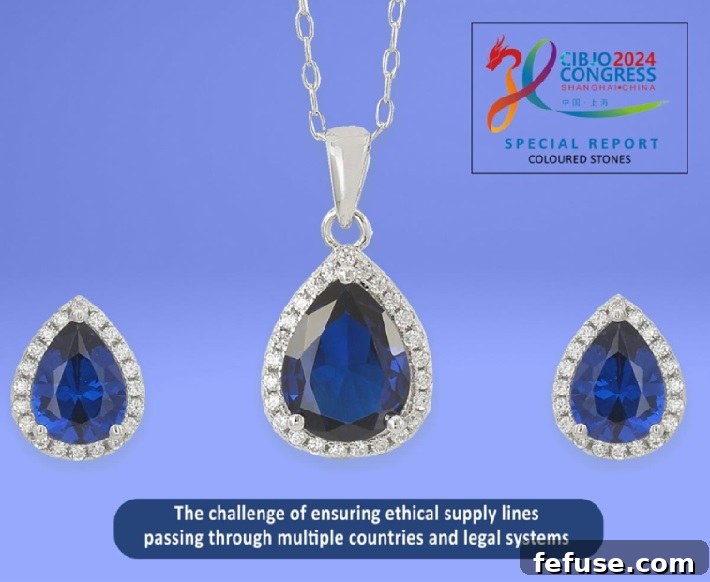
One of the foremost hurdles identified in the report is the inherent difficulty in precisely verifying the origin of each individual colored gemstone. Unlike some other sectors, the global colored gemstone industry operates within a mosaic of diverse regulatory frameworks. This uneven enforcement of standards across various countries creates a significant obstacle, making it challenging for companies to track a gem’s journey from mine to market with absolute certainty. While the industry collectively champions ethical progress and sustainable practices, the absence of uniformly applied standards and robust international protocols inadvertently hinders genuine efforts to establish fully traceable supply chains. This fragmentation allows for potential loopholes, making comprehensive oversight a formidable task.
The demand for ethically sourced products is rapidly growing among conscious consumers, placing immense pressure on the industry to evolve. However, the path to achieving full traceability is fraught with logistical complexities. Gemstones often pass through numerous hands – miners, brokers, cutters, polishers, and dealers – sometimes across multiple continents, before reaching the final retail stage. Each step adds layers of complexity, requiring meticulous documentation and verifiable assurances at every point. Without universally accepted norms and consistent implementation, verifying the provenance of a particular stone remains an ongoing, intricate challenge.
Ethical Sourcing: Balancing Ideals with Real-World Limitations
Charles Abouchar’s report acknowledges the crucial measures that can be adopted to ensure ethical sourcing, yet simultaneously underscores the significant limitations of current systems. A primary concern is the potential for well-intentioned but overly stringent sourcing policies to inadvertently create discriminatory practices. For instance, limiting purchases solely to goods from dealers who can demonstrably comply with rigorous, often expensive, certification standards can disproportionately impact smaller players in the market.
This is particularly pertinent in the colored gemstone sector, which is heavily dominated by artisanal and small-scale mining (ASM) operations. These miners, often working in remote areas and operating with limited resources, may struggle to meet the extensive documentation, environmental, and social compliance requirements imposed by larger buyers or certification bodies. While the intention behind such requirements is noble – to prevent child labor, ensure fair wages, and minimize environmental damage – their practical application can unintentionally exclude a vast segment of the mining community, thereby limiting their market access and economic opportunities. This exclusion can, paradoxically, push these vulnerable miners into less regulated channels, undermining the very goals of ethical sourcing.
Furthermore, such restrictive purchasing policies can stifle market competitiveness. By narrowing the pool of eligible suppliers, the market risks becoming concentrated among a few large, well-resourced entities. This can reduce diversity, limit innovation, and potentially lead to price inflation, ultimately impacting both businesses and consumers. The challenge lies in developing ethical sourcing frameworks that are inclusive, equitable, and adaptable to the varied operational realities across the global supply chain, especially for ASM communities that form the backbone of much of the colored gemstone supply.
Towards a Responsible Future: Industry Collaboration and Tools for Progress
Despite these significant hurdles, the report issues a clear and encouraging call to action for all industry members: to persist in their efforts towards establishing robustly ethical and transparently traceable supply chains. This journey, while demanding, is essential for the long-term health, reputation, and consumer trust in the colored gemstone industry.
The Coloured Stone Commission specifically recommends leveraging tools and resources developed by reputable organizations such as CIBJO, The World Jewellery Confederation. CIBJO has been a proactive force in promoting responsible practices, and its offerings include invaluable guidance for businesses committed to ethical operations. Two key resources highlighted are:
- The Responsible Sourcing Blue Book: This comprehensive guide provides a framework and best practices for companies to implement responsible sourcing policies. It covers critical areas such as human rights, labor practices, environmental protection, and anti-corruption measures, offering a blueprint for ethical conduct throughout the supply chain.
- The Responsible Sourcing Toolkit: Complementing the Blue Book, this toolkit offers practical, actionable steps and resources to help businesses operationalize their responsible sourcing commitments. It assists companies, particularly small and medium-sized enterprises (SMEs), in navigating the complexities of due diligence and compliance, making ethical sourcing more accessible and achievable.
By actively adopting and integrating these tools, industry players can incrementally build more responsible and transparent systems, fostering a culture of accountability and sustainability that benefits all stakeholders, from miners to consumers.
Beyond Sourcing: Addressing a Spectrum of Industry Issues
The scope of the report extends beyond ethical sourcing, delving into several other pressing issues that demand the industry’s collective attention. These challenges are crucial for maintaining integrity, consistency, and consumer trust within the colored gemstone sector:
- The Proliferation of Marketing Descriptors: The report highlights concerns regarding the inconsistent and sometimes misleading use of marketing terms and descriptors for colored gemstones. Ambiguous terminology can create confusion for consumers, impact perceived value, and hinder fair trade. Standardizing these descriptors is vital for clear communication and preventing misrepresentation.
- Colour Instability in Treated Sapphires: Certain treatments applied to sapphires to enhance their color may not always be permanent, leading to potential color instability over time. This issue raises questions about disclosure, long-term durability, and maintaining the value proposition for treated stones. Accurate and transparent information about treatments and their potential effects is paramount.
- The Impact of New Research on Older Gem Lab Reports: Advancements in gemological science and analytical techniques continuously provide new insights into gem identification, origin determination, and treatment detection. This progress can sometimes reveal information that contradicts or expands upon older gem laboratory reports. The report addresses the implications of such new research for previously certified stones, suggesting a need for updated standards or mechanisms to address these evolving understandings.
- Inconsistencies in Origin Reporting: While related to the broader traceability challenge, this point specifically addresses variances in how different gemological laboratories determine and report the geographical origin of a gemstone. Differences in methodology, reference collections, and interpretation can lead to conflicting origin reports for the same stone, which can significantly impact its market value and consumer confidence. Greater harmonization in origin determination methodologies is crucial.
Conclusion: A Call for Unified Progress and Enduring Trust
The colored gemstone industry, rich in beauty and history, stands at a pivotal juncture. The report led by Charles Abouchar meticulously outlines the significant challenges confronting the sector, particularly in achieving truly ethical sourcing and comprehensive traceability. The uneven application of regulations, the potential for discriminatory practices against artisanal miners, and a range of technical and marketing inconsistencies all contribute to a complex landscape.
However, the report is not merely a critique; it is a powerful catalyst for positive change. By emphasizing the availability of robust tools like CIBJO’s Responsible Sourcing Blue Book and Toolkit, and by urging persistent, collaborative efforts, it charts a clear path forward. The future of colored gemstones hinges on a collective commitment to transparency, integrity, and sustainable practices. Addressing these issues systematically will not only enhance the industry’s reputation but also foster greater consumer confidence, ensuring that the allure of colored gemstones endures for generations to come, underpinned by a foundation of responsibility and trust.