
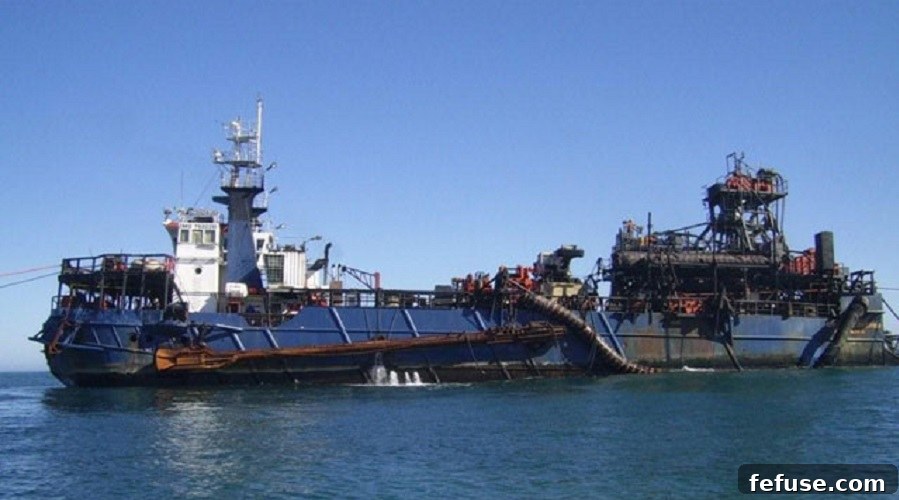
Diamond Fields International Gears Up for Resumption of Offshore Diamond Mining in Namibia, Leveraging Advanced Technology and Strategic Partnerships
Vancouver-based Diamond Fields International (TSXV: DFI), a prominent player in the global marine diamond sector, has announced its much-anticipated return to active mining operations off the coast of Namibia in 2018. This strategic move signals a renewed focus on extracting high-value gemstones from one of the world’s richest offshore diamond provinces, following a period of meticulous planning and successful preliminary assessments.
A Strategic Return to Namibia’s Diamond-Rich Waters
Namibia holds a unique position in the global diamond industry, renowned for its vast offshore deposits of high-quality, gem-grade diamonds. These precious stones, often liberated from ancient river systems and transported to the Atlantic seabed, have undergone natural sorting processes, resulting in a significantly higher proportion of larger, more valuable diamonds compared to land-based operations. Diamond Fields International has long recognized the immense potential of this region, and its decision to recommence mining activities underscores the compelling economics and geological promise that Namibia offers.
The company’s re-entry into the Namibian offshore diamond mining scene is not merely a resumption but a calculated advancement, built upon a solid foundation of strategic partnerships and cutting-edge technological deployments. This initiative is poised to bolster DFI’s standing in the market and contribute significantly to the supply of premium diamonds, meeting the persistent global demand for luxury gemstones.
Unearthing Value: The Success of Bulk Sampling and Strategic Alliance
Central to DFI’s confidence in resuming operations is the highly successful bulk sampling program conducted in alliance with International Mining and Dredging Holdings. The results from this program were, as company officials reported, “extremely encouraging, with an unexpectedly high frequency of large, high-value stones.” This outcome far exceeded initial projections, providing robust validation for the commercial viability and exceptional potential of the target areas within their concession.
Sybrand Van Der Spuy, CEO of Diamond Fields International, emphasized the superior quality of the diamonds recovered from what is known as “concession ML 111.” In a press release, Van Der Spuy highlighted that these diamonds are of the highest gem quality, a characteristic that significantly enhances their market value and appeal. The recent testing, he noted, even surpassed his already optimistic expectations, reinforcing the belief that ML 111 harbors substantial reserves of premium quality diamonds.
The strategic alliance with International Mining and Dredging Holdings is a crucial element of DFI’s operational framework. Such collaborations are vital in the capital-intensive and technologically demanding marine mining sector, pooling expertise, resources, and operational capabilities to maximize efficiency and success. This partnership ensures that DFI has access to the necessary infrastructure and operational know-how to execute its mining plans effectively and responsibly.
Advanced Technology for Precision and Efficiency: The Ya Toivo Vessel
Following a necessary stoppage, primarily due to challenging weather conditions and the executive team’s dedication to constructing a robust new partnership structure and comprehensive mining plans, DFI is set to resume work by targeting a specific seafloor area spanning approximately 55 hectares. The scale and precision required for such an operation necessitate state-of-the-art equipment, and DFI is well-prepared with the deployment of the advanced Ya Toivo mining vessel.
The Ya Toivo is not just any vessel; it is a sophisticated platform engineered for the rigors of deep-sea mining. It is equipped with a highly effective 4-point-mooring-system integrated with anchor-assist capabilities, complemented by a dynamic positioning system. These features are critical for maintaining unparalleled vessel stability, even under turbulent sea conditions, ensuring that mining operations can proceed efficiently and safely without interruption. The ability to hold a precise position is paramount when targeting specific, high-value diamond-bearing areas on the seabed, minimizing collateral disturbance.
Further enhancing its operational capabilities, the Ya Toivo is outfitted with a Remotely Operated Subsea Tractor. This advanced piece of equipment, as the company states, is “capable of highly efficient and selective mining on the sea floor.” The term “selective mining” is key here; it implies a targeted approach that aims to extract diamonds with minimal disturbance to the surrounding seabed environment. This technology allows for precise navigation and collection of diamondiferous gravels, optimizing recovery rates while adhering to responsible mining practices. The Subsea Tractor operates autonomously or semi-autonomously, directed from the vessel, allowing human operators to precisely control its movements and collection mechanisms in real-time, greatly improving efficiency and reducing operational risks associated with manned subsea activities.
Navigating the Regulatory Landscape: Licence Renewal and Environmental Compliance
The operational continuity for Diamond Fields International in Namibia hinges on the renewal of its mining licence for concession ML 111, which was anticipated to be renewed for a further 10 years by December 20, 2017. Such a long-term licence renewal is a significant vote of confidence from the Namibian government, reflecting the country’s commitment to fostering a stable and predictable environment for responsible resource development.
However, this renewal comes with stringent conditions, underscoring Namibia’s robust regulatory framework for environmental protection. Key among these conditions is the requirement for DFI to undertake a new Environmental Impact Assessment (EIA) and to have an Environmental Management Plan (EMP) Report prepared and approved. An EIA is a crucial process designed to identify and assess the potential environmental impacts of a proposed project before it commences, allowing for the development of mitigation strategies.
The Environmental Management Plan (EMP) then translates the findings of the EIA into actionable steps, outlining how potential negative impacts will be minimized, monitored, and managed throughout the project’s lifecycle. This includes protocols for waste management, biodiversity protection, and rehabilitation efforts. These regulatory requirements reflect Namibia’s proactive approach to safeguarding its unique marine ecosystems, ensuring that resource extraction aligns with principles of environmental stewardship.
Addressing the Environmental Dialogue in Marine Mining
While the economic promise of offshore diamond mining is significant, the practice of seafloor mining, particularly in Namibia, has not been without its controversies. Environmental groups and local fishing companies have voiced considerable concerns, advocating for stricter regulations or even outright bans on certain types of marine mineral extraction, especially in the context of phosphate mining. These concerns are rooted in a broader apprehension about the potential ecological footprint of such operations.
Activists worry about several potential detrimental effects on the delicate marine environment. Firstly, there is the concern over the physical destruction of seabed habitats, which are crucial nurseries and feeding grounds for various marine species. The dredging and collection processes, even when selective, can alter the physical structure of the seafloor, impacting benthic organisms and the wider ecosystem.
Secondly, critics highlight the risk of releasing heavy metals and other dangerous materials, such as hydrogen sulphide, which can be trapped within seabed sediments. Disturbing these sediments could mobilize these toxic substances into the water column, posing threats to marine life and potentially entering the food chain.
Another concern is the potential for algal blooms, triggered by the mobilization of phosphates from the seabed. While phosphate mining directly targets these minerals, any sediment disturbance can release nutrients that lead to excessive algal growth, which can deplete oxygen levels in the water (eutrophication), creating “dead zones” harmful to marine life.
Underwater noise pollution, generated by the operation of large vessels, mining equipment, and subsea tractors, is also a significant concern. Such noise can disrupt the communication, navigation, feeding, and breeding patterns of marine mammals and fish, causing stress and displacement. Furthermore, the turbidity created by disturbed sediments can reduce light penetration in the water, leading to decreased photosynthesis by phytoplankton, which form the base of the marine food web, potentially impacting the entire ecosystem.
Much of these effects, environmental advocates argue, could be caused by the types of vessels and the processes used for marine mineral extraction. In response to these pressing concerns, Diamond Fields’ CFO, Secretary, and Director, Earl Young, addressed the matter in an email to MINING.com. While acknowledging that he is not a specific expert on environmental science, Young affirmed his knowledge of Namibia’s “rigorous environmental compliance regime.” He stressed that DFI must comply with all national regulations and standards, indicating a commitment to operate within the defined environmental parameters set by the Namibian authorities. This statement underscores the importance of the EIA and EMP processes, which are designed to ensure that potential impacts are thoroughly assessed and managed according to strict guidelines.
Outlook and Strategic Importance for DFI
The resumption of offshore diamond mining by Diamond Fields International marks a pivotal moment for the company. With an expected 10-year licence renewal for ML 111, DFI is positioned for long-term, stable operations in a high-value sector. The successful bulk sampling program, coupled with the deployment of advanced mining technology, points towards efficient and profitable extraction of Namibia’s coveted gem-quality diamonds.
This initiative not only solidifies DFI’s strategic presence in the marine diamond market but also contributes to Namibia’s economy through royalties, taxes, and job creation, while maintaining adherence to stringent environmental safeguards. As global demand for ethically sourced and high-quality diamonds continues to grow, DFI’s commitment to responsible mining practices, underpinned by robust environmental assessments and management plans, will be crucial for its sustained success and industry leadership.